Tag: Linear B Tablets

  • Knossos tablet KN 497 O a 06 & the supersyllabogram DA = labrys = double axe

    Knossos tablet KN 497 O a 06 & the supersyllabogram DA = labrys = double axe:

    Knossos tablet KN 497 O a 06 supersyllabogram DA = labrys = double axe

    There isn’t much I can say about this tablet, apart from the fact that it inventories 6 double axes. The text on the left side is unintelligible, being left truncated. The importance of the labrys or double axe in the Minoan/Mycenaean religion cannot be over-stressed. This repetitive motif appears the whole length of the Hall of the Double Axes at Knossos – which I personally saw in May 2012 and which is a magnificent work of art. A nearly identical motif re-appears on frescoes at Mycenae. The presence of the labrys is all-pervasive in the Minoan/Mycenaean religious symbolism of the military. It is uncertain whether the religious or the military aspect predominates in such art, but I am inclined to say that it is the religious, since religious symbolism is rampant in the Minoan/Mycenaean pantheon. Moreover, their religion is primarily matriarchal, and not patriarchal. It is to be expected that religious mythology would trump military in matriarchal societies such as this.

  • Knossos tablet KN 496 O x 04 and the supersyllabogram da = labrys

    Knossos tablet KN 496 O x 04 and the supersyllabogram da = labrys:

    Knossos tablet KN 496 O x 04 and the supersyllabogram DA = labrys

    It is simply impossible to determine the meaning of the first word on this tablet, “tanopada”, left truncated, for which the previous syllabogram is probably “a”. In addition, there may be more than one syllabogram before the left truncation. Whatever the word it is, it appears not to be Greek. It may possibly be Minoan. As explained on the illustration of the tablet (above), it is also not possible to determine whether the number 3 refers to both the labrys and the small swords, in which case there would be 3 of each, or whether there is only 1 labrys and there are 3 small swords. My preference is for the latter. In addition, the mark following the number 3 cannot be 10, since the format for 13 is the reverse. It appears simply to a scratch.

  • The supersyllabogram DA = dapu = “double axe” in Mycenaean Linear B

    The supersyllabogram DA = dapu = “double axe” in Mycenaean Linear B:
    
    Knossos tablet KN 495 O a 03 supersyllabogram DA double axes
    
    This unusual supersyllabogram appears on only 3 Linear B tablets from Knossos... unusual not only because it is rare, but also because it is either oncharged or supercharged onto the syllabogram for “double axe”. This would imply that the supersyllabogram DA is an associative, not attributive supersyllabogram, given that attributive supersyllabograms are otherwise without exception incharged in their ideograms. This leaves us in a bit of a quandary, because we should expect that DA is attributive and not associative. Its position (supercharged or oncharged) on this tablet and the other 2 like it indicates that it should be associative. But a double axe can neither be associated with itself nor be an attribute of itself. That is a contradiction in terms. So what are we to make of this bizarre positioning of the supersyllabogram DA onto the ideogram for the double axe?  I can come up with no explanation other than that the supersyllabogram DA is neither attributive nor associative, but is simply itself per se. What is even more astonishing is the fact that the ideogram and the supersyllabogram are essentially one and the same thing. Was the scribe at a bit of a loss in his attempt to “describe” the double axe as a supersyllabogram? Actually, I don't think so. What he was doing in this particular instance was emphasizing or, if you like, stressing the fact that he was focused on the double axe.  In this context, it appears that the ideogram for “double axe” coupled with its supersyllabogram must take precedence over the rest of the text on this tablet. The tablet is focused sharply on the inventory of the double axe, which takes precedence over any other consideration. At least that is my take on it.
    
    Here we have two illustrations highlighting the conspicuous symbolism of the double axe in Minoan/Mycenaean iconography:   
    
    Hall of the Double Axes Knossos
    
    pottery-and-shield-of-the-labrys-or-double-axe-museum-mycenae-may-3-2012


  • The composite supersyllabograms ZE & RO with the ideogram for horse in Linear B

    The composite supersyllabograms ZE & RO with the ideogram for horse in Linear B:
    
    KN 259 N l 21 SSYLS ZE RO
    
    This is one of only two tablets in the entire corpus of Linear B tablets which has two supersyllabograms modifying their ideogram, making them a unique phenomenon. The other one appears in the next post.
    
    While the supersyllabogram ZE, meaning “a team of horses”, is straightforward, RO appears only once on this fragment, and nowhere else on any Linear B tablet or fragment, regardless of provenance. L.R. Palmer, in “The Interpretation of Mycenaean Greek Texts” (1963) defines it as meaning “a part of the horse trappings, made of leather”. I have no reason to discount this interpretation. It is unusual for the ideogram for armour to follow that for horse, and especially for the scribe to indicate that there are two (2) sets of armour for the (chariot) drivers, one for each... unusual because the ideogram for armour almost always follows that for chariot and precedes that for a team of horses. Be it as it may, that is the way the scribe inscribed it; so we'll take it at its face value.
    
    
  • Linear B tablet 04-39 N u 10 from the Knossos “Armoury” illustrating the SSYLS ZE & MO

    Linear B tablet 04-39 N u 10 from the Knossos “Armoury” illustrating the SSYLS ZE & MO
    
    Linear B tablet k 04-39 N u 10 from Knossos wheel ZE MO
    
    While the translation of this tablet is relatively straightforward, there are a few points worthwhile mentioning. The first is that the supersyllabogram MO, appearing  for the first time on this tablet, is the first syllable of the Linear B word – mono - , meaning – one, single (i.e. spare). Secondly, since the tablet is right-truncated, we do not know how many spare wheels (MO) the scribe has inventoried, but my bet is that there is a spare wheel for each set of wheels on axle. Given that there are 3 sets of wheels on axle, that would mean that there would be 3 spare wheels. Lastly, and significantly, there is absolutely no mention of a chariot on this tablet (nor is there on well over a dozen other tablets), leading me to the all but inescapable conclusion that a considerable number of chariots were fully assembled without their wheels, the wheels being separately manufactured. But why? 
    
    There are three discreet sets of tablets discussing the construction of chariots and their wheels (on axle):
    
    (a) The first set of tablets inventory fully assembled chariots with their wheels on axle and their spare wheel (if present);
    (b) The second is comprised of tablets for fully assembled chariots without their wheels on axle and;
    (c) The third details the construction of wheels on axle, usually along with spare wheels, with no mention of chariots. Now this third set of tablets raises the inescapable question: why do so many tablets refer to the construction of wheels (both wheels on axle and spares), with no mention whatsoever of the chariots for which they are destined?
    
    The most plausible explanation for these discrepancies is that the privileged functionary who has ordered his chariot does not want it delivered with its wheels already on axle [set (b) above], because he wishes to have the wheels separately manufactured according to his own specifications. We can be reasonably certain that VOPs such as the wanax (King) or the rawaketa (Commander-in-Chief) were the only supernumeraries who could possibly afford to have chariot wheels manufactured to their exacting specifications. Here you see a composite of four different styles of Mycenaean chariot wheels:
    
    composite of 4 Mycenaean chariots
    
    Such highly placed aristocrats would probably have been terribly fussy about the style and decoration of the wheels they wanted mounted. So the wheels on axle would have been manufactured separately from the chariots, which neatly explains why numerous tablets speak of wheel construction alone, while others refer to chariots without their wheels attached destined for the same elite customers. In fact, these two types of tablets appear to run in tandem with each other, there being one tablet referring to the chariot fully assembled without wheels on axle and a corresponding one detailing the manufacture of the wheels on axle (and most of the time of the spare wheel), but with no mention of the chariot itself. The difficulty is which Knossos tablet dealing with a particular fully assembled chariot without wheels is to be paired with which corresponding tablet describing the manufacture of wheels on axle (and most often a spare wheel to boot)? That is a question we shall never know the answer to, but the plausibility of this method of dual (or paired) construction of chariots without wheels in tandem with the separate manufacture of wheels makes sense.
    
    
  • Knossos tablet 04-38 from the Knossos “Armoury”

    Knossos tablet 04-38 from the Knossos “Armoury”
    
    wheel ZE 04.38
    
    Knossos tablet 04-38 from the Knossos “Armoury” illustrates the use of the supersyllabogram ZE = “zeukesi” = a pair of, in other words, when it comes to wheels, a set of wheels (on axle)... certainly not off axle! Since there are 15 sets of wheels made of willow inscribed on this tablet, it is clear that the tablet describes the construction of sets of chariot wheels only, and not of the chariots to which they are eventually to be attached. Except for a rather large patch of scratches on the top left side of the tablet, it is completely intact. This inventory of the construction of wheels alone, and not of the chariots to which they are to be affixed, strengthens my previous hypothesis that some chariots were fully assembled without their wheels already on axle. In other words, any such chariot would have been delivered to its buyer without its wheels on axle, most likely because he wanted the wheels custom made to his specifications, and then fitted afterwards to the chariot in question. Otherwise, why would there be several Linear B tablets from Knossos and Pylos describing wheel manufacturing only?


  • Linear B tablet K 04-22 N b 05 from the Knossos “Armoury”

    Linear B tablet K 04-22 N b 05 from the Knossos “Armoury”
    
    Linear B tablet 04-22 Knossos armoury
    
    This is one of the most significant tablets from Knossos dealing with chariots. At least two really perplexing words plague any reasonable translation of this tablet. The first of these is – peqato – on the first line, which according to Chris Tselentis in his Linear B Lexicon just might mean – a foot-board -.  But this is speculative. L.R. Palmer is unable to offer any plausible translation at all for this word. At the end of the second line we find the truly bizarre concoction – posieesi – which is utterly alien to ancient Greek and quite unlike any combination of vowels I have ever encountered in Mycenaean Greek. It is the juxtaposition of – iee – i.e. three vowels in a row which really throws us off. I have never seen anything like it in Mycenaean Greek. It just might possibly be instrumental plural, but that is a real stretch. So is my translation. I would take it with a hefty grain of salt. But everyone who knows me is perfectly aware that I will dive right in where others shy away. As long as the words just might make sense both in the textual and the actual construction context of Mycenaean chariots, then there is no harm trying on a translation. If the shoe fits, wear it.
    
    Here is the original tablet from the Ashmolean Museum (approximate actual size). 
    
    An1910_213_o a Ashmolean 04-22
    
    
  • Linear B tablet K 04.03 from the Knossos “Armoury”

    Linear B tablet K 04.03 from the Knossos “Armoury”
    
    Tablet:
    
    Linear B tablet Knossos K 04.03 translation
    
    The text of this tablet is longer than on most tablets on chariot construction. This makes for more chances for error(s) in the original text, depending on the scribe’s hand (which in this case is sloppy) in the final literal and free translations. The notes on the tablet above make it quite clear where the scribe’s writing leaves something to be desired. So the translator is left to his or her own devices to come up with the best possible interpretation under the circumstances. For instance, the word – opa – apparently is archaic Mycenaean. It had fallen out of use by the time of Homer. It is a bit difficult to determine exactly what it means, but Chris Tselentis has it as – workshop –, which makes sense in the context. Once again, by context, I mean not only textual context but the most likely translation for the real world context of the Mycenaean vocabulary describing chariot construction. I am convinced that in this case Tselentis has ventured the best possible translation, which by exception I accept without question. My normal practice is to call into doubt any word on any tablet which has no equivalent in later ancient Greek, Homeric or Classical. But sometimes we have to throw in the towel when faced with no other reasonable alternative for the translation of archaic Mycenaean Greek or possibly even Minoan words. There is nothing unusual at all in the phenomenon of cross-linguistic transfer of certain words from a former, more archaic, language (in this case Minoan Linear A). Lord knows, English is full of such words, the vast majority inherited from Latin, Greek and medieval and early Renaissance French. What is good for the goose is good for the gander.
    
    The scribe, whose hand is admittedly quite sloppy, appears to have inscribed – araromo-pa-mena – for – araromo-te-mena –, by omitting one of the horizontal bars on the syllabogram. Translators of Linear B must always be on the ball and on the lookout for scribal errors in orthography on any tablet whatsoever, regardless of provenance – Knossos, Pylos, Mycenae etc.  After all, people make spelling mistakes often enough today, just as they always have throughout history. No surprise there.
    
    Finally, there is the sticky question, why would a scribe inventory a fully assembled chariot without wheels on axle, when – fully assembled – implies that the damn thing has to have its wheels on axle. Compare this with the manufacture of cars nowadays. No one in their right mind would call a car fully assembled, unless it had its wheels on axle. However, it is conceivable that Linear B scribes inventorying fully assembled chariots might sometimes be obliged to list the chariot(s) in question  – here there are 3 of them – as still not having their wheels on axle, because they are inventorying them at the very end of the current fiscal year. On the other hand, chariots might sometimes have been delivered without the wheels on axle, if the new owner wished to design and construct his own wheels, only attaching them after delivery has been received. There is no reason why this might not have been the case in some instances. But we shall never know, because we were not there when the scribes tallied chariots without wheels on axle. There must have been some method in their madness after all.
    
    
  • Linear B tablets KN 235 N j 41 & KN 236 N j 42 on chariots from the Knossos “Armoury”

    Linear B tablets KN 235 N j 41 & KN 236 N j 42 on chariots from the Knossos “Armoury”
    
    armour chariot aplate xxviii
    
    235 Nj POAISIDO armour chariot with wheels 800
    
    chariot bplate xxviii KURUMENO
    
    236 Nj' KURUMENO chariot withwheels 800
    
    These two tablets were perhaps the easiest I have had to translate. No further comments are necessary. Since there is so little text on these tablets, I did not bother translating the Linear B into archaic Greek. 


  • Linear B tablet Sd 4401 from the Knossos “Armoury”, a fully assembled chariot

    Linear B tablet Sd 4401 from the Knossos “Armoury”, a fully assembled chariot:
    
    Knossos tablet SD 4401
    
    Apart from the very first tablet on chariots we posted this month, namely, Linear B tablet Kn 894 N v 01, here:
    
    Link to Knossos tablet Kn 894 N v 01
    
    This is one of the most detailed of the Linear B tablets from the Knossos “Armoury”, zeroing in on more parts of a Mycenaean chariot than can be found on any of the other tablets we have already translated on the same subject, apart from Linear B tablet Kn 894 N v 01. There are a couple of peculiarities in the Linear B text of this detailed tablet which require clarification. The first is that the ideogram for chariot on the right side of the tablet is right truncated; so we do not know whether or not the chariot is equipped with a set of wheels. But common sense tells us that it is almost certain that this is a chariot equipped with wheels on axle, since the scribe explicitly states that the chariot is fully assembled. Secondly, the word for chariot on the second line = - iqiya – is feminine, which is quite strange, given that all of the modifying attributes following this word are in the masculine. This leads me to confidently conclude that the scribe meant to inscribe – iqiyo - = a double chariot, i.e. a chariot for two drivers, rather than – iqiya -. Otherwise, the grammatical constructs on the second line do not jibe.
    
    As we have already noted in our translations of at least a few of the other chariot tablets, the scribes are prone to make errors, usually in case agreement or in orthography. But that is nothing unusual, given that writers past and present are prone to the same liability. After all, we are only human.
    
    
  • Linear B tablet 04-81 N a 12 from the Knossos “Armoury”

    Linear B tablet 04-81 N a 12 from the Knossos “Armoury”
    
    04-81WIRINEO O n KAKEYAPI OPI Greek & translation 
    
    While most of the Linear B tablets from the Knossos “Armoury” we have translated so far this month have posed few problems of any significance, and a few occasional problems of some significance,  this tablet stubbornly defies an accurate translation, for the following reasons:
    
    1 the literal word order on the first line is so jumbled up that it is almost impossible to determine what adjectives modify what nouns. So I have had to come up with at least two alternate interpretations of this line in my free translation.  We are saddled with the burning question – 
    
    1.1 Is the chariot equipped with straps and bridles made of leather and horse blinkers made of copper?
    OR
    1.2  Is the chariot equipped with straps and horse blinkers made of leather and bridles made of copper?
    OR
    1.3 even some other probable concatenation?
    
    Then we are confronted with the mysterious Mycenaean word – (ko)nikopa – (if indeed the first syllabogram, which is partially obscured, is in fact – ko – ), leaving me no alternative but  to rummage through an ancient Greek dictionary, in the hope that I just might be able to come up with a word concatenated from two ancient Greek words, and to my slight relief, I found both of the ancient Greek words you see in the illustration of the tablet above, transliterated into Latin script here for those of you who cannot read ancient Greek. These are the words – koniatos – , which means – whitewashed – or – painted white – and – kopis – which means – sword/axe – . See The Pocket Oxford Classical Greek Dictionary, pg. 189, for these definitions. But it is quite clear to any ancient Greek linguistic scholar that I am stretching the putative meaning of – (ko)nikopa – just about as far as one can without crossing over into the realm of ridiculous speculation. So please take my translation of this word with a very large grain of salt. I merely took this meaning because the word has to mean something, so why not at least try and take a stab at it? Every one and anyone who knows me is perfectly aware that I am always the first one to take the plunge and to attempt to translate even the most recalcitrant unknown words found on Linear B tablets. Someone has to, and I am a most willing guinea pig.  
    
    Nevertheless, it is still possible, however remotely, that the word may mean just that, especially if we assume (and that is all it is, an assumption) that the chariot builder painted an axe motif onto both sides of the chariot body, just as we find the same motif painted onto frescoes in the Hall of the Double Axes at Knossos. This motif of the double axe, which is dubbed a – labrys  – by the Minoans and Mycenaeans, is characteristic of wall frescoes at both Knossos and Mycenae, as illustrated here:
    
    motif of labrys or double axes common to Knossos and Mycenae
    
    clarified in turn by the illustration below of the ideogram – dapu – for – labrys –  and with a similar ideogram of a labrys incharged with the supersyllabogram WE, which I have as yet been unable to decipher:
    
    Linear B syllabogram B232 DAPU or labrys
    
  • Translation of tablets K 04.40 N u 03 & K 04.41 from the Knossos “Armoury”

    Translation of tablets K 04.40 N u 03 & K 04.41 from the Knossos “Armoury”
    04.40 amota kedomena pteweya odakweta
    
    04.41 erika odakweta kedomena
    
    While the translation of these two tablets is quite straightforward, there is a little problem with the second  one, since it is unsure whether or not the chariot body or the chariot wheels are made of willow. However, I prefer the first translation over the second, given that on almost all other Linear B tablets from the Knossos “Armoury” are made of elm. On the same tablet (04.41), it is obvious to the observant translator that we may be dealing with anywhere from 50 to 59 sets of wheels on axle, ergo, 50 to 59 chariots.
    
    
  • POST 1,000! Linear B tablets K 04-31 N u 07 & 04-37 N u 04 in the Knossos “Armoury”

    POST 1,000! Linear B tablets K 04-31 N u 07 & 04-37 N u 04 in the Knossos “Armoury”
    
    Yes, we have finally hit 1,000 posts on Linear B, Knossos and Mycenae, in its slightly less than three years of existence.
    
    04-31 TEMIDWETA PTEREWA whell ZE
    
    04-37 AMOTA OREWA ATUYO TEMIDWETTE wheel ZE
    While the translation of both of these tablets is relatively straightforward, I do have a few comments to make. In the first place, it is becoming more than obvious by this point (after seeing several Linear B tablets on the design and construction of chariots already posted here) that not only is the vocabulary for chariots completely standardized, i.e. formulaic in the extreme, but that words referencing the parts of the chariot almost always appear in a minimally variable order on the tablets.  It is to be noted that the generic words for the largest parts always appear first, followed by (characteristics of) their smaller components. Thus:
    
    1 EITHER if it is mentioned, – amota – (with wheels) or – anamota – (without wheels) almost always appears in the first position. If the reference to wheels is the first on the tablet, it is apparent that the scribe is squarely placing emphasis on the (construction of the) wheels over all other parts of the chariot.
    OR if it is mentioned, – iqiyo – (for a single dual chariot for two people and NOT for the dual, 2 chariots!) or – iqiya – (for a chariot or chariots) almost always appears in the first position. If the reference to the chariot is the first on the tablet, it is apparent that the scribe is squarely placing emphasis on the construction of the chariot over all other concerns.
    
    This is routinely followed either:
    
    2 (a) by the kind of wood the scribe is referring to, usually either – pterewa –  = elm or – erika –  = willow, then by the designation – temidweta – referring to the rims of the wheel(s),
    (b) inversely,  by the designation – temidweta – referring to the rims of the wheel(s) and then usually either – pterewa –  = elm or – erika –  = willow, for the kind of wood the rims are made of; 
    
    3 followed  by – odatuweta –   referring to the grooves in the rims (it makes perfect sense to refer to the rims first and then to the grooves on the rims, rather than the other way around, which would violate common sense) then with a reference to the use of – kako –  = bronze or any variations of it (although this word can sometimes appear in the  first position but only if either of the words –  amota – (with wheels) or – anamota – (without wheels) do not appear on that line;
    
    4 then by the ideogram for wheel + the supersyllabogram ZE = –  zeugesi –  = a pair of wheels, or more properly speaking, (a set of) wheels on axle + the number of sets of wheels (if present) , with the understanding that if more than 1 set of wheels is listed, then more than one chariot is referenced. Thus, if the supersyllabogram (SSYL) ZE is followed by the number 22, the scribe is referring to 22 chariots;
    and (if present) by the ideogram for wheel, either preceded or followed by  the supersyllabogram MO = –  mono –  = a single wheel, or more properly = a spare wheel or spare wheels, if a number > 1 appears after MO;
    
    5 and finally (if present) by the ideogram for chariot with wheels or chariot without wheels.
    
    Of course, the word order is not set in stone (nothing ever is), but you get the picture.
    
    In short, the vocabulary appearing on military tablets dealing with chariots is both formulaic and routinely predictable. This is a prime characteristic of all inventories, ancient or modern. 
    
    
  • Translation of Linear B tablet K 04-28 from the Knossos “Armoury”

    Translation of Linear B tablet K 04-28 from the Knossos “Armoury”
    
    Knossos tablet 04-28 N a 15
    
    The translation of this tablet is relatively straightforward. The first line speaks for itself. On the second line we have  “opoqo kerayapi opiiyapi”, which could mean either “with horse blinkers of horn with parts of the reins” or “with horse blinkers with horn parts of the reins”,  since the Mycenaean Greek does not make it clear which part of the phrase – kerayapi – = “horn” modifies, the first or the second. Nevertheless, the second makes considerably more sense, since the poor horses might suffer injury if their blinkers were made of horn and they happened to shatter.  Certainly, the reins could be at least partly made of horn. So there you have it.
    
    Finally, we are confronted with the perfect participle passive – metakekumena – . Chis Tselentis takes a wild guess that it means “dismantled?” , though it is quite obvious that he is very unsure of himself, given that his translation is followed by a question mark (?). Besides, when we consider the context of the physical attributes of the chariot in which this word is set, it does not make much sense that anyone would want to dismantle a chariot which has been painted crimson by someone else, as that would simply undo the work  of the painter. Not a pretty scene. The scribe would have had one angry painter on his hands. On the other hand, the translation “(fully) refurbished”, which is practically identical with L.R. Palmer’s, makes a lot more sense. In said case, the scribe and the painter would have gotten along fine with one another. I am not saying that Tselentis’ translation is outright wrong. But the problem is that there exists no ancient Greek verb which fits the orthographic conditions of the perfect participle passive – metakekumena –  . On the other hand, the ancient Greek verb – komizo – is a pretty close match, even though its own perfect participle passive does not match. But – komizo – is Classical Greek, while – metakekumena – is far more archaic Mycenaean Greek. So there really is no way to tell for sure. But since the translation matches up so well with the context of the actual physical appearance of the chariot, I am much more inclined to favour it over that of Chris Tselentis.
    
    
  • Linear B tablet K 04.5 from the Knossos Armoury: the redoubtable challenges for translation

    Linear B tablet K 04.5 from the Knossos Armoury: the redoubtable challenges for translation
    
    04.5 iqiya piriniyo opoqo keryapi opiiyapi
    
     Linear B tablet K 04.5 from the Knossos Armoury: the redoubtable challenges for translation
    
    While some of the military tablets from the Knossos Armoury dealing with the construction and design of chariots pose a few problems in the translation of certain words which yield at least two or possibly even three different possible meanings, others are much more of a challenge to the translator. Some vocabulary in the more challenging tablets proves to be much more fractious. There are several reasons for this phenomenon when we are dealing with Mycenaean Greek vocabulary, let alone that of any truly archaic ancient language, such as Babylonian and Assyrian cuneiform and Egyptian hieroglyphics. These are:
    
    1 Some words in Mycenaean Greek may closely or somewhat resemble their later counterparts in Homeric Greek or Classical Greek, conveying the same or a similar meaning. Such is the case with – wanax – = “king” in Mycenaean Greek.
    2 Some of the words in Mycenaean Greek may closely or somewhat resemble their later counterparts in Homeric Greek, and yet not convey precisely the same meaning or might even mean something more remotely associated, such as – qasireu – , which does not mean the same thing as “basileus” = “king” in Homeric Greek. A – qasireu – in Mycenaean Greek is merely a local leader of a town, citadel, redoubt or similar small centre and nothing more.   A king in Mycenaean Greek is a – wanax – , for which there is an almost exact match in Homer’s Iliad.  
    3 Some words in Mycenaean Greek may look like variants of later Homeric or Classic Greek words, although they are spelled in a fashion alien to the latter, never appearing in them. 
    4 Some of the words in Mycenaean Greek may closely or somewhat resemble their later counterparts in Classical Ionic or Attic Greek, and yet convey an entirely different meaning.
    5 Some vocabulary in Mycenaean Greek may be archaic Greek which later fell entirely out of use even prior to Homeric Greek, in which case it may be next to impossible to confirm that such words are even archaic Greek at all.
    6 Some vocabulary in Mycenaean Greek may possibly be proto-Greek or even more ancient proto Indo-European, but we can never be certain of this at all.
    7 Some vocabulary in Mycenaean Greek may possibly or even likely be Minoan or of Minoan origin. Such is the case with the word – kidapa – on tablet KN 894 N v 01, the very first tablet I translated in this series of tablets on chariots. L.R. Palmer assumes this word refers to a kind of wood, and I agree. This assumption is based on the fact that two other kinds of wood are referenced on the same tablet, i.e. elm and willow. With this evidence in hand, I have gone even further than L. R. Palmer and have taken the calculated risk to identify this word as meaning “ash (wood)”, a wood which Homer uses for weapons.
    8 Just as is the case with Classical Greek, in which a few thousand words are not of Indo-European origin, Mycenaean Greek contains a fair proportion of such vocabulary. Words such as – sasama –  (sesame) & – serino –  (celery) come to mind.
    
    This is the scenario which confronts us in the translation of at least two of the words on this tablet, namely, – piriniyo – and – mano –, both of which are certainly open to more than one possible interpretation. The first word - piriniyo – meets the criteria outlined in 1 & 3 above. It probably means “an ivory worker”, but we cannot be sure of this. Since the latter – mano – may not have any relation to later Homeric or Classical Greek at all, it is a crap shoot to try and translate it. This word meets the criteria in 1,2 and 4 above. But I took the chance (as I always do), on the assumption, however fanciful, that – mano – may be related to the Classical Greek word – manos – , meaning “thin”, as defined in Liddell & Scott.
    
    And what applies to Mycenaean vocabulary on this and all other tablets dealing with chariots, whether or not they originate from Knossos, equally applies to all of the vocabulary on each and every tablet in the military sector of the Mycenaean economy. By extension, this principle must also apply to all of the vocabulary on Linear B tablets, regardless of provenance (Knossos, Pylos, Mycenae, Thebes etc.) and regardless of the sector of the Mycenaean economy with which they are concerned. What is good for the goose is good for the gander. In short, the 8 criteria outlined above must be applied on an equal footing, through the procedure of cross-comparative extrapolation, to all of the vocabulary of Mycenaean Greek.
    
    We shall return to this phenomenon in our article on chariot construction and design, which is to appear on my

     account under the auspices of Koryvantes, the Association of Historical Studies (Athens):
    
    Koryvantes Association of Historical Studies Athens Category Linear B & the Iliad
    sometime later this winter.
    
    
  • Linear B tablet K 04-16 N b 01 from the Knossos “Armoury”

    Linear B tablet K 04-16 N b 01 from the Knossos “Armoury”
    
    04-16 N
    There are a couple of oddities in the Linear B on this tablet, as illustrated by the Notes in the illustration of it above.  Since Chris Tselentis lists “reins” as – aniyapi – one would expect the instrumental plural to be – aniyapisi - . But I am not the scribe, and I was not there when he inscribed the tablet. So who knows?
    
    On the other hand, his spelling of – araromotemena – is definitely wrong. He has it as – araromotomena – and that spelling turns up neither in L.R. Palmer, The Interpretation of Mycenaean Texts (1963) nor in Chris Tselentis’ excellent Linear B Lexicon.
    
    Other than that, everything’s cool. So there you have it.
    
    
  • Two more chariot tablets from the Knossos “Armoury”, K 05-35 N u 12 & K 04-39 N u 10:

    Two more chariot tablets from the Knossos “Armoury”, K 05-35 N u 12 & K 04-39 N u 10
    
    Here we see two more tablets from the Knossos “Armoury”. Once again, the translations are relatively straightforward, except that in the first tablet, the words -ore- and -e- are truncated on the right. The only plausible translation I could come up with for the word beginning with -ore- is the name Orestas, which I found in Chris Tselentis’ Linear B Lexicon and not in L.R. Palmer’s, The Interpretation of Mycenaean Greek Texts (1963), in spite of the fact that Palmer’s glossary of Mycenaean Linear B vocabulary is far the most complete to be found anywhere. The translation of the truncated word beginning with -e- on the second line of the first tablet (K 05-35 N u 12) below is obvious. The word is -erika- in Linear B, i.e. willow.
    
    04-35 AMOTA ODAKUWETA wheel ZE
    
    The second tablet (K 04-39 N u 10) poses only one problem, and that is the question of how to translate -amota- which in Classical Greek would clearly mean “chariot”, except that the spelling is different (Latinized Greek = harmata) in the latter.
    
    04.39 amota erika temidweta
    
    The Mycenaean word could have meant “chariot”, except for the fact that on all Linear B tablets dealing with chariots, the word “chariot” is never spelled out. Instead, the ideograms for “a chariot with wheels” and “a chariot without wheels” are always used. Note that the ideograms for chariot appear on neither of these tablets, which seem concerned only with the construction and the total number of wheels on axle + the spare wheel.
    
    
  • Here you see two more chariot tablets from the Knossos “armoury”

    Here you see two more chariot tablets from the Knossos “armoury”
    
    KN 04-34 N u 08
    
    04-34 ERIKA TEMIDWETA wheel ZE
    
    The first deals with 2 chariots, not 1, since the number 2 after the ideogram for “wheel” cannot conceivably mean that one chariot has two sets of wheels on axle! Given that the supersyllabogram MO refers to “a single”, it would appear that there is at least a single spare wheel on hand. But that is not necessarily the case, because the tablet is right truncated. It makes more sense that there would be two spares for two chariots. Folks back in the late Minoan and Mycenaean era kept spares on hand too, though they did not carry the spare around with them. They would have to go back to the workshop to get a spare for a broken wheel. A bit of a pain in the butt. Still, there is nothing new under the sun. Chariots, cars, six of one, half a dozen of the other.
    
    KN 04.38 N u 11
    
    04.38 erika wozomena
    
    The second one deals with the eventual delivery of 15 chariots made of elm wood with their wheels already on axle presently under construction. Their translation is quite straightforward. The supersyllabogram ZE, when paired with the ideogram for “wheel” always means “with (2) wheels” or to put it more succinctly, “with its wheels on axle”.


  • January 2016 is “chariot” month. So let’s take you for a ride!

    January 2016 is “chariot” month. So let’s take you for a ride!
    
    Here is the first tablet illustrating a chariot with 2 stallions being driven by a fellow whose name translates something like “longshoreman”, which makes sense if the fellow is a post messenger who frequently drives to and from Knossos and its harbour, Amnisos.
    
    a-kn-sc-230-translation1
    
    Rita Roberts and I shall be posting at least a dozen chariot-related tablets in January.
    
    So keep posted.
    
    Richard


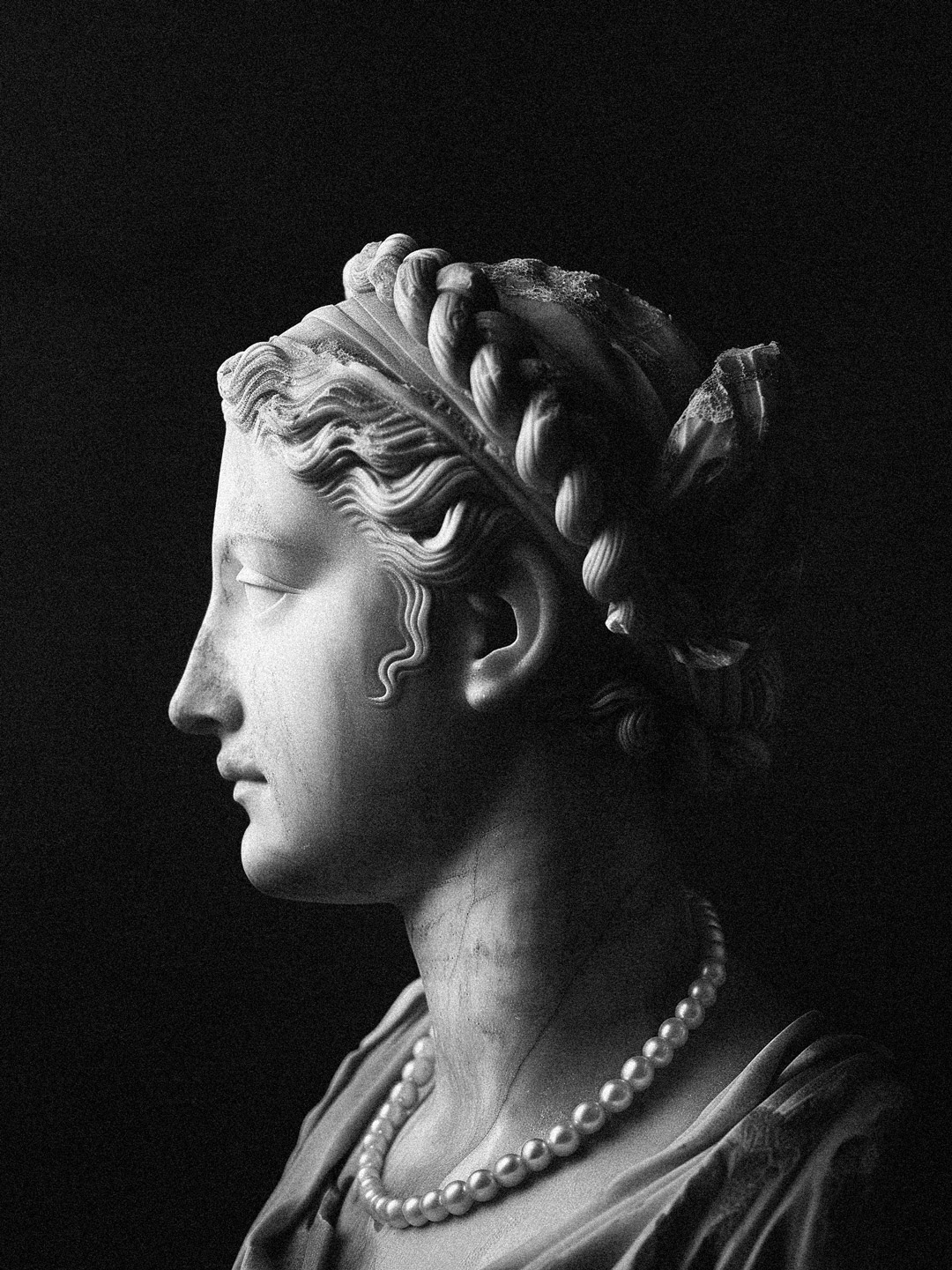
Sappho, spelled (in the dialect spoken by the poet) Psappho, (born c. 610, Lesbos, Greece — died c. 570 BCE). A lyric poet greatly admired in all ages for the beauty of her writing style.

Her language contains elements from Aeolic vernacular and poetic tradition, with traces of epic vocabulary familiar to readers of Homer. She has the ability to judge critically her own ecstasies and grief, and her emotions lose nothing of their force by being recollected in tranquillity.

Marble statue of Sappho on side profile.

Designed with WordPress