Tag: Linear B Tablets

  • Scripta Minoa: So-called Easy Fragments # 2: Knossos, Amnisos & Potnia. General Criteria for Interpretation of Fragments


    Scripta Minoa: So-called Easy Fragments # 2: Knossos, Amnisos & Potnia (Click to ENLARGE:)
    
    ALL 5
    
    To summarize the criteria we laid out in detail in the previous post, in general terms, the following conditions pertain to all fragments (not tablets!) regardless:
    
    1. There is no context by which to establish what sense or meaning the word or words (usually no more than 5 or 6 at most) actually are meant to convey.
    2. Almost all fragments are truncated on the left or right, making it practically (though not utterly) impossible to interpret whatever the cropped text is supposed to mean.
    3. But things are not quite so hopeless as it would at first sight appear. If the occurrences of all extant words beginning with a particular syllabogram in every Linear B dictionary now available online are relatively few, then we can predict that our translation has a 1 in nn chance, sometimes even as low as 1 in 10 or 10% of actually being the right translation.  
    4.Even where right hand truncation is the order of the day, sometimes there is only one interpretation. But here again, ambiguity of context frustrates once again. What on earth does the fragment in question tell us about (usually one single) word? In almost all instances, precisely nothing. 
    5. Ambiguities in grammatical construction further complicate matters.
    6. Scribes often (half) ERASE one or more syllabograms on fragments, almost always on the right side. This usuallly happens when a scribe simply erases the last (extraneous) character, which he never meant to write in the first place. On the other hand, he may be hesitating whether or not he should erase it, as will be illustrated in he next 2 posts.
    
    Our second example of 5 fragments: Scripta Minoa: So-called Easy Fragments # 2: Knossos, Amnisos & Potnia speak for themselves, or more accurately do not speak for themselves. I invite you to try and interpret each of the 5 fragments on your own. I am quite sure you will come up for air pretty quickly, feeling (somewhat or annoyingly) frustrated. For instance, who the blazes is Potnia? Look her up in almost any classical Greek-English dictionary and you are likely bound to hit a brick wall. Fortunately, our excellent companion, Liddell & Scott, comes to the rescue yet again (pg. 581), which is why any serious Linear B researcher should have this invaluable resource in his or her collection. I am not going to tell you who she is. I believe it is up to you to do your own research on this one, even if you have to go to the library.
    
    Things are going to get a lot messier from here on in!
    
    
    Richard
    
    
  • Scripta Minoa: So-called Easy Fragments # 1: Knossos & Amnisos. Do not be fooled!

    Scripta Minoa: So-called Easy Fragments # 1: Knossos & Amnisos (Click to ENLARGE:)
    
    ALL 4
    
    We now begin our long series of posts of some 2,000 of the approximately 3,500 tablets and fragments from Knossos, which Sir Arthur Evans published in his Scripta Minoa (Oxford University Press, 1952). The first 4 fragments you see here already amply illustrate some of the (sometimes intractable) problems faced by translators, especially when we have to deal with fragments. In general terms, the following conditions pertain to all fragments (not tablets!) regardless:
    
    1. There is no context by which to establish what sense or meaning the word or words (usually no more than 5 or 6 at most) actually are meant to convey. The last of the 4 in this table amply illustrates this problem. First of all, does the word “enereya” mean “operation or better still, industry”... possibly, even probably (by a stretch), but also probably not. And plenty of translators will contest my “translation”.
    2. Almost all fragments are truncated on the left or right, making it practically (though not utterly) impossible to interpret whatever the cropped text is supposed to mean. This is fully illustrated by the second fragment in this table.
    3. But things are not quite so hopeless as it would at first sight appear. If the occurrences of all extant words beginning with a particular syllabogram (in this case TE) in every Linear B dictionary now available online are relatively few, then we can predict that our translation, here = temenos (boundary) has a 1 in nn chance of actually being the right translation. Allow me to illustrate. In the two largest Mycenaean Linear B – English dictionaries now available online (the larger one in PDF format and over 260 pages long!), there are 6+17 = 23 instances of all extant words beginning the single syllabogram TE as the first syllable.  So let’s assume the ratio is 1/25 or about 4%. But wait. But only a very few of these words make any sense in fragment #2, and as it happens that number adds up to only: te = then, tekotones = carpenters, temeno = boundary or temple,teo(i) = god(s), temidweta = wheel with studs, tereta = official title of a tax collector or master of ceremonies, tetukuoa = well prepared or ready, teukepi = with implements, thereby reducing our chances of being “correct” to 1 in 7 according to this vocabulary. But let’s err on the side of caution, and say, 1 in 10, or 10 %, and that is a heck of a lot better than our initial calculation. Of course, I for one are more than willing to substitute any of the other 6 words above for “temenos”, because they all make sense in this admittedly very limited context, if you can even call it that. But, in fact, the collateral evidence I have just laid out makes it even probable that any of these 7 (or slightly more) interpretations fits the bill.
    
    But in the second example in this table the meaning is clear. It can only be Aminiso or Aminisoyo (genitive) or some such variant. So even where right hand truncation is the order of the day, sometimes there is only one interpretation. But here again, ambiguity of context frustrates once again. What on earth does this fragment tell us about Amnisos... Precisely nothing.
    
    5. Ambiguities in grammatical construction further complicate matters, as in fragment 1. Why is Konosoyo in the genitive and Rukitiyo (apparently) nominative? Why are these two places mentioned together? What is the association or link between them? We shall never know. Richard
  • KEY POST: my translation of Knossos Tablet KN RA 1548 = 3 finer quality swords… another tough nut to crack

    KEY POST: my translation of Knossos Tablet KN RA 1548 = 3 finer quality swords... another tough nut to crack: Click to ENLARGE:
    
    There are MAJOR problems with this post, all centred around the word, ariyete, which I now believe I have translated wrongly. As soon as I can clear up the problems, I will report the Tablet, KN RA 1548, and modify the text accordingly. I also invite any Linear B expert to catch me out on this one, as I am quite certain you will.  Apart from this tricky (sneaky) word, I believe the rest of the translation is accurate. 
    
    Translation KN RA 1548
    There are several noteworthy aspects to my translation of this very significant tablet from Knossos, which has been translated many times over. However, each translator has his or her own take on what the tablet signifies, and I am no exception. I researched every single word on the table very carefully before translating it, but the word which caused me the greatest grief was “ariyete”. What on earth was that supposed to mean? Once again, Liddell & Scott (1986 ed.) came to my rescue, as you can see on the tablet above. Some will say I am really going out on a limb with this interpretation, and actually I suppose I am. But as I have so often said before in this blog, and shall never cease to repeat, one has to take chances with translations of Linear B Tablets, which are often (to say the very least) ambiguous. Now let us turn to the map upon which I base my hypothesis for my translation. Click to ENLARGE:
    
    Eastern Mediterranean 1250-1150 BCE
    At least my translation has the elegance of being consistent within its ambit. The swords here are described as “finer”, and there are only 3 of them in inventory, further attesting to their quality. Moreover, the attribution of Median origin of manufacture is not such a far stretch of the imagination, since as the map itself clearly illustrates, the Medians were a migratory people at that time, and the word for the people described as “ariyete” on the tablet bears a more than passing resemblance to “Arzawa” on the map. I am not at all claiming that my translation is the “right” one, as there simply is no such thing in cases such as this, with Knossos KN RA 1548, which is about as ambiguous as you can get.
    
    While my literal translation is just that, literal, following the tablet word by word, what is my justification for my free translation?  Why do I insist that the 3 swords, which are made of Cyperus, have “chain-braided hilts”, rather than simply saying what the text clearly says, that they are “with chains” (dative plural)? I do so for two good reasons: (1) because if the swords were hung from chains (presumably shoulder straps), the poor blokes who wanted to attack with them would be killed themselves before they even got them off their shoulders! & (2) Bronze-Age swords were frequently adorned with chain-braided hilts, as you can see in these two examples: Click to ENLARGE:
    
    Bronze Age Sword inlaid with gold braid top & second example below
    
    We must recall at all times that the Minoan & Mycenaean scribes were very adept at using shorthand in transcribing their tablets, since the tablets were almost invariably very small. That is why a literal translation is quite unlikely to represent accurately what they really meant when they wrote out their tablets. It is for this reason, for instance, that the noun “kuperos” stands (in) for the adjective “kuperosiya”, which in fact would be feminine, were it to modify the noun, “pakana”. So why did the scribes use the noun instead of the adjective? The answer is apparent... to save space on the tablet. Minoan and Mycenaean scribes resorted to this ploy over and over on 100s, even 1,000s of tablets, so is it any wonder they would have done so on this tablet? 
    
    
    I welcome any and all observations, critiques and criticisms of this translation, however agreeable or, on the other hand, contrary or vexatious.
    
    
    Richard
    
    
  • Our First Anniversary has come and gone and now the time has come for the Consolidation of the Mission & Ultimate Goals of Linear B, Knossos Mycenae (2014-2018)

    Our First Anniversary has come and gone and now the time has come for the Consolidation of the Mission & Ultimate Goals of Linear B, Knossos Mycenae (2014-2018).
    
    In it first full year (May 2013-May 2014), our Blog has become the premier Linear B blog on the Internet, and for many sound reasons:
    
    1 In our first year, we designed and set up a Lesson Plan at 5 Levels (Levels 1 & 2, Basic), Level 3 (Intermediate) & Levels 4 & 5 (Advanced), which were specifically designed with the needs and tailored to the learning curve of each and every serious new student of Linear B, and of course, a review guide for students and researchers already familiar with Linear B.  All the vocabulary we introduced in these Lessons is attributed [A] vocabulary found on extant Linear B tablets. We have not quite finished with Level 5. 
    2 We introduced our new Theory of the Regressive-Progressive Construction of both Linear B Grammar and Vocabulary, a theory which is elegant in in its simplicity & which we believe is sound, viable and eminently logical to that end.
    3 We began reconstructing our all-new Progressive Grammar of Mycenaean Greek in Linear B, by building the first ever all-but complete tables for the indicative active voice of both thematic and athematic verbs in all of these tenses: present, future, imperfect, aorist and perfect. This was merely the first step in our long-term project to reconstruct as much of the corpus of Mycenaean Greek grammar as is feasible and practical.
    4 We began translating Book II of the Iliad, which exemplifies the most ancient alphabetical Greek in existence, and hence, serves as our reference point or as we say in French, notre point de repère, for the regressive reconstruction of missing Mycenaean vocabulary in Linear, which we designate as derived [D], as opposed to attributed [A] vocabulary found on extant Linear B tablets.
    5 We translated a number of Linear B Tablets, some of them simple, some of them of intermediate difficulty, and a few extremely complex ones, amongst which we count:
    
    BM 1910.04 232 (British Museum); Knossos: KNV 684 + Scripta Minoa pg 154: 217 N j 31, 218a KN 07, 222 Nk 224 Nk 06, 231 N k  04, 259 N k 21 & 264  N k 02 + Pylos: AE08, cc665, TA 641-1952 (Ventris) + FL 1994 (Heidelburg: Thomas C. Palaima) + Tosa Pakana (Total number of swords), Attendants & Millworkers tablets
    
     6 We made a few first tentative baby steps into the study of Linear A, which is however not a main goal of this blog, but merely ancillary. 7 We made a few first tentative baby steps into the study of Arcado-Cypriot Linear C, the most ancient Greek script, also Linear, after Linear B, which is a major project of this blog. See more below in the Table Linear B, Knossos & Mycenae:  CONSOLIDATION 2014-2015. 8 We began to investigate the 3.5 K + tablets & fragments in Sir Arthur Evan’s Scripta Minoa & soon came to the realization that a massive effort at translating at least 50 % of these must be undertaken, if we are to further our understanding of Linear B beyond the bounds of present-day knowledge. Those were our targets for our first year and 1 month of our Blog, and we met them handsomely. However, up until now, threads of our goals and projects have been posted willy-nilly throughout the blog, and this has now to change, as it is time for us to CONSOLIDATE, and expound in the clearest possible ways the specific distinct goals, projects as well as the overall mission of our Blog throughout the remainder of 2014 and to the end of 2015 at least. Linear B, Knossos & Mycenae: CONSOLIDATION 2014-2015 & Beyond: Click to ENLARGE: Mission Consolidation Mycenaean Linear B & Arcado-Cypriot Linear C & Idalion Tablet 
  • The Linear B “Attendants” Tablet – a Tough Nut to Crack!

    The Linear B “Attendants” Tablet – a Tough Nut to Crack! (Click to ENLARGE):
    
    linear-b-attendants-tablet-apiqoro-kowa-kowo-ta2
    This has got to be one of the most difficult Linear B tablets to decipher, not because most of it isn't all that hard to translate, but for that last syllabogram TA, which I am sure must have stumped practically everyone who has ever tried to tackle it.  However, upon consulting the most comprehensive Linear B Glossary on the Internet, A Companion to Linear B, Mycenaean Greek Texts and their World [Bibliothèque de lInstitut linguistique de Louvain ― 127 (2011)]  I discovered, to my utter astonishment, the two entries you see flagged just under the tablet itself in this post, TAPA EOTE, which is in early ancient Greek, tapa\ e1ontej. What we need to understand in this context is that the Linear B scribes frequently used abbreviations to save valuable space on what were, after all, (very) small tablets. For instance, on the Heidelberg Tablet HE FL 1994, the scribe has used the single syllabobgrams KO PA & MU to stand in for KONOSO, PAITO & MUKENE respectively, thereby saving a great deal of space. I shall be translating this fascinating tablet as well sometime in April or May. Another reason why I believe we can lend credence to my translation is this: attendants actually do appear on Minoan frescoes, such as this one from Knossos (Click to ENLARGE):
    
    Minoan_procession_fresco_crete_Knossos
    My explanatory commentary below goes a long way to clarifying and lending further credence to my decipherment. So unless you actually read the commentary, you will not get a full grasp on the decipherment.     
    
    We notice that in the fresco above, the one woman, almost certainly a priestess has 7 attendants, all male, which might go some way to explaining why there are 41 attendants for only 32 people. If for instance the priestess in a procession of 32 people has, as in the fresco we see here, 7 attendants, and everyone else coming up the rear has 1 attendant, for a total of 38 attendants, the total is very close to the 41 given on this tablet.  But it is also possible that the priestess would have an acolyte following right behind her, and if her acolyte were to have 3 attendants, we would then have our 41. Of course all this is pure conjecture on my part, but the possibility still remains, and at any rate we cannot conjecture how many attendants would follow in a particular procession, as processions were probably held very often at Knossos, Chania, Mycenae, Pylos and other Mycenaean centres for different festivals. All ancient cities without exception held frequent festivals, which were almost all religious in nature, festivals for the city's patron goddess, for spring sowing and autumn reaping of crops, feasting festivals for the "wanaka" or King and his Queen, and in the case of Knossos and the Mycenaean fortress towns, for the Snake Goddess of fertility, without whom the population would not have been well replenished... at least for the Minoans and Mycenaeans.
    
    Another equally feasible interpretation for some festivals at least, is that many of the attendants would have been musicians, just as in the fresco above, where we see a lyre player on the left and/or libation bearers, such as the 1 on the right in this fresco holding a rhyton, probably filled with mead or wine. So if that were to be the case, and 31 people had 1 attendant each, that would leave, for instance, possibly 4 musicians and 6 libation or "cup bearers"(again giving a total of 41 as in this case). Processions proliferate on Minoan/Mycenaean frescoes... and the number of attendants would have surely varied widely, depending on the type of festival. Of course, we shall never really know, as the extensive research into Minoan/ Mycenaean festivals to date has never been able to shed sufficient light on the arcane "mysteries" of Minoan/Mycenaean religious rites, processions and festivals, nor is it likely that future research will get much further, barring the unearthing of a considerable number of new tablets dealing specifically with religious matters.
    
    Still, I feel quite confident that I have come up with a sound decipherment of the final syllabogram TA on the Linear B “Attendants” Tablet, but I would love to receive feedback from any and all researchers into Linear B tablets concerning other equally feasible interpretations of that pesky little syllabogram.
    
    CAVEAT:
    
    On the other hand, this translation crams an awful lot of significance into one pesky syllabogram, TA. The solution could be a lot simpler. So if I can come up with any alternative simpler decipherment(s), I will let you all know. One should never take anything for granted. 
    
    Richard
    
    
  • A Closer Look at Sir Arthur Evans’ Attempts at Deciphering Certain Linear B Syllabograms (Part 2)

    A Closer Look at Sir Arthur Evans' Attempts at Deciphering Certain Linear B Syllabograms (Part 2) [Click to ENLARGE]:
    
    Sir A0rthur Evans Scripta Minoa Syllabograms Decipherment AB 35 38 51 56 57
    
    These are the observations Sir Arthur Evans makes on the syllabograms and homophones Michael Ventris et al. were eventually to correctly decipher as:
    
    Linear B:
    
    PA2     Previously thought to be a homophone, actually the syllabogram QA, which can be difficult to distinguish from...
    QO	also a syllabogram on Linear B tablets, due to the variable “handwriting” of various scribes
    SE	which, being practically identical to Cypriot SE, has the same value. 
    RA	which Evans correctly correlated with Cypriot LI (in the same syllabic series)
    YU	(or JU) versus DU which Evans once again correctly differentiates
    ZA	 which he knows perfectly well is equivalent to the Egyptian hieroglyph ANKH.
    
    All of these insights were to prove invaluable to Alice Kober, Michael  Ventris et al., in the eventual decipherment of Linear B. I will be making further observations on Sir Arthur Evans' ground-breaking research later this month and in coming months, whenever and wherever they cast light on particular aspects of the eventual decipherment of Linear B.
    
    Richard
  • Sir Arthur Evans’ Tentative (& Amazingly Correct) Decipherment of 6 Linear B Syllabograms

    Sir Arthur Evans' Tentative (& Amazingly Correct) Decipherment of 6 Linear B Syllabograms:
    
    Sir Arthur Evans spent years and years methodically and meticulously recording the contents of some 4,000 Linear A & Linear B tablets he unearthed at the site of Knossos between 1900 and 1903, and then again, years later, after the First World War, when it was possible to return to the site, and continue with the painstaking, indeed mind-boggling, task of not only inventorying all those tablets, but cataloguing them by categories, according to their contents, which he correctly took to be accounting records, and even transcribing, character by character, syllabogram by syllabogram, ideogram by ideogram, the texts of every single one of these thousands of tablets.
    
    Not only was Sir Arthur Evans reasonably convinced that a great many of the Linear B syllabograms were directly derived from their ancestors, the corresponding Linear A syllabograms, had the exact same values both scripts, he was (as it turns out) perfectly right in that assumption.
    
    But what is even more remarkable is this: Sir Arthur Evans (amazingly!) was able to tentatively identify the possible Linear B values of 6 syllabograms, with a remarkable degree of accuracy, even in the face of the total absence of any corroborating evidence that could have possibly lead him to the (seemingly) most preposterous conclusion that there was, in fact, any conceivable link, however tenuous or solid, between the Cypriot Script (Linear C), which had already previously been deciphered in the nineteenth century as being Greek by the brilliant cryptographers G. Smith, thanks to his discovery of a Phoenician-Cypriot bilingualinscription found at Idalium, the Egyptologist Samuel Birch(1872), the numismatist Johannes Brandis (1873), the philologists Moritz Schmidt, Wilhelm Deecke, Justus Siegismund (1874), and the dialectologist H.L. Ahrens (1876).  See Wikipedia for the fascinating history of this extremely important syllabary.
    
    It was later to turn out that there is in fact a very tight correlation between Linear B and its offspring Linear C, as we shall gradually discover in greater detail throughout 2014, even though the actual syllabograms in Linear B and Linear look completely different.  But looks can be (very) deceptive, and in the case of Linear B and Linear C, they most certainly are.  Never judge a book by its cover.  And there is much more to this remarkable correlation between the Linear B and Linear syllabic scripts than you can possibly imagine (unless of course you have).  The striking similarity of Linear B and Linear C is in fact no accident, and as I shall demonstrate later this year, the fact that Linear C is Greek provesbeyond doubt that Linear B likewise is Greek, and can be nothing else. 
    
    These are the 6 Linear B syllabograms which Sir Arthur Evans, even on the tentative basis he was forced to espouse, correctly identified in his Scripta Minoa.
    
    Cypriot		= Linear B
    TA			   DA * 	
    LA			   RA **	
    LO			   RO **
    PA			   PA
    PO			   PO ***
    SE			   SE
    
    as illustrated in this Table (Click to ENLARGE):
    
    Cypriot syllababary as deciphered by Markus_egetmeyer_le_dialecte_grec_ancien_de_chypre Cypriot Linear C values = Linear B
    
    * While Linear B has both a D + vowel and a T + vowel series of syllabograms, Cypriot (Linear C) has no D series; so once again, Cypriot TA, which looks exactly like Linear B DA, is in fact the “same” syllabogram.  But bear in mind that Linear B also has T series, and so it makes a clear distinction between the D & T series.   
    
    ** These syllabograms are in fact identical, since Linear B always used RA & RO to represent both LA & LO + RA & RO, while Cypriot has it the other way around, using LA & LO to represent both LA & LO + RA & RO.  I believe I know why.  Just as the Japanese are unable to pronounce what we term a “pure l” or a “pure r”, but pronounce something in between the 2 semi-vowels L & R, which are almost identical anyway, so also – or at least it appears so –  neither the Mycenaeans (1500-1200 BCE) nor the Cypriots after them (1100 BCE) were able to quite make up their minds whether their identical syllabograms were pronounced one way or the other, which is not a problem to the linguist.  For if we look at it the other way around, from the Japanese point of view, it is they who are pronouncing the separated (or more accurately split) semi-vowels we call L & R in the Occident as the one single semi-vowel, which is precisely what it is to them.  So who is right?  Both.  The Occidental view that these are two (split) almost identical semi-vowels holds water; but so does the reverse for the Oriental Japanese, who do not see L & R as split, but as one semi-vowel in and of itself, which only sounds like “rl” to us in the West.  It strikes the Japanese as just as funny to hear two separate semi-vowels R & L, when there is clearly only 1 for them, just as it strikes us as strange to hear one when we expect 2.  But who is “right”?  
    
    *** While the syllabogram for PO is vertical in Linear B, and appears to be slanted about 30% to the right in Cypriot, this apparent difference is merely that and nothing more, only apparent, because the “penmanship” or “scratchmanship” if you like, of Linear B and Linear C scribes, like handwriting in any alphabetic script, varies widely from one individual to the next.  We can sometimes (though not too often) see PO incised slanting to the right  by some renegade Linear B scribes, while the same phenomenon occurs in reverse in Linear C. While most Cypriot scribes slanted PO to the right, you can just count on it, some (though only a few) went their merry way and transcribed it as we usually (but not always) see it on Linear B tablets.  To each his or her own, eh?
    
    Evans also made highly intuitive, soundly-researched, but (as we know now, but only after Michael Ventris finally figured it all out when he did decipher Linear B in 1952) “incorrect” guesses for:
    
    NA
    TI
    ZA 
    
    which I will explain in detail in the next post. 
    
    CONCLUSION: we are not really entitled, at least to my mind, to retrospectively judge Evans' attempts at decipherment Linear B syllabograms as amateurish or anything other than brilliant, because, as I have already stressed he had absolutely nothing to work with. No bilingual tablets with either Linear A or Linear B and a known ancient language has ever been found (yet). So he had to simply grope around in the dark like a blind man. His accomplishments speak volumes to his genius.  These were (and remain):
    
    1 his history-making archeological find and meticulous reconstruction of the ancient Palace of Knossos;
    2 the gargantuan task of cataloguing and transcribing some 4,000 tablets in both Linear A & Linear B, without which the research of Alice Kober (1906-1950) and Michael Ventris (1922-1956) would have been quite simply impossible;
    3 his successful decipherment of both the Linear A & Linear B accounting systems, which are not quite identical, the latter being an outgrowth of the former;
    4 and his successful guesses, which he had no choice but to make intuitively, at the then tentative (and unverifiable) values of 6 of the 59 or so basic syllabograms, which is after all 10 % of the whole.  Once again, how far could Alice Kober and Michael Ventris have come without Evans' ground-breaking work on decipherment?  I leave it to answer this question for yourself, but as for myself, you all know where I stand.  My 4 conclusions make that perfectly clear.
    
    And there is more, as we shall soon see in our further investigation of Evan's brilliant insights early in February. Keep posted.
    
    Richard
  • Sir Arthur Evans’ successful decipherment of the Numeric Accounting System in Linear B:

    Sir Arthur Evans‘ successful decipherment of the Numeric Accounting System in Linear B (Click to ENLARGE):

    Scripta Minoa Arthur Evans Numerics pp. 51-52

    as published in Scripta Minoa (Oxford University Press, 1952), the very same year that Michael Ventris finally deciphered the entire Linear B syllabary as well as a large number of its ideograms. Sir Arthur Evans had, of course, deciphered the numeric system years before.

    SCRIPTA MINOA Oxford 1952

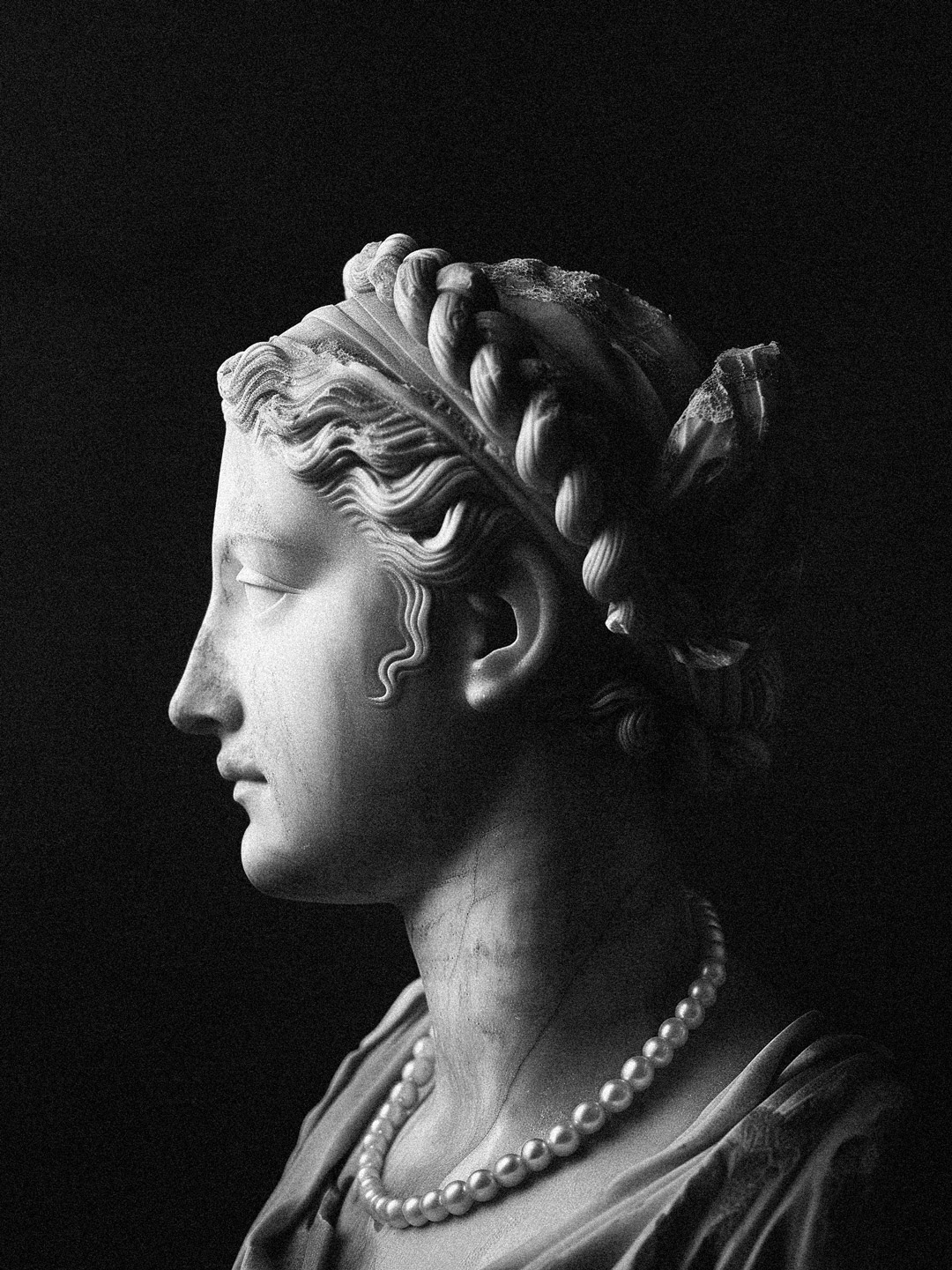
Sappho, spelled (in the dialect spoken by the poet) Psappho, (born c. 610, Lesbos, Greece — died c. 570 BCE). A lyric poet greatly admired in all ages for the beauty of her writing style.

Her language contains elements from Aeolic vernacular and poetic tradition, with traces of epic vocabulary familiar to readers of Homer. She has the ability to judge critically her own ecstasies and grief, and her emotions lose nothing of their force by being recollected in tranquillity.

Marble statue of Sappho on side profile.

Designed with WordPress