Tag: LinearB

  • Translation of the Silver Spoon Inscription in Linear C, “Clotho, the Spinner” at the British Museum

    Translation of the Silver Spoon Inscription in Linear C, “Clotho, the Spinner” at the British Museum: Click to ENLARGE
    
    spoon amusekatateteketaitioitakolokiai
    

    This is a truly difficult inscription to translate. In the first place, we cannot be sure that the subject is a person actually called “Ammus”, a name, apparently Egyptian, which sounds suspiciously like that of the Egyptian deity Amun Ra, King of the gods, god of the wind and patron deity of Thebes, who rose to prominence in the 11th. dynasty in the twenty-first century BCE (ca.  4,200 years ago): Click on the image of Amun-Ra for the Wikipedia article on him:

    Amun Ra

    It is also abundantly clear that the Linear C syllabary, which was frequently used alongside the Arcado-Cypriot dialectical Greek alphabet, had made huge strides over Mycenaean Linear B, especially by the 6th. century BCE, when the inscription you see on this spoon was composed. As for the silver spoon itself, the inscription appears only in Linear C; so it is impossible to cross-correlate with an equivalent in the Arcado-Cypriot Greek alphabet. Had there been a version of this inscription in alphabetic Greek, we would have been certain of an unequivocal, indisputable translation of the text on this silver spoon. As it stands, with the inscription appearing only in Linear C, we are left to our best devices. The translation you see here is my own interpretation, and is at least in part subject to dispute. As you can see, I have interpreted the verb as the Arcado-Cypriot aorist middle corresponding to the same tense of the Attic Greek verb, kathisteimi. I had serious problems interpreting the last word in the sentence, but I finally settled on what I suspect is probably the Arcado-Cypriot dative singular for the Attic name of the Muse, Clotho, the youngest of the three Fates or Moirai, the same who spun the thread of life: click to ENLARGE her image

    Clotho by William Russell Smith 1880-1969 Scottish

    Structural and Grammatical Considerations:

    It is immediately obvious to anyone familiar with ancient Greek dialects contemporaneous with the 6th. century BCE Ionic and Attic, that Linear C had made huge strides over the much older Mycenaean Linear B syllabary. First off, the Linear C syllabary was from the outset in the 11th. century BCE, structurally much simpler than Linear B, having abandoned once and for all time all logograms and ideograms characteristic of both Minoan Linear A & Mycenaean Linear B. Linear C is simply a syllabary and nothing more. Grammatical Considerations: While we can be pretty much certain that the earliest Arcado-Cypriot documents in Linear C could not possibly have made use of the definite article, the typical later ancient Greek construction of a verb + ta (these things) in the neuter plural, the advanced dative singular with the definite article or the use of the definite article preceding names of gods and abstract words, all of these characteristics are firmly in place on this tablet, which was after all composed in the sixth century BCE, some 500 years after the first appearance of Linear C on the scene.

    These developments are extremely significant. In the first place, even if we did not know the precise dating for this inscription, we would still know that it had to have been written no earlier than the sixth century BCE, since all of the grammatical elements we have flagged in the notes on the tablet above only appeared in ancient Greek (regardless of dialect) from that century onwards. The telltale signs for this dating are:

    (a) Whereas in Mycenaean Linear B it is not possible to clearly identify the gender of the nominative singular for nouns which are either masculine or neuter, such is not the case in Linear C. All nouns of any gender end in “se” in the nominative singular.

    (b) the use of the definite article twice in the same inscription. The definite article never appeared in early Greek writings, not even in the Iliad and the Odyssey of Homer.

    (c) Radically unlike texts on in Mycenaean Linear B, inscriptions in latter-day Linear C not only sported the definite article, but made frequent use of the typical Ionic-Attic verbal construction of a verb (in any tense) + the definite article in the neuter plural (ta) to denote abstract constructions, i.e. abstract thought. Abstractions are almost totally absent from Mycenaean Linear B tablets.

    (d) Finally, the dative singular, again used with the definite article for the names of gods & goddesses, city names and the like, was a huge leap forward from equivalent constructions in the dative singular on tablets in Mycenaean Linear C, where it is often difficult at best even to identify the dative singular, let alone distinguish it from the nominative singular. The same holds true for the nominative and dative plural, and indeed for all the cases. It is easy to isolate cases in Arcado-Cypriot Linear C, not only because the syllabary clearly demarcates them, but also because the definite article frequently appears in all cases. The same can scarcely be said of tablets or inscriptions in Mycenaean Linear B, in which the cases are all too often ambiguous, making it difficult to determine which is subject, which is direct and which is indirect object. Note that in the last instance of the dative singular on the silver spoon, I have translate the Greek for – the = + the feminine dative sing. of the number one as: for the one and only, because – miai – uncharacteristically follows the noun, i.e. the name of the muse, Clotho, adding extra emphasis to it.  Although she is only one of the three Fates or Moiroi, she is in her own right the one and only of her kind. An earlier translation of this tablet which I found on the Internet tells us that the dedication is to the Golgian goddess, whoever that is supposed to be. Yet my own translation makes much more sense, given the century in which this inscription was composed, the 6th. cent. BCE, when the Three Fates or Moiroi were familiar fare to Greeks everywhere.      

    The only case which is clearly demarcated in Linear B is the genitive, which appears as “oyo” in the masculine singular, “oya” in the feminine singular & “isi” in the plural. Otherwise, we are left to our own devices. The same cannot be said of inscriptions in Linear C, unless they are very early. There is only one such inscription that I know of, which I have already translated, dating from the eleventh century BCE. The Profound Implications of Cross-Correlation of Equivalent Vocabulary in Mycenaean Greek Arcado-Cypriot: All other extant inscriptions in Arcado-Cypriot Linear C date from the sixth to the fourth centuries BCE. Of these, the extremely long Idalion Tablet, an official decree, leaves little or no room for doubt with respect to the grammatical clarity or the vocabulary of documents written in the Arcado-Cypriot dialect. The vocabulary of such inscriptions cannot be in doubt in those instances where the inscription exists both in Linear C and in the Arcado-Cypriot alphabet, as is the case with the Idalion tablet. The vocabulary on that tablet cannot be interpreted as meaning anything other than what it says in the alphabetic version, leaving no room for alternative interpretations in the Linear C version.

    This fact alone has immense implications for tablets and inscriptions in Mycenaean Linear B, on which there appears any word which has an exact or nearly equivalent Linear C version. In such cases, the meaning of the Mycenaean word equivalent to its Arcado-Cypriot counterpart is relatively fixed, once and for all. Once put into practical application, this development will have a profound impact on the interpretation of many Mycenaean words which have (near) exact equivalents in Arcado-Cypriot, leaving little or no room for interpretations of their meanings, and effectively invalidating such interpretations where they clearly clash with their Arcado-Cypriot equivalents, either in Linear C or in the Arcado-Cypriot Greek alphabet. Recall that these two dialects are far more closely related than any other ancient Greek dialects, even the Ionic and Attic. Once you know and accept this fact, it becomes next to impossible to deny the evidence of Arcado-Cypriot words for which there are (exact) equivalents in Mycenaean Linear B. We intend to carry this hypothesis to its logical terminus, settling once and for all at least some of the disputes that have occurred over the “meanings” of a number of Mycenaean Greek words since the decipherment of the syllabary by the genius, Michael Ventris, in 1952-1953. Any word which says what it clearly says in Linear C or in the Arcado-Cypriot alphabet must almost certainly mean (almost) precisely the same thing in Mycenaean Greek. A rose is a rose is a rose.

    Richard 

  • Significant Phonetic Variations in the Pronunciation of the L & R + Vowel Series as Reflected in the Linear B & Linear C Syllabaries

    Significant Phonetic Variations in the Pronunciation of the L & R + Vowel Series as Reflected in the Linear B & Linear C Syllabaries 
    
    Comparison of the Mycenaean Linear B & the Arcado-Cypriot Linear C Syllabaries: Click to ENLARGE
    
    Mycenaean Linear B & Arcado Cypriot Syllabaries compared
    
    Where the phonetic values of the syllabogram series R + vowel series (the L series missing in Linear B) do sound somewhat different in the two syllabaries, Linear B & Linear C, there is in fact a very sound phonetic reason for this.
    
    But first, let me tell you a little story. If there were such a thing as time-travel into the past or the future, modern Greeks from Athens travelling back to the city in 500 BCE would indeed be shocked at how Greek was pronounced then. Ancient Greeks thrust into the future would have the same reaction – utter disbelief. I myself put this hypothesis to test while I was in Greece in May 2012. I could read modern Greek fairly well even then. But when I tried to communicate with some folks I met in a restaurant with my own plausible version of the ancient Attic dialect (there are actually 3 or 4 possible versions), no-one could understand scarcely a word I spoke. And when I asked my colleagues to speak modern Greek to me, I was equally at a loss. But I could read the menu with no problem.          
    
    Moving on then.
    
    Although the Mycenaean Greeks were apparently unable to pronounce the letter “L”, nothing in fact could be more deceptive to the unwary Occidental ear. It all comes down to a matter of our own ingrained linguistic bias in our own social-cultural context. To us, the Arcadians & Cypriots indeed appear to have already made the distinction between L & R, given that their syllabary contains syllabograms consisting of both of these consonants (L & R) followed by vowels. But I stress, to us, we cannot be sure how they pronounced L & R, or to what extent they had by then become phonetically separate. Looking at the Linear C Syllabary, you can see the distinction right away. See above.
    
    Now some of you may already be aware of the “fact” that to our ears in the West, the Japanese seem utterly incapable of pronouncing either L or R, but appear to be pronouncing something half-way between the two, which sounds like mumble-jumbo to our ears. Since the Linear B syllabary has no L + vowel series of syllabograms, the Mycenaeans too might have conflated L and R into one consonant in a manner similar to the way the Japanese pronounce it, at least in the early days of the Mycenaean dialect (possibly from 1450-1300 BCE). On the other hand, since the Arcadians and the Cypriots had apparently already made the distinction between L & R from as early as 1100 BCE, their immediate forebears, the Mycenaeans, might have already been well on the road to being able to pronounce L & R distinctly as consonants by 1300-1200 BCE, although they still may have been confusing them from time to time. However, they probably could see no point in adding an L + vowel series such as we see in Arcado-Cypriot Linear C, given that they had already used the Linear B syllabary for at least 2 and half centuries (ca 1450 – 1200 BCE). I am inclined to accept this hypothesis of the gradual emergence of L & R towards the end of Linear B's usage ca. 1200 BCE, in preference to a hypothetical Japanese-like pronunciation based on the assumption that the L+R concatenation is a merging of L & R as semi-consonants. Still, either scenario is perfectly plausible.
    
    Allophone English speakers invariably find the pronunciation of L & R in almost all other Occidental languages (French, Spanish, Italian etc.) much too “hard” to their ears. This is because the letters L & R in English alone are alveolars, mere semi-consonants or semi-vowels, depending on your perspective as an English speaker, which is in turn conditioned by the dialect you speak. There are some English dialects in which the letter R is still pronounced as a trilled consonant, but for the most part, allophone English speakers pronounce both L and R very softly – at least to the ears of allophones from other European nations. Practically all other modern European languages trill the letter R, making it a consonant in their languages. But not English. This is due to the “Great Vowel Shift” which occurred in the fourteenth and fifteenth centuries in English, whereby the earlier trilled R was abandoned in favour of the much softer semi-consonant or semi-consonant R we now use in English. For this reason and others besides, English alone of the Germanic languages is not guttural at all. At the same time, L, which had previously been pronounced just as in other European languages, became a semi-consonant.
    
    You can put this to the test by pronouncing either letter aloud, paying close attention to where you touch the interior of your mouth with your tongue. Your tongue will instantly feel that the semi-consonant L scarcely makes any contact with any firm area of the mouth, but is pronounced almost the same way the vowels are – almost, but not quite. On the other hand, R, which is a true semi-vowel, at least in Canadian and American English, does not make any contact with any firm part of the mouth, in other words, it is pronounced just as the vowels are – no contact. So it really is a vowel. But English scholars and linguists in the sixteenth century could see no point in changing R to a vowel, any more than the Mycenaeans could be bothered with a new series of syllabograms beginning with L.      
    
    But it matters little, if at all, whether or not we pronounce L & R as semi-consonants or semi-vowels, as in English, or as separate consonants as in the other European languages, since we all pronounce them as distinct letters. This ingrained linguistic bias greatly colours our perceptions of how others pronounce the “same” letters, if indeed they are the same at all. So it all boils down to just one thing: it all depends on your socio-culturally conditioned perspective as a speaker of our own language.
    
    This state of affairs leaves me forced to draw the inescapable conclusion that to the Japanese it is we who have made a mess of things by separating the pronunciation of L & R, which sound identical to their ears, in other words as one consonant (which is neither a semi-consonant nor a semi-vowel). To assist you in putting this into perspective, consider the Scottish pronunciation of the letter R, which is also clearly a consonant, and is in fact the pronunciation of R before the Great Vowel Shift in Middle English. This is not to say that the Scottish pronounce their consonant R anywhere near the way the Japanese pronounce their single consonant, to our ears an apparent conflation of our two semi-consonants L & R.    
    
    Again, the whole thing comes down to a matter of linguistic bias based on the socio-cultural conditions of two very distinct meta-cultures, Occidental and Oriental. In that context, the languages in their meta-classes (Occidental versus Oriental) are symbolic of two entirely different perspectives on the world. Need I say more?
    
    In conclusion, it is extremely unwise to draw conclusions for phonetic distinctions between the socio-culturally “perceived” pronunciation of any consonant or any vowel whatsoever from one language to another, especially in those instances where one of the languages involved is Occidental and the other is Oriental. The key word here is “perceived”. It is all a question of auditory perception, and that is always conditioned by the linguistic norms of the society in which you live.
    
    This still leaves us up in the air, so to speak. How can we be sure that the Mycenaean Greeks apparently could not pronounce their Ls “properly” (to be taken with a grain of salt). We cannot. Since we were not there at the time, our own linguistic, socio-cultural biases figure largely in our perception of what the so-called “proper” pronunciation was. If we mean by proper, proper to themselves, that is an altogether different matter. But what is proper to us was almost certainly not proper to them, of that we can pretty much rest assured. The same situation applies to every last ancient Greek dialect. What was proper pronunciation and orthography to the Dorian dialect most certainly was not for the Arcado-Cypriot dialect any more than it was for Attic Greek. To be perfectly blunt, we cannot ever be quite sure how anyone in ancient Greek pronounced their own dialect of the language, again because we weren't there.
    
    Richard
    
    
  • An Easy Guide to Learning Arcado-Cypriot Linear C & I mean easy!

    An Easy Guide to Learning Arcado-Cypriot Linear C & I mean easy!: Click to ENLARGE
    
    Arcado-Cypriot Linear c Syllaqbograms Levels 1-4
    If any of you out there have already mastered either Minoan Linear A or Mycenaean Linear B or both, Arcado-Cypriot Linear C is likely to come as a bit of a shock. Although the phonetic values of the syllabograms in Linear C are identical to their Linear B counterparts, with very few exceptions, the appearance of Linear C syllabograms is almost always completely at odds with their Linear B counterparts, again with very few exceptions. If this sounds confusing, allow me to elucidate.
    
    A: Appearance of Linear B & Linear C Syllabograms. Linear C syllabograms look like this. If you already know Linear B, you are probably saying to yourself, What a mess!, possibly even aloud. I can scarcely blame you. But courage, courage, all is not lost. Far from it. Click to ENLARGE:
    
    Linear C syllabograms 2014 
    Only the following syllabograms look (almost) alike in both Mycenaean Linear B & Arcado-Cypriot Linear C [see (a) below]:
    
    NA PA TA * SE * LO * PO *
    
    * There is a slight difference between those syllabograms marked with an asterisk *
    
    DA in Linear B is identical to TA in Linear C because Linear C has no D + vowel series, but uses the T + vowel series instead.
    SE in Linear B has 3 vertical strokes, whereas in Linear C it has only 2.
    RO in Linear B is identical to LO in Linear C. While Linear C has both and R + vowel series, it uses the L + vowel series as the equivalent of the Linear B R series.
    PO stands vertically in Linear B, but is slanted about 30 degrees to the right in Linear C.
    
    All other syllabograms in these two syllabaries are completely dissimilar; so you might think you are on your own to learn the rest of them in Linear C. But in fact, you are not. I can help a lot. See below, after the section on the Phonetic Values of Linear B & Linear C Syllabograms.
    
    B: Phonetic Values of Mycenaean Linear B & Arcado-Cypriot Linear C Syllabograms:
    
    Here the reverse scenario applies. Once you have mastered all of the Linear C syllabograms by their appearance, you can rest pretty much assured that the phonetic values of almost all syllabograms in both syllabaries are identical, with very few exceptions. Even in those instances where their phonetic values appear not to be identical, they are in fact identical, for all intents and purposes. This is because the ancient Greek dialects were notorious for wide variations in pronunciation, ergo in orthography. Anyone at all familiar with ancient Greek dialects can tell you that the pronunciation and spelling of an identical document, were there ever any such beast, would vary markedly from, say, Arcado-Cypriot to Dorian to Attic alphabetic. I can hear some of you protest, “What do you mean, the Arcado-Cypriot alphabet? I thought the script for Arcado-Cypriot was the syllabary Linear C.” You would be only half right. In fact, the Arcadians and Cypriots wrote their documents either in Linear or in their version of the ancient Greek alphabet, or in both at the same time. This is the case with the famous Idalion decree, composed in the 5th. Century BCE: Click to ENLARGE
    
    Idalion Tablet Facsimile Cyprus
    The series of syllabograms beginning with the consonant R + any of the vowels A E I O & U is present in Mycenaean Linear B.  However, the series of syllabograms beginning with the consonant L + any of the vowels A E I O & U is entirely absent from Mycenaean Linear B, while Arcado-Cypriot Linear C has a series of syllabograms for both of the semi-consonants L & R. It rather looks like the Arcadians & Cypriots had already made the clear distinction between the semi-vowels L & R, firmly established and in place with the advent of the earliest form of the ancient Greek alphabet, which sported separate semi-vowels for L & R.
    
    Likewise, the series of syllabograms beginning with the consonant Q + any of the vowels A E I & O is present in Mycenaean Linear B, but entirely absent from Arcado-Cypriot Linear C. Conversely, the series of syllabograms beginning with the consonant X + the vowels A or E (XA & XE) is entirely absent from in Mycenaean Linear B, but present in Arcado-Cypriot Linear C.
    
    For the extremely significant socio-cultural linguistic explanation for this apparent paradox (I say, apparent, because it is in fact unreal), we shall have to defer to the next post.
    
    WARNING! Always be on your guard never to confuse Linear B & Linear C syllabograms which look (almost exactly) alike – the sole exceptions being NA PA TA SE LO & PO, since you can be sure that their phonetic values are completely at odds.
    
    Various strategies you can resort to in order to master Linear C fast!   
    
    (a) The Linear B & Linear C syllabograms NA PA TE SE LO & PO are virtually the same, both in appearance and in pronunciation.
    (b) Taking advantage of the real or fortuitous resemblance of several syllabograms to one another &
    (c) Geometric Clustering: Click to ENLARGE
    Similarities in & Geometric Clustering of Linear C Syllabograms
    What is really astonishing is that the similarities between the syllabograms on the second line & their geometric clustering on the third are identical! So no matter which approach you adopt (b) or (c) or both for at least these syllabograms, you are a winner.
         
    Failing these approaches, try
    (d) Mnemonics: For instance, we could imagine that RO is a ROpe, PE = Don’t PEster me!, SA = SAve $, TO is TOFu etc. or we could even resort to
    (e) Imagery! For instance, we could imagine that A E & I are a series of stars, RI NI & KE all look like variations on the letter E, that LE is the symbol for infinity, WE is an iron bar etc. For Mnemonics & Imagery, I am not suggesting that you follow my own arbitrary interpretations, except perhaps for LE, which is transparent. Take your imagination where it leads you.
    Finally (f) the really great news is that the Linear C syllabary abandoned homophones, logograms and ideograms, doing away with them lock-stock-and-barrel. This should come as no surprise to anyone familiar with the Minoan Linear A & Mycenaean Linear B syllabaries. The first had so many syllabograms, homophones, logograms and ideograms that it can be a real pain in the butt to learn Linear A. Mycenaean Linear B greatly simplified the entire mess, reducing the number and complexity of syllabograms & homophones, but unfortunately retaining well over a hundred logograms and ideograms, which are equally a pain in the you know what. In other words, the process of greater and greater simplication was evolutionary. This phenomenon is extremely common across the spectrum of world languages. 
    
    What the Linear C scribes agreed upon, the complete elimination of anything but syllabograms, was the last & greatest evolutionary phase in the development of the Minoan-Greek syllabaries before the Greeks finally reduced even Linear C to its own variable alphabet of some 24-27 letters, depending on the dialect. But even the 3 syllabaries, Linear A, B & C, all had the 5 vowels, A E I O & U, which already gave them an enormous advantage over almost all other ancient scripts, none of which had vowels, with the sole exception of Sanskrit, as far as I know. That alone was quite an achievement. If you have not yet mastered the Linear B syllabary, it goes without saying that all of these techniques can be applied to it. The same goes for the Minoan Linear A syllabary, though perhaps to a lesser extent.
    
    The Real Potential for Extrapolation of these Principles to Learning any Script:
    Moreover, at the most general level for learning linguistic scripts, ancient or modern, whether they be based on pictographs, ideograms alone (as with some Oriental languages, such as Chinese, Japanese & Korean, at least when they resorted to the Kanji script), or any combination of ideograms, logograms & syllabograms (all three not necessarily being present) or even alphabetic, they will almost certainly stand the test of the practical validity of any or all of these approaches for learning any such script. I have to wonder whether or not most linguists have ever considered the practical implications of the combined application of all of these principles, at least theoretically.
    
    Allow me to conclude with this telling observation. Children especially, even from the age of 2 & a half to 3 years old, would be especially receptive to all of these techniques, which would ensure a rapid assimilation of any script, even something as simple as an alphabet of anywhere from 24 letters (Italian) to Russian Cyrillic (33 letters), as I shall clearly demonstrate with both the modern Greek & Latin alphabet a little later this month.
    
    PS. If any of you are wondering, as I am sure many of you who are familiar with our blog must be, I have an extremely associative, cross-correlative mind, a rather commonplace phenomenon among polyglot linguists, such as myself. In fact, my thinking can run in several directions, by which I mean I frequently process one set of cross-correlative associations, only to consider another and another, each in quite different directions from the previous.  If that sounds like something Michael Ventris did, it is because that is precisely what he did to decipher almost all of Mycenaean Linear B - almost all, but not quite. As for the remaining 10 % or so which has so far defied decipherment, I promise you you are in for a great surprise very soon, perhaps as early as the spring of 2015, when my research colleague, Rita Roberts, and I shall be publishing an in-depth research paper in PDF on the Internet - a study which is to announce a major breakthrough in the further decipherment of Linear B. Those of you who frequent this blog on a regular basis already know what we are up to. As for those of you who are not regular visitors, if you read all the posts under the rubric, Supersyllabograms (at the top of this page), you are going to find out anyway.       
    
    Richard
    
    
  • NEWS RELEASE! Just a few of the KEY Twitter Accounts following us

    NEWS RELEASE! Just a few of the KEY Twitter Accounts following us: Click our banner to view our Twitter account:
    
    Twitter KONOSO Knossos
    
    Note that the number of Twitter accounts following us has grown from about 500 at the beginning of 2014 to just short of 800 now, growing at a rate of 10-20 new followers per month.  
    
    As of December 2014, we have the honour and privilege of being followed by some of the more significant, indeed some of the most important Twitter accounts. Of these, perhaps the most impressive is none other than The British Museum, with 428,000 followers: Click on its banner to visit their Twitter (also Click on all of the other Twitter accounts below to do the same): Click here:
    
    Twitter The British Museum
    You will perhaps have noticed that The British Museum follows fewer than 10 % of the Twitter accounts who follow them; so it is particularly telling that they decided to follow us.
    
    Here are some more Twitter accounts of direct relevance to ours, starting with linguistics:
    
    Twitter Babel
    Once again, Babel follows just over 10 % of those who follow them. They stood up and noticed us.
    
    And here we have just of few of the scores of Twitter accounts relevant to ours following us:
    
    Twitter language crawler
    
    Twitter logos ancient Greek
    
    Twitter Erik Welo University of Oslo
    Twitter Orestes Agamemnon
    
    who by the way lives in Mycenae.
    
    Twitter Greek+Latin Grammar
    
    
    Twitter Archaeology & Arts
    
    Twitter Philosophical Gree
    And here are just two of the most popular MEDIA and Promotional accounts on Twitter now following us (some of them with 100s of thousands of followers):
    
    Twitter Terri Bauman
    
    Twitter Kigray memoe! 2014 R2l
    
    Richard


  • Rita Roberts’ Translation of the famous “Ivory” Tablet, Knossos Tablet KN 684 U h 11

    Rita Roberts’ Translation of the famous “Ivory” Tablet, Knossos Tablet KN 684 U h 11: Click to ENLARGE:
    
    KN 684 U h 11 EREPATO KARAMATO
    Once Rita and I had finally managed to establish our connection with Skype, due in no small part to her patience in assisting me to get it up and running on my computer, I began to teach her interactively. Her lessons have run to about one hour each, which is what I would have expected. Rita emphatically told me that she found this tablet, the famous “Ivory” one, to be the most difficult one by a long shot that she has had to translate so far. And she was right. I had deliberately assigned her this tablet with the express intention that she had to move on to more complex Linear B tablets; so this one came as a shock to her.
    
    During the classroom session, in which we tackled this difficult tablet, we spent some time comparing her translation to my own, and as a result of our conversation, I have come to the conclusion that I prefer Rita’s to my own, if only for the fact that her approach is less academic than mine, hence more realistic. Whereas I have translated the notion of loss as “8 accounts written off”, where “written off” is meant to be the equivalent of “lost”, Rita takes this as meaning a single transaction or sale which the Minoan palace administration has lost. This translation makes more sense than mine.       
    
    I now believe she is more than ready and willing to tackle more and more Linear B tablets at this advanced level, a task which she will find herself confronted with more and more often as she progresses towards her matriculation at the secondary school level either in December 2014 or in January 2015. She is already fully aware that in order to graduate to the university level she will be obliged to translate the very first Linear B tablet which Michael Ventris himself deciphered in 1952, Pylos Tablet PY 641-1952 (Ventris): Click to ENLARGE
    
    Pylos Tablet 641-1952 Ventris first line
    Meanwhile, compare Rita’s translation of KN 684 U h 11 to my own and to the faulty one by Gretchen Leonhardt (with the demerits of the latter discussed at some length here:
    
    Linear B Previous Post
    
    
    Richard


  • Rita Roberts’ Translation of Knossos Tablet K 1186

    Rita Roberts’ Translation of Knossos Tablet K 1186: Click to ENLARGE:
    
    Knossos Tablet K 1186 Imerijo with rams
    In her translation of Knossos Tablet K 1886, Rita Roberts mentions the toponym “Lato”, which she has transcribed into the correct English name for the Linear B “RATO”. Other than that, this tablet is relatively straightforward to translate.
    
    
    Richard


  • Rita Roberts’ Translation of Knossos Tablet KN 933 G d 01 with the Supersyllabograms O & KI

    Rita Roberts’ Translation of Knossos Tablet KN 933 G d 01: Click to ENLARGE:
    
    Knossos KN 933 G d 01 Plot of land translation by Rita Roberts
    In her translation of Knossos Tablet KN 933 G d 01, Rita Roberts, now an advanced student of Linear B, refers to the SSYLs O &  KI, which are the Linear B Supersyllabograms “a lease field” and “a plot of land” respectively. We have discussed our all-new Theory of Supersyllabograms several times on this blog, but just to refresh your memory, a supersyllabogram is defined as the first syllabogram, in other words, the first syllable of a Linear B word. The meaning of any supersyllabogram in Linear B never changes in the context for which it is intended, but can & often does change its meaning when it appears in a different context. For instance, the supersyllabogram O means one thing & one thing only in the context of livestock, in this case, sheep (rams), namely, “a lease field”, while the SSYL KI can only mean “a plot of land” in the same context. Specific supersyllabograms sometimes appear in only one category of the Minoan/Mycenaean economy, and in no others. On the other hand, they often appear in two or more sectors of the economy and social + religious life of the Minoans & Mycenaeans. Early in 2015, we shall compile a complete table of all 31 supersyllabograms in Mycenaean Linear B, to be posted on this blog as the first step towards the publication of our research article positing the Theory of Supersyllabograms sometime in the spring of 2015.
    
    Richard
    
    
  • What does Homer’s Iliad, Book II, “The Catalogue of Ships” have to do with Linear B? Why bother translating just it, and not the rest of the Iliad?

    What does Homer’s Iliad, Book II, “The Catalogue of Ships” have to do with Linear B? Why bother translating just it, and not the rest of the Iliad?
    
    Click to ENLARGE my translation of Homer. Iliad, Book II, “The Catalogue of Ships” lines 511-545:
    
    Iliad 2 511-545
    The Catalogue of Ships (lines 459-815) in Book II of the Iliad is the most reliable source for regressive extrapolation and derivation of archaic Greek vocabulary progressively extrapolated into equivalent Attested (A) or Derived (D) Mycenaean Greek vocabulary, next to the archaic Arcado-Cypriot dialect, in which several documents were written in the Linear C syllabary, the close cousin of Linear B. These include the famous “Idalion Tablet”, a decree from Stasicypros, king of Idalion in Cyprus, on behalf of a physician, Onesilos, and his brothers, whom the king and the city promises to pay medical fees for the treatment of the wounded after the siege of Idalion by the Medes (478 and 470 BC). (Bronze plaque engraved on both faces with a Cyprian inscription at the Cabinet des médailles, Paris, France.)
    
    But it isn’t just the Linear B and Linear C scripts which stand hand in hand. The Mycenaean Greek and Arcado-Greek dialects, both very ancient, are even more closely allied than Ionic is to Attic Greek. The implications are clear. Any time we, as linguists specializing in the translation of Linear B tablets and sources, wish to verify the authenticity of our translations, the best source for such verification lies in tablets and documents in Arcado-Cypriot, whether these are written in Linear C or in the Arcado-Cypriot Greek alphabet itself (which is not quite identical to the Classical Greek alphabet).
    
    Following hard on the heels of Arcado-Cypriot is the archaic Greek of Homer’s Iliad, and above all, that of “The Catalogue of Ships” itself in Book II. It is precisely in this passage alone that we find the most archaic Greek in the entire Iliad. So we, as translators, should rely on “The Catalogue of Ships” more than the rest of the Iliad as the second choice after Arcado-Cypriot for the regressive-progressive extrapolation of Mycenaean Greek words, Attested (A) or Derived (D).
    
    Since a great many Attested (A) words in Mycenaean Greek often call for or even require some reliable source(s) for Derived (D) variations, the significance of Derived (D) Mycenaean Greek vocabulary in the Linear B script should not be underestimated. Conjugational forms of verbs and declensional of nouns missing from Linear B tablets cannot be reliably extrapolated unless we can find some dependable source to do just that. This is precisely the reason why I intend to resort to both Arcado-Cypriot sources in Linear C and in alphabetic Greek, and to “The Catalogue of Ships” in particular in Book I of the Iliad for the purpose of reconstructing “missing” Derived (D) vocabulary, for which certain forms are Attested (A). Why would I want to do that? With the assistance of my research colleague, Rita Roberts, who lives near Heraklion, Crete, I intend to publish a Topical English – Mycenaean Greek Linear B Lexicon sometime between 2016 and 2018, which will account not only for all of the currently Attested (A) vocabulary in Mycenaean Greek, but which will also include a great deal of Derived (D) vocabulary based on the principles I have just mentioned. And more besides. I have in mind the goal of at least doubling the currently Attested (A) Mycenaean vocabulary of some 2,500 words to at least 5,000.
    
    And that is why it is imperative for me to translate in its entirety “The Catalogue of Ships” itself in Book II of Homers Iliad.
    
    NOTE: to read my previous translations of Homers Iliad on our blog, scroll to the top of the page, and click on “ILIAD: Book II”.   
    
    Richard
    
    
  • The Suitability of Mycenaean Linear B, Classic & Acrophonic Greek, Hebrew and Latin Numeric Systems for Calculation

    The Suitability of Mycenaean Linear B, Classic & Acrophonic Greek, Hebrew and Latin Numeric Systems for Calculation
    
    Here is the Mycenaean Linear B numeric system (A:) Click to ENLARGE
    
    Mycenaean Linear B Numerics
    Here are the 2 ancient Greek numeric systems, the so-called Classical (BA:) and the (CA:) Acrophonic, side by side: Click to ENLARGE
    
    Classic Greek & Acrophonic Numerals
    This table compares the relative numeric values of the so-called Classical Greek numeric (BA:) & the Hebrew numeric (BB:) systems, which are strikingly similar: Click to ENLARGE 
    
    Greek & Hebrew Numerals
    
    Finally, we have the Latin numeric system (CB:) Click to ENLARGE
    
    L Latin Numerics
    
    The question is, which of these 5 numeric systems is the the most practical in its application to the (a) basic process of counting numbers, (b) to accounting and inventory or (c) geometry & (d) algebra? Let's briefly examine each of them in turn for their relative merits based on these criteria. We can take the Classical Greek & Hebrew numeric systems together, since they are patently based on the same principle, the application of letters of the alphabet to counting. For the same reason, it is expedient to lump the Acrophonic Greek & Latin systems together. There are other ways of classifying each of these systems, but for our purposes, and for the sake of clarity and consistence, we have opted for this approach.
    
    A: the Mycenaean Linear B numeric system:
    
    Merits: well suited to accounting and inventory; possibly suited to geometry, but only in limited contexts, though never used for that purpose
    Demerits: space-consuming, discursive; totally unsuitable for algebra. While their numeric system seems never to have been applied to geometry, the Minoans and Mycenaeans who relied on this system were, of course, not only familiar with but adept in geometry, as is attested by their elegant streamlined rectilinear & circular architecture. We must also keep firmly in mind the point that the Minoan scribes never intended to put the Mycenaean Linear B numeric accounting system to use for algebra, for the obvious reason that algebra as such had not yet been invented. But we mustn’t run away with ourselves on this account, either with the Mycenaean system or with any of the others which follow, because if we do, we seriously risk compromising ourselves in our own “modern” cultural biases & mind-sets. That is something I am unwilling to do.    
    
    B = (BA:+BB:) the Classical Greek & Hebrew numeric systems: 
    
    Merits: well-suited to both geometric and algebraic notation & possibly even to basic counting.
    Demerits: possibly unsuitable for counting, but that depends entirely on one's cultural perspective or bias. Who is to say that the modern Arabic system of counting (0...9) is in any way inherently superior to either the Classical Greek or Hebrew numeric systems? Upon what theoretical or practical basis can such a claim be made? After all, the Arabic numerals, universally adopted for counting purposes in the modern world, were simply adopted in the Middle Ages as an expedient, since they fitted seamlessly with the Latin alphabet. Nowadays, regardless of script (alphabet, syllabary or oriental) everyone uses Arabic numerals for one obvious reason. It is expedient. But is it any better than the Classical Greek & Hebrew numeric systems? I am quite sure that any ancient Greek or Hebrew, if confronted with our modern Arabic system of numerics, would probably claim that ours is no better than theirs. Six of one, half a dozen of the other.
    
    However, in one sense, the modern Arabic numeric notation is probably “superior”. It is far less discursive. While the ancient Greeks  & Hebrews applied their alphabets in their entirety to counting, geometry and algebra, the Arabic numerals require only 10 digits. On the other hand, modern Arabic numerals cannot strictly be used for algebra or geometry unless they are combined with alphabetic notation. The Classical Greek alphabetic numeric system has been universally adopted for these purposes, as well as for the ease of application they bring to calculus and other complex modern systems such as Linear A, B & C, which have nothing whatsoever in common with the ancient Minoan Linear A, Mycenaean Linear B or Arcado-Cypriot Linear C syllabaries, except their names.  Regardless, it is quite apparent at this point that the whole question of which numeric system is supposedly “superior” to the others is beginning to get mired down in academic quibbling over cultural assumptions and other such factors. So I shall let it rest.  
    
    C = (CA:+CB:) the Acrophonic Greek & Latin numeric systems:
    
    Before we can properly analyze the relative merits of these two systems, which in principle are based on the same approach, we are obliged to separate them from one another for the obvious reason that one (the Acrophonic Greek) is much less discursive than the other (the Latin). Looking back through the lens of history, it almost seems as if the Athenian Greeks took this approach just so far, and no further, for fear of it becoming much too cluttered for their taste. After all, the ancient Greeks, and especially the Athenians, were characterized by their all-but obsessive adherence to “the golden mean”. They did not like overdoing it. The Romans, however, did not seem much concerned at all with that guiding principle, taking their own numeric system to such lengths (and I mean this literally) that it became outrageously discursive and, in a nutshell, clumsy. Why the Romans, who were so eminently practical and such great engineers, would have adopted such a system, is quite beyond me. But then again, I am no Roman, and my own cultural bias has once again raised its ugly head.     
    
    CA: Greek Acrophonic
    Merits: well-suited to both geometric and algebraic notation & possibly even to basic counting.
    Demerits: See alphabetic Classical Greek & Hebrew systems above (BA:+BB:)
    
    CB: Latin
    Merits: easy for a Roman to read, but probably for no one else.
    Demerits: extremely discursive and awkward.  Useless for geometric or algebraic notation.
    
    This cartoon composite neatly encapsulates the dazzling complexity of the Latin numeric system. Click to ENLARGE:
    
    Composite 4 Cartoons Roman numerals 
    
    Richard


  • MEDIA Linear B Tablet, Heraklion Archaeological Museum, List of Men Including the “Basileus” or Viceroy

    MEDIA Linear B Tablet, Heraklion Archaeological Museum, List of Men Including the “Basileus” or Viceroy: Click to ENLARGE

    Heraklion Archaeological Museum tablet wanaka qasiereu viceroy

    This magnificent photograph was taken by my colleague and fellow Linear B researcher, Rita Roberts, who actually lives in Heraklion, Crete, only five kilometres from Knossos. Rita is also a retired archaeologist who worked for years with pottery and other precious Minoan findings at the site of Knossos. I am so very fortunate to have her as my colleague. She and I have been working together for at least 15 months, almost since the founding of this great Linear B blog 20 months ago. In spite of our recent advent on the scene, our blog is now the second largest of its kind on the Internet, with the blog, Linear B Syllabary – the ancient script of Crete – Omniglot, the only one ahead of us. To visit Omniglot, Linear B, click here:

    OMNIGLOT Linear B

    A general search on “Mycenaean Linear B” finds us several times on just the first two pages. I would like to make it absolutely clear that, in the field of linguistic research into Mycenaean Linear B & Arcado-Cypriot Linear C in particular we leave no stone unturned. We will go to any lengths to unearth absolutely every scrap of evidence, every instance of new research and insights into these scripts and all related matters. So if you are looking for a clearinghouse on “everything you ever wanted to know about Linear B, but were afraid to ask”, you have just found it.

    Our Twitter account, Knossos KO NO SO, is the only Twitter page on the entire Internet focusing specifically on Mycenaean Linear B, undeciphered Minoan Linear A & Arcado-Cypriot Linear C, as well as on related areas of historical significance such as The Catalogue of Ships in Book II of Homer’s Iliad, archaic Greek dialects, Classical Ionic & Attic Greek, the Twitter account of Henry George Liddell Scott, and others like these. If you wish to follow us on Twitter, click HERE:

    Twitter Konoso Knossos vallance22

  • Rita Roberts’ Translation of Pylos Tablet AE 08, Slaves serving the priestess in charge of sacred gold

    Rita Roberts' Translation of Pylos Tablet AE 08, Slaves serving the priestess in charge of sacred gold: Click to ENLARGE
    
    Pylos Tabet AE 08 Sacred gold at Pylos
    Rita and I had our very first SKYPE teacher-student session just a few days ago. What a delight it was to finally meet my star student face to face! She is as charming as I always imagined she would be. Our classroom session lasted almost 1 1/2 hours! Rita learned a great deal more about the niceties of translating Linear B tablets, I enjoyed the teaching experience as much as she did the learning.
    
    Richard


  • MEDIA Post: New MENU Category, MEDIA for images, videos & films on our blog…

    MEDIA Post: New MENU Category, MEDIA for images, videos & films on our blog...  
    
    Linear B Knossos & Mycenae MENUS 01122014
    We have just added a new MENU Category, MEDIA, where you will find all archived posts which are primarily in media format: images, videos & films. Images and videos dealing specifically with Knossos & Mycenae are usually not in this MENU, but in their own, also illustrated here:
    
    Thank you
    
    Richard


  • SPECIAL MEDIA POST! 2 Linear B Tablets at the Heraklion Archaeological Museum Naming Knossos & its Harbour, Amnisos + Piraeus & Ostia!

    SPECIAL MEDIA POST! 2 Linear B Tablets at the Heraklion Archaeological Museum Naming Knossos & its Harbour, Amnisos + More Tablets: Click to ENLARGE:
    
    2007-02-16 23.56.22
    These tablets speak for themselves, to say the very least. There are in fact scores of tablets mentioning the name of the unwalled metropolis, Knossos, estimated population 55,000 (a very large city for antiquity) and of its bustling town harbour, Amnisos. We have already translated over a dozen tablets naming Knossos & Amnisos. Here is a sampling: Click to ENLARGE
    
    Sampling of Linear B Tablets, Scripta Minoa, with the names of Knossos and its harbour, Amnisos
    
    Amnisos & Knossos map
    Check Wikipedia to read all about Amnisos:
    
    WikipediaLinear
    
    By comparison, Athens, with its own harbour, Piraeus, had about the same population at the acme of its power in the 5th. century BCE. Click to ENLARGE:
    
    Piraeus Long Walls Athens map
    
    This is the first time ever that I have put my modern Greek lessons to the test, by including the title of this image in modern Greek, as well as English & French. If there are any errors at all in the Greek title, I beg one of our native Greeks to inform me ASAP, so that I can correct the error statim.
    
    To read all about the Piraeus, see Wikipedia:
    
    WikipediaLinear   
    
    while Rome, a much larger city (est. pop. at least 750,000 at its height in the Augustinian period, ca. 20 BCE – AD) also had its own town harbour, Ostia (aka Ostia Antica). Click to ENLARGE
    
    Ostia Antica Rome
    
    Check Wikipedia to read all about Ostia:
    
    WikipediaLinear
    
    SPECIAL NOTE: From here on in, whenever we post anything which largely features MEDIA (photographs, videos & films), we will tag them as such in the post Title, MEDIA POST! We are also creating a new Category at the top of the first page of our blog, MEDIA, so that you can search all archived media posts at your leisure!  
    
    Richard


  • The Supersyllabogram PU in Knossos Tablet KN 424 R q 12. Cloth for whom?

    The Supersyllabogram PU in Knossos Tablet KN 424 R q 12. Cloth for whom? Click to ENLARGE:
    
    Linear B Tablet KN 472 R q 12 KORUWEYA PUKATARIYA
    While a translation for this Linear B tablet may seem relatively straight-forward, unfortunately it is not – as is the case with a great many Linear B tablets which admit of alternative interpretations. In this particular case, I came up with 3 possible interpretations, although I am quite certain other Linear B translators can devise others equally convincing, if not more so. I invite any translator who can do so to post such a translation on his or her blog or to submit it to our blog. In the same spirit of free and open discussion, I also invite other translators of Linear B tablets to criticize my own translation to their hearts’ content.
    
    Richard
    
    
  • “A type of cloth” – the Supersyllabogram PU in Mycenaean Linear B & its Implications for the Eventual Decipherment of Minoan Linear A

    A type of cloth” - the Supersyllabogram PU in Mycenaean Linear B & its Implications for the Eventual Decipherment of Minoan Linear A: Click to ENLARGE
    
    Linear B Tablet  KN 474 R q 21 PUPUREYA PUKATARIYA
    This is probably the last supersyllabogram for cloth, and the last one we will be dealing with before we move onto providing the meanings of all 31 SSYs in context sometime in December 2014. That will be the final step before we publish our official PDF research article sometime in the winter or spring of 2015.
    
    In the meantime, reviewing the principle of the supersyllabogram, it is defined as the first syllabogram, in other words, the first syllable of the Mycenaean Linear B word which it represents, with the caveat that SSYs vary in meaning depending on the context in which they appear. By context we mean the area of the Minoan/ Mycenaean economy or society which the tablet is dealing with. Thus, the SSY PU would have a different meaning in agriculture than it does in the economic sector for textiles. Within each context, however, each supersyllabogram always has one invariable meaning.
    
    In the context of textiles, the SSY PU means “a type of cloth”, and is the first syllable of the Mycenaean word pukatariya. Unfortunately, this word had already disappeared from Greek even in the archaic period, when Homer wrote the Iliad (ca. 900-700 BCE). So we have no way of knowing whether in fact pukatariya was a Greek, Minoan or even an altogether foreign word. My suspicion is that it is Minoan, and that raises the question whether several other Mycenaean words for which there is not even an archaic Greek equivalent might also be Minoan. If any are – even just a few of them – then that might provide a clue to at least a partial decipherment of Minoan Linear A. It would be an easy task if we were able to find either the exact or an approximate equivalent of any of these purported “Minoan words”  in John G. Younger’s exhaustive lexicon of Minoan Linear A:
    
    John G Youngers reassigment of PA2 to QA
    but I suspect that we would have no such luck, as the old saying goes. The confirmation of even a single one of these words in Younger’s lexicon would be a welcome little shot in the arm for the eventual decipherment of Minoan Linear A. Of course, if we cannot find any of the words on extant Linear B tablets for which there is no Greek equivalent, archaic or classical, then we are simply out of luck. I shall eventually get around to doing precisely that, culling all of the Mycenaean words from extant Linear B tablets. for which there is no Greek equivalent, in order to compare them with Younger’s lexicon, unless John G. Younger beats me to the punch. I strongly suspect he already has.
    
    Prof. John G Younger Univresity of Kansas
    Finally, since the Mycenaean orthography is pukatariya, we cannot be sure if the Mycenaean Greek pronunciation was putakataria, fugataria or possibly even futhataria.
    
    Richard


  • 2 More Photos by Rita Roberts of Tablets at the Heraklion Archaeological Museum

    2 More Photos by Rita Roberts of Tablets at the Heraklion Archaeological Museum: Click to ENLARGE
    
    Linear B Tablet rams at Aptera at the Heraklion Archaeological Museum by Rita Roberts 2014
    One of the famous “Armoury” Tablets: Click to ENLARGE
    
    Linear B Armoury Tablet Heraklion Archaeological Museum by Rita Roberts 2014
    With our thanks!
    
    Richard 


  • More Fine Photos by Rita Roberts of Linear B Tablets at the Heraklion Archaeological Museum

    More Fine Photos by Rita Roberts of Linear B Tablets at the Heraklion Archaeological Museum: Click to ENLARGE
    
    Record of wheat crops olives & cyperus Heraklion Archaeological Museum by Rita Roberts
    Click to ENLARGE:
    
    4 Linear B tablets Herakleion Museum 112014 by Rita Roberts
    Once again, Rita Roberts has taken some really impressive photos of several Linear B tablets at the Heraklion Archaeological Museum this month, November 2014. She did so under very unfavourable lighting conditions for phtoography. Since flash is patently not allowed in archaeological museums of international stature as as this one, Rita was left with no choice but to take her photos under rather dim natural light. I managed to enhance the contrast and brightness a good deal, and here are the results. We hope you enjoy them as much as we do.
    
    Working as the great team we surely are, Rita and I shall be translating all of these tablets between now and the summer of 2015 at the very latest. And you never know. Some of our Linear B research colleagues may also want to take up the gauntlet and rise to the challenge. I certainly suspect as much. 
    
    Richard
    
    
  • Easy GUIDE to searching any topic or area of research of interest to you on our blog

    Easy GUIDE to searching any topic or area of research of interest to you on our blog: Click to ENLARGE
    
    MENUS & Categories
    In response to a concern professed by one of our regular blog viewers, a concern undoubtedly shared with many others, I have designed for your convenience the handy little graphical guide you see above. On a blog as large as ours, with far in excess of 500 posts in a little over 19 months, a very high posting rate for a blog on something as esoteric and far-fetched as Mycenaean Linear B, Minoan Linear A & Arcado-Cypriot Linear C, among other linguistic research areas of primary concern to us, is it any wonder that we have classified our blog Menus and Categories to such a level of precision? There is simply no way around this approach to archived posts, given that our blog is already the third largest Linear B blog on the entire Internet. Simply by clicking on any Menu or Category item, you will be immediately taken to all of the archival entries under the same.
    
    There is a distinction between Menus & Categories.
    
    Menus refer either to general posts under that topic or to Links to other major Linear B (-related) sites.
    
    Categories are much more comprehensive. Virtually all archival entries under the Category you are interested in searching will be brought up for you to research at your leisure, in reverse chronological order. Categories are further sub-divided into MAJOR (in CAPS or UC) and Minor (LC). Some Categories contain a great many posts. The greatest number of posts by far fall under the Categories, Tablets & Scripta Minoa (for tablets at Knossos only), but we have not capitalized these, because while they are of great interest to all Linear B tablet decipherment specialists and translators, they are not the primary focus of our blog, in spite of their transparent importance to Linear B research. We lay particular, even heavy, emphasis on the Categories in CAPS (UC), since these are the primary drivers in the mission of our Blog. For instance, while it does not include all that many posts, the Category SUPERSYLLABOGRAMS is one of the most significant categories on our blog, because it is one of the Theories which we intend to advance and to publish papers on in the next year or so. Note that, although the Category, NASA, being an Acronym, is in CAPS, it is of course not a Major Category.
    
    Ours is also a teaching blog. Yes, I actually teach Linear B for free to anyone who wishes to learn it. Just ask Rita Roberts. She knew no Greek at all almost 2 years ago; now she is very competent in Mycenaean Linear B, and she has become my trusted research colleague and side-kick. I do not know where I would have been now without her great helping hand.   
    
    I trust that this little graphic guide will clear up any questions or concerns anyone may still have relative to the sub-classification of archived posts on our blog. If you are still unsure over how our system works, please feel free to leave a Comment at any time.
    
    Richard
    
    
  • NASA, New MENU added to Reflect our Research into the Application of Linear B & Syllabic Scripts to Interstellar Communication

    NASA, New MENU added to Reflect our Research into the Application of Linear B & Syllabic Scripts to Interstellar Communication: Click on this BANNER to see all these posts now.
    
    NASA
    
    We have added our innovative, cutting edge NASA MENU (Category), which appears on the third line at the top of the first page of our blog. If you are at all interested in our research into the possible (or even probable) implications of any seriously competent scientific research into the Theoretical and Practical Applications of Linear B & Syllabic Scripts to Interstellar Communication, research such as we see conducted by NASA, ESA, the KEPLER missions, SETI or by any other official international space agencies or university-level research projects and the like, then this is the place you’ll definitely want to be. Ours is the one and only Linear B blog on the entire Internet, dedicated to Mycenaean Linear B, as well as to Minoan Linear A & Arcado-Cypriot Linear C, where such matters are taken seriously, but only at the academic, research level. We do not and shall never associate ourselves with crack-pot blogs and sites all in a kerfuffle about so-called UFOS, alien intelligences (usually deemed hostile) and other such riff-raff on the Net: Click to ENLARGE, at your own risk!
    
    UFOers and silly ideas about extraterrestrial intelligence
    These deserve no valid place whatsoever into the search for communication(s) with extraterrestrial intelligences, if any such exist at all, or if we go on the assumption, fragile as it is, that they might or may exist, that they would even bother to communicate with the likes of us at all. These and several other specific considerations, which can in some real way be scientifically investigated or adduced, will be addressed under the Category MENU NASA, as the need arises.
    
    We shall of course keep you apprized.
    
    Stay posted.
    
    Richard


  • 2 great photos of the tiny Linear B tablets at the Heraklion Museum, taken by my colleague and fellow Linear B researcher, Rita Roberts

    2 great photos of the tiny Linear B tablets at the Heraklion Museum, taken by my colleague and fellow Linear B researcher, Rita Roberts, November 2014. Click on each photo to ENLARGE it:
    
    Heaklion A
    
    Heaklion B
    
    And here is Rita herself, admiring all those great little tablets. I am green with envy, but at the same time delighted Rita has done this wonderful favour for us all.
    
    unnamed
    
    Richard


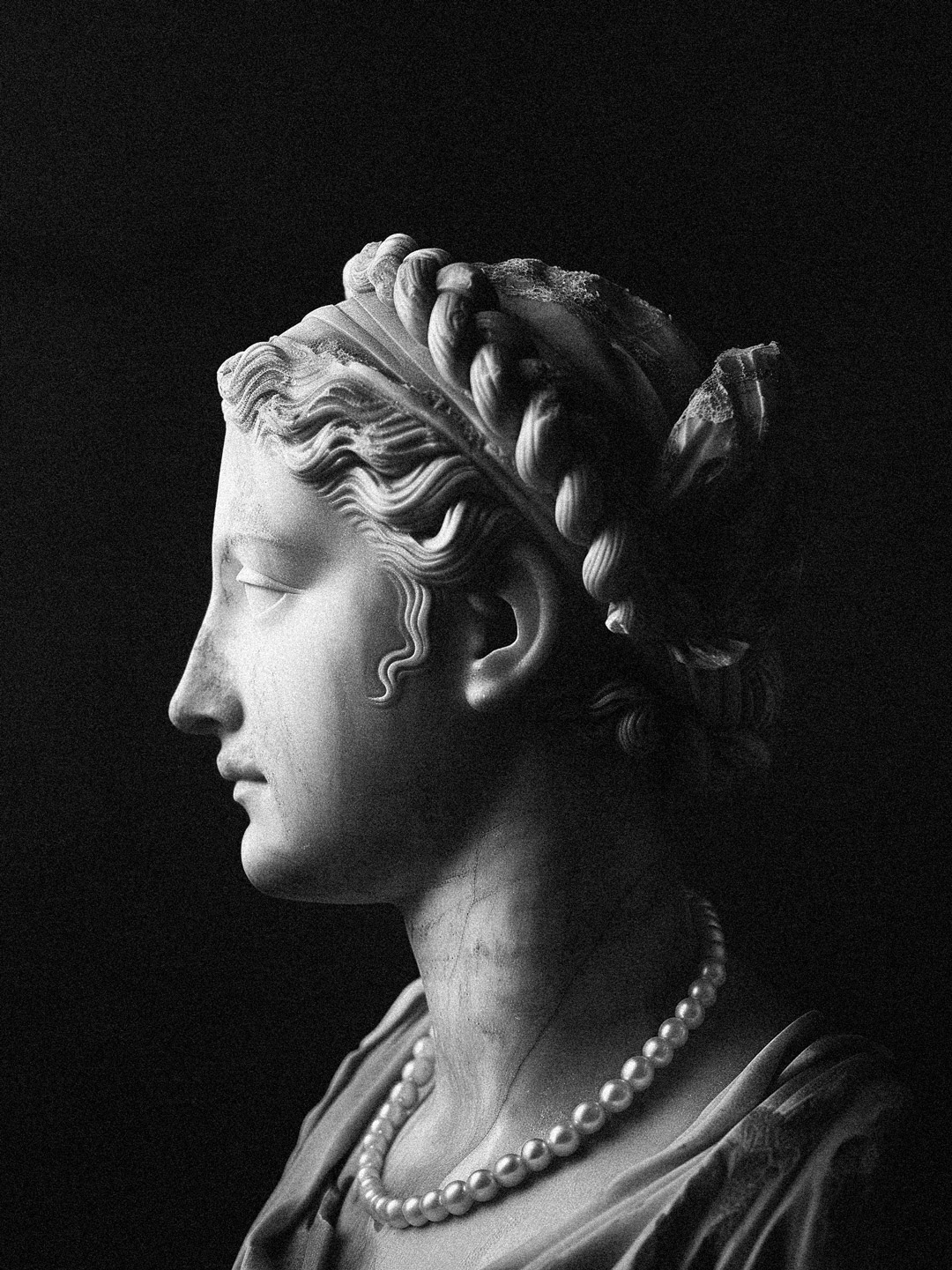
Sappho, spelled (in the dialect spoken by the poet) Psappho, (born c. 610, Lesbos, Greece — died c. 570 BCE). A lyric poet greatly admired in all ages for the beauty of her writing style.

Her language contains elements from Aeolic vernacular and poetic tradition, with traces of epic vocabulary familiar to readers of Homer. She has the ability to judge critically her own ecstasies and grief, and her emotions lose nothing of their force by being recollected in tranquillity.

Marble statue of Sappho on side profile.

Designed with WordPress