Tag: minoan

  • Linear A vase rim inscription PE Zb 3 (Petras), terebinth trees

    Linear A vase rim inscription PE Zb 3 (Petras), terebinth trees:

    Linear A vase rim Petras PE Zb 3 on tereebinth trees

    The Linear A vase rim inscription PE Zb 3 (Petras) deals with terebinth trees, kitanasijase (instrumental plural), either surrounded by a (stone) enclosure or growing in a field. The inscription is entirely in Mycenaean-derived New Minoan. Since the Linear A word for terebinth tree, kitano (nominative masc. sing.) is all but identical to the Linear B word kitano, we can be quite certain that this tablet is inscribed in New Minoan.

    On a passing note, I would like to point out that I have already deciphered over 60 Linear A tablets more or less accurately. That is far more than anyone has ever even attempted to decipher in the past.

  • Linear A fragment PH 7 (Phaistos) which is definitely a religious incantation

    Linear A fragment PH 7 (Phaistos) which is definitely a religious incantation:

    PH 7 linear-a-phaistos-a religious incantation

    Linear A fragment PH 7 (Phaistos), entirely inscribed in Mycenaean-derived New Minoan, is definitely a religious incantation. It is fascinating to note that the incantation is highly reminiscent of the Christian mass or communion, call it what you will. The priestess pours water, udiriki (instr. sing.), from a cup, dipaja (gen. sing.) and offers jatimane or the blessed bread of healing to her suppliants, while the whole ceremony, apparently conducted in a small shrine, is illumined by a firebrand. What a lovely, intimate picture of a scared religious ceremony this draws!

  • Linear A tablet dealing with wheat and spices

    Linear A tablet dealing with wheat and spices:

    Linear A tablet dealing with wheat and spices

    Note that on this tablet, the word toesato/totaesato/toekito/totaekito (whichever one of these 4 alternatives it is and whatever it means) is conjectural, since I find it difficult to determine how many syllabograms there are in it.

  • Minoan Linear A decorated ceramic, kitina, Cf. Linear B kot0na = plot of land?

    Minoan Linear A decorated ceramic, kitina, Cf. Linear B kot0na = plot of land?

    minoan decorated ceramic

    This Minoan Linear A decorated ceramic is inscribed with the single word, kitina, which looks very much like the Mycenaean Linear B word kotona or kotoina, which means a plot of land. If this is the case, it would appear that the ceramic is a personal token of the owner of a plot of land. It could also be a personal name, but this is less likely. What appears to ber the genitive singular, kitanasija, also appears in Linear A.

  • After 117 years, the Linear A vocabulary for 3 major grains (bran, wheat, barley) and for flax is conclusively deciphered

    After 117 years, the Linear A vocabulary for 3 major grains (bran, wheat, barley) and for flax is conclusively deciphered:

    Although decipherment of Linear A vocabulary for the primary Minoan grains has seemed beyond reach for the past 117 years, I believe that I may have actually cracked the vocabulary for at least 3 major Minoan grain crops, kireta2 (kiretai)/kiretana (attributive) = barley, dideru = einkorn wheat, kunisu = emmer wheat and for sara2 (sarai) = flax, while concurrently tackling 3 more grain crops, rumata(se), pa3ni (paini)/pa3nina (painina) (attributive), which I may or may not have managed to accurately identify. More on this below.

    How did I manage to accomplish this feat? My first breakthrough came with the code-breaker, Linear A tablet HT 114 (Haghia Triada), on which appears the word kireta2 (kiretai). It just so happens that this is a match with the ancient Greek word, kritha(i) for barley, here Latinized:

    Minoan Linear A tablet HT 114 Haghia Triada

    Armed with this invaluable information, I then devised a procedure to extract the names of the other 2 major grains, dideru (Linear B equivalent, didero), and kunisu and for sara2 (sarai) from all of the Haghia Triada tablets. I selected the tablets from Haghia Triada because they mention grains far more often than any other extant Linear A tablets do, regardless of provenance, with the sole exception of Zakros ZA 20, which is a very close match with the many Linear A tablets from Haghia Triada dealing with grains.

    The procedure I have adopted is tagged cross-comparative extrapolation (CCE). I scanned every last word related to grain on every last Linear A tablet from Haghia Triada, HT 1 – HT 154K on Prof. John G. Youngers Linear A texts in phonetic transcription HT (Haghia Triada) for the recurrence and numerical frequency of each of these words. It strikes me as very odd that no one in the past 117 years since the first discovery of Linear A tablets at Knossos has ever thought of this or a similar cross-comparative procedure. While it is practically useless to try and extrapolate the meaning of each and every grain merely by examining them in context on any single Linear A tablet, regardless of provenance, because even in single tablet context, and even in the presence of other words apparently describing other type(s) of grain, we get absolutely nowhere, the outcome from cross-correlating every last one of these words on every last tablet from Haghia Triada paints an entirely different picture, a picture which is both comprehensive and all-embracing. Clear and unambiguous patterns emerge for each and every word, including the total incidence of all statistics for them all. The result is astonishing. The table below makes this transparently clear:

    Minoan ancient grains

    We see right off the top that all of the Haghia put together mention akaru, which means field, the equivalent of Linear B akoro, no fewer than 20 times! Additionally, the generic word for wheat, situ, corresponding to Linear B sito, surfaces 5 times. But this is just the tip of the proverbial iceberg. Cross-comparative extrapolation of the next 4 grains has proven to be much more fruitful. The first of these is of course kireta2 (kiretai) kiretana (attributive) for “barley”, which appears 149 times (!) on all of the Linear A tablets from Haghia Triada. I was definitely on to something big.

    But the preliminary step I needed to take, before I actually attempted to identify the next 2 most common grains cultivated in the pre-Mycenaean and Mycenaean Minoan era, was to conduct a Google search on the 2 most common grains after barley grown in Minoan Crete. These are einkorn and emmer respectively. Returning to my cross-comparative extrapolative scan, I discovered the words dideru and kunisu recurring 40 times each. It just so happens that one previous researcher (whose name unfortunately escapes me for the time being, but whom I shall fully acknowledge when I publish my summary data on academia.edu) has accurately identified both of these types of wheat. As can be seen from the table above, these are dideru for “einkorn” and kunisu for “emmer” wheat respectively.

    Moving on, fully realizing that sara2 (sarai) runs rampant on the Haghia Triada Linear A tablets, I discovered that this word recurs no less than 1321 times. Astonishing! But what does it mean? The answer was not long coming. The next most common crop the Minoans cultivated was flax, for the production of linen. Flax is not a grain, but is derived from flax flowers and seeds. This fully explains why sara2 (sarai) recurs with such astonishing frequency. Unlike the aforementioned grains, which would have been grown on a relatively restricted number of plots, in this case not exceeding 4o each, the number of flax flowers required to produce a sufficient flax harvest would have had to be very high… hence 1321. These stunning frescoes illustrate a male Minoan flax flower and a female flax seed gatherer:

    Minoan flax gatherers

    Even from these 2 frescoes, we can easily see that the flax gatherers were kept busy picking what was required, a large flax crop, in this case running to 1321 flax seeds and flowers. No surprise here.

    As a result of my exhaustive cross-comparative extrapolation of the first four Minoan crops, I have been able to define 3 of them for certain as grains, kireta2 (kiretai), dideru and kunisu, and one of them, sara2 (sarai) as flax. It is practically certain that all 4 definitions are correct. Hence, I have managed to isolate for the first time in 117 years the actual names of 4 major Minoan crops, barley, einkorn wheat, emmer wheat and flax.

    However, when it comes to the next 5 crops, we run up against inescapable semiotic problems. What does each of these signifiers signify? There is no easy answer. On the other hand, I would have been remiss were I not to make a stab at extrapolating the names of these crops as well. It just so happens that the next most common grains after barley, einkorn and emmer cultivated by the Minoans were millet and spelt. And the next two words I extrapolated were rumata(se) and pa3ni (paini)/pa3nina/painina (attributive). But if one of them appears to be millet, the other is spelt, or vice versa. That is the conundrum. But the problem is compounded by the mystifying cumulative total statistics for each of these words, 1039 for rumata(se) and 1021 for pa3ni (paini)/pa3nina/painina (attributive). Why on earth are there so many recurrences of these 2 crops, when there are only 40 instances of dideru and kunisu? It does not seem to make any sense at all. Yet there is a possible explanation. While dideru and kunisu reference einkorn and emmer crops as crops per se, it would appear that rumata(se) and pa3ni (paini)/pa3nina/painina (attributive) refer to the seeds derived from the crops. It is the only way out of this impasse. However, it is not necessarily a satisfying answer, and so I have to reserve judgement on these definitions, which are interchangeable at any rate.

    Next we have the ligatured logograms dare and kasaru, either of which might refer to the next most common crops, durum and lentils. But there is no way for us to corroborate this conclusion with any certainty. The verdict is out. Finally, the last word, kuzuni, might refer to 2 other, less common Minoan crops, either sesame or vetch for fodder. But once again, which one is which? Your guess is as good as mine.

    Conclusions:

    Nevertheless, one thing is certain. Every last one of these words identifies a Minoan crop. While most of them are grains, three of them are certainly not. One of them is clearly flax (sara2/sarai) The other two may or may not be lentils or sesame. But they probably are one or the other, if they are not on the other hand durum or vetch. In short, there several permutations and combinations for the last 5. Yet the circumstantial evidence for the first 4 appears quite solid enough to justify the definitions we have assigned, barley, einkorn, emmer and flax. So at least this constitutes a major breakthrough in the identification of these 4 for the first time in 117 years.

    I shall eventually be publishing a much more comprehensive draft paper on this very subject on my academia.edu account, either this summer or autumn. I shall keep you posted.

  • Google image search “Minoan Linear A grains” reveals that practically every last image is from Linear A, Linear B, Knossos & Mycenae

    Google image search “Minoan Linear A grains” reveals that practically every last image is from Linear A, Linear B, Knossos & Mycenae:

    Click on the image search banner to see the results for yourself:

    google search on grains and their decipherment in Linear A

    This confirms that the almost all current research (2015-2017) is almost exclusively founded in my studies and decipherments of grains (wheat, barley, flax, spelt etc.) on Linear A tablets.

  • Credible decipherment of several grains mentioned on of Linear A tablet HT 10 (Haghia Triada)

    Credible decipherment of several grains mentioned on of Linear A tablet HT 10 (Haghia Triada):
    
    Linear A tablet HT 10 Haghia Triada dealing with several grain crops
    
    After several abortive attempts at realizing a relatively convincing decipherment of Linear A tablet HT 10 (Haghia Triada), I believe I have finally managed to come through. This has to be one of the most challenging Linear A tablets I have ever been confronted with. Any credible decipherment eluded me for months on end, until it finally struck me that all I needed to do was to identify the grain crops most commonly cultivated in the Neolithic and Bronze Age Mediterranean. And this is precisely what I have just done.  
    
    Neolithic and Bronze age grains cultivated in the Mediterranean during the Neolithic and Bronze Age eras (the most common italicized):
    
    barley (sara2/sarai?) *
    einkorn (dideru) *
    emmer (kunisu) *
    flax (sara2/sarai?) *
    freekeh (sara2/sarai?) *
    and
    bran (less common)
    bulgur (less common)
    groats (less common)
    lentils (less common)
    millet (dare -or- kasaru)
    spelt (dare -or- kasaru)
    vetch for fodder (less common)
    
    Now it strikes me that if we find any of these grains recurring on several Linear A tablets, and we do, these grains must be the most common cultivated then. As it so happens, the 3 grain crops most frequently referenced in Linear A tablets are dideru, kunisu and sarai2 (sarai). They appear over and over and in abundant quantities on several Linear A tablets from Haghia Triada (HT 8 HT 10 HT 28 HT 85-68 HT 91 HT 93 HT 95 HT 114 HT 121 & HT 133), on HM 570, on Khania KH 10, Kophinas KO Za 1 and on Zakros ZA 20. We now know for certain that dideru means “einkorn (wheat)” and kunisu “emmer (wheat)”. It is also highly likely that sara2 (sarai) references “barley”, “flax” or “freekah”. Which one we cannot be sure, but it almost certainly has to be one of these. In addition, we also find dare and kasaru on HT 10. It stands to reason that, by elimination, dare and kasaru are probably either “millet” or “spelt” or vice versa. I have eliminated bran, bulgur, groats, lentils and vetch, as these crops appear to have been relatively less common. 
    
    Free translation of HT 10:
    
    emmer wheat on 4 hills + PA? + 16 1/2 bushel-like units of another type of grain (millet or spelt) *333? + RO + 6 *u325 + 14 bushel-like units of groats (?) + 2 1/2  of *301 (whatever that is), all stored in 8 vases, of which 2 are pithoi (very large) and also stored in 1 vessel of another type + 2 bushel-like units of bran, flax, millet or spelt & 16 young shoots of grain + 6 /12 of *312 TA ? & 6 bushel-like units of millet or spelt, of which 9 1/4 units were lost to death (i.e. never matured)...
    
    My preliminary research into the types of grains cultivated in the Neolithic and Bronze Age Mediterranean has clearly facilitated this plausible decipherment of HT 10, and has moreover confirmed my even more accurate translations of several other Linear A tablets dealing with grain, almost all of them co-incidentally from Haghia Triada.


  • A major advance in the decipherment of Linear A, the impact of 22 Linear A ligatured logograms, of which 12 are in Mycenaean-derived Greek

    A major advance in the decipherment of Linear A, the impact of 22 Linear A ligatured logograms, of which 12 are in Mycenaean-derived Greek:

    Linear A ligatured logograms

    Here we see 22 ligatured logograms in Linear B. By ligatured logograms we mean two or more Linear A syllabograms bound together as one unit. To date, no previous researcher, not even Andreas Zeke of the Minoan Language Blog, has isolated any more than 10 ligatured logograms. This comes as a great surprise to me, if not a real shock. Considering the huge impact these 22 ligatured logograms is bound to have on the decipherment of Linear A, why any ancient language linguist in the past 117 years since the discovery of the first Linear A tablets at Knossos would not account for all 22 of the ligatured logograms I have taken firmly into account is beyond me.

    Since there are at least 2 syllabograms bound together, it is impossible to determine which syllabogram comes first. This means that in the case of 2 ligatured syllabograms, the word represented may be reversed. For instance, in the case of the first ligature in the table below, the ligature could be either aka or kae, although the first is more plausible in the second in this case. If the first ligature is indeed aka, then it is highly likely that it is the Linear A equivalent of the Greek word aska, which is the archaic accusative of askos (here Latinized), meaning a leather bag or wine skin, more likely the second than the first. In the case of the third, we have either kuwa, the exact Linear A equivalent of Linear B kowa, which deciphered means girl”or if reversed, waku, which in ancient Greek is agu (Linear A orthography) or agos, meaning “any matter of religious awe/guilt/sacrifice”, of which the last definition is the most convincing.

    12 Mycenaean-derived Greek ligatures:

    Linear A logograms ligatured Greek


    When it comes to ligatures consisting of more than 2 syllabograms, the number of permutations and combinations rises dramatically. Whereas with 2 ligatured logograms there are only 2 possibilities, with 3 there are 9, and with 4 there are 16… at least theoretically. However, in practical terms, just one syllabogram, the first on the left, very likely certainly takes precedence, meaning that the number of permutations and combinations is probably no greater than 2 even in these cases. However, there is no way of knowing for certain. For instance, what are we to make of the eleventh ligature, which can read as either mesiki or sikime or kimesi, or as 6 additional permutations? As it so happens, 2 translations seem most plausible. The first is mesiki, which can be translated as Greek meseigu (Latinized), meaning “in the middle”, whereas the second is kimesi, which can be rendered as keimesi, instrumental plural of keimos, “with muzzles or halters for a horse”. Either translation is perfectly plausible; so we must account for both.

    All in all, of the 22 ligatured logograms, 12 or over half are susceptible to translation into Greek. If anything, this illustrates the great impact of the Mycenaean-derived superstratum on Linear A. In this table, only 10 ligatures appear to be in Old Minoan, i.e. the original Minoan language, aka the Minoan substratum. Finally, with the addition of these 22 ligatured logograms and a few more words I have recently unearthed, the number of words in our Comprehensive Linear A Lexicon soars from 988 to an astonishing 1022, which means that the corpus of Linear A vocabulary now amounts to at least 20 % of that for Linear B. No previous Lexicon of Linear A even approaches this upper limit. Prof. John G. Younger’s Linear A Lexicon, the most thorough-going to date, contains only 774 intact Linear A terms, exclusive of broken words with some syllabograms missing, strings of greater than 15 syllabograms, and any words containing numeric syllabograms, which are utterly indecipherable at any rate. This means that our Lexicon is an astonishing 24.3 % larger than that of Prof. Younger. In addition, I have managed to decipher at least 30 % of Linear B, the highest amount ever. I shall be soon publishing our Lexicon on my academia.edu account, by mid-July at the latest, and it is bound to have a considerable impact on the ancient linguistics community.

  • Linear A roundel pendant, Titisutisa, the name of a princess?

    Linear A roundel pendant, Titisutisa, the name of a princess?
    
    Linear a roundel Titisutisa onomastics
    
    This Linear A roundel bears what is ostensibly a personal name ending in a. If indeed the feminine nominative singular ends in a in the Minoan language, as it does in most Indo-European occidental languages. However, since there are no genders in Basque, a language isolate, it is possible that there are none in Minoan, provided that it too is a language isolate. But even if it is, that does not necessarily imply that there are no genders.   
    
    
  • Minoan Linear A scribal hands: W & Z series syllabograms: WA WI ZA ZE ZE ZU (the last)

    Minoan Linear A scribal hands: W & Z series syllabograms: WA WI ZA ZE ZE ZU (the last)
    
    
    Linear A scribal hands WA WI ZA ZE ZO ZU


  • Did the archaic nominative and/or genitive singular feminine ending in ja/ya in Mycenaean Greek derive from the Minoan language?

    Did the archaic nominative and/or genitive singular feminine ending in ja/ya in Mycenaean Greek derive from the Minoan language?
    
    teal banner feminine nominative or genitive
    
    In the glossary below of:
    A: masculine Mycenaean Linear B words ending in jo
    B: feminine Mycenaean Linear B words ending in ja
    C: Minoan Linear A words ending in ja
    
    These are the keys:
    nom. = nominative
    gen. = genitive
    
    All Linear B entries are drawn Latinized as is from Chris Tselentis’ Linear A Lexicon. 
     
    A: Most Linear B nouns in jo are nominative:
    
    A-da-ra-ti-jo Adrastios nom.
    ai-ki-a2-ri-jo aigihalios = coastal, of the coast gen.
    a-ka-ta-jo Aktaios nom.
    a-ke-re-wi-jo Agrevios nom.
    akorajo= used for communal purposes + for the marketplace gen.
    a-mi-ni-si-jo Amnisos nom.
    a-pi-no-e-wi-jo ethnic name of Amphinoevioi gen.
    arejo = areios (divine epithet)nom.
    a-te-mi-ti-jo = Artemitios nom.
    da-ja-ro = Daiaros nom.
    da-mi-ni-jo = Damnios nom.
    da-ta-ja-ro = Dataiaros nom.
    da-wi-jo = ethnic name of Davios gen.
    de-u-ka-ri-jo = Deukalion nom.
    di-ka-ta-jo = Diktaios Cf. Linear A nom.
    di-u-jo + diwijo = belonging to Zeus gen.
    du-ni-jo = Dynios nom.
    dwo-jo = of two gen.
    e-to-ni-jo = etonion = free-hold nom.
    e-wi-ta-jo = ethnic name of Evitaios nom.
    kakijo = made of copper gen
    ku-te-se-jo = kyteseios = made from ebony gen.
    
    B: Most Linear words in ja are nominative:
    
    a-ko-ra-ja= used for communal purposes + for the marketplace gen.
    a-mo-te-wi-ja armothevia = description of a pot (gen. sing.?)gen.
    a-ne-moi-ere-ja = priestess of the winds nom.
    a-ni-ja = ania = reins (neut. pl.) nom.
    a-pa-ta-wa-ja = ethnic name of Aptarfaia nom.
    a-ra-ka-te-ja = alakateiai = weavers nom.
    a-ra-ru-ja = ararya = bound, equipped nom.
    a-re-ja = areia (divine epithet) nom.
    a-si-ja-ti-ja = Asiatiai nom.
    a-si-wi-ja = Asivia nom.
    a-te-re-wi-ja = Atreivia nom.
    da-wi-ja = ethnic name of Davia gen.
    de-di-ku-ja = dedikyia = being apprenticed adjectival
    di-pi-si-ja = ethnic name of Dipsia gen.
    di-u-ja = diyia = priestess of the god Zeus nom.
    e-qe-si-ja = related to a follower gen.
    e-ru-mi-ni-ja = elymniai = roof beams nom.
    e-sa-re-wi-ja = Esalevia nom.
    e-to-ki-ja = entoihia = fittings for insertion in walls nom.
    e-wi-ri-pi-ja = ethnic name of Evripia gen.  
    i-je-re-ja = priestess nom.
    i-ni-ja = personal name = Inia nomm.
    i-pe-me-de-ja = personal name =Iphemedeia nom.
    ka-da-mi-ja = somee product related to garden cress nom.
    ka-ki-ja/ka-ke-ja = made of copper = khalkia gen.
    ka-pi-ni-ja = kapnia = chimney nom.
    ke-ra-me-ja = personal name = Kerameia nom.
    ke-ro-si-ja = geronsia = council of elders nom. + gen.
    ke-se-ne-wi-ja = xenwia adjectival
    ko-ki-re-ja = kolhireia = shell=shaped, spiral adjectival
    ko-no-si-ja = Knosia = ethnic name of Knossos gen.
    nu-wa-i-ja = numfaia = kind of textile of water-lily colour nom. + gen.
    pa-ta-ja = paltaia =  arrow nom.
    po-si-da-e-ja = Posidaeia nom.
    pu-ka-ta-ri-ja = type of cloth nom.
    pu2-te-ri-ja = phuteria = planted, cultivated adjectival
    qe-ra-si-ja = Kerasia (name of goddess) nom.
    ra-e-ja = laheia = made of stone gen.
    ra-ja = Raia nom.
    ri-ne-ja = lineiai = flax workers nom.
    ro-u-si-je-wi-ja = Lousieveia = originating in/from Lousos gen.
    se-to-i-ja = Setoia nom.
    si-to-po-ti-ni-ja= sitopotnia = goddess of grain nom. + gen.
    te-o-po-ri-ja = Theophoria = religious feast nom.
    ti-ri-ja= tria = three nom.
    we-a-re-ja = vealeia = made of glass adjectival + gen.
    
    C: what are all the Minoan Linear A words below ending in ja supposed to represent? Are all or even some of them either nouns or adjectives? Just because they are in Mycenaean Linear B does not constitute proof that they are in Linear A. Nevertheless, they could be.    
    
    NOTE that it is highly unusual, if not inexplicable, for there to be 57 words with the ultimate ja in Linear A, but none whatsoever ending in jo. This leads me to believe that it is extremely risky to assume that all of these Minoan words with ultimate ja are either nominative or genitive feminine singular. Just because they are in Mycenaean Linear B does not at all necessarily imply that they are so in Linear A. That would be jumping to conclusions. Nevertheless, there may be a case for assuming that Minoan Linear A words with ultimate ja may possibly be either nominative or genitive feminine singular, in which case it would appear that the Mycenaean nominative or genitive feminine singular words with the ultimate ja may possibly be derived from their Minoan precedents. But there is no way of proving this.
    
    C: 57/988 Minoan Linear A words with the ultimate ja:
    
    amaja
    aseja
    asuja
    dija Cf. LB di-u-ja = diyia = priestess of the god Zeus
    duja
    esija
    ija
    iruja
    itaja
    jadireja 10
    jasaja
    jatoja
    kija
    kiraja
    koja
    kuja
    kupa3rija *
    kupaja
    masaja (of larger? L&S 426)
    masuja 20
    mireja (belonging to a sheep? L&S 443) 
    musajanemaruja
    namarasasaja
    nenaarasaja
    nemaruja
    nenaarasaja
    nukisikija *
    oteja
    pa3kija
    paja 30
    pasarija *
    pija
    piwaja
    qapaja
    qeja
    radasija *
    raja
    rasasaja
    redamija *
    reduja 40
    reja
    saja/sajea
    sejarapaja
    sidija *
    sija
    sudaja
    suja
    Sukirteija
    tija 
    tikuja 50
    tiraduja
    tuimaja
    Tukidija
    Tunija
    waja (land)
    wija
    zanwaija 57
    
    These 57 Minoan Linear A words may be either:
    1 the primordial nominative singular feminine
    OR
    2 the primordial genitive singular feminine
    OR 
    3 neither
    
    The last scenario is just as probable as the first two.
    
    
  • Decipherment of Linear A tablet HT 14 (Haghia Triada) with John G. Younger’s errors corrected

    Decipherment of Linear A tablet HT 14 (Haghia Triada) with John G. Youngers errors corrected:

    Linear A tablet HT 14 Haghia Triada


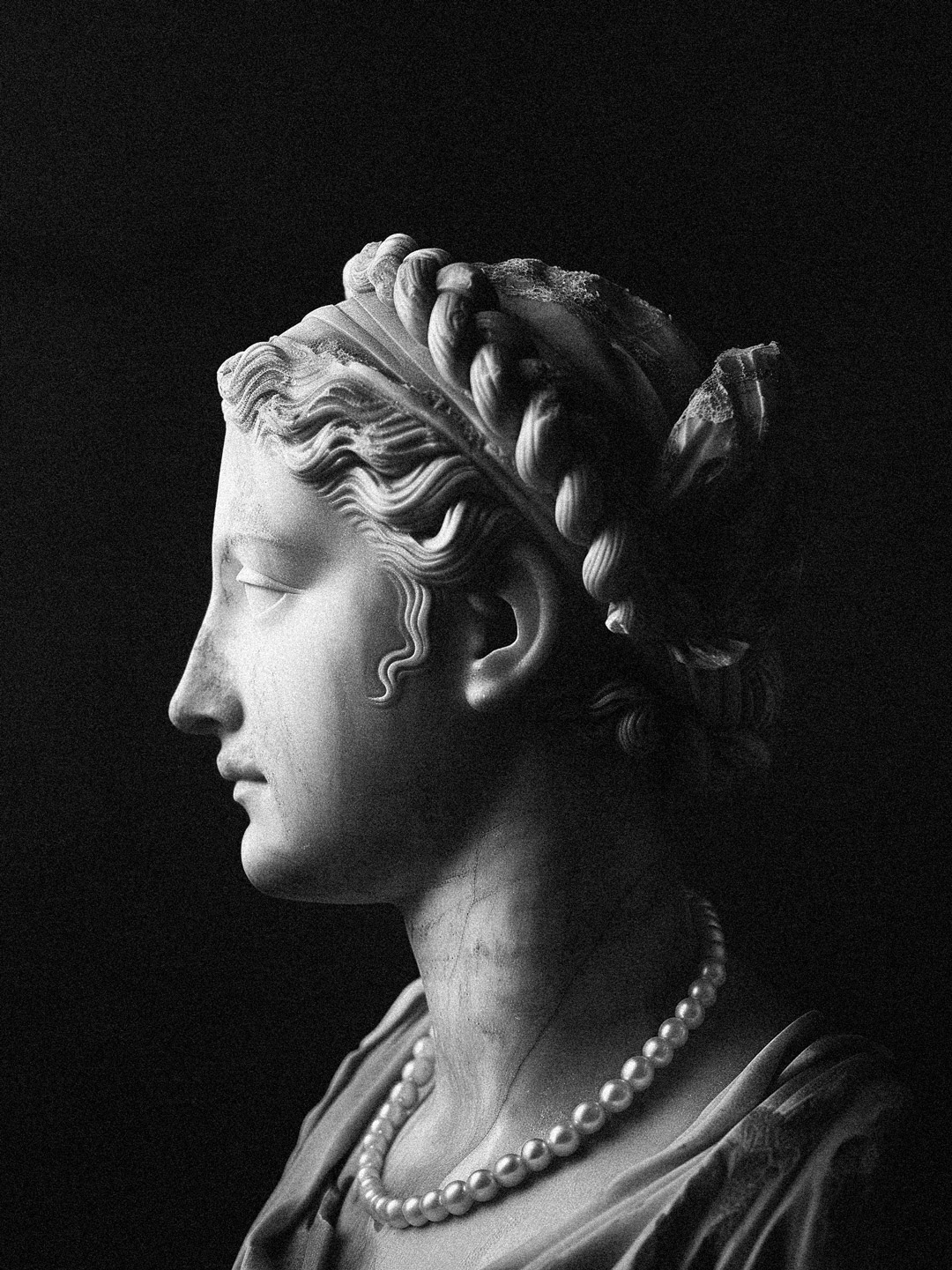
Sappho, spelled (in the dialect spoken by the poet) Psappho, (born c. 610, Lesbos, Greece — died c. 570 BCE). A lyric poet greatly admired in all ages for the beauty of her writing style.

Her language contains elements from Aeolic vernacular and poetic tradition, with traces of epic vocabulary familiar to readers of Homer. She has the ability to judge critically her own ecstasies and grief, and her emotions lose nothing of their force by being recollected in tranquillity.

Marble statue of Sappho on side profile.

Designed with WordPress