Tag: Minoan Linear A

  • Linear A tablet ARKH 2 (Arkhanes), dealing with wine and pomegranate juice?

    Linear A tablet ARKH 2 (Arkhanes), dealing with wine and pomegranate juice?

    Linear A tablet ARKH 2 Arkhanes

    Linear A tablet ARKH 2 (Arkhanes) appears to deal with wine and pomegranate juice. This being so, we have now deciphered 2 Linear A tablets centred on this subject. If the two decipherments withstand scrutiny, they lend credence to the notion that wine and pomegranate juice were produced in pre-Mycenaean Minoan times. It is uncertain whether or not pomegranate juice was mixed with wine, but if it was, the composite alcoholic beverage would have been delicious. We recall that ancient wine, even as late as Roman times, was more sour than modern wine; hence, the need to sweeten it. The most common sweetener was honey, but it is conceivable that pomegranate juice was also used, at least in the middle and early late Minoan eras.

    On a final note, I have greatly enhanced and digitized the original of this tablet, which was originally under-focused and fuzzy.

  • Proposed decipherment of a Trojan roundel in Linear A illustrating a bronze shield

    Proposed decipherment of a Trojan roundel in Linear A illustrating a bronze shield:

    Trojan roundel in proposed Mycnaean-derived Linear A

    This is my proposed decipherment of a Trojan roundel in Linear A illustrating a bronze shield. It is highly probable that a roundel of Trojan origin inscribed in Linear A would have been entirely composed in Mycenaean-derived New Minoan Linear A, since after all the Trojan War occurred near the end of the Mycenaean Era (ca. 1250-1200 BCE). Given the late date, it is improbable that it would have been inscribed in Old Minoan. Why it is inscribed in Linear A rather than in Linear B, which would have been the expected syllabary, remains a mystery. However, there is evidence that Mycenaean scribes switched back and forth between Linear A and Linear B indiscriminately.

  • Partial conjectural decipherment of Linear A tablet HT 6 Haghia Triada (VERSO)

    Partial conjectural decipherment of Linear A tablet HT 6 Haghia Triada (VERSO):

    Haghia Triada Linear A tablet HT6 VERSO

    If there is any Linear A tablet which has proven a real headache, it has to be this one. The surface of the VERSO of HT 6 (Haghia Triada) is so badly damaged that experts such as Andras Zeke of the Minoan Language Blog and Prof. John G. Younger cannot even agree on a few syllabograms in the text, while I myself disagree with them on some of the same. Additionally, there is no consensus on the values of Linear A fractions. Interpretations by Andras Zeke and Prof. John G. Younger of the smaller fractional values often do not agree. So I am unwilling to add fuel to the fire. I simply choose whichever value (either that of Zeke or of Younger) seems more convincing to me. At any rate, no one today can determine with any degree of accuracy numeric values in Minoan Linear or Mycenaean Linear B, since both syllabaries are so historically remote as to preclude any convincing readings.

    As for the syllabograms on this tablet, once again, Andras Zeke and John G. Younger do not agree on the values of at least 3 of them. And I find myself at odds with their own interpretations. This is the result of the shoddy scribal hand and the less than ideal condition of the tablet itself. As for maridi, I find myself obliged to read it as if it were meridi, since the interpretation wool (mari) is utterly out of the question in the context of this tablet, whereas reading it as meridi = “honey” makes much more sense contextually. As for sama, it may be the Minoan equivalent of Mycenaean Linear B samara = mound/hill”, but once again, this interpretation is conjectural. I have previously tentatively deciphered Old Minoan (OM) pa3nina (painina) as “an amphora for the storage of… ”, but here again, I have gone out on a limb. Nevertheless, the interpretation once again suits the context. Once all of fig and pomegranate juice (RECTO) and the drops of wine and honey (VERSO) are accounted for, we can see that this tablet may deal with a recipe for a sweet alcoholic beverage, which with these ingredients would indeed be delicious.

    Consequently, any convincing decipherment of the VERSO of HT 6 is beyond our reach. We simply have to muddle through it and come up with the best alternatives we can for each apparently decipherable word. However, by fully taking into account the much more accessible text on the RECTO of HT 6, I believe I have been able to rescue a small portion of the significance of the text on the VERSO by placing it in its proper context with the RECTO. See the previous post for my fuller decipherment of the RECTO.

  • Linear A tablet HT 6 (Haghia Triada) RECTO: ripe figs and pomegranates

    Linear A tablet HT 6 (Haghia Triada) RECTO: ripe figs and pomegranates:

    HT 6 RECTO

    Linear A tablet HT 6 (Haghia Triada) RECTO deals with ripe crops, including figs and pomegranates. Although we do not know what the Old Minoan words jaru or ruja (could be either), mazu and daqera mean, they are almost certainly kinds of ripe crops, some of them fruits. However, it is possible that mazu derives from the proto-Indo-European mat = to plant, hoe. Cf. Occitan massa and Spanish maza = “mallet”. This makes sense in context.

    Of the probable Mycenaean-derived New Minoan words, pitaja, on line 2, which appears to mean “drinkable”, would imply that we are dealing with 24 units (cups?) of fig juice, in view of the fact that figs are specified as the first ripe crop on line 1.

    It is noteworthy that, as the result of having learned how to decipher some 25-30 Linear A tablets, all of which are at least partially inscribed in Mycenaean-derived New Minoan, I am finally gaining greater insight into the vocabulary, Old Minoan and New Minoan alike, of Linear A tablets.

    Since this tablet is so information rich, I am obliged to decipher the VERSO in the next post.

  • Edges of Pithoi from Petras, Crete, 15th. century BCE

    Edges of Pithoi from Petras, Crete, 15th. century BCE:

    edges of pithoi Crete, Petras, 15th century BC

    It is apparent from the inscriptions on these pithoi that the text is inscribed in Mycenaean-derived New Minoan, except for the personal names (of the fabricators or owners of the vases) .

    Petras Archaeological site:

    Petras archaeological site


  • A convincing contextualized decipherment of Linear A tablet HT 1 (Haghia Triada)

    A convincing contextualized decipherment of Linear A tablet HT 1 (Haghia Triada):

    Linear A tablet HT 1 Haghia Triada

    While decipherment of Linear A tablet HT 1 (Haghia Triada) appears at first sight beyond reach, this may not actually be the case. Of the 6 words on this tablet, only 3 are likely to be Mycenaean-derived, qera2u (qeraiu), kiro and kupa3nu (kupainu), while the other 3, zusu, didizake and aranare, are almost certainly Old Minoan, i.e. written in the original Minoan language. As I have pointed out over and over, a number of Linear A tablets appear to be inscribed in a combination of the Mycenaean-derived superstratum and of the Minoan substratum, as is almost surely the case here.

    But even if 3 of the words on this tablet are probably Mycenaean-derived, 2 of them, qera2u (qeraiu) and kupai3nu (kupainu) require further analysis. How can it be that qeraiu is derived from gerron (Greek Latinized) = shield and kupainu from kuparissinos (Greek Latinized) = made of cypress word”, when the orthography of the Mycenaean-derived words diverges from the original Greek, especially in the case of kupainu, which does not exactly appear to resemble kuparissinos? But there is an explanation and it is this. The orthography of the Greek words must be adjusted to meet the dictates of Minoan spelling in each and every case in which Mycenaean-derived words are imported into the Minoan language.

    This phenomenon is analogous to the imposition of the Norman French superstratum on English pursuant to the Norman conquest of England in 1066 CE. The Mycenaean conquest of Knossos and Crete or, failing that, of their all but absolute suzerainty over these territories ca. 1500-1450 BCE appears to have had a similar outcome, namely, that much of the vocabulary of the source language of the invaders, the Mycenaeans, found its way into the target or original language, Minoan. But in so doing, the originally Mycenaean vocabulary would have had to be adjusted to standard Minoan orthography.

    Allow me to illustrate this through comparison with the influx of some 10,000 French words into English between ca. 1100 & 1450 CE. The French vocabulary could not be assimilated into English without undergoing a metamorphosis in orthography permitting the original French vocabulary to be adjusted to the dictates of English spelling. Examples running into the thousands abound. So we should not be at all surprised at this metamorphosis of orthography from the superstratum (Mycenaean derived vocabulary) to the substratum (Minoan vocabulary derived from the Mycenaean superstratum). After all, when superstratum French words are imported into English, their orthography undergoes the same metamorphosis. For instance, we have:

    French to English:
    
    albâtre = alabaster
    amical = amicable
    bénin = benign
    ciprès (from Old French cipres) = cypress (See below for Minoan kupainu)
    cloître = cloister
    dédain = disdain
    dédoublé = doubled up
    doute = doubt
    entrée = entrance
    fanatique = fanatic
    gobelet = goblet
    jalousie = jealousy
    loutre = otter
    maître = master
    plâtre = plaster
    retenir = retain
    soldat = soldier
    similitude = similarity
    
    and on and on ad nauseam. This phenomenon applies to every last substratum language upon which a superstratum from another language is imposed. So in the case of Old Minoan, it is inevitable that the orthography of any single superstratum Mycenaean derived word has to be adjusted to meet the exigencies of Minoan orthography.
    
    The most striking example of this metamorphosis is the masculine singular. Mycenaean derived words in Minoan must have their singular ultimate adjusted to u from the Mycenaean o. There are plenty of examples:
    
    Akano to Akanu (Archanes)
    akaro to akaru (field)
    kako to kaku (copper)
    kuruko to kuruku (crocus/saffron)
    mare (mari) to maru (wool)
    Rado to Radu (Latos)
    simito to simitu (mouse)
    suniko to suniku (community)
    Winado to Winadu (toponym)
    woino to winu (wine)
    iyero to wireu  (priest)
    
    And on this particular tablet we find the Mycenaean-derived Minoan spellings:
    

    qera2u (qeraiu), which if Latinized would be gerraiu, from Greek gerron and

    kiro, which if Latinized, is kilon, almost the exact equivalent of the Greek keilon. And kupa3nu (kupainu), Latinized = kupainu (kupaino) at least approximates the Greek kuparissinos, but with the the syllables rissi dropped. Compare this last entry with French-English similitude = similarity and you can see at once that orthographic metamorphoses even as divergent as these are possible. So chances are that kupainu may in fact be equivalent to kuparissinos, although there is no way to verify this with any certainty, except for one thing. Context.

    Since we know from line 1 that we are dealing with 192 shields and lances * (i.e. arrow shafts *), it is not too much of a stretch to conjecture that kupainu does correspond to the Greek kuparissinos, because we know from archaeological and historical evidence that Minoan and Mycenaean shields were of wicker work. And it is well within the realm of reason to suppose that such wicker shields were constructed of flexible, pliant cypress wood. Cypress wood is smooth grained and lightweight and has natural built in preservatives or oils that make cypress long lasting and resistant to water damage. It could be combined with bronze and leather on Mycenaean and ancient Greek warrior shields. And according to Wikipedia, The word cypress is derived from Old French cipres, which was imported from Latin cypressus, Latinized from the Greek κυπάρισσος (kuparissos). Ergo.

    However, we are still left with the puzzle, what do the Old Minoan words, zusu, didizake and aranare, mean? Once again, context comes to the rescue. It is entirely reasonable to suppose that a Linear A tablet dealing with cypress shields and lances would also cover other military paraphernalia essential to self-defence. The most obvious candidates are spears and swords, for zusu and aranare respectively, though in which order we cannot say for certain. The inclusion of swords as one of the alternatives is well justified, since pakana, i.e. swords, frequently appear on Linear B tablets. As for didikaze, I will not speculate, although it too more likely than not references military apparel, perhaps signifying armour.

    Aranare (knives?) is plural, singular = aranarai. Since the word is diminutive feminine, the decipherment knives clearly makes sense in context.
    Nevertheless, any decipherment of  zusu, didizake and aranare is by nature problematic. Assumptions are always dangerous, even in the case of a tablet such as this one, where context would appear to support such conclusions. But as I have so often repeated, appearances can be and often are deceptive.
  • Locations of Linear A tablets at Haghia Triada, including the 14 I have deciphered

    Locations of Linear A tablets at Haghia Triada, including the 14 I have deciphered:

    Haghia Triada location of tablets in Linear A with my decipherments

    This general plan of Haghia Triada with the locations of Linear A tablets incorporates the 14 tablets which I have managed to decipher more or less accurately to date.

  • Inscription from Malia in New Minoan Linear A, Tainaron, a town with authority

    Inscription from Malia in New Minoan Linear A, Tainaron, a town with authority:

    Mallia text in Linear A dealing with Tainaron with Linear B transcription

    Here we have yet another inscription from Malia in New Minoan Linear A, which appears to invoke the supreme authority of Tainaron, a town at the southern tip of Laconia, with the blessings of the gods. If this tablet is indeed inscribed in Mycenaean-derived new Minoan, then it is the fourth of the tablets from Malia I have deciphered, all of them in New Minoan. It would thus appear that the Mycenaeans had assumed suzerainty over Malia before these tablets were inscribed, and that the scribes there were still using the Linear A syllabary to inscribe tablets in Mycenaean Greek, just before the switch-over to the new official syllabary, Linear B. It cannot simply be co-incidental that all of the inscriptions from Malia, including the famous IDAMATE labrys from the Archalochori Cave, appear to be inscribed in Mycenaean-derived New Minoan. In fact, the word Idamate can easily be rendered as the mother (goddess) of Mount Ida”. It is also a matter of great interest to note that Tainaron itself is the toponym of Cape Tainaron,

    Tainaron ancient Greece

    where there was a sanctuary of Poseidon, who may very well be the god who has brought blessings on the town. It is to be noted that the Archalochori axe inscribed in proto-Greek is also in a sanctuary where a horde of bronze votive weapons, mostly axes, were discovered. Moreover, Malia tablet MA 1 appears to deal with Minos, the legendary king of Knossos offering gold to Rhea, mother of Zeus. In other words, all of the inscriptions from Malia deal with religious rites. This should come as no surprise, as more Linear A than Linear B tablets appear to focus on religious symbolism or rites.

    Except for Tainaro, which is equivalent to the nominative neuter in Linear B, all proto-Greek spellings on this inscription have been adjusted to meet the exigencies of Old Minoan syntax. It would thus appear that etanasu is the Minoan orthography for hestanwn (standing, Greek Latinized), while pijani is the dative or instrumental singular in Minoan of the noun derived from the Greek verb, piainw, to enrich. The orthography of Tainaro appears to confirm that the nominative neuter in Linear B underwent no change in Minoan. This conclusion conforms with the table of 45 apparent Minoan masculine and neuter nominatives I recently posted:

    https://linearalinearblinearc.ca/2017/05/18/linear-a-nouns-ultimate-o-masculineneuter-nouns-and-adjectives/

  • Free translation of Linear A tablet KH 5 (Khania) concerning the shipping of wine by sea?

    Free translation of Linear A tablet KH 5 (Khania) concerning the shipping of wine by sea?

    Linear A tablet KH 5 Khania enhanced

    If this tablet, KH 5 (Khania) is inscribed in Mycenaean-derived New Minoan, then it would appear that it deals with the shipping of wine by sea. The fact that the floor boards are apparently level would imply that the shipment was carried out successfully in calm seas. On line 1, adakisika, which is Mycenaean-derived New Minoan with orthography adapted to Old Minoan, translates as and adorned with ivy, which implies that the cargo has been blessed by a priest(ess). If this is the case, there is text missing before this phrase, which after all ends with and”, hence possibly “and adorned with ivy (blessed by a priest(ess))”. If NA references nauwi, i.e. “on a ship”, then the mention of “on a level wooden floor (i.e. deck)” makes sense in context. This decipherment may be largely correct, but there is no way of verifying this with any certainty. Finally, if PA is the first syllabogram of pa3ni (paini), which I interpret as Old Minoan for “amphora”, then the wine is being shipped in amphorae, the only way wine could have been shipped in Minoan times. As if…

  • Haghia Triada roundels & noduli

    Haghia Triada roundels & noduli:
    
    Linear A nodulae with syllabogram SI from Haghia Triada
    
    From: The Haghia Triada administrative documents:
    
    http://www.aegean-museum.it/musint2/en/crete/documents.inc.php
    
    Descriptions from this site (quoted):
    
    Although the writing has not been deciphered neither the language has been interpreted (sic, poor grammar) various data may be obtained from the tablets. First of all, a list of Linear A signs may be hypothesized, which, with its 97 symbols, reveals a syllabic script of a simple typology (consonant + vowel and vowels): the signs are, in fact, too many, to represent a complex syllabic system (as the Near Eastern Cuneiform and the Aegyptian Hieroglyph). To these syllabic signs a long series of "logograms", representing each one a word, are added. 
    
    Types of seals represented:
    
    nodulae and roundels from Haghia Triada
    
    Roundels:
    
    The roundel is a characteristic document of the Neopalatian Minoan [1] administration, beside the tablet. It is a round clay disk (classified as Wc) with seals impressions along the edge - from one to six impressions - and, on most cases, one inscription on one or both sides. Frequently the inscription consists of a logogram, sometimes also of a sign-group. It seems to represent the last act [2] of an administrative transaction and probably functioned as a receipt. 
    
    The seals stamped on roundels fully coincide with seals stamped on the other different documents. At Haghia Triada 22 roundels have been found, one of them being without (an) inscription. 
    
    Nodules:
    
    It is (sic, They are) the most widespread Aegean Bronze Age document, both geographically and chronologically. These clay small object (sic, objects) (defined as noduli by J. Weingarten) were not always inscribed but only sealed. They appear in two shapes: dome (classified as We) (fig. 4) and disk (classified as Wf) (fig. 5).  At Haghia Triada 54 noduli have been found, in dome shape, and only 7 are inscribed. 
    
    Types:
    1 Flat-based nodule:
    This type of document is rarely inscribed but regularly sealed. Its characteristic is the negative impression on its reverse (or base) which shows that it had been placed upon a folded piece of parchment around which a thin thread was wound which was also wound into the clay. It appears in two different shapes: standing (fig. 6) or recumbent (fig. 7) (both classified as Wb). At Haghia Triada 76 flat-based nodules have been found, only 2 having a carved inscription. 
    
    2 Hanging nodule [3]:
    
    This small clay piece is characterized by string holes which show that it was fastened to another object by a string. They may present one or two holes. 
    Those with two holes (classified as Wd) have an elongated shape (fig. 8), while those with one hole (classified as WA) present five slightly different shapes: pendant, pyramid, cone, dome, pear (fig. 9) [4]. At Haghia Triada 936 single-holes have been found, 851 being inscribed, and 11 two-hole, only 2 being inscribed. 
    
    Comments by Richard Vallance:
    
    [1] Neo-palatial Minoan administration: This is the Minoan administration at Haghia Triada dating from the Middle Minoan MM ca. 1750-1550 BCE & Late Minoan LM1A, ca. 1550-1500 BCE. Documents in Linear A inscribed during the LM1A period may have been inscribed in Mycenaean-derived New Minoan.  
    [2] “the last act”. This is ambiguous English. Does it refer to the “the most recent” of the Haghia Triada administration? And if so, does this mean the act or acts date from the Late Minoan LM1A period?  And if so, are these acts inscribed in Mycenaean-derived New Minoan?
    [3] The nodules illustrated in my decipherment of Figure 9 above are hanging nodules.
    [4] See my 3 decipherments in Figure 9 at the outset of this post. If the syllabogram SI is the first syllable of a Mycenaean-derived New Minoan word, it could represent any of the 3 decipherments I have proposed. If on the other hand, SI represents any Old Minoan word, it is indecipherable.  
    
    Haghia Triada pianta genrale
    
  • Linear A bar, MA 2 (Malia), probable translation: penny royal as a means of treatment

    Linear A bar, MA 2 (Malia), probable translation: penny royal as a means of treatment:
    
    Malia MA 2
    
    Linear A bar, MA 2 (Malia) deals with some sort of (herbal) remedy as a means of treatment. It strikes me that it may be penny royal (unana). The word jamauti is New Minoan for “as a remedy”, apparently in the instrumental.
    
    
  • Linear A Nouns: ultimate o: Masculine/neuter nouns and adjectives

    Linear A Nouns: ultimate o: Masculine/neuter nouns and adjectives:
    
    Phaistos
    
    KEY: OM = Old Minoan, Minoan substratum
    NM = New Minoan, Mycenaean-derived superstratum
    PGS = pre-Greek substratum
    
    Since this list is intended merely to be indicative of what appears to be the Minoan ultimate o for masculine and neuter nouns and adjectives, with a few exceptions intended to be illustrative, I have not defined any of the words here. They will be defined in our Complete Glossary of Minoan Vocabulary, consisting of over 950 words. 
    
    adaro NM = a type of grain, barley
    amidao
    apero
    aruqaro
    asidatoi (pl.?) 5
    dinaro
    ero NM
    jako
    jateo
    kairo 10 NM = due measure
    kero 
    kidaro 
    kiro NM
    kiso
    kito 15
    kuro NM = reaching, attaining, i.e. total
    meto
    mio
    muko NM = corner, recess
    murito 20
    niro
    Paito PGS = Phaistos (= Linear B) 
    pa3dipo
    potokuro NM = a full drink, a brimming drink 
    puko 25 OM = tripd
    qajo
    qareto
    qato
    qero 30
    reqasuo
    roiko NM = broken (= Linear B)
    ruiko Cf. roiko
    Rukito PGS = Lykinthos (= Linear B, Rukito)
    ruko 35
    sapo
    sato
    sezanitao
    simito PGS = mouse, attribute of Apollo, the Mouse God
    siro NM? 40
    tero
    tio
    uro
    uso
    utaro 45
    witero 46
    
    
  • Linear A tablet HT 18 (Haghia Triada) in Old Minoan fully deciphered

    Linear A tablet HT 18 (Haghia Triada) in Old Minoan fully deciphered:

    Linear A ideogams for wheat and barley

    Linear A tablet HT 18 Haghia Triada

    Except for the word pase which introduces this tablet, and which is probably Mycenaean-derived, the entire tablet is in Old Minoan, i.e. the Minoan substratum. Since we know what all of the ideograms and supersyllabograms mean, the decipherment is straightforward. On the first line, we have the ideogram for wheat followed by the associative supersyllabogram QE, which stands for qeria, Old Minoan for “emmer roasted wheat”. Next we have the ideogram for “roasted einkorn”, which Prof. John G. Younger incorrectly identifies as the ideogram for “olives”. They are sometimes confused. In this context, it makes no sense whatsoever for this ideogram to signify “olives”, in view of the fact the rest of the tablet deals with wheat, except at the very end, where figs are introduced. The associative supersyllabogram KI with the ideogram for “roasted einkorn” may reference one of two things, either kiretana, which is apparently Old Minoan for “Cretan” or more likely than not kireta2 (kiretai), meaning “with barley”. In other words, the roasted einkorn is mixed with barley. Finally, we have the supersyllabogram NI for “figs”. In old Minoan, this word is either nire or nite in the plural. The assignment of “bushel-like units” to the wheat and barley on this tablet is merely an approximation, since we have no idea what the standard unit for the measurement of grains, wheat or barley was in Minoan or for that matter in Mycenaean Crete. But it gives us an approximation of the amounts we are dealing with on this tablet.

  • Linear A tablet ZA 14 (Zakros) appears to be almost entirely inscribed in Mycenaean-derived Greek

    Linear A tablet ZA 14 (Zakros) appears to be almost entirely inscribed in Mycenaean-derived Greek:

    Linear A ZA 14 Zakros

    minoan fashion linen dresses


    Linear A tablet ZA 14 (Zakros) appears to be almost entirely inscribed in Mycenaean-derived Greek. The only exception is the word tumitizase, which from the context very likely means linen, one of the most highly prize cloths or textiles in Minoan/Mycenaean times. All of the other Mycenaean derived words have been adjusted to meet the exigencies of Minoan grammar. Comments: Megidi almost certainly is in a Minoan oblique case. Given that I have extrapolated 5 more words with the ultimate di: dimedi, medakidi, mekidi, sekadidi and sekidi, it appears that this case may be the genitive singular, probably masculine. Further research is required to substantiate this claim, if at all possible. Mycenaean-derived punikaso is such a striking match with Linear B poinikiyo that it almost certainly means Phoenician. With reference to textiles, this word signifies “crimson”. In addition, qatiju is a close match with ancient Greek, geitheo (here Latinized) = to delight in, which in Minoan grammar is rendered as qatiju, i.e. gatheiu. Also, we have kupi = xhoufi from xhous, “in liquid measure” and panuke = fanuthe from fanos, meaning “brightly washed” and finally jawi for iawi = in violet (Greek).

    To summarize, the decipherment makes perfect sense if all the vocabulary is interpreted as being Mycenaean-derived, except for tumitizase, which context practically demands signifies “linen”, the Old Minoan word corresponding with Linear B rino.

    This remarkable decipherment lends even further credence to the hypothesis that a Mycenaean-derived superstratum imposed itself on the Minoan substratum. I have already deciphered at least six Linear A tablets which are primarily inscribed in Mycenaean-derived Greek, along with more inscribed in an admixture of Old and New Minoan.

  • Minoan Grammar: Nouns & adjectives: Masculine: ultimate u, nominative masculine singular: Part 2: D-Z depu-tanirizu 86-150

    Minoan Grammar: Nouns & adjectives: Masculine: ultimate u, nominative masculine singular: Part 2: D-Z depu-tanirizu 86-150
    
    teal banner
    
    depu
    kopu
    kumapu
    matapu
    nisupu 90
    qepu
    ra2pu
    rapu
    sasupu
    sokanipu 95
    supu
    
    adaru
    akaru
    atiru
    dideru = emmer wheat 100
    dimaru
    diru
    ditajaru
    jaru
    kaporu 105
    karu
    kasaru
    kekiru
    kiru
    koiru NM 110
    koru NM
    maru
    miru
    muru
    naru 115
    nazuru
    niru
    padaru
    qaqaru
    ra2ru 120
    saru
    setamaru
    saru
    siru
    tamaru
    terusi(declension) 125
    
    dusu
    kunisu = emmer wheat
    usu
    zusu
    
    siitau 130
    
    aratu
    kisusetu
    majutu
    mesenerutu
    nutu 135
    rera2tusi (declined)
    ripatu
    sarutu
    semetu
    senu 140
    sezatimitu
    sitetu
    sutu
    
    juu
    
    duzu 140
    kupazu
    manarizu
    mazu
    nazuku
    nasuru 145
    pikuzu
    pu2juzu
    radizu
    suzu
    tanirizu 150
    
    
  • Minoan Grammar: Nouns & adjectives: Masculine: ultimate u, nominative masculine singular: Part 1: A adu-winu 1-85

    Minoan Grammar: Nouns & adjectives: Masculine: ultimate u, nominative masculine singular: Part 1: A adu-winu 1-85
    
    teal banner
    
    Apparently, there are fewer than the 200 nouns and adjectives for the nominative, masculine singular of nouns and adjectives than I had estimated. However, 150 is still a significant cross-section of of our Minoan Linear A Lexicon of 950+  words, accounting for 15.8 % of all vocabulary in the Lexicon.
     
    adu
    dimedu
    edu
    inaimadu
    jadu 5
    judu
    madadu
    minedu
    nadu
    napa3du 10
    nisudu
    qetiradu
    radu
    repu3du
    reradu 15
    ridu
    sezaredu
    teridu
    watepidu
    wazudu 20
    wirudu
    zaredu
    zudu
    
    aju
    araju NM 25
    kaju
    kumaju
    kureju
    pirueju
    sareju 30
    uju
    
    daku
    dejuku
    jaku
    japaku 35
    jaripa3ku
    jatituku
    jumaku
    kaku NM
    kuruku NM 40
    maruku
    nazuku
    niku
    nupa3ku
    pa3ku 50
    pa3pa3ku
    paku NM?
    piku
    qasaraku
    qenamiku 55
    radakuku
    raku
    rekotuku
    reku
    ripaku 60
    romaku
    samuku
    suniku NM
    taku NM
    temeku 65
    tenatunapa3ku
    teniku
    titiku
    tunapa3ku
    zapaku 70
    
    dinau
    karunau
    sijanakarunau
    
    Akanu
    daminu 75
    jakisisinu
    jarinu
    kupa3nu
    nijanu
    nutu 80
    panuqe
    senu
    tenu
    tinu
    winu 85
    
    
  • Linear A seals: Part 2 + Minoan grammar, nominative singular masculine in u

    Linear A seals: Part 2 + Minoan grammar, nominative singular masculine in u:
    
    linear_a_sealsR
    
    Linear A seal HM 570.1g confirms beyond doubt that the word situ is New Minoan, i.e. Mycenaean-derived for “wheat”, a tight match with Mycenaean sito.     But it establishes a lot more than just that. Since there are well over 200 Minoan     words, whether Old Minoan or Mycenaean-derived New Minoan, all of which terminate in u, the circumstantial evidence is very strong that u is the nominative masculine singular of Minoan nouns and adjectives regardless.  I have no idea what jetana means, as it is clearly Old Minoan.
    
    
  • Linear A seals: Part 1 + Minoan grammar, enclitic ne = in/on

    Linear A seals: Part 1 + Minoan grammar, enclitic ne = in/on:

    linear_a_sealsL

    On these Linear A seals we find the word patane, apparently a variant of patos (Greek) = path. But how can we account for the divergence from standard Greek spelling? In the Mycenaean dialect, the preposition “in” was proclitic and expressed as eni, hence eni pati (locative singular). But as I have already pointed out several times in previous posts, when any word is imported from a source superstratum language (in this case, Mycenaean) into a target language (in this case, the Minoan language substratum), its orthography must be changed to comply with the spelling conventions of the target language. This phenomenon also occurs in English, where 10s of thousands of Norman French and French words are imported, but where in a great many cases, the French spelling must be adjusted to conform with English orthography. To cute just a few examples of French orthography adjust to meet the exigencies of English spelling, we have:

    French to English:
    
    albâtre = alabaster
    bénin = benign
    cloître = cloister
    dédain = disdain
    épître = epistle
    forêt = forest
    fanatique = fanatic
    gigantesque = gigantic
    gobelet = goblet
    loutre = otter
    maître = master
    plâtre = plaster
    similitude = similarity
    traître = treacherous
    
    and on and on. This phenomenon applies to every last substratum language upon which a superstratum from another language is imposed.
    
    Likewise, in the case of Old Minoan, it is inevitable that the orthography of any single superstratum Mycenaean derived word has to be adjusted to meet the exigencies of Minoan orthography.
    
    The most striking example of this metamorphosis is the masculine singular. Mycenaean derived words in Minoan must have their singular ultimate adjusted to u from the Mycenaean o. There are plenty of examples:
    
    Akano to Akanu (Archanes)
    akaro to akaru (field)
    kako to kaku (copper)
    kuruko to kuruku (crocus/saffron)
    mare (mari) to maru (wool)
    Rado to Radu (Latos)
    simito to simitu (mouse)
    suniko to suniku (community)
    Winado to Winadu (toponym)
    woino to winu (wine)
    iyero to wireu  (priest)
    
    But these same words terminate in u in Minoan. And there are well over 150 in the extant Linear  A lexicon of slightly more than 950 words. 
    
    As we can clearly see on Linear A seal HM 570.1a, the word patane is typical of several Minoan words, all of which also terminate in ne. These are:
    
    aparane
    asamune
    dakusene
    dadumine
    jasararaanane
    kadumane
    namine
    parane
    patane
    qetune
    sikine
    wisasane
    
    It distinctly appears that all of these words are in the Minoan dative/locative case, and that the enclitic ultimate therefore means “in” or “on”. This will have to be substantiated by further research, but for the time being, let us assum that this conclusion is at least tentatively correct.
    
    
  • Linear A tablet HT 87 (Haghia Triada), apparently in Mycenaean derived Greek

    Linear A tablet HT 87 (Haghia Triada), apparently in Mycenaean derived Greek:
    
    Linear A tablet HT 87
    
    Linear A tablet HT 87 (Haghia Triada) is apparently inscribed in Mycenaean derived Greek. The literal translation and the free translation derived from it do make sense if we interpret the text as being Mycenaean derived Greek. The only word which is indecipherable is sa?supu -or- ni?supu. I cannot determine what the word is, since the syllabogram on the far left is left-truncated. It may be either ni or sa. On thing is certain: Prof. John G. Younger got it wrong. But it is probably an archaic proto-Greek word, which may mean something along the lines of “perfumed”, resulting in a translation “perfumed unguent”, of which 1 part is saffron. This makes sense in context. 
     
    
  • Badly damaged, but still largely legible Linear A tablet from Gournia in Mycenaean derived Greek

    Badly damaged, but still largely legible Linear A tablet from Gournia in Mycenaean derived Greek:
    
    Minoan-Crete-Gournia-Linear-A
    
    Gournia Crete
    
    Although this tablet is badly damaged, the text remains legible. The word kadusi is instrumental plural for a bucket or pail, while daro is a piece of wood (burning/on fire). As for the single syllabogram RO on the first line of the RECTO, it looks very much like it is the last syllable for udoro, which is the word for water in Mycenaean Linear A. So while this tablet is inscribed in the Linear A syllabary, it must have been written just before the adoption of Linear B as the new syllabary. 2 roundels from Gournia were composed ca. 1600 BCE, but this damaged tablet must have been inscribed later, ca. 1500-1450 BCE.


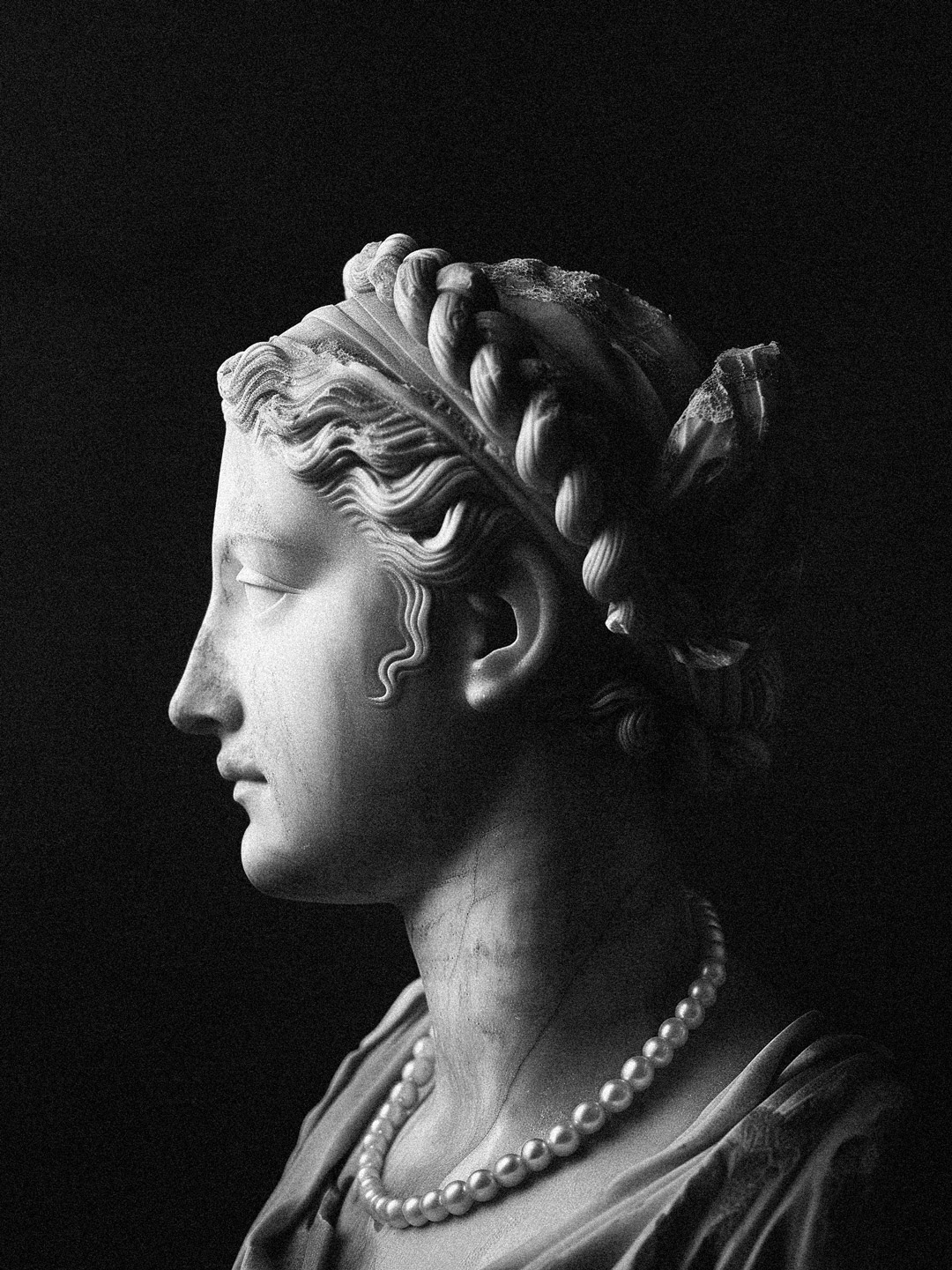
Sappho, spelled (in the dialect spoken by the poet) Psappho, (born c. 610, Lesbos, Greece — died c. 570 BCE). A lyric poet greatly admired in all ages for the beauty of her writing style.

Her language contains elements from Aeolic vernacular and poetic tradition, with traces of epic vocabulary familiar to readers of Homer. She has the ability to judge critically her own ecstasies and grief, and her emotions lose nothing of their force by being recollected in tranquillity.

Marble statue of Sappho on side profile.

Designed with WordPress