Tag: ideograms

  • Linear B tablet KN 847 K j 61, wheat production at Knossos for one lunar month

    Linear B tablet KN 847 K j 61, wheat production at Knossos for one lunar month:

    Knossos tablet KN 847 K j 61 monthly cultivation of wheat

    Linear B tablet KN 847 K j 61 deals with wheat production at Knossos for one month (we do not know which month). Soanobotos is the wheat farmer. Note that the ideogram for “month” looks like the moon, which is scarcely surprising. The output of wheat at 12 hectares for this particular month is in line with the extent of wheat production we might expect from the large expanse of fields surrounding a city as large as Knossos (population ca. 55,000). It is absolutely critical to understand that, in ancient times as in modern in the Mediterranean basin, the production of wheat could not have extended through every month of the year. Far from it. That is par for the course in any civilization, ancient or modern. The second point, which stage of production are we dealing with here? This tablet does not make it at all clear. Is is spring and are we dealing with the sowing of wheat? Or is it autumn, and the harvesting of wheat. My bet is decidedly in favour of the latter scenario. Now it is more than likely that harvesting of wheat was spread over two months at most, since the autumns are warm in the Mediterranean. So we can expect that something in the order of the number of “hectares” = 12 for this month, let’s say it is lunar “September”, would be repeated for the next month, lunar “October”, though probably on a somewhat lesser scale, let’s say 8 hectares. That would yield a crop of 20 “hectares” harvested for the current year. Pretty decent, I would say. Not only that, we must keep firmly in mind that this crop is only that of Soanobotos, who is only 1 of God knows how many farmers at Knossos. There could have been as few as 20 or as many as 50. No one knows for sure. So the wheat crop harvested at Knossos alone could have run to 240 hectares at a conservative estimate. Just about right on target for such a large city. If a conservative estimate for both of the lunar months is taken into account, the harvest runs to 400 hectares! We’ll never know, but it is always worthwhile conjecturing, and in any case, the wheat crop at Knossos would have had to be pretty substantial.

  • Pylos tablet Eo 269, wool carding and the production of wheat

    Pylos tablet Eo 269, wool carding and the production of wheat:

    Pylos tablet Eo 269 wheat crops

    Pylos tablet Eo 269 deals with both wool carding and the production of wheat (wheat crops). The person responsible for wool carding is Aktaoios, who is the owner of a settled plot of land. Note the emphasis on “settled”. The family lives on the land and off it. Aktaoios would therefore appear to be a well off farmer-land owner. The first occupation mentioned is wool carding, which implies the presence of (a lot of) sheep, even though sheep are not specifically mentioned on this tablet. With reference to the wheat crop, while we do not know exactly how much wheat the “unit of measurement” refers to, for the sake of convenience, let us say it is something like 1 hectares or 1 acre or something along those lines. It clearly was something along those lines, but no actual “proof” of the size of measured land upon which wheat was grown in Mycenaean times survives, as is to be expected. So we make an approximation. In any case, it is a lot of wheat, and he and his family would have had to do a lot of seeding to bring in such a rich crop. The Minoans and Mycenaeans (here at Pylos) appear to have been real experts at growing wheat, as it is often mentioned in large quantities on Linear B tablets from both Knossos and Pylos.

  • Linear B tablet K 1248, Knossos, a special case

    Linear B tablet K 1248, Knossos, a special case:
    
    Knossos tablet K 1248 PE rams
    
    Linear B tablet K 1248 at Knossos presents us with a special case, in so far as it contains two new independent supersyllabograms, RU and KA. KA = kameu, which refers to the owner of a kama, a unit of land, which in turn is for all intents and purposes, synonymous with kitimena = a plot of land. This makes such perfect sense in context that it appears almost incontestable. And it also makes sense that the supersyllabogram KA, the owner of a unit or plot of land must be an independent supersyllabogram, because the owner is not necessarily directly linked to the sheep. Any kind of livestock might be present on his land at any given time. Moreover, the the unit or plot of land as such is independent of whatever livestock or, for that matter, crops which might turn up there. Now the tablet further clearly implies that KA = the owner of a unit of land because he is called by name, Kirinetos. He must be quite a wealthy farmer or superintendent of lands because he owns a lot of sheep (95) at one place (unnamed) and five more at Tuniya, which apparently is a minor outpost, given the small number of rams there. On the other hand, it is very difficult to establish whether or not he also owns a unit of land at Rukito = Lykinthos, since using a supersyllabogram, in this case, RU, to replace a toponym, is completely atypical. In fact, I reserve serious doubts that indeed RU refers to a place name. The only reason I selected it (Rukito) is that this is the only entry in Chris Tselentis' Linear B Lexicon which fits the bill. But it is a pretty poor excuse for the full word represented by the independent supersyllabogram RU, and so we must take it with a serious grain of salt.  I have tried my best.
    
    
  • Linear B tablet KN 851 K j 03, olive oil at Knossos

    Linear B tablet KN 851 K j 03, olive oil at Knossos:
    
    851 K j 03 A olive oil A
    
    The text on this Linear B tablet is broken off. If indeed epikere means “at the top of a honeycomb”, which is very doubtful (although the word partially fits with the Classical Greek word for “honeycomb”, then whatever the “i” is the termination of in the first line appears to be the vessel in which the honeycomb is stored. Linear B ama is almost the exact equivalent of its Classical Greek counterpart, and in this context means “along with”, indicating that the honeycomb (if that is what it is) is stored along with the wheat (if that is what the syllabogram means) and if not, along with something right-truncated beginning with ZO, but we cannot say what, and finally along with olive oil in 46 amphorae, where the amphorae are almost certainly of the type shown in the illustration above, in other words, huge amphorae or pithoi, which were in widespread use for the storage of olive oil at the Third Palace at Knossos, Late Minoan III, ca. 1450 BCE, just as this tablet makes abundantly clear.
    
    So the running translation goes something like this: something at the top of a honeycomb (?) stored  along with wheat and olive oil in 46+ amphorae. I say 46+ because the number is right-truncated and could be anywhere from 46 to 49.     
    
    
  • Severely damaged tablet on textiles, KN 1530 R t 01

    Severely damaged tablet on textiles, KN 1530 R t 01:

    KN 1530 R t 01 textiles damaged

    Because Knossos tablet KN 1530 R t 01 on textiles is so severely damaged, it is impossible to make any sense at all out of lines 1 & 2, while only the right side of line 3 makes any sense, in so far as it clearly sets down 11 units of textiles and (apparently) a liability, if that is what the supersyllabogram O means in this context, i.e. O = opero = liability. Line 4 is muddled on the left side. It is difficult to establish whether or not the word on the left side, which is partially missing, is a person’s name, but if it is, and we insert “i” as the missing letter, then we have Waisio in Linear B or Waisios in Archaic Greek. The middle part of this line is garbled. The word kitano means “a terebinth tree” and seems out of place in this context, unless the pistachio from this tree is used to create a pale green dye for the cloth. The right side of line 4 makes sense, in so far as it clearly sets down 11 units of textiles and (apparently) a liability, if that is what the supersyllabogram O means in this context, i.e. O = opero = liability.

  • Linear B tablet Knossos KN 683 Sh 01 dealing with textiles and onyx

    Linear B tablet Knossos KN 683 Sh 01 dealing with textiles and onyx:
    
    KN 683 S h 01 textiles
    
    Linear B tablet Knossos KN 683 Sh 01 deals primarily with textiles, but it covers a lot more ground than just that. The textiles mentioned are (a) wehano, a Linear B word for “a type of textile”, but since this word is archaic Mycenaean Greek, we do not know exactly what kind of textile it refers to. We do know that it is a kind of cloth, but that is as far as it goes. (b) The next type of cloth mentioned is mare (in Linear B = “wool”. Next comes the really surprising mention of onyx = onuke in Mycenaean Linear B! Female interior decorators are not only working on both types of cloth, but on the onyx too! Wow! The question is, what are they decorating that requires both two kinds of cloth (one wool) and onyx as well? That is a mystery to me. And they are using an awful lot of wool (9 rolls at 2 units of weight each, probably something along the line of kilograms), in other words something like 18 kilograms or so.  And it is hardly surprising that, with the use of 2 types of cloth and of onyx, this interior decorating, whatever it is, is going to be expensive to the potential buyer, which is why the ladies in question wish to make it perfectly clear that there is a question of debts to be paid. No payment, no decorations. Nada. Nothing surprising there. Ancient capitalism at its best.
    
    I actually found this tablet not only quite a challenge, but a real beauty at that. There is a great deal more information to be found on it than on most Linear B tablets. That is what makes it so intriguing. 
    
    
  • Linear B tablets on wheat: KN 849 K j 72

    Linear B tablets on wheat: KN 849 K j 72:
    
    Knossos KN 849 K j  72 wheat
    
    This tablet is rather more challenging. The Linear word beginning with pera on the first line is right-truncated; so we do not know what word or phrase it is supposed to represent. Upon consulting Chris Tselentis’ excellent Linear B Lexicon, I discovered only one Linear B word which fit, and that is peraakoraiya, which means “in the further provinces”. It is plausible, I suppose, but rather unlikely. However, it is possible, even likely, that Linear B pera is not truncated at all, and that it is therefore the preposition for “beyond”... but beyond what? It just so happens that, as with everything else in the agricultural sphere, the Minoans and Mycenaeans raised their sheep and livestock and cultivated their crops on Linear B kitimena = “plot(s) of land”. So a better translation would be, “Wheat is being cultivated beyond the confines of this particular plot of land”, in other words, in an adjacent plot. That makes quite a lot of sense to me. 
    
    
  • Linear B tablets on wheat: KN 36 K c 33

    Linear B tablets on wheat: KN 36 K c 33:
    
    KN 36 K c 33 wheat
    
    This is a typical Linear B tablet from Knossos dealing with wheat.
    
    
  • Invitation to join The Premier Network of Major Classical Greek and Latin sites on the Internet:

    Invitation to join The Premier Network of Major Classical Greek and Latin sites on the Internet:
    
    Linear B, Knossos and Mycenae
    
    Linear B, Knossos & MycenaeLINK
    
    is spearheading a major initiative to bring together and co-ordinate a brand new  Premier Network of Major Classical Greek and Latin Sites on the Internet, which will be comprised of as many major Classical sites as we can reach in the next few months, in order to build a research network unlike any other yet seen on the Internet, apart from academia.edu itself. To date, our site and Koryvantes, the Association of Historical Studies
    
    Koryvantes
    
    
    Rita Robert's Blog LINK
    
    
    Sententiae Antiquae
    
    and a major European Institute of Archaeology, in anticipation of their acceptance of membership. Our strategy is to ask as many major Classical sites that we can reach ourselves to join in our new Network, and then in turn to appeal to those new members who have already joined up to contact other key sites with which they are closely linked or in partnership with.
    
    Our eventual goal is to establish a new LINKS page on each of the participating sites to all other sites in the Network, which is to be multilingual, if at possible. Since LBK&M is a Canadian site, we hope to call our network:
    
    The Premier Network of Major Classical Greek and Latin sites on the Internet = Le premier réseau des sites les plus importantes des études classiques grecques et latines.
    
    And we are of course open to adding the title in other languages as well. 
    
    
  • Knossos tablet KN 1280 E m 222, 10 ewes, 10 lambs and 40 sheep in a sheep pen

    Knossos tablet KN 1280 E m 222, 10 ewes, 10 lambs and 40 sheep in a sheep pen:
    
    Knossos tablet KN 1280 E m 222 lambs and sheep in sheep pens
    
    Knossos tablet KN 1280 E m 222 deals with 10 ewes as mothers of 10 lambs, and also with 40 rams in a sheep pen. The supersyllabogram PA = pauro in Linear B or pauros in ancient Greek, also parvus in Latin = “small” or “little”, hence a small sheep is naturally a lamb. As if. Unfortunately, although the supersyllabogram PA occurs on no less than 38 Linear B tablets in the sheep husbandry sector of the Minoan/Mycenaean economy, there is no attested word corresponding to this supersyllabogram anywhere in the Mycenaean Greek lexicon. So I had to make an “educated guess”. Well, actually more than just educated. After all, the ancient Greek word pauros = Latin parvus = “small” or “little” eminently fits the bill. So I chose it, just like that. It is possible that this SSYL does not mean “lamb”, but I rather doubt it, especially in light of the fact that the number of lambs on this tablet is exactly equal to the number of ewes. 10 mothers, 10 lambs.


  • Knossos Linear B tablet K 919, fleece, penning in sheep on a plot of land etc.

    Knossos Linear B tablet K 919, fleece, penning in sheep on a plot of land etc.:
    
    Linear B tablet K 919 with the supersyllabograms KI PE ZA SE
    
    This is a unique Knossos Linear B tablet K 919, the only 1 of its kind in the entire repertoire of Linear B tablets, in so far as in it we have the only appearance in Linear B of the (apparently) independent supersyllabogram SE = sekaze in Linear B or sekazein in ancient Greek, which means “to pen in”. This suits the context like a glove, since the supersyllabogram PE, which means “a sheep pen” pops up immediately after the SSYL KI = “a plot of land”, while the left-truncated O to the right of the tablet is almost certainly the first supersyllabogram,  i.e. O, the first vowel of the Linear B word onaton = “a lease field”. I say that the SSYL SE is apparently independent, since it is not immediately fused with an ideogram,  in this case, the ideogram for “ewes” (100 of them) to its right. But this may be deceptive. The SSYL SE may be partially independent and partially dependent, since (a) it stands on its own in between maro = “fleece” and the ideogram for “ewes”, yet (b) it may very well be dependent on the ideogram for “ewes”, in spite of its placement. This is also a unique phenomenon in Linear B. No other supersyllabogram other than SE is both dependent and independent, if indeed that is what this one is. I cannot be sure. In point of fact, no other scribe ever resorted to placing a supersyllabogram mid-way between a Linear B word, maro, and an ideogram (ewes). Very odd.
    
  • Linear B tablets dealing with gold cloth (supersyllabogram KU incharged)

    Linear B tablets dealing with gold cloth (supersyllabogram KU incharged):
    
    Linear B tablets dealing with gold cloth KN 514 to KN 516
    
    The 3 Linear B tablets above all deal with gold cloth. The supersyllabogram KI incharged in the ideogram for pawea = textiles indicates that the cloth is made of gold = kuruso in Linear B. The translations are completely transparent. The only problem is with the right-truncated syllabogram A on the first fragment. This could be the first syllabogram, i.e. the first syllable of at least 5 Mycenaean Greek words as illustrated above. Take your choice. My favourite is “decorated”, although I also particularly like “silver”, since cloth woven with silver and gold would be extremely precious. The following picture illustrates two Minoan women wearing dresses with gold weaving.
    
    Minoan women in gold cloth
    
    
  • The beautiful “Prince of Lilies” Fresco, Knossos, showing his belt = ZONE

    The beautiful “Prince of Lilies” Fresco, Knossos, showing his belt = ZONE:
    
    KN 433 R w 11 ZO
    
    The Prince of Lilies Knossos with his belt
    
    This stunning fresco from the Late Minoan IIIb Palace at Knossos (ca. 1450 BCE) shows us the famous so-called “Prince of Lilies” wearing his beautiful azure belt.  Note that the supersyllabogram, the single syllabogram ZO, is the first syllable of the Linear B word zone, which is equivalent to its ancient Greek counterpart as illustrated on the tablet and on the fresco. This is the one and only tablet in the entire Linear B repertoire on which this SSYL appears, but I am quite convinced that it means what I take it to mean, i.e. a belt.
    
    
  • A partial Linear B tablet from Knossos illustrating 542 amphorae or pithoi!

    A partial Linear B tablet from  Knossos illustrating 542 amphorae or pithoi! 
    
    KN 712 M p 01
    
    This is a partial Linear B tablet from  Knossos illustrating 542 amphorae or pithoi, a staggering number. Since the pithoi at Knossos are all huge, it is impossible that these 542 amphorae an all be pithoi. Far from it. Probably 500 at least were smaller amphorae, and the rest (42 or so) possibly pithoi, but we cannot be sure. I have deduced that teyo to the left side of this partial tablet is the genitive singular of the Linear B word teo = “Zeus” or “a god”, hence in this context it means, “of Zeus” or “of the god”, implying that all of these amphorae and pithoi are the property of said god. 
    
    Here we see a fabulously wrought Minoan bee pendant with what appears to be the image of a Minoan priest or god in the centre.
    
    Minoan bee pendant god ca 1850 - 1550 BCE Aigina
    
  • A series of 5 Linear B fragments on vessels (pottery) with 2 beautiful illustrations of amphorae

    A series of 5 Linear B fragments on vessels (pottery) with 2 beautiful illustrations of amphorae:
    
    5 Linear B fragments on vessels
    
    There can be no surprise that 4 these 5 fragments follow one another serially, while the last one is in the same numeric series (700s). I do not understand why 708b just shows the number 8 but has no framework in which it is supposed to be set (i.e. no fragment).  Fragment 709 M m 01 appears to have  originally been a longer tablet, since there is text (? na) left-truncated prior to the ideogram and right-truncated (ya) after it. It is impossible to recover the “absent” meaning of the word of which these syllabograms a a part. 776a M f 01 is very peculiar.  The “amphora” at the top is clearly unfinished, and even the one on the bottom is rudimentary. This is uncharacteristic of Linear B scribes. Was he alseep at the switch? Was it the end of the day? Was the tablet started, only to be discarded? If so, why? We shall never know.
    
    Examples of exquisite Minoan amphorae from Knossos:
    
    amphoraa
    
    mycenaean-linear-b-aporowewe-amphora-decorated-with-spirals


  • Example of a Linear B tablet on vessels without supersyllabograms

    Example of a Linear B tablet on vessels without supersyllabograms:
    
    Knossos table KN 434 M r 01 vessels
    
    Here you see an example of a Linear B tablet without supersyllabograms from Knossos. The text on the tablet is piecemeal and so much of it defies decipherment. So I did not bother even trying to decipher what was beyond me. For instance, the two words wapi kononipi appear nowhere in any Linear B glossary or lexicon, nor in ancient Greek. So they are probably archaic Mycenaean, and lost to us forever. Still, enough of the original text remains intact for us to make a sensible translation of it.
    
    
  • Archaeology, Anthropology and Interstellar Communication 2: Relevant Photography and Images

    Archaeology, Anthropology and Interstellar Communication 2: Relevant Photography and Images
    
    Here we see some photographs and images relevant to our translation of Richard Saint-Gelais' brilliant article,Archaeology, Anthropology and Interstellar Communication 2  research... and some not so relevant! First off, we have here a chart illustrating thee extreme geometric simplicity or more to the point, the Geometric Economy of Mycenaean Greek, which may indeed make it susceptible or even suitable to extraterrestrial communication with other intelligent beings, if we accept the “fact” that we ourselves are “intelligent”... a point which is open to serious debate!
    
    The Geometric Economy of Mycenaean Linear B:
    
    Geometric enonomy of Linear B
    
    Moreover, Linear B's closest cousin, Arcado-Cypriot Linear C, which followed closely on the heels of Linear B, once it fell out of use with the fall of Mycenae ca. 1200 BCE, and which lasted continually from ca. 1100-400 BCE (!), is just as remarkable for its Geometric Economy as Linear B, and could equally serve the same capacity as a vehicle for extraterrestrial communication.
    
    The Geometric Economy of Arcado-Cypriot Linear C:
    
    linear-c-geometric
    
    On the other hand, nothing could be more ridiculous than the Voyager 1 satellite, launched on Sept. 5 1977, and now hurtling God knows where just outside the confines of our Solar System. Apart from the fact that a mechanical contraption such as this would (and will!) take hundreds of thousands of years to get anywhere at all, what is the point? Moreover, the premises upon which its means of communication with so-called extraterrestrials are based are so absurdly unsound as to beg credence. For instance, what extraterrestrial beings in their right minds (assuming they have minds like us) could conceivably recognize those ridiculous images of a naked man and woman?... unless they were even remotely similar to us physiologically... a likelihood that is about as realistic as winning a lottery of a trillion dollars. And that is just scratching the surface, as we shall discover to our great amusement when I eventually publish my article on Prof. Saint-Gelais' own research. There follow here a few images relative to the Voyager 1 probe which are liable to make you LOL.
    
    plaque 
    
    pioneer_plaque_ for _real
     
    Voyager_plaque_V2
    
    
  • The beginning of my translation of, Archaeology, Anthropology and Interstellar Communication 2, by Richard Saint-Gelais, Université Laval, Québec, Québec

    The beginning of my translation of, Archaeology, Anthropology and Interstellar Communication 2, by Richard Saint-Gelais, Université Laval, Québec, Québec  
    
    Before I get to the beginning of my translation of Richard Saint-Gelais' astonishing article on the practical and theoretical application of Mycenaean Linear B (I kid you not!) to interstellar communication between ourselves and other intelligent extraterrestrial beings, allow me to point out that the notion is not so far-fetched as it might seem at first sight. Certainly, it is not in the same “category” as Ufology or Ufologists chasing kooky dreams in “Area 51”. In fact, NASA itself sponsored this brilliant and insightful investigation which Prof. Sain-Gelais recently undertook under the auspices of NASA.
    
    So this is serious business.. . which is why I am translating it in the first place. But I intend to take the project even further than that. Not only am I translating Prof. Saint-Gelais' in depth study, but I intend to follow my translation and his subsequent original text in French with a lengthy commentary on the feasibility of such interstellar communication, however remote. And remote it is. It is likely that I will need at least another month even to effect the translation, let alone to write the article, which I shall eventually be posting on my academia.edu account. Hopefully, I can then submit it to a scientific journal such as Science

    Science

    or Astronomy 
    
    astronomy
    
    Only time will tell. But I am quite sure some scientific publication will certainly be interested in this highly original research I have to offer. 
    
    My translation: introduction:
    
    Archaeology, Anthropology and Interstellar Communication 2
    
    Chapter 5: Semiotic Outlook on SETI
    
    As everyone knows, communication is a sensitive human venture. So there are reasons to doubt that this would be an easy thing to carry off across the universe. In this essay, I shall endeavour to explain a set of theoretical problems which might beset communication between us and extraterrestrial intelligent beings. I shall also attempt to map out the primary difficulties which we may encounter when we come face to face with the phenomenon (or to be more precise the hypothesis) underlying communication, by all appearances, with beings so profoundly unlike ourselves. Such difficulties are often articulated in epistemological terms or of sensorial incompatibility between interstellar beings belonging to such dissimilar species and cultural milieus communicating with one another that that grounds for mutual understanding proper to such communication will very likely be extremely weak. We are not even aware whether or not extraterrestrial beings are likely to perceive and conceive of their own reality in any way similar to the way we do, or if they are subject to the same sorts of cognitive categories as ours, or even if they are able to communicate by sight or sound.
    
    infinite-improbability-drive
    
    Right off the top, I have to say that my position runs along the lines of epistemological skepticism as I have just outlined it. Still, my point of view differs somewhat, without however being incompatible with the epistemological approach. I intend to apply semiotic theories and methodologies to the problem of interstellar communication, all the while placing an emphasis on signs, language, meaning and interpretation. An easy but simplistic approach to the conception of such communication as this can be defined in terms of synchronization of a message received with its prior transmission, with message decoding at target pursuant to its coding at source, in the sense of meaning conveyed through the medium of the message itself considered as vehicle for its own context (Marshall McLuhan, The medium is the message). Still, understanding a message does not necessarily mean extracting something actually present in its own signs. On the contrary, it is implied that such signs can effectively integrated in an interpretational framework allowing the being targeted to confer meaning on them, in the sense that he or she can profit from elaborating on them, rather than extracting them from the source. For instance, let's take the example of a very basic repetitive sign consisting of two equilateral triangles with their bases flush, all the while pointing in opposite directions, one to the left and the other to the right. Occasionally, these two triangles are separated by a vertical line. A experiments re-writing “this” sign on a blackboard conducted with first year students have repeatedly shown me, they are met with looks of astonishment until I can provide them with a hint along the lines of, “Suppose that this is something you have spotted in an elevator”, by furnishing them with a context for interpretation allowing them to recognize the triangles as a conventional symbol opening up portals.
    
    By Richard Saint-Gelais, Université Laval, Québec, Québec 
    
     
    Archéologie, Anthropologie et Communication Interstellaire 2
    
    Introduction:
    
    Chapitre 5: Perspectives sémiotiques sur SETI
    
    SETI@home Multi-Beam
    
    La Communication, comme nous le savons tous, est une entreprise délicate entre les êtres humains. Donc, il y a des raisons de douter que ce serait une chose facile à travers l'univers. Dans cet essai, je vais essayer de décrire un ensemble de problèmes théoriques qui pourraient affecter la communication avec des intelligences extraterrestres. Je vais aussi essayer de cartographier les principales difficultés qui se posent lorsque l'on regarde le phénomène (ou plus exactement l'hypothèse) de communication entre ce qui sera, selon toute vraisemblance, des espèces profondément différentes. Ces difficultés sont souvent exprimées en termes d'épistémique et d'incompatibilité sensorielle entre des interlocuteurs interstellaires qui appartiennent à des espèces et des cultures si différentes que le terrain d'entente nécessaire à la communication pourrait être vraiment très faible. Nous ne savons pas si les extraterrestres vont percevoir et concevoir leur réalité de façon similaire à la nôtre, en utilisant les mêmes catégories cognitives, ou même si ils vont communiquer par les voies visuelles et acoustiques.
    
    NASA
    
    Je dois dire d'emblée que ma position est similaire au scepticisme épistémique que je viens de mentionner. Mais mon point de vue sera légèrement différent de ça, mais pas incompatible avec la perspective épistémique. Je vais appliquer les théories et les méthodes d'analyses sémiotiques au problème de la communication interstellaire, en mettant l'accent sur ??les signes, le langage, le sens et l'interprétation. Une facile mais simpliste conception de la communication se définit comme la production d'une émission suivie d'une phase de réception, un codage puis un décodage d'un sens donné à travers un message qui est considéré comme un véhicule pour ce contenu. Mais la compréhension d'un message n'est pas d'extraire quelque chose de physiquement présent dans les signes. Elle implique, au contraire, l'intégration de ces signes dans un cadre d'interprétation qui permet au destinataire de leur donner des significations, un sens que le bénéficiaire doit élaborer, pas extraire. Prenez, par exemple, un signe très simple et fréquent qui consiste en deux triangles équilatéraux placés la base à la base et pointant dans des directions opposées, l'une à gauche, l'autre à droite; Ces deux triangles sont parfois séparés par une ligne verticale. Comme des expériences répétées avec les étudiants de premier cycle me l'ont montré, une reproduction de ce signe sur le tableau noir ne rencontre que perplexité jusqu'à ce que je leur offre l'indice "suppose que c'est quelque chose que vous voyez dans un ascenseur", fournissant une interprétation du contexte, qui leur permet de reconnaître les triangles comme le symbole conventionnel pour ouvrir les portes.
    
    Par Richard Saint-Gelais, Université Laval, Québec, Québec 
    
    
  • 3 Linear B tablets on coriander, 1 from Knossos, 1 from Lykinthos, 1 from Surimos

    3 Linear B tablets on coriander, 1 from Knossos, 1 from Lykinthos, 1 from Surimos:
    
    measurmenrt-of-coriander-in-linear-b-on-3-tablets-from-scripta-minoa
    
    These 3 tablets on coriander are the final 3 to be posted here. I actually posted them back in 2015, but I am reposting them with additional comments. The first tablet, KN 415 L c 01, is quite straight-forward, simply mentioning the spice shaker with 6 grams of coriander from Lykinthos. The second, KN 417 L c 01, informs us of the person who has (or owns) the spice shaker. His name is Qamos. The spice shaker contains 3 (grams) of coriander. The tablet is partially illegible.  The adjective “crimson” pops up, and presumably refers to the colour of the coriander, which seems to be in powder form. The last tablet, KN 418 L c 11, is double sided. The recto side, which is again partially illegible, again deals with delivery of coriander. On the verso side, we have the adjective “purple”. I am not sure what purple is supposed to refer to, as I am unsure whether or not powderized coriander can be purple. Perhaps someone visiting our blog can enlighten me on this point.  The top refers to coriander, the amount of which is equivalent to 2 X 6 grams, on the bottom we have 7 grams. The verso of the tablet appears to indicate that all of the coriander there is from Surimo.
    
    
  • Linear B tablet KN 416 L c 02, spices at Phaistos

    Linear B tablet KN 416  L c 02, spices at Phaistos:
    
    KN 416 L c 02 spices at Phaistos
    
    Not much to say about this one, except that it refers to Phaistos. If tablets concerning spices do not refer to a place name, they are understood to be from Knossos. Since the word -gram- did not exist in the ancient world, I have replaced it with pauron = a small amount.
    

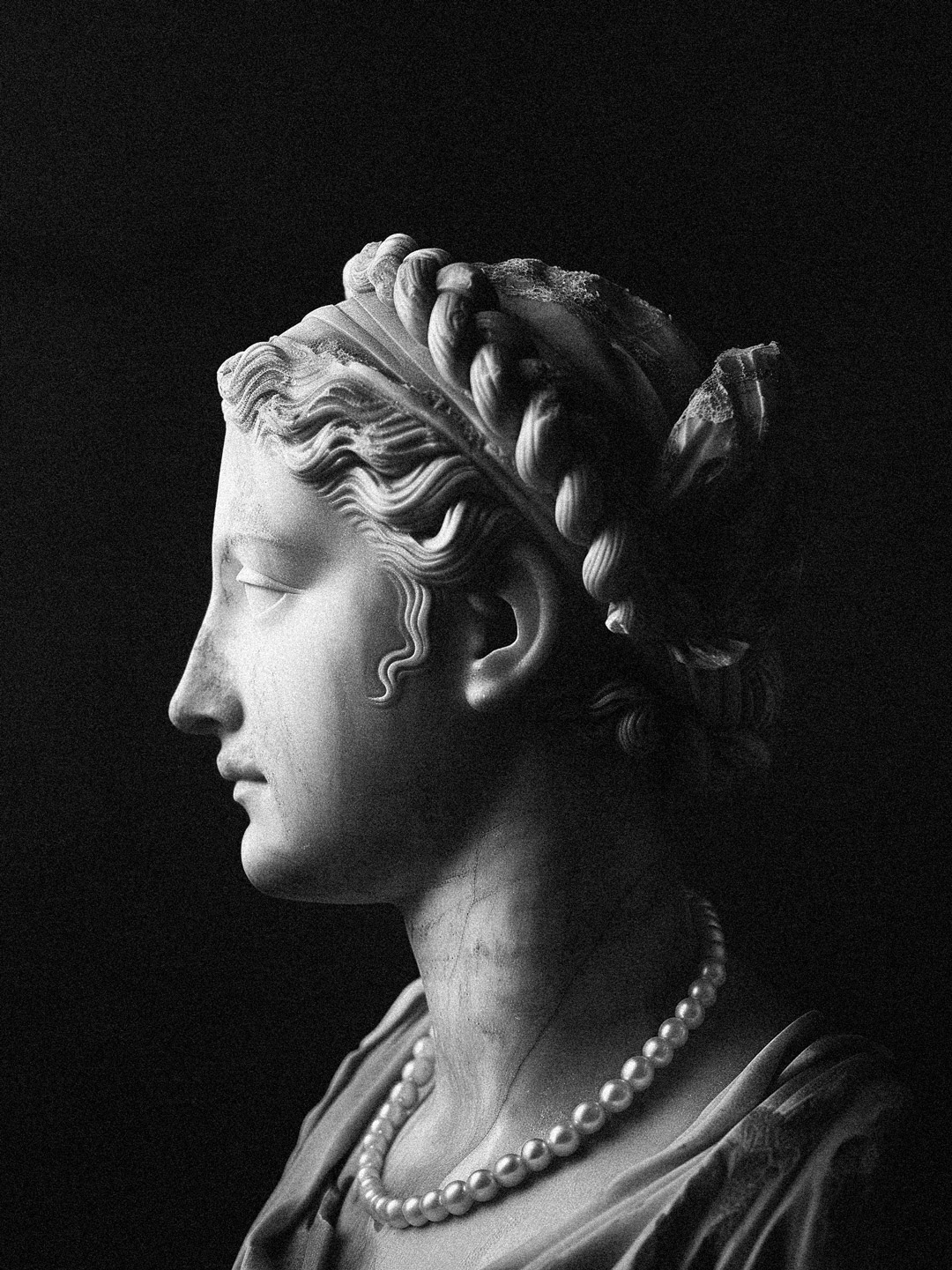
Sappho, spelled (in the dialect spoken by the poet) Psappho, (born c. 610, Lesbos, Greece — died c. 570 BCE). A lyric poet greatly admired in all ages for the beauty of her writing style.

Her language contains elements from Aeolic vernacular and poetic tradition, with traces of epic vocabulary familiar to readers of Homer. She has the ability to judge critically her own ecstasies and grief, and her emotions lose nothing of their force by being recollected in tranquillity.

Marble statue of Sappho on side profile.

Designed with WordPress