Knossos, Bull Portico photos, Third Palace, Late Minoan IIIb (ca. 1450 BCE) Post 2 of 2:


Knossos, Bull Portico photos, Third Palace, Late Minoan IIIb (ca. 1450 BCE) Post 2 of 2:
Knossos, Bull Portico photos, Third Palace, Late Minoan IIIb (ca. 1450 BCE) Post 1 of 2:

Here you see the first 3 photos of the Bull Portico photos, Third Palace, Knossos, Late Minoan IIIb (ca. 1450 BCE). The architecture is simple, but magnificent. The fresco of the bull is stunning. The bull was the standard symbol of almost all ancient Occidental civilizations, and that of Persia as well, until later into Antiquity. I wish to draw your attention specifically to the incredibly accurate circular designs on the frieze. As with all Greek architecture, the proportions are absolutely perfect, from one circle to the next.


Even the Parthenon of Athens was flanked by bulls at its entrance, as illustrated here:

Columns from the Late Minoan IIIb Palace (ca 1450 BCE) Post 2 of 2:


Columns from the Late Minoan IIIb Palace (ca 1450 BCE) Post 1 of 2:


Windows from the Late Minoan IIIb Palace (ca 1450 BCE):


Doors from the Late Minoan IIIb Palace (ca 1450 BCE):


Archaeology, Anthropology and Interstellar Communication 2: Relevant Photography and Images Here we see some photographs and images relevant to our translation of Richard Saint-Gelais' brilliant article,Archaeology, Anthropology and Interstellar Communication 2 research... and some not so relevant! First off, we have here a chart illustrating thee extreme geometric simplicity or more to the point, the Geometric Economy of Mycenaean Greek, which may indeed make it susceptible or even suitable to extraterrestrial communication with other intelligent beings, if we accept the “fact” that we ourselves are “intelligent”... a point which is open to serious debate! The Geometric Economy of Mycenaean Linear B:Moreover, Linear B's closest cousin, Arcado-Cypriot Linear C, which followed closely on the heels of Linear B, once it fell out of use with the fall of Mycenae ca. 1200 BCE, and which lasted continually from ca. 1100-400 BCE (!), is just as remarkable for its Geometric Economy as Linear B, and could equally serve the same capacity as a vehicle for extraterrestrial communication. The Geometric Economy of Arcado-Cypriot Linear C:
On the other hand, nothing could be more ridiculous than the Voyager 1 satellite, launched on Sept. 5 1977, and now hurtling God knows where just outside the confines of our Solar System. Apart from the fact that a mechanical contraption such as this would (and will!) take hundreds of thousands of years to get anywhere at all, what is the point? Moreover, the premises upon which its means of communication with so-called extraterrestrials are based are so absurdly unsound as to beg credence. For instance, what extraterrestrial beings in their right minds (assuming they have minds like us) could conceivably recognize those ridiculous images of a naked man and woman?... unless they were even remotely similar to us physiologically... a likelihood that is about as realistic as winning a lottery of a trillion dollars. And that is just scratching the surface, as we shall discover to our great amusement when I eventually publish my article on Prof. Saint-Gelais' own research. There follow here a few images relative to the Voyager 1 probe which are liable to make you LOL.


Photo series of the Second Palace of Knossos (ca. 1700-1600 BCE) # 2

Here again you see a set of three photos of the rear stairwells of the Second Palace, which are very well preserved... indeed, so well preserved that even the ruins of Pompeii cannot boast of such restoration. The third photo shows that the interior wall structure of the Second Palace was pretty much identical with the Third, with door jambs in the same style and of the same colour. Unquestionably, the columns of the Second Palace must have looked pretty much identical to those of the Third. You can clearly see from the third and fourth photos that much of the structure of the retaining walls of the Second Palace was left intact by the Minoan engineers when they constructed the Third.    The retaining walls of the Second Palace are distinct, insofar as they are rounded at the corners.


Photo series of the Palaces of Knossos, first (1900 BCE), second (1700 BCE) & late Minoan III (1500 BCE) For the next few months, at least twice a week, I shall be posting scores of the wonderful photos I took of the Palaces of Knossos, which I took the day I visited the site, May 1 2012. Today, I am starting with 2 photos of the First Palace (ca. 1900 BCE), which was destroyed by earthquake. The First Palace

Some of the Third Palace, late Minoan II (ca. 1500-1425 BCE) was added onto the second. The rest of it was built over it. Even from the wasted ruins of the First Palace, you can see it was an advanced complex. Apparently, the population of Knossos was already around 18,000 by the time of the first palace, and had risen to at least 55,000 in the late Minoan III period. For antiquity, that is an extremely large city.
Shadow, our mascot on Linear B, Knossos and Mycenae: RIGHT CLICK to enlarge the photo to its full size. Then click on VIEW and then SAVE it to your computer.Here you see Shadow, my long-haired tabby, age 5, our mascot on Linear B, Knossos and Mycenae, keeping TABs (get it?) on my keyboard, to safeguard our posts and the security of our site. You can hit the TAB key to see more of her. Just kidding. Richard
Quelle horreur à Paris ! What a horrific mess in Paris! Click to ENLARGE Cliquer pour ELARGIR !#PorteOuverte attaques horrifiques à Paris doivent réveiller le monde entier ! C’est la guerre ! #PorteOuverte horrific attacks in Paris should wake the whole world up! This is war! Quelle horreur à Paris ! Isis n’a plus de visage humain ! C’est une monstruosité ! Que Dieu épargne leurs âmes pourries ! Qui d’autre en est capable? Wikipédia: Attentats du 14 novembre 2015 en Île-de-France
What a horrific mess in Paris! Isis has lost all semblance of humanity! It’s monstrous! May God spare their rotted souls! Who else can? Wikipedia: November 15 Paris Attacks
Photos from the Paris Attacks

BING images search reveals that the majority of Linear B tablets from Knossos & Pylos are from our own blog: from Knossos: Click to run the search:Now that is some accomplishment! It confirms that Linear B, Knossos & Mycenae is indeed the premier Linear B blog on the Internet. And if that were not enough, the same goes for the BING images search for Linear B tablets from Pylos: Click to run the search:
So if you wish to search for images of Linear B tablets from Knossos or Pylos, simply run the searches above, and voilà, off you go! You will find a treasure trove of Linear B tablets of these provenances, regardless of the site where they are found. Translations of tablets from both sites are by Richard Vallance and Rita Roberts. We have done ourselves proud. Richard
More splendid photos of the magnificent chandeliers in the Art Nouveau restaurant in Prague's central square + 2 photos of Old Town buildings!

Click on each photo to ENLARGE:


That's all folks, for Prague, but plenty more to come for Warsaw and Gdansk, Poland.

Richard
Photos of our vacation in Europe: Prague – the loveliest restaurant in Europe & probably the entire world! B

Breath taking!

Click on each photo to ENLARGE:


Even more to come!
Photos of our vacation in Europe: Prague – the loveliest city in Europe! A

These photos speak for themselves. Prague was Mozart's favourite city. No Wonder!

Click on each photo to ENLARGE:


Wait until you see the photos of Prague in the next two posts!

Richard
7 more photos from Vienna (2 in both colour & B&W), from our vocation in Europe, June 2015: Click on each photo to ENLARGE:


Great Photos to Welcome us back home to Canada from our grand tour of central Europe!

After spending almost a whole month in Europe (25 days), starting first with Budapest, Hungary for 3 days, then continuing on to Vienna, Austria for 5 days, thence to Prague, the Czech Republic for a week, and finally on to Warsaw, Poland for our last 9 days, we are finally back home here in Canada, though as you can all well imagine, not without mixed emotions.  It goes without saying that this was such an exciting vacation, visiting so many astonishingly beautiful locales, we must both miss Europe terribly, all  the more so considering that we added side trips to 3 more magnificent cities, Salzburg and Krakow for Louis-Dominique and Gdansk for myself. What a totally unanticipated and unimaginably rewarding dream come true! Words simply cannot express our profound joy at visiting so many famous European cities, all of which date from the cradle of European, hence, Western, civilization.

While even photos cannot adequately express the profound spiritual impact these amazing venues had on us, they can at least offer you all a glimmer of the fantastic experiences that await you should you ever decide to do a grand tour of central & Eastern Europe yourself. Beginning with this post, I shall be posting 4 of my finest photos for each of the 6 cities we visited, from the approx. 6,000 (!) I took during our voyage. You are going to love them!

So let us start with Budapest, Hungary: Click each photo to ENLARGE it:

1. Budapest Parliament Florentine cupola:

2. Budapest Parliament by night:

OLYMPUS DIGITAL CAMERA
3. Saint Matthias church with location and detail of weather vane:4. Budapest Museum frieze:

5. Budapest cathedral frieze: Ego sum via veritas et vita = I am the way, the truth and the life.

6. Danube River with Budapest Chain Bridge from our night cruise boat:

Richard
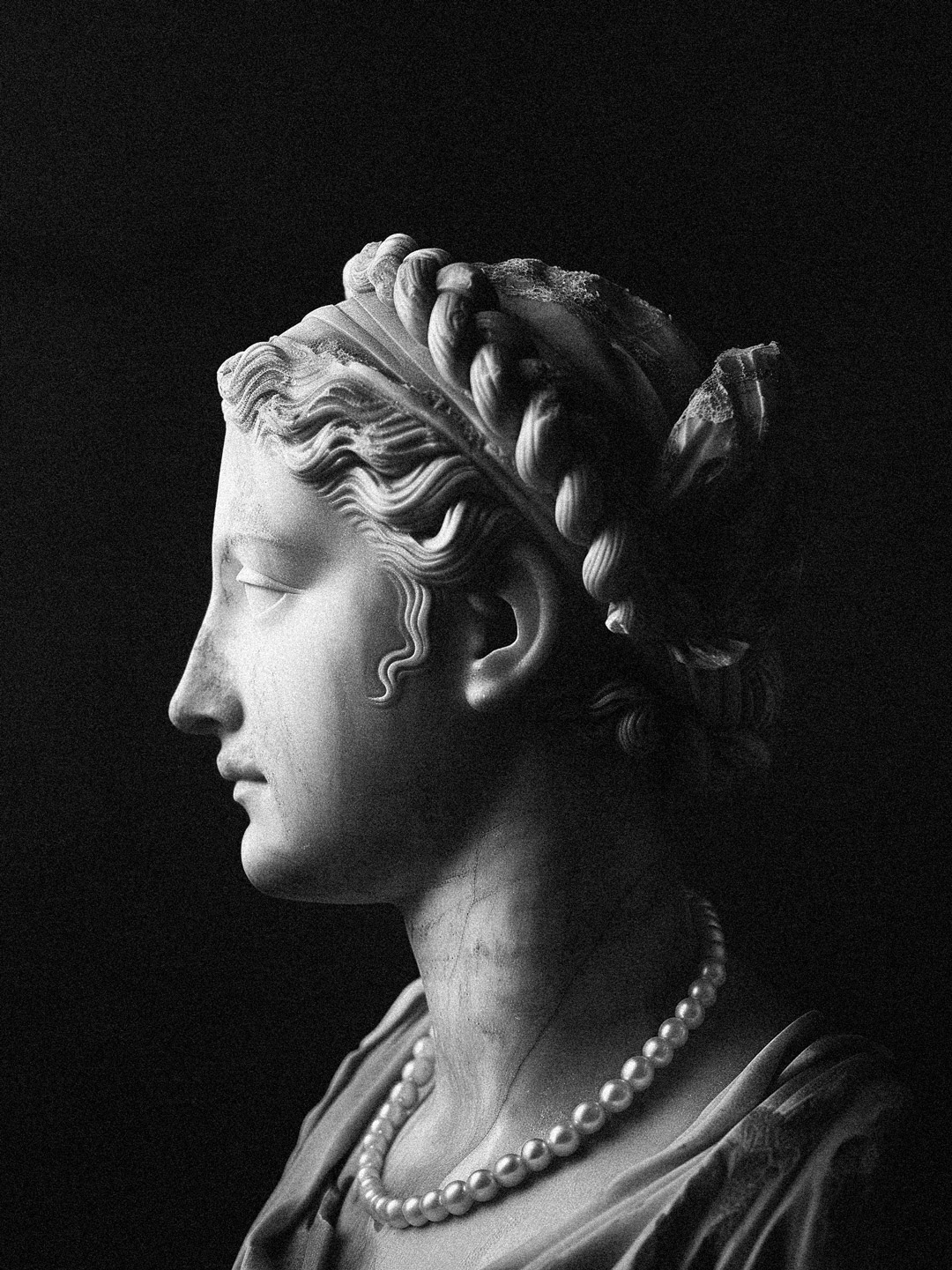
Sappho, spelled (in the dialect spoken by the poet) Psappho, (born c. 610, Lesbos, Greece — died c. 570 BCE). A lyric poet greatly admired in all ages for the beauty of her writing style.
Her language contains elements from Aeolic vernacular and poetic tradition, with traces of epic vocabulary familiar to readers of Homer. She has the ability to judge critically her own ecstasies and grief, and her emotions lose nothing of their force by being recollected in tranquillity.
Designed with WordPress


You must be logged in to post a comment.