Tag: Linguistics

  • The last two military supersyllabograms KO & WI with (animal) hide

    The last two military supersyllabograms KO & WI with (animal) hide:

    Military supersyllabogram KO & WI with hide

    The military supersyllabograms KO kowo = “fleece” & WI = (kito) wirineo = “leather (chiton)” with (animal) hide are the last two we can account for in the military sector. Although I have not been able to find either of them on any extant Linear B. Tablet, they are attested according to John Chadwick.

  • Knossos tablet KN 227 N l 21 & the supersyllabogram QE = qeqinomeno = “woven”

    Knossos tablet KN 227 N l 21 & the supersyllabogram QE = qeqinomeno = “woven”:

    Knossos tablet KN 227 N l 21 & supersyllabogram QE = woven undertunic or chiton

    As with the previous post, the supersyllabogram QE on this tablet clearly refers to qeqinomeno, a “woven undergarment” or “woven undergarment”. The rest is self-explanatory.

  • Linear B tablet K 224 and the new military supersyllabogram QE = woven undertunic & the supersyllabogram IQO ZE = a team of horses

    Linear B tablet K 224 and the new military supersyllabogram QE = woven undertunic & the supersyllabogram IQO ZE = a team of horses:

    Knossos tablet K 224 and the new military supersyllabogram QE

    Here we encounter the all-new supersyllabogram QE inside (incharged) in the ideogram for linen (under)tunic. It is crucial to understand that this supersyllabogram QE is completely unlike the previous one, QE inside a shield = “a wicker shield”. This new supersyllabogram QE, qeqinomeno, literally means “woven”, hence it refers to “a woven undertunic” or to be more precise, “a woven linen undertunic”, which once again the Mycenaean warriors wore under their toraka = ancient Greek thoraxes, i.e. Their breastplates. These two supersyllabograms are entirely different and must never be confused. This is the one and only instance in Mycenaean Linear B in which the same supersyllabogram appears inside two different ideograms, the first for “a shield” and the second for “an undertunic”. These two supersyllabograms QE + shield and QE + undertunic appear in the military sector only, and in no other sector of the Minoan/Mycenaean economy.

  • Linear B tablet at the Ashmolean Museum, An1910_217_O & the supersyllabograms RA = tailor & QE = wicker shield

    Linear B tablet at the Ashmolean Museum, An1910_217_O & the supersyllabograms RA = tailor & QE = wicker shield:

    Linear B tablet Ashmolean An1910_217_o

    You see illustrated here in its actual size the Linear B tablet An1910_217_O at the Ashmolean Museum/British Museum. Like the others we have recently posted, this tablet is concerned with a tailor adding the finishing touches to cloth, more specifically the linen undertunic Mycenaean warriors wore under their breastplates, known as toraka in Mycenaean Linear B or thoraxes in ancient Greek. The first word on the first line after the left-truncated PA is the name of the tailor, Apasakiyo in Linear B. The Greek below the Linear B Latinized text is the translation of the original Linear B text on this tablet. This is followed by the literal & free English translations, with the caveat that I am unable to translate the double syllabogram WE WE following the supersyllabogram QE inside the ideogram for a shield, meaning that the shield is a wicker shield.

  • NEW CATEGORY = TEXTILES at Linear B, Knossos & Mycenae!

    NEW CATEGORY = TEXTILES at Linear B, Knossos & Mycenae!
    
    Linear B Knossos and Mycenae new cateogy TEXTILES
    
    Click on the new category title, TEXTILES, to view all posts on our research blog on Mycenaean Linear B, Minoan Linear A & Arcado-Cypriot Linear C related to textiles:
    
    Since this category is in CAPS, it is a MAJOR category.
    
    We shall soon be adding another new MAJOR category = VESSELS (i.e. Pottery).
    
    In passing, I would like to draw to your attention that the best way to search our research site is to search by category. This way, you can zero in on the posts on the subject which interests you at the moment. For instance, if you click on Linear A, you will be taken to the pages where all posts on Minoan Linear A appear; if you click on Decipherment, you will be routed to the pages on which all posts dealing with decipherment of any tablet in any script, Minoan Linear A, Mycenaean Linear B or Arcado-Cypriot Linear B appear. And so on.  
     
    
  • Linear B tablet 04-59 D j 13 & the supersyllabograms RA = tailor & QE = wicker shield

    Linear B tablet 04-59 D j 13 & the supersyllabograms RA = tailor & QE = wicker shield:

    Linear B tablet 04-59 D j 13 and the supersyllabograms RA = tailor & QE = wicker shield

    This tablet poses the same problems as the previous ones we have posted on these two supersyllabograms, RA & QE. First off, as I have already said, it is well nigh impossible for me to determine what the two syllabograms WE WE following the second instance of the supersyllabogram QE for wicker shield mean? As I pointed out in the previous post, the double occurrence of WE (WE WE) usually references measurement. But I am unable to harmonize their incidence in this context with terms of measurement. Apart from that, there are two other glitches in the decipherment. What does rawa following the first instance of QE = wicker shield” refer to. The word rawaketa = “leader of the host” or “commander in chief” where “host” = “army”, as we find in Homer as well, is extant on the Linear B tablets. I have derived the subset rawa = “host” from the latter. It may or may not be the correct interpretation in this context. Secondly, if the last syllabogram, truncated right, on the first line is in fact DU, then it may be the first syllable of the word duo = “two”. But this is entirely conjectural. Although the rest of the translation appears to be relatively straightforward, it is still open to question, especially in light of the fact that I am quite unable to decipher WE WE.

  • K 04-58 D j 31 & the supersyllabograms RA A & QE (military and textiles)

    K 04-58 D j 31 & the supersyllabograms RA A & QE (military and textiles):
    
    Linear B tablet K 05-58 D j 31 and the supersyllabograms RA = tailor and QE = wicker shield
    
    This particular tablet presents us with a new associative supersyllabogram DA, which is the first syllable of the Linear B word, dameusi = “distribution”, a synonym of the more common Linear B word for “distribution” = apudosi.  Dameusi appears nowhere else on any Linear B tablet, not even as the supersyllabogram = DA. But I am satisfied that this is its meaning. The first word on this tablet, Dawano, appears to be the name of the tailor = “Dawanos”. The word okamo on the left side of the tablet appears nowhere else in Linear B, and I cannot determine its meaning.  As with the other tablets in this series, the double appearance of the syllabogram  WE (WE WE) is a mystery to me. So I have left these 2 syllabograms untranslated. Generally, the appearance of WE WE on a Linear B tablet refers to measurement. But I cannot be sure this is the case with this tablet. It bears further investigation.
    
    
  • Linear B tablet K 04-56 D j 04 and the supersyllabograms RA = tailor & QE = wicker shield

    Linear B tablet K 04-56 D j 04 and the supersyllabograms RA = tailor & QE = wicker shield:

    Linear B tablet K 04-56 and supersyllabograms RA = tailor & QE = wicker shield

    This Linear B tablet, which falls within the purview of both the military and textile sectors of the Minoan/Mycenaean economy, presents us with what are certainly 2 of the most unusual of all the supersyllabograms with ideograms in Linear B. Not only do we have the supersyllabogram RA inside the ideogram for “unfinished cloth” = putakariya, but also the supersyllabogram for a wicker shield. Let’s take a look at the supersyllabogram RA. This is the most unusual of all supersyllabograms I have ever encountered. Unusual because the syllabogram RA is incharged inside an ideogram which looks for all the world like that for textiles, but with the left and bottom sides lopped off. Hence  “unfinished cloth”. At least that is what it looks like to me. This supersyllabogram has never been deciphered before my present attempt at translating it.

    Next, we find the supersyllabogram QE inside an ideogram which looks vaguely like a shield. And that is what I think it is meant to be. QE indicates that not only is this a shield, but a wicker shield = qero. This supersyllabogram has never been deciphered before,  This is followed by the ideogram for “horn”, hence my translation. There is no known ancient Greek word corresponding to the Linear B “numoro”, which is almost certainly left-truncated at any rate.

    There are no fewer than 6 more Linear B tablets with both of these supersyllabograms.

  • Linear B tablet KN 595 R p 31 with reference to the chiton undertunic

    Linear B tablet KN 595 R p 31 with reference to the chiton undertunic:
    
    Linear B tablet KN 595 R p 31 & the supersyllabograms O PE & KI
    
    This tablet has to be one of the most challenging and most intriguing I have ever had the pleasure of deciphering. Challenging because it introduces two new associative supersyllabograms which appear nowhere else on tablets in the military sector of the Minoan/Mycenaean economy. Intriguing because, as is to be expected, the two associative supersyllabograms, O & PE in the military sector, cannot possibly mean the same thing as they do in the agricultural sector of the Minoan/Mycenaean economy, where they are occur on hundreds of tablets. Associative supersyllabograms, which always appear adjacent to the ideograms they modify, are those which describe some characteristic or element related it, unlike attributive supersyllabograms, which always appear inside the ideogram which they modify. Attributive supersyllabograms are without exception an attribute of the ideogram which they embody. Thus the attributive supersyllabogram KI describes precisely the type of textile its ideogram refers to, namely, the chiton undertunic = kito in Linear B, which the Mycenaean warriors, charioteers and foot soldiers alike wore under their breastplate = toraka in Linear B or thorax in ancient Greek. There is no mystery here.
    
    But what about the associative supersyllabograms O on the first line and PE on the second line? What can they possibly signify? It is obvious from the outset that here, in the military sector of the Minoan/Mycenaean economy, they cannot conceivably mean the same thing as they do in the agricultural sector, where O = onato i.e. a lease field & PE = periqoro = a sheep pen in Linear B. This is where context comes into play, and in a big way. In fact, without context in the broadest sense of that word, no supersyllabogram, whether associative or attributive, can have any meaning at all.
    
    It is absolutely necessary to define context in its all-inclusive sense. By context I do not merely mean the semantic-syntactical context within the confines of the tablet in which any supersyllabogram whatsoever appears, but also the cross-comparative syntactical contextual significance of each and every syllabogram cutting across any number of tablets in which these supersyllabograms appear in the same sector of the Minoan/Mycenaean economy. But even at this level, context is not sufficiently accounted for. It is all fine and well to contend that this is all there is to context. Nothing could be further from the truth. Unless and until we take context to mean the actual real world significance of each and every supersyllabogram, let alone word or phrase, we take into account in any and all sectors of the Minoan/Mycenaean economy, contextual and cross-contextual syntactical context alone fall far short of establishing their actual meaning. The real world context is just that. It is the clincher.
    
    For instance, if we contend that the associative supersyllabograms O = onato or lease field, and PE = periqoro or a sheep pen in contextual association alone with the ideogram they modify, we cannot be certain that that is in fact what these two supersyllabograms designate. Unless we take their real world, environmental context fully into account, there is no substantive corroborative evidence that these supersyllabograms actually mean what they appear to mean in their contextual sense alone. The only way we can be certain that these supersyllabograms O & PE actually refer to a lease field and a sheep pen in turn, and nothing else, is to fully account for their real world context, namely, the agricultural sector of the Minoan/Mycenaean economy (which just so happens to be almost always sheep). Otherwise, all the contextual analysis in the world amounts to a hill of beans. As it just so happens, these two supersyllabograms, O & PE, in the agricultural sector alone, must mean what they do mean, because there are no other feasible alternatives in their real world environment.
    
    The guiding principle is, change the sector of the Minoan/Mycenaean economy in which any supersyllabogram appears, and you automatically change its real world significance in the vast majority of cases, with very few exceptions. It is patently impossible for the supersyllabogram O to mean a lease field or for the supersyllabogram PE to refer to a sheep pen in in the military sector of the Minoan/Mycenaean economy. The idea is ludicrous. That leaves us with no other alternative than to attempt to establish, not only the (cross-) contextual, but also the real world significance of the associative supersyllabograms O & PE in the military sector. This is not such a simple operation as one might assume.
    
    The principle of cross-contextual real world significance of supersyllabograms:
    
    Before moving on to the definitions of these two supersyllabograms in the military sector, it is absolutely necessary to generalize the principle of the sense of any supersyllabogram whatsoever in the context of any and all sectors of the Minoan/Mycenaean economy in which it appears. Hypothetically and in actuality, the meaning of any supersyllabogram whatsoever, associative as well as attributive, depends entirely on both the syntactical and real world context within which it appears. Change the environmental context in which any single supersyllabogram is set, and you automatically change its meaning or more properly speaking, its true significance. Thus, for instance, the supersyllabograms O & PE each signify one thing and one thing only in the agricultural sector and quite another in the military sector of the Minoan/Mycenaean economy. This is true for every single supersyllabogram which cuts across any or all of the sectors of the Minoan/Mycenaean economy. These sectors are: agricultural, military, textiles, vessels (pottery etc.), religious and toponyms. For instance, the supersyllabogram PA cuts across all sectors but one, vessels. But it cannot and does not carry the same real world significance in any of these sectors. This factor must always be held uppermost in mind in the determination of the real world significance of any and all supersyllabograms, associative or attributive, as they cut across the boundaries separating the sectors of the Minoan/Mycenaean economy.
    
    That leaves us with the burning question, just what do the associative supersyllabograms O & PE signify in the military sector? The answer, at least in the case of the associative supersyllabogram O, is not so obvious as one might imagine. Why so? Unfortunately, when we turn to Chris Tselentis’ superb Linear B Lexicon, we discover to our dismay that there are no fewer than three candidates for the supersyllabogram O. These are (a) that the supersyllabogram O means a military unit, such as a squadron or battalion or (b) it refers to the delivery of the item(s) under the scope or (c) to the purchase of said item(s). Which one is right?  We shall never know. We were not there when the scribes assigned the real world significance to this supersyllabogram, O. Any one of the aforementioned definitions fits the bill where the military sector is concerned. It is particularly tempting to opt for the first meaning, as it is explicitly military, but we must be on our guard about making such an assumption. However, it does appear that the notion of a military unit such as a squadron or battalion makes eminent sense, given the presence of the word eropakeya, which references game hunting. At the same time, that definition looks suspiciously like it is too specific with regard to the real world context, as I am somewhat doubtful whether a scribe would run to such detail in the determination of the significance of the supersyllabogram at hand, namely, O. It makes just as much sense to postulate that O refers to the delivery or purchase of the textile, the chiton undergarment. We were not there when the scribe assigned the meaning he did to this supersyllabogram, O. So we shall never know. So take your pick.
    
    As for the supersyllabogram PE, things are much more straightforward. We already know from the syntactical and real world context of the attributive supersyllabogram KI, which can refer to one thing and one thing only, the (undergarment) chiton, that the associative supersyllabogram PE must without a shadow of a doubt be directly related to its parallel attributive supersyllabogram KI. It just so happens that Chris Tselentis has lit upon the one word which precisely fits the context (at all levels). And that word is pekoto, which refers to a kind of textile. And that kind of textile is quite obviously the chiton. But why would the scribe find it necessary to repeat the notion of textile, once as pekoto (a kind of textile) and secondly as kito (a chiton) specifically? There has to be a legitimate reason; otherwise he would not have done so. The reason is this: the scribe is specifically drawing our attention to the manufacture of a certain type of textile, in this instance, the chiton undergarment. This is the primary thrust of the overall significance of the text (contextual and real world) of this tablet. In other words, the fact that the supersyllabogram O refers to a military hunting unit, or to the delivery or purchase of the items under consideration for game hunting (namely, textiles) is secondary, taking a back seat to the actual manufacture of this item, which is the chiton undertunic. At least that is how I interpret it.
      
    
  • Linear B tablet KN 594 R r 11 & the supersyllabogram KI = chiton

    Linear B tablet KN 594 R r 11 & the supersyllabogram KI = chiton:
    
    Knossos tablet KN 594 R r 11 and the supersyllabogram KI for chiton
    
    This supersyllabogram (KI) is a variant on the one in the previous post (RI = linen). It would appear that the Linear B scribes used one (RI) or the other (KI) on an equal footing. This appears to be substantiated by Linear B  tablet KN 594 R r 11, in which the word for cloth or textiles appears on the first line, and both the ideogram for cloth or linen and the ideogram for chiton appear side by side on the second. Nothing could be more explicit. In other words, Linear B tablets which employ the supersyllabogram RI for a linen undergarment or undertunic or chiton and those which make use of the supersyllabogram KI for an undergarment or undertunic or chiton pretty much amount to one and the same thing, in spite of the fact that the word linen is not always explicitly mentioned whenever the supersyllabogram KI is used in lieu of the supersyllabogram RI. Although the word rita does not appear anywhere else on any Linear B tablets, its meaning is clear, as the word is found in ancient Greek, and means arms or limbs of a person. Thus, the chiton or undertunic covered the arms. It is also to be noted that both of these supersyllabograms, KI and RI, apply equally to the military and the textiles sectors of the Minoan/Mycenaean economy.  In the military sense, it is understood that the attributive supersyllabogram KI refers to the chiton undertunic which was worn under the “toraka” (Linear B) or “thorax”, i.e. the armoured breastplate.
    
    
  • Knossos tablet KN 281 R w 21 & the supersyllabogram RI = linen undergarment

    Knossos tablet KN 281 R w 21 & the supersyllabogram RI = linen undergarment:
    
    Knossos tablet 281 R w 21 linen undergarment or tunic
    
    This is perhaps one of the easiest supersyllabograms I have ever had to translate. It is pretty much self-evident. The supersyllabogram RI stands for “rino” which is the Linear B word for “linen”, referring to the linen undergarment or linen tunic or linen chiton. Mycenaean armour consisted of an outer plated armour called “toraka” in Linear B or “thorax”, which means “breastplate armour” in English. Under the breastplate the Mycenaean warriors wore an undertunic, a.k.a. chiton, which was made of linen.
    
    The only question is, why is the supersyllabogram attributive, appearing as it does inside the ideogram for “tunic”? Attributive supersyllabograms always describe an attribute of the ideogram within which they fall. The ideogram is of course that for “tunic”. But it is more than just a tunic. It is a linen tunic. Hence, “rino” or linen is attributive. The Linear B and ancient Greek for “thorax” appear just below the Linear B, Linear B Latinized, ancient Greek and English for “linen”.


  • Knossos tablet KN 497 O a 06 & the supersyllabogram DA = labrys = double axe

    Knossos tablet KN 497 O a 06 & the supersyllabogram DA = labrys = double axe:

    Knossos tablet KN 497 O a 06 supersyllabogram DA = labrys = double axe

    There isn’t much I can say about this tablet, apart from the fact that it inventories 6 double axes. The text on the left side is unintelligible, being left truncated. The importance of the labrys or double axe in the Minoan/Mycenaean religion cannot be over-stressed. This repetitive motif appears the whole length of the Hall of the Double Axes at Knossos – which I personally saw in May 2012 and which is a magnificent work of art. A nearly identical motif re-appears on frescoes at Mycenae. The presence of the labrys is all-pervasive in the Minoan/Mycenaean religious symbolism of the military. It is uncertain whether the religious or the military aspect predominates in such art, but I am inclined to say that it is the religious, since religious symbolism is rampant in the Minoan/Mycenaean pantheon. Moreover, their religion is primarily matriarchal, and not patriarchal. It is to be expected that religious mythology would trump military in matriarchal societies such as this.

  • Knossos tablet KN 496 O x 04 and the supersyllabogram da = labrys

    Knossos tablet KN 496 O x 04 and the supersyllabogram da = labrys:

    Knossos tablet KN 496 O x 04 and the supersyllabogram DA = labrys

    It is simply impossible to determine the meaning of the first word on this tablet, “tanopada”, left truncated, for which the previous syllabogram is probably “a”. In addition, there may be more than one syllabogram before the left truncation. Whatever the word it is, it appears not to be Greek. It may possibly be Minoan. As explained on the illustration of the tablet (above), it is also not possible to determine whether the number 3 refers to both the labrys and the small swords, in which case there would be 3 of each, or whether there is only 1 labrys and there are 3 small swords. My preference is for the latter. In addition, the mark following the number 3 cannot be 10, since the format for 13 is the reverse. It appears simply to a scratch.

  • The supersyllabogram DA = dapu = “double axe” in Mycenaean Linear B

    The supersyllabogram DA = dapu = “double axe” in Mycenaean Linear B:
    
    Knossos tablet KN 495 O a 03 supersyllabogram DA double axes
    
    This unusual supersyllabogram appears on only 3 Linear B tablets from Knossos... unusual not only because it is rare, but also because it is either oncharged or supercharged onto the syllabogram for “double axe”. This would imply that the supersyllabogram DA is an associative, not attributive supersyllabogram, given that attributive supersyllabograms are otherwise without exception incharged in their ideograms. This leaves us in a bit of a quandary, because we should expect that DA is attributive and not associative. Its position (supercharged or oncharged) on this tablet and the other 2 like it indicates that it should be associative. But a double axe can neither be associated with itself nor be an attribute of itself. That is a contradiction in terms. So what are we to make of this bizarre positioning of the supersyllabogram DA onto the ideogram for the double axe?  I can come up with no explanation other than that the supersyllabogram DA is neither attributive nor associative, but is simply itself per se. What is even more astonishing is the fact that the ideogram and the supersyllabogram are essentially one and the same thing. Was the scribe at a bit of a loss in his attempt to “describe” the double axe as a supersyllabogram? Actually, I don't think so. What he was doing in this particular instance was emphasizing or, if you like, stressing the fact that he was focused on the double axe.  In this context, it appears that the ideogram for “double axe” coupled with its supersyllabogram must take precedence over the rest of the text on this tablet. The tablet is focused sharply on the inventory of the double axe, which takes precedence over any other consideration. At least that is my take on it.
    
    Here we have two illustrations highlighting the conspicuous symbolism of the double axe in Minoan/Mycenaean iconography:   
    
    Hall of the Double Axes Knossos
    
    pottery-and-shield-of-the-labrys-or-double-axe-museum-mycenae-may-3-2012


  • The composite supersyllabograms E & KO with the ideogram for horse in Linear B

    The composite supersyllabograms E & KO with the ideogram for horse in Linear B:

    KN 226 N j 21 composite SSYLS E KO

    This is one of only two tablets in the entire corpus of Mycenaean Linear B tablets, on which two (2) supersyllabograms modify their ideogram, in this case, the one for horse. It is particularly intriguing that these two supersyllabograms are framed on each side with the numeral 1. If this looks peculiar at first sight, I can hardly blame you. Yet there is an explanation which is more than likely sound. We note that there is only 1 chariot. This would mean that there has to be a team of 2 horses. Yet it appears that this factor is not taken into account. In fact, far from it. The scribe has in fact written the number 2, one 1 one on each side of the two supersyllabograms. This would seem to imply that the scribe is referring to 2 sets of a part of the harness, probably the bridle and of the cross-bar. This in turn implies that there is a team of horses to whom these parts are assigned. Even though the supersyllabogram ZE = a team of horses does not appear on this tablet, it looks very much like that is what the scribe intends us to understand, given that there are two sets of the parts assigned, this appears to confirm that there is a team of horses.

    Note that the ideogram for armour follows that for one (1) chariot and precedes the two supersyllabograms E & KO. This is the standard formulaic position for the ideogram for armour. This ideograms does not imply that the chariot is armoured, but rather that the driver of the chariot is armoured, hence my translation.

    Prior to my discovery of this phenomenon of composite supersyllabograms, no researcher past or present has ever before identified it.

  • The composite supersyllabograms ZE & RO with the ideogram for horse in Linear B

    The composite supersyllabograms ZE & RO with the ideogram for horse in Linear B:
    
    KN 259 N l 21 SSYLS ZE RO
    
    This is one of only two tablets in the entire corpus of Linear B tablets which has two supersyllabograms modifying their ideogram, making them a unique phenomenon. The other one appears in the next post.
    
    While the supersyllabogram ZE, meaning “a team of horses”, is straightforward, RO appears only once on this fragment, and nowhere else on any Linear B tablet or fragment, regardless of provenance. L.R. Palmer, in “The Interpretation of Mycenaean Greek Texts” (1963) defines it as meaning “a part of the horse trappings, made of leather”. I have no reason to discount this interpretation. It is unusual for the ideogram for armour to follow that for horse, and especially for the scribe to indicate that there are two (2) sets of armour for the (chariot) drivers, one for each... unusual because the ideogram for armour almost always follows that for chariot and precedes that for a team of horses. Be it as it may, that is the way the scribe inscribed it; so we'll take it at its face value.
    
    
  • Linear B tablet 04-39 N u 10 from the Knossos “Armoury” illustrating the SSYLS ZE & MO

    Linear B tablet 04-39 N u 10 from the Knossos “Armoury” illustrating the SSYLS ZE & MO
    
    Linear B tablet k 04-39 N u 10 from Knossos wheel ZE MO
    
    While the translation of this tablet is relatively straightforward, there are a few points worthwhile mentioning. The first is that the supersyllabogram MO, appearing  for the first time on this tablet, is the first syllable of the Linear B word – mono - , meaning – one, single (i.e. spare). Secondly, since the tablet is right-truncated, we do not know how many spare wheels (MO) the scribe has inventoried, but my bet is that there is a spare wheel for each set of wheels on axle. Given that there are 3 sets of wheels on axle, that would mean that there would be 3 spare wheels. Lastly, and significantly, there is absolutely no mention of a chariot on this tablet (nor is there on well over a dozen other tablets), leading me to the all but inescapable conclusion that a considerable number of chariots were fully assembled without their wheels, the wheels being separately manufactured. But why? 
    
    There are three discreet sets of tablets discussing the construction of chariots and their wheels (on axle):
    
    (a) The first set of tablets inventory fully assembled chariots with their wheels on axle and their spare wheel (if present);
    (b) The second is comprised of tablets for fully assembled chariots without their wheels on axle and;
    (c) The third details the construction of wheels on axle, usually along with spare wheels, with no mention of chariots. Now this third set of tablets raises the inescapable question: why do so many tablets refer to the construction of wheels (both wheels on axle and spares), with no mention whatsoever of the chariots for which they are destined?
    
    The most plausible explanation for these discrepancies is that the privileged functionary who has ordered his chariot does not want it delivered with its wheels already on axle [set (b) above], because he wishes to have the wheels separately manufactured according to his own specifications. We can be reasonably certain that VOPs such as the wanax (King) or the rawaketa (Commander-in-Chief) were the only supernumeraries who could possibly afford to have chariot wheels manufactured to their exacting specifications. Here you see a composite of four different styles of Mycenaean chariot wheels:
    
    composite of 4 Mycenaean chariots
    
    Such highly placed aristocrats would probably have been terribly fussy about the style and decoration of the wheels they wanted mounted. So the wheels on axle would have been manufactured separately from the chariots, which neatly explains why numerous tablets speak of wheel construction alone, while others refer to chariots without their wheels attached destined for the same elite customers. In fact, these two types of tablets appear to run in tandem with each other, there being one tablet referring to the chariot fully assembled without wheels on axle and a corresponding one detailing the manufacture of the wheels on axle (and most of the time of the spare wheel), but with no mention of the chariot itself. The difficulty is which Knossos tablet dealing with a particular fully assembled chariot without wheels is to be paired with which corresponding tablet describing the manufacture of wheels on axle (and most often a spare wheel to boot)? That is a question we shall never know the answer to, but the plausibility of this method of dual (or paired) construction of chariots without wheels in tandem with the separate manufacture of wheels makes sense.
    
    
  • Knossos tablet 04-38 from the Knossos “Armoury”

    Knossos tablet 04-38 from the Knossos “Armoury”
    
    wheel ZE 04.38
    
    Knossos tablet 04-38 from the Knossos “Armoury” illustrates the use of the supersyllabogram ZE = “zeukesi” = a pair of, in other words, when it comes to wheels, a set of wheels (on axle)... certainly not off axle! Since there are 15 sets of wheels made of willow inscribed on this tablet, it is clear that the tablet describes the construction of sets of chariot wheels only, and not of the chariots to which they are eventually to be attached. Except for a rather large patch of scratches on the top left side of the tablet, it is completely intact. This inventory of the construction of wheels alone, and not of the chariots to which they are to be affixed, strengthens my previous hypothesis that some chariots were fully assembled without their wheels already on axle. In other words, any such chariot would have been delivered to its buyer without its wheels on axle, most likely because he wanted the wheels custom made to his specifications, and then fitted afterwards to the chariot in question. Otherwise, why would there be several Linear B tablets from Knossos and Pylos describing wheel manufacturing only?


  • Linear B tablets K 04.30 and 04.33 from the Knossos “Armoury” illustrating the use of the supersyllabogram ZE

    Linear B tablets K 04.30 and 04.33 from the Knossos “Armoury” illustrating the use of the supersyllabogram ZE
    
    wheel ZE 04.30
    
    K04.33, being a mere fragment, can be translated in the blink of an eye as  “one set of wheels on axle”, although we can be certain that the lost part of  this fragment dealt with chariot construction and design. What on earth else?
    
    As far as K 04.30 is concerned, we have to wonder why the scribe set the word “newa” = “new” so far to the right of the phrase “Komoda opa”.  I believe there is tenable explanation for this. We notice that the word “newa” is closer to the ideogram for a set of wheels on axle = ideogram for wheel + ZE. So this may indicate that the scribe probably wishes to draw our attention more to the fact that this set of wheels is “new” than to the other parts of the chariot.
    
    But that still begs the question, why? Scribes often separate single syllabograms or words from phrases to the right or left of the phase each is related to. As I have often said before, on this blog and in my published papers, no scribe or writer uses any linguistic device in any language whatsoever, unless that linguistic device plays a specific mandatory role in context, the function of which cannot be substituted by any other textual approach. This is the case here. The scribe is surely stressing that this set of wheels on axle is not just new but brand new. But again, why on earth would anyone do that, when it is apparent to the reader that the entire chariot is new? Or is it? Appearances can be deceiving. The emphasis on the newness of the set of wheels on axle leads me to believe that this chariot is to some extent constructed with spare or used parts. Consequently, we may assume that many other chariots inventoried on tablets are also partially constructed from spare or used parts. If that is the case, then the fact that the set of wheels is brand new takes precedence over the condition of the other parts in the construction of this chariot in particular makes perfect sense, at least to me.
    
    This explanation is sound.  Given that the same ploy pops up on a considerable number of tablets, and not just in the military sector of the economy, we have to ask ourselves why the scribe has resorted to this approach in each and every case where similar dispositions of syllabograms are separated from the text they appear in on tablets, regardless of economic sector.  In other words, the praxis of the separation of (a single) syllabogram (s) from the rest of the text on the same line is never effected as a recurring linguistic practice without good reason. We shall discover that this is so over and over in the discussion of supersyllabograms in Linear B, again regardless of economic sector.
    
    Richard


  • Linear B tablet K 04-22 N b 05 from the Knossos “Armoury”

    Linear B tablet K 04-22 N b 05 from the Knossos “Armoury”
    
    Linear B tablet 04-22 Knossos armoury
    
    This is one of the most significant tablets from Knossos dealing with chariots. At least two really perplexing words plague any reasonable translation of this tablet. The first of these is – peqato – on the first line, which according to Chris Tselentis in his Linear B Lexicon just might mean – a foot-board -.  But this is speculative. L.R. Palmer is unable to offer any plausible translation at all for this word. At the end of the second line we find the truly bizarre concoction – posieesi – which is utterly alien to ancient Greek and quite unlike any combination of vowels I have ever encountered in Mycenaean Greek. It is the juxtaposition of – iee – i.e. three vowels in a row which really throws us off. I have never seen anything like it in Mycenaean Greek. It just might possibly be instrumental plural, but that is a real stretch. So is my translation. I would take it with a hefty grain of salt. But everyone who knows me is perfectly aware that I will dive right in where others shy away. As long as the words just might make sense both in the textual and the actual construction context of Mycenaean chariots, then there is no harm trying on a translation. If the shoe fits, wear it.
    
    Here is the original tablet from the Ashmolean Museum (approximate actual size). 
    
    An1910_213_o a Ashmolean 04-22


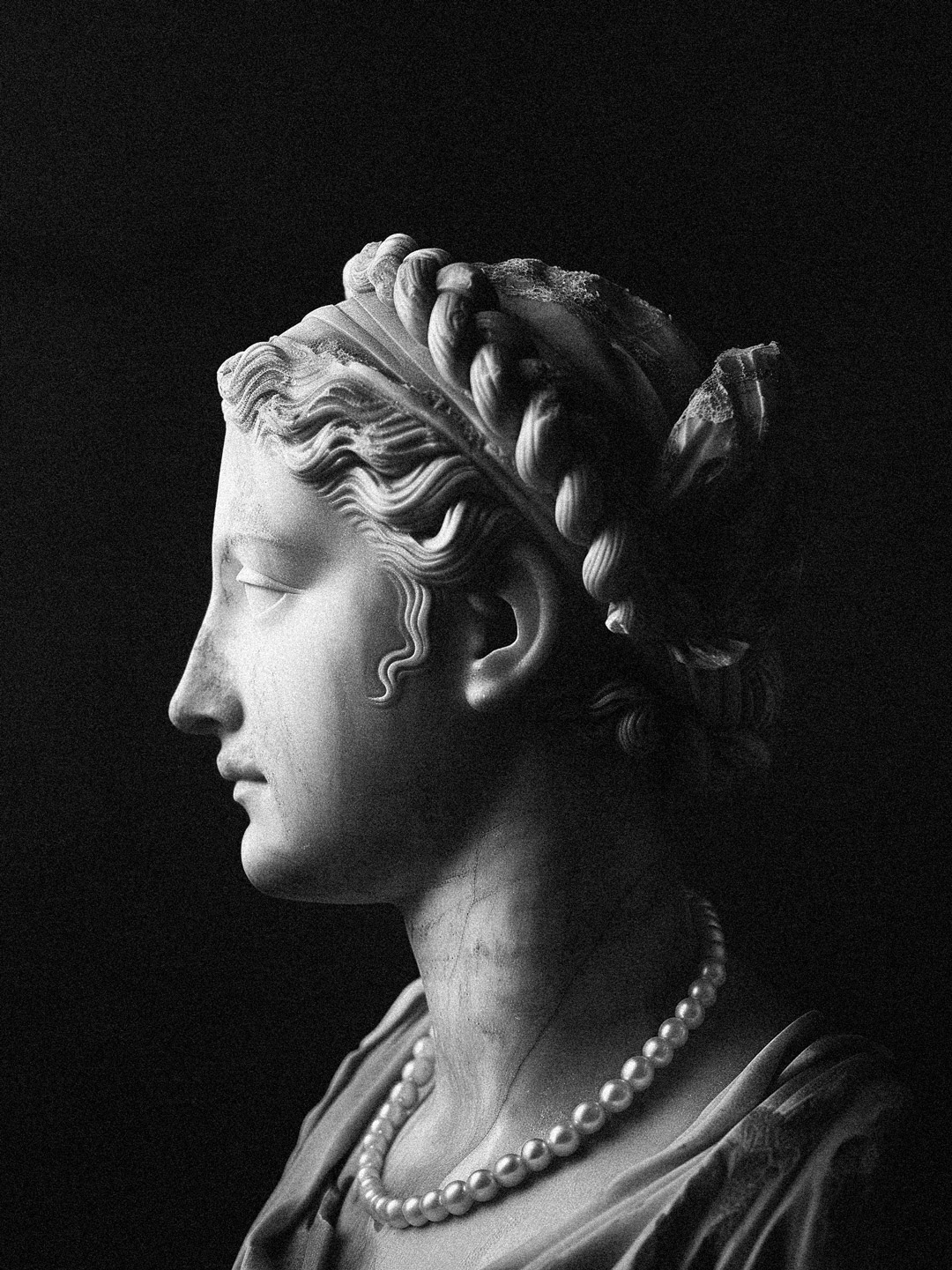
Sappho, spelled (in the dialect spoken by the poet) Psappho, (born c. 610, Lesbos, Greece — died c. 570 BCE). A lyric poet greatly admired in all ages for the beauty of her writing style.

Her language contains elements from Aeolic vernacular and poetic tradition, with traces of epic vocabulary familiar to readers of Homer. She has the ability to judge critically her own ecstasies and grief, and her emotions lose nothing of their force by being recollected in tranquillity.

Marble statue of Sappho on side profile.

Designed with WordPress