Tag: syllabograms

  • Hi, friends! More mnemonics to learn the Linear B syllabograms MA MI MO NA NE NU

    Hi, friends! More mnemonics to learn the Linear B syllabograms MA MI MO NA NE NU Click to ENLARGE:
    
    Mnemonics for Linear B syllabograms MA MI MO NA NE NU
    
    Well, then, here is another dose of mnemonics to learn more of those pesky Linear B syllabograms, which can stump even the most assiduous and enthusiastic of learners. I know they did me. It took me months to master even all of the basic syllabograms, which is why I resorted to mnemonics myself, which were a great help to me.
    
    Richard
    

  • Linear B Mnemonics for K Series Syllabograms … kartwheels, kites, corkscrews & acrobats

    Linear B Mnemonics for K Series Syllabograms (Click to ENLARGE):
    
    mnemonics for Linear B KA KI KO KU syllabograms
    
    Judging from the number of visits we have been getting to our blog in the past few days, it certainly looks as if folks really appreciate this fun way of learning Linear B Syllabograms. Unfortunately, it does not always work out precisely as I would like it to. For instance, try as I might, I just could not come up with anything remotely mnemonic for the syllabogram KE. If anyone can, please be my guest.
    
    Richard
  • Mnemonics for learning Linear B Syllabograms: Vowels

    Mnemonics for learning Linear B Syllabograms: Vowels
    
    Over a year ago, when we first started up this blog on learning the ins and outs of Linear B in all its intricacies and finer points, I was sorely tempted to teach (so-to-speak) Linear B vowels and syllabograms by means of mnemonics, but I rather thought this might come off across as rather insulting to folks’ intelligence... well, except for my own, for instance, and the intelligence of plenty of other people, as I might well have imagined at the time (and did!), since many of us lesser lights learn far better by mnemonic or visual association than by mere rote learning, of which I personally stand in horror! So, at the time, thinking the wiser of it, I didn’t take that route, but now, being a lot less wiser for it, I might as well go for it, which is why you see this silly little chart illustrating at least one way (my way, as if!) for learning the Linear B vowels by mnemonics.
    
    Mnemonics for learning Linear B Syllabograms: Vowels (Click to ENLARGE):
    
    Linear B Mnemonics A I U E O
    
    Just to drive you completely insane, from time to time over the next few months, I shall be doing precisely the same thing for all of the syllabograms and key homophones. Some of you will love this approach; others it will probably leave cold; and still others may hate it. But, heck, why not let everyone have his or her say in court.  If you have even funnier suggestions for mnemonic learning devices for Linear B syllabograms, homophones and vowels, toss them our way in the “Comments” Section of our Blog, or if you like, you can e-mail your suggestions to me at:
    
    vallance22@gmx.com
    
    and I shall be glad to post them. All for a good laugh!
    
    
    Richard
    
  • One Brave Soul’s Courageous Attempt to Transcribe some of the Proemium of the Iliad into Mycenaean Linear B

    One Brave Soul’s Courageous Attempt to Transcribe some of the Proemium of the Iliad into Mycenaean Linear B (Click to ENLARGE):
    
    Proemium of the Iliad in Linear B
    
    Now I must admit that when I ran across this wonderful exercise some brave soul recently undertook to try to translate at least some of the Proemium of the first book of Homer’s Iliad into Mycenaean Linear B, I was delightfully rewarded by the person’s true grasp of the manifold difficulties (some of them well-nigh insurmountable, or so it would appear) in any such hazard-fraught attempt!  But as I have so often said before on our blog, someone has got to do it first. And my congratulations to this person! I would be delighted if you would identify yourself to us all.
    
    Eventually, we will be attempting the same zany exercise, not only with the Proemium (Introduction) to Book I of the Iliad, but for certain portions of the famous Catalogue of Ships in Book II, which will more easily lend themselves to translation from Homeric Greek to Linear B text, since the Homeric Greek in the Catalogue of Ships in Book II of the Iliad is the most archaic Greek in the entire Iliad.  And the reasons why we shall insist on translating certain key passages in the Catalogue of Ships will become abundantly clear when we eventually get around to said translations.  But don’t hold your breath. That will not happen until sometime in 2015, since I must first translate the entire Catalogue of Ships (viz. Lines 489-784 of Book II of the Iliad) this year, before we can even begin to think about taking that next bold step.
    
    In the meantime, I invite you to enjoy our friend’s translation as we do.
    
    Richard
    
  • Scripta Minoa: Not so Easy Fragments # 4

    Scripta Minoa: Not so Easy Fragments # 4 (Click to ENLARGE):
    
    791 & 1017
    
    In this case, we have only 2 fragments, but they are nasty little buggers. In the first one, the ideograms for rams and ewes are clear as a bell, but what on earth is PAKOSOKI supposed to mean? ... or for that matter UKI?  I have not the faintest idea, regardless of the fact that I thoroughly ploughed through all the Mycenaean-English Glossaries, so this is simply a case of, throw up your arms and give up. With the second one, we have considerably more luck. Once again, we are confronted with a single syllabogram WO, the first syllable of some word, God knows what.  But I asked myself, quite naturally, “What would be purple that the Minoans loved to make”... and I came up with only 2 answers, (1) purple dyed cloth & (2) wine.  Again, it was mere happenstance that I came up with the word, WONOWATISI, gardens with vines (dative case) by consulting the Mycenaean (Linear B) - English Glossary, and what with a bit of searching around in Liddell & Scott, I was thoroughly delighted to come up with the Ionic version of the same word, which as you can see written on the second fragment above, and which means, “made of or with wine”. So what we end up with here is something like, “with the purple colour of wine”. Sure makes a lot of sense to me, at least. But of course, plenty of folks will surely contest this interpretation.
    
    Richard
    
  • Scripta Minoa: Not so Easy Fragments # 3

    Scripta Minoa: Not so Easy Fragments # 3 (Click to ENLARGE:)
    
    827 909 102
    
    Now we come to fragments which are somewhat more difficult to interpret, because:
    1. some of the syllabograms may be truncated on both the left and the right, making it almost impossible to figure out what the full word is in which they appear, as illustrated in the third fragment here, or
    2. some of the syllabograms may or may not be truncated on the left, as appears to be the case in the first example above, where I finally decided WAKITARA was probably not truncated on the left, and was a man’s name. But that would only be the case if there were only 1 man, and since the fragment is truncated on the right, we shall never know this, or
    3. as in the second example, where Haptarwara is clearly a man’s name, there still exist ambiguities. What about that half-erased syllabogram to the right of his name?  It sure looks like RE, but that is not certain. But if it is RE, then that places his name in the dative case, which is highly significant for this particular fragment. Given that the second line clearly states that there are 102 men tending to rams or ewes or both, i.e. sheep, if Haptarwara’s name is in fact in the dative case, then the phrase means, “for Haptarwara”, surely implying that the 102 men are working for him, and that he is their overseer. In that case, the translation is pretty clear, and because it is so, it makes a lot of sense. It runs as follows: 102 men (shepherds) tending to sheep (rams & or ewes), working for their overseer, Haptarwara. Without the dative, however, this interpretation falls apart.
    
    As you can, I have applied the general criteria outlined in the second post on Easy Syllabograms to this post on Syllabograms which are no longer so easy to decipher, but which nevertheless, are not entirely recalcitrant to interpretation.
    
    Richard
    
    
  • Scripta Minoa: So-called Easy Fragments # 2: Knossos, Amnisos & Potnia. General Criteria for Interpretation of Fragments


    Scripta Minoa: So-called Easy Fragments # 2: Knossos, Amnisos & Potnia (Click to ENLARGE:)
    
    ALL 5
    
    To summarize the criteria we laid out in detail in the previous post, in general terms, the following conditions pertain to all fragments (not tablets!) regardless:
    
    1. There is no context by which to establish what sense or meaning the word or words (usually no more than 5 or 6 at most) actually are meant to convey.
    2. Almost all fragments are truncated on the left or right, making it practically (though not utterly) impossible to interpret whatever the cropped text is supposed to mean.
    3. But things are not quite so hopeless as it would at first sight appear. If the occurrences of all extant words beginning with a particular syllabogram in every Linear B dictionary now available online are relatively few, then we can predict that our translation has a 1 in nn chance, sometimes even as low as 1 in 10 or 10% of actually being the right translation.  
    4.Even where right hand truncation is the order of the day, sometimes there is only one interpretation. But here again, ambiguity of context frustrates once again. What on earth does the fragment in question tell us about (usually one single) word? In almost all instances, precisely nothing. 
    5. Ambiguities in grammatical construction further complicate matters.
    6. Scribes often (half) ERASE one or more syllabograms on fragments, almost always on the right side. This usuallly happens when a scribe simply erases the last (extraneous) character, which he never meant to write in the first place. On the other hand, he may be hesitating whether or not he should erase it, as will be illustrated in he next 2 posts.
    
    Our second example of 5 fragments: Scripta Minoa: So-called Easy Fragments # 2: Knossos, Amnisos & Potnia speak for themselves, or more accurately do not speak for themselves. I invite you to try and interpret each of the 5 fragments on your own. I am quite sure you will come up for air pretty quickly, feeling (somewhat or annoyingly) frustrated. For instance, who the blazes is Potnia? Look her up in almost any classical Greek-English dictionary and you are likely bound to hit a brick wall. Fortunately, our excellent companion, Liddell & Scott, comes to the rescue yet again (pg. 581), which is why any serious Linear B researcher should have this invaluable resource in his or her collection. I am not going to tell you who she is. I believe it is up to you to do your own research on this one, even if you have to go to the library.
    
    Things are going to get a lot messier from here on in!
    
    
    Richard
    
    
  • Scripta Minoa: So-called Easy Fragments # 1: Knossos & Amnisos. Do not be fooled!

    Scripta Minoa: So-called Easy Fragments # 1: Knossos & Amnisos (Click to ENLARGE:)
    
    ALL 4
    
    We now begin our long series of posts of some 2,000 of the approximately 3,500 tablets and fragments from Knossos, which Sir Arthur Evans published in his Scripta Minoa (Oxford University Press, 1952). The first 4 fragments you see here already amply illustrate some of the (sometimes intractable) problems faced by translators, especially when we have to deal with fragments. In general terms, the following conditions pertain to all fragments (not tablets!) regardless:
    
    1. There is no context by which to establish what sense or meaning the word or words (usually no more than 5 or 6 at most) actually are meant to convey. The last of the 4 in this table amply illustrates this problem. First of all, does the word “enereya” mean “operation or better still, industry”... possibly, even probably (by a stretch), but also probably not. And plenty of translators will contest my “translation”.
    2. Almost all fragments are truncated on the left or right, making it practically (though not utterly) impossible to interpret whatever the cropped text is supposed to mean. This is fully illustrated by the second fragment in this table.
    3. But things are not quite so hopeless as it would at first sight appear. If the occurrences of all extant words beginning with a particular syllabogram (in this case TE) in every Linear B dictionary now available online are relatively few, then we can predict that our translation, here = temenos (boundary) has a 1 in nn chance of actually being the right translation. Allow me to illustrate. In the two largest Mycenaean Linear B – English dictionaries now available online (the larger one in PDF format and over 260 pages long!), there are 6+17 = 23 instances of all extant words beginning the single syllabogram TE as the first syllable.  So let’s assume the ratio is 1/25 or about 4%. But wait. But only a very few of these words make any sense in fragment #2, and as it happens that number adds up to only: te = then, tekotones = carpenters, temeno = boundary or temple,teo(i) = god(s), temidweta = wheel with studs, tereta = official title of a tax collector or master of ceremonies, tetukuoa = well prepared or ready, teukepi = with implements, thereby reducing our chances of being “correct” to 1 in 7 according to this vocabulary. But let’s err on the side of caution, and say, 1 in 10, or 10 %, and that is a heck of a lot better than our initial calculation. Of course, I for one are more than willing to substitute any of the other 6 words above for “temenos”, because they all make sense in this admittedly very limited context, if you can even call it that. But, in fact, the collateral evidence I have just laid out makes it even probable that any of these 7 (or slightly more) interpretations fits the bill.
    
    But in the second example in this table the meaning is clear. It can only be Aminiso or Aminisoyo (genitive) or some such variant. So even where right hand truncation is the order of the day, sometimes there is only one interpretation. But here again, ambiguity of context frustrates once again. What on earth does this fragment tell us about Amnisos... Precisely nothing.
    
    5. Ambiguities in grammatical construction further complicate matters, as in fragment 1. Why is Konosoyo in the genitive and Rukitiyo (apparently) nominative? Why are these two places mentioned together? What is the association or link between them? We shall never know. Richard
  • All 22 Arcado-Cypriot Linear C syllabograms we have learned so far

    All 22 Arcado-Cypriot Linear C syllabograms we have learned so far
    
    I have tagged each of 22 of the syllabograms we have covered so far with a large asterisk on the chart of the Arcado-Cypriot syllabary below. Click to ENLARGE:
    
    Arcado-Cypriot Syllabary
    & again!
    
    cypriot-examples b
    
    I will introduce the remainder of the Arcado-Cypriot syllabary sometime in the late summer.
    
    
    Richard
    
    
  • Arcado-Cypriot Linear C Syllabograms: Moderate-Intermediate Linear

    Arcado-Cypriot Linear C Syllabograms: Moderate-Intermediate Linear: Click to ENLARGE:
    
    Linear C SO LI NE LA MI MU RI NI
    These 8 syllabograms all consist of 3-6 linear strokes only, and are relatively easy to learn. Once again, remember that the majority of Linear C syllabograms are primarily linear, with a few of them circular, or a combination of linear & circular, making the syllabary relatively straightforward to learn. For the time being, this is as far as we intend to go with Linear C syllabograms, having introduced the first 22 or already 40 % of 56 syllabograms, enough for us to decipher a few words on the Arcado-Cypriot Linear C Idalion Tablet, and to compare these with their counterparts in Mycenaean Linear B. These comparisons, or as I prefer to call them, cross-correlations, serve to make it perfectly obvious to anyone familiar with either of these syllabaries, Linear B or Linear C, and especially to those familiar with both syllabaries, that indeed the Mycenaean dialect in Linear B and the Arcado-Cypriot in Linear C are the 2 most closely related early East Greek dialects, which were all to eventually merge into the Ionic and finally, the Attic dialect. In other words, what I am saying is that all of these East Greek dialects, from Mycenaean to Attic, are all of the self-same family.
    
    
    Richard
  • 8 more Arcado-Cypriot Linear C Syllabograms: Simple Linear

    8 more Arcado-Cypriot Linear C Syllabograms: Simple Linear: Click to ENLARGE
    
    Linear C  WE SA PI O KA R PE U
    From here on in, we can forget about correlating any Linear C syllabograms whatsoever with any Linear B syllabograms, simply because the two scripts part ways once and for all, beyond the 6 which we just introduced in the last post, which simply happen to look like their counterparts in Linear B, whether intentionally or not.
    
    Apart from that, these 8 syllabograms all consist of 2-5 linear strokes only, and are easy to learn. It should also be noted that the majority of Linear C syllabograms are primarily linear, with a few of them circular, or a combination of linear & circular, making the syllabary relatively straightforward to learn. The problem is -  and I don’t know about you - trying not to confuse the 56 syllabograms in Linear C with the 81 in Linear BV just might drive one half nuts. I only hope it doesn’t do that to me. I will let you know if it does (joke!). Anyway, as it stands, we now have 14 or exactly 25% of the 56 syllabograms under our belt, which is a good start.
    
    Richard


  • Our First Anniversary has come and gone and now the time has come for the Consolidation of the Mission & Ultimate Goals of Linear B, Knossos Mycenae (2014-2018)

    Our First Anniversary has come and gone and now the time has come for the Consolidation of the Mission & Ultimate Goals of Linear B, Knossos Mycenae (2014-2018).
    
    In it first full year (May 2013-May 2014), our Blog has become the premier Linear B blog on the Internet, and for many sound reasons:
    
    1 In our first year, we designed and set up a Lesson Plan at 5 Levels (Levels 1 & 2, Basic), Level 3 (Intermediate) & Levels 4 & 5 (Advanced), which were specifically designed with the needs and tailored to the learning curve of each and every serious new student of Linear B, and of course, a review guide for students and researchers already familiar with Linear B.  All the vocabulary we introduced in these Lessons is attributed [A] vocabulary found on extant Linear B tablets. We have not quite finished with Level 5. 
    2 We introduced our new Theory of the Regressive-Progressive Construction of both Linear B Grammar and Vocabulary, a theory which is elegant in in its simplicity & which we believe is sound, viable and eminently logical to that end.
    3 We began reconstructing our all-new Progressive Grammar of Mycenaean Greek in Linear B, by building the first ever all-but complete tables for the indicative active voice of both thematic and athematic verbs in all of these tenses: present, future, imperfect, aorist and perfect. This was merely the first step in our long-term project to reconstruct as much of the corpus of Mycenaean Greek grammar as is feasible and practical.
    4 We began translating Book II of the Iliad, which exemplifies the most ancient alphabetical Greek in existence, and hence, serves as our reference point or as we say in French, notre point de repère, for the regressive reconstruction of missing Mycenaean vocabulary in Linear, which we designate as derived [D], as opposed to attributed [A] vocabulary found on extant Linear B tablets.
    5 We translated a number of Linear B Tablets, some of them simple, some of them of intermediate difficulty, and a few extremely complex ones, amongst which we count:
    
    BM 1910.04 232 (British Museum); Knossos: KNV 684 + Scripta Minoa pg 154: 217 N j 31, 218a KN 07, 222 Nk 224 Nk 06, 231 N k  04, 259 N k 21 & 264  N k 02 + Pylos: AE08, cc665, TA 641-1952 (Ventris) + FL 1994 (Heidelburg: Thomas C. Palaima) + Tosa Pakana (Total number of swords), Attendants & Millworkers tablets
    
     6 We made a few first tentative baby steps into the study of Linear A, which is however not a main goal of this blog, but merely ancillary. 7 We made a few first tentative baby steps into the study of Arcado-Cypriot Linear C, the most ancient Greek script, also Linear, after Linear B, which is a major project of this blog. See more below in the Table Linear B, Knossos & Mycenae:  CONSOLIDATION 2014-2015. 8 We began to investigate the 3.5 K + tablets & fragments in Sir Arthur Evan’s Scripta Minoa & soon came to the realization that a massive effort at translating at least 50 % of these must be undertaken, if we are to further our understanding of Linear B beyond the bounds of present-day knowledge. Those were our targets for our first year and 1 month of our Blog, and we met them handsomely. However, up until now, threads of our goals and projects have been posted willy-nilly throughout the blog, and this has now to change, as it is time for us to CONSOLIDATE, and expound in the clearest possible ways the specific distinct goals, projects as well as the overall mission of our Blog throughout the remainder of 2014 and to the end of 2015 at least. Linear B, Knossos & Mycenae: CONSOLIDATION 2014-2015 & Beyond: Click to ENLARGE: Mission Consolidation Mycenaean Linear B & Arcado-Cypriot Linear C & Idalion Tablet 
  • Table 3A: Examples of Linear B Spelling Conventions Cross-Correlated with (early) Ancient Alphabetical Greek


    Table 3A: Examples of Linear B Spelling Conventions Cross-Correlated with (early) Ancient Alphabetical Greek – Click to ENLARGE:
    
    Table 3 Examples of spelling conventions in Linear B versus Greek
    
    While most Linear B grammatical, didactic, instructional & research sites propound generally complex “rules” or regulatory tables for the transference of Linear B orthography (through no fault of their own), which is based almost exclusively on syllabograms, each consisting of a consonant + a vowel (with the sole exception of the vowels, which actually do correspond with their Greek alphabetical counterparts, but again with the exception of Linear B E & O, which cannot express short versus long E & O in alphabetical Greek, i.e. epsilon vs. aytay and omicron vs. omega), to my mind, it is simply not necessary to memorize all sorts of often perplexing arcane guidelines, when all we really need to do is illustrate how the single syllabograms in Linear B cross-correlate with their (frequently) multiple variants in early alphabetical Greek (by which I mean, first and foremost, the Homeric Greek in The Catalogue of Ships in Book II of the Iliad; failing that, the Homeric Greek in Book II of the Iliad; failing that the Homeric Greek of the Iliad in toto; and failing that Arcado-Cypriot Greek.  Just learn each of the relatively straight-forward procedures for the transference of Linear B spelling to early Greek alphabetical orthography in Tables 1, 2, 3A & 3B, and you will have it all down pat.  Once you have mastered these guidelines, which I have tried to simplify as far as I possibly can (although as we all know by now, nothing in Mycenaean Linear B grammar is simple!), you will be ready to move on to the mastery of the corpus Progressive Mycenaean Linear B grammar which I will be reconstructing for all parts of speech throughout 2014 & 2015, until we have under our belts the first truly comprehensive Mycenaean grammar ever devised since the decipherment of Linear B by Michael Ventris in 1952. This is the entire raison d’être of this Blog. 
    
    What is more, these very same principles of Linear B versus early ancient Greek orthography are equally applicable, and with a level of precision never before attained in any Mycenaean Linear B – early ancient Greek – English Glossary or Vocabulary, when we apply the theory of progressive Linear B Orthography to our English – Linear B – early ancient Greek Lexicon, another massive project which may very well take until 2018 to bring to fruition. As I have repeatedly pointed out before in this blog, our Lexicon, which will be conceived along the lines of Liddell and Scott’s Greek-English Lexicon, is intended to increase the current Linear B Vocabulary of some 2,500 words, phrases and expressions to at least triple that amount, i.e. some 7,500 entries, many of which are attested on the extant tablets, and a large number of which will be derived from entries on the tablets, as well as from The Catalogue of Ships of Book II of the Iliad.
    
    The scope of these undertakings,
    (1) the progressive reconstruction of as much of Mycenaean Linear B grammar as is feasible (and that is a lot more than you can imagine);
    (2) the progressive reconstruction of as much of Mycenaean Linear B vocabulary as is feasible (and that too is a lot more than you can imagine)
    
    Richard


  • Is the syllabogram ZE just a plain old syllabogram? A MAJOR discovery soon to be announced!

    Is the syllabogram ZE just a plain old syllabogram?  A MAJOR discovery soon to be announced!
    
    ZE, the Super Syllabogram!
    
    Linear B ZE syllabogram logogram combinatory ideogram
    
    Just the other day, while meticulously examining some of the 100s of the fragments of the Scripta Minoa I have already ploughed through with a fine-tooth comb, I noticed something particularly astonishing, something which has never been directly observed until now, but which is bound to have a significant impact on the continuing saga all of us, as researchers, are pursuing in our attempts to successfully decipher certain aspects of the Linear B syllabary, including both logograms and ideograms, which have hitherto remained entirely recalcitrant to interpretation. But I sincerely believe I have actually cracked another mystery in the Linear B saga, and that mystery revolves around not one, but more than one, Linear B syllabogram, logogram and ideogram, taken not in isolation but in specific, invariable combination(s) with one another.
    
    This entirely new approach to the decipherment of hitherto inexplicable portions of Linear B tablets, indeed, even of fragments of Linear B tablets, is bound to have profound implications in our ability to break open at least some of the remaining mysteries of Linear B. Not only did I discover this particular syllabogram ZE in a specific configuration, that is to say, a specific, invariable order with the very same ideogram several times over, but I also discovered the same phenomenon occurring at least as frequently and in some cases, far more frequently, with specific syllabograms always combined in exactly the same order with exactly the same ideogram. Something is going on here, and I mean something big, which has eluded the notice of all Linear B researchers to date, in the 60 years plus since Michael Ventris first deciphered Linear B.
    
    To say the very least, I was extremely lucky to have stumbled upon this particular and particularly precise usage of the “syllabogram” ZE in the Scripta Minoa, which places it firmly in the same class as the most common Linear B logograms, all of which are already perfectly understood. The big difference here is that, until now, all Linear B logograms we know the precise meaning of are all comprised of nothing but two or more syllabograms.  I stress this.  In the case of ZE, we have an entirely new phenomenon, as you shall soon discover for yourselves. Please understand that for my purposes, and in fact for the sake of absolute clarity and for sound theoretical purposes, I insist on a clear distinction between a logogram and an ideogram. In fact, as you are soon to see, we may have to “invent” at least one new class of Linear B “symbols” which is a composite of either:
    
    a both a syllabogram and an ideogram, but always in the same precise configuration and in the same precise order;
    b and, yes, even 2 ideograms, again always in the same precise configuration and in the same precise order.
    
    I am in fact so convinced that the “meaning” I am about to assign to the syllabogram ZE in combination with the (as yet) “secret” syllabogram I shall be unveiling is in fact so sound as to be practically self-evident. I challenge all major researchers into Linear B to challenge my interpretation of the ZE + ideogram logogram, since after all I may be barking up the wrong tree. But somehow, intuitively, inductively and contextually, I do not believe I err. Only time will tell. 
    
    What I sincerely believe I am about to demonstrate is this: Linear B is an even more complex, more sophisticated, in short, a more elegant syllabary system than we have yet imagined, so much so indeed that it may be the most sophisticated syllabary ever to have existed prior to the advent of the alphabetic scripts.   
    
    Keep posted!
    
    Richard


  • Significance of the Statistical Frequency of Syllabograms in % according to Michael Ventris (1952)


    Significance of the Statistical Frequency of Syllabograms in % according to Michael Ventris (1952)
     
    Michael Ventris was on to much more than even he imagined when he began to unravel the mysteries of the Linear B script by the spring of 1952, when he constructed the following table, in which he extrapolated the statistical frequency in percentage (%) of most of the syllabograms [Click to ENLARGE]:
    
    Michael Ventris Frequency of Syllabograms in Percentages 1952
    What he didn't realize then, and what has become not only apparent but of paramount importance to myself and, I sincerely hope, to other researchers in the field of Linear B today is that most of the syllabograms with high or moderate frequencies (in %) play an enormous role in the progressive-regressive reconstruction of Mycenaean grammar and vocabulary alike. I cannot stress this point too much.
    
    Some syllabograms, in fact, play such a decisive role in the grammar and vocabulary of Mycenaean Greek that they cannot be safely ignored in the reconstruction of the language. Of these, for the time being, the most significant for our purposes are, above all, JO (genitive sing. masc. & neut. adjs. & nouns) and SI (dative plural & endings for several forms of verb conjugations, as well as U (nom. sing. masc. nouns), YA (fem. sing. nom. & gen. adjs. & nouns), TA (fem. sing. nom. & neut. pl. nom.) and TE (verb conjugations).
    
    Keep posted for our analyses of the contextual significance of each of these syllabograms in turn, beginning with the 2 most relevant to the reconstruction of both Mycenaean grammar & vocabulary, i.e. JO & SI.
    
    We shall address the rest of the high and moderate frequency syllabograms late this year.
    
    Richard
    
    
  • A Closer Look at Sir Arthur Evans’ Attempts at Deciphering Certain Linear B Syllabograms (Part 2)

    A Closer Look at Sir Arthur Evans' Attempts at Deciphering Certain Linear B Syllabograms (Part 2) [Click to ENLARGE]:
    
    Sir A0rthur Evans Scripta Minoa Syllabograms Decipherment AB 35 38 51 56 57
    
    These are the observations Sir Arthur Evans makes on the syllabograms and homophones Michael Ventris et al. were eventually to correctly decipher as:
    
    Linear B:
    
    PA2     Previously thought to be a homophone, actually the syllabogram QA, which can be difficult to distinguish from...
    QO	also a syllabogram on Linear B tablets, due to the variable “handwriting” of various scribes
    SE	which, being practically identical to Cypriot SE, has the same value. 
    RA	which Evans correctly correlated with Cypriot LI (in the same syllabic series)
    YU	(or JU) versus DU which Evans once again correctly differentiates
    ZA	 which he knows perfectly well is equivalent to the Egyptian hieroglyph ANKH.
    
    All of these insights were to prove invaluable to Alice Kober, Michael  Ventris et al., in the eventual decipherment of Linear B. I will be making further observations on Sir Arthur Evans' ground-breaking research later this month and in coming months, whenever and wherever they cast light on particular aspects of the eventual decipherment of Linear B.
    
    Richard
  • A Closer Look at Sir Arthur Evans’ Attempts at Deciphering Certain Linear B Syllabograms (Part 1)

    A Closer Look at Sir Arthur Evans' Attempts at Deciphering Certain Linear B Syllabograms (Part 1) [Click to ENLARGE]:
    
    Sir Arthur Evans Scripta Minoa decipherment Linear B syllabograms AB 4 5 15
    
    As we can readily see in the entries above (AB 4, 5 & 15) which I have excerpted from Sir Arthur Evans' Scripta Minoa, published by Oxford in 1952, the distinguished archaeologist and self-made linguist made some truly remarkable conjectures on the presumptive values of at least a few syllabograms in the Linear B syllabary, coming very close to the truth of the matter in spite of himself, or should I say rather, in spite of the absolute dearth of any supportive evidence whatsoever to support his claims. There is simply no way on earth he could have known that his assumptions were even remotely close to the mark, but as it turns out for favourable future prospects for the decipherment of Linear B as undertaken by Alice Kober and Michael Ventris respectively, his own ground-breaking research was to vindicate at least a few of the meticulous observations in his voluminous notes on the script.
    
    As for the note [1] in the excerpts above, please see the previous post, in which I discuss at some length the apparent disparity between the Linear B and Cypriot (Linear C) syllabaries.  I say, apparent, because that is all it is. The 2 syllabaries are far more alike than they are unalike. 
    
    Richard

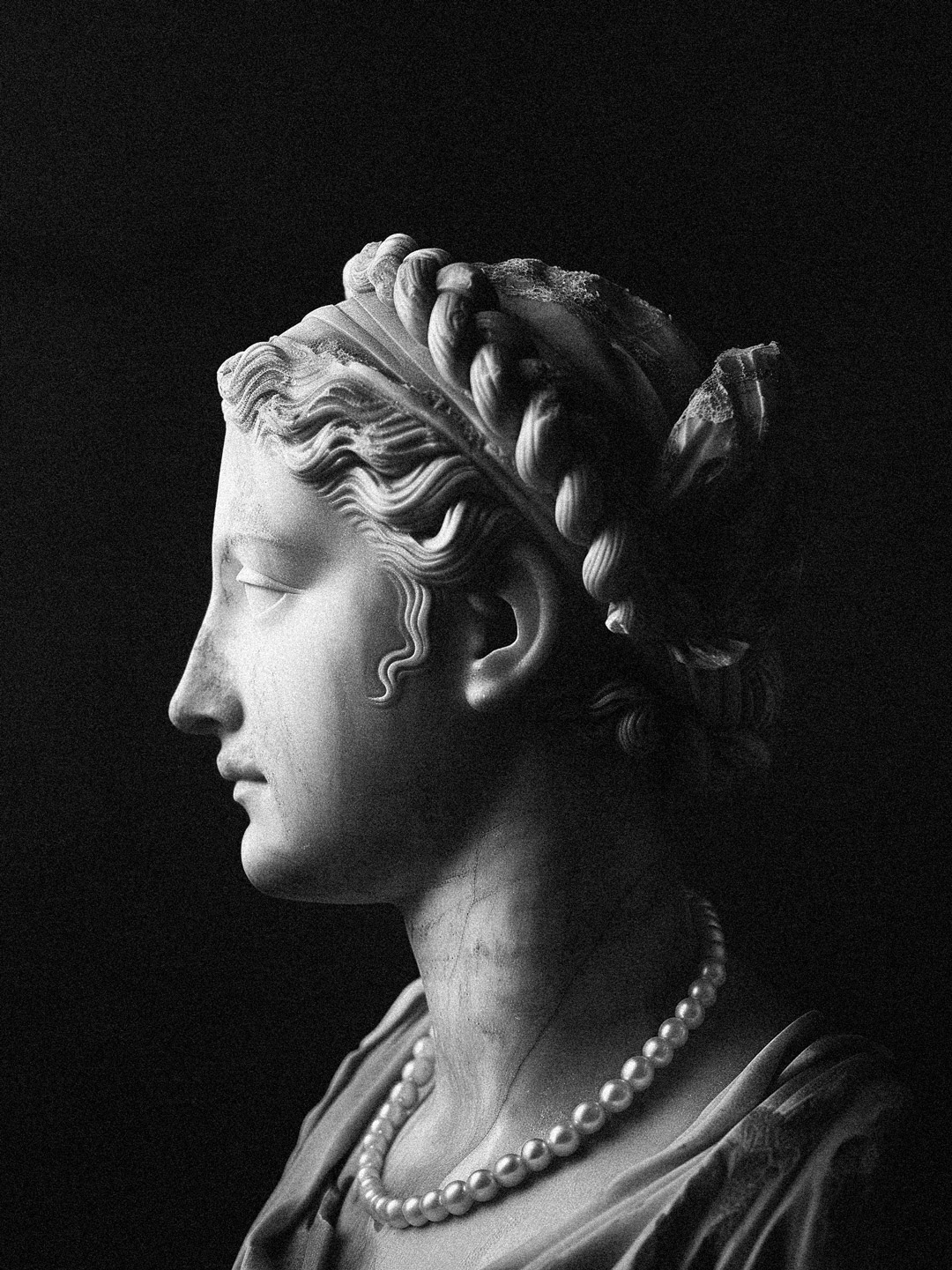
Sappho, spelled (in the dialect spoken by the poet) Psappho, (born c. 610, Lesbos, Greece — died c. 570 BCE). A lyric poet greatly admired in all ages for the beauty of her writing style.

Her language contains elements from Aeolic vernacular and poetic tradition, with traces of epic vocabulary familiar to readers of Homer. She has the ability to judge critically her own ecstasies and grief, and her emotions lose nothing of their force by being recollected in tranquillity.

Marble statue of Sappho on side profile.

Designed with WordPress