Tag: Mycenaean Greek

  • Translation of Knossos Fragment KN 190 B with the Sypersyllabogram DI by Rita Roberts


    Translation of Knossos Fragment KN 190 B with the Sypersyllabogram DI by Rita Roberts 
    
    Well over a year ago I became interested in the ancient script writings of the Minoans. These scripts are written on clay tablets and were discovered by Sir Arthur Evans whilst excavating the grand Palace of Knossos in Crete. It was Evans who named these scripts Linear B.
    
    My Linear B teacher and mentor Richard Vallance Janke is extremely helpful in guiding me through what would be a difficult course for me to follow. However, with Richards humour and patience and his unique way of teaching I have found this subject a delight to learn in so much that I have now completed levels 1-4 (Basic to Advanced, Part 1).
    
    Now Richard has given me my first assignment in translating Linear B fragments into English. These fragments seemed simple at a first glance as all of them contained the words KOWA for girl and KOWO for boy, so I thought, this should be reasonably easy. However, when I looked at what I thought was a simple translation where the first word was KOWA followed by the single syllabogram DI this confused me, I had no idea what this could possibly mean.
    
    I know that Richard has been working hard on his new theory of Sypersyllabograms. I call them Supergrams to myself, so I knew he would advise me to consult the Linear B English Glossary and the Linear B Lexicon a much larger dictionary where I most likely would find what the Syllabogram DI might mean, this I did and to my astonishment there I found an entry which made sense " diwiya" alternately spelled "diwiyaya" meaning "a or the Priestess of the god Zeus".
    This Sypersyllabogram DI meaning is to me a logical translation since the three most important deities the Minoans worshipped were Pipituna, the Snake Goddess and Zeus, hence my translation as follows:
    
    Translation of Knossos Fragment KN 190 B with the Sypersyllabogram DI by Rita Roberts (Click to ENLARGE):
    
    Folder Ref DI translation 2
    
    Rita Roberts
    
    NOTE by Richard Vallance Janke.
    
    Folks, this is Rita’s firs major contribution as an official translator of Linear B fragments. Considering that Rita only just began learning Linear B in the spring of 2013, she has come a very, very long way indeed. The task of translating this recalcitrant fragment placed enormous intellectual demands on Rita, and she has surpassed herself in the sheer ingenuity of her translation, which I would never have dreamt of myself, in spite of my extensive knowledge of Linear B, and a translation which I consider to be not only second to none, but highly accurate. Congratulations, Rita. We look forward to more fine translations from your expert hand.
    
    Richard


  • Translation of Knossos Fragment KN 212 X – ivory worker(s)?

    Translation of Knossos Fragment KN 212 X - ivory worker(s)? (Click to ENLARGE):
    
    Knossos fragment KN 212 X EREPAIRO
    This particular fragment poses yet another vexing problem in the translation of Linear B fragments. Where context is lacking, as it surely is here, a tablet often admits of more than one translation, and often several translations, but if this so, which one is the most likely?  In this case, when I consulted Liddell & Scott (1986), I immediately discovered a verb, “to trick or destroy”, which fit the bill perfectly, but the real problem here is that this verb is almost certainly of much later Greek origin, and is Ionic or Attic, not Mycenaean. This is made all the more obvious by the fact that the primary meanings of the verb are abstract, and if anything, abstract words are few and far between in Mycenaean Greek. That is our first interpretation. The second [2] is far more likely to be correct because ivory workers were commonplace in the Minoan economy. The problem here is that I had to invent the noun, which may or may not have existed in the Mycenaean era. Although the noun is purely a construct of my own making, it does make perfect sense in the context; so I am going to assume that something like this noun may have existed in Mycenaean times. Otherwise, if either or both of these interpretations does not pass muster, this fragment must be deemed unintelligible. 
    
    Richard
    
    
  • Homer: Iliad: Book II: The Catalogue of Ships (continued) – Introduction: Lines 76-108

    Homer: Iliad: Book II: The Catalogue of Ships (continued)  – Introduction: Lines 76-108 (Click to ENLARGE):
    
    Iliad 2 76-108 in Greek
    
    With this post, we continue our translation of the Introduction to Book II of Homer’s Iliad, which contains the famous Catalogue of Ships (lines 484-779). You can find the Introductory texts to Book II of the Iliad in sequence by clicking on the Heading, “Iliad: Book II” at the top of our home page, right under the title, Linear B, Knossos & Mycenae. I have so far translated lines 1-108 of the Introduction, and I shall soon post lines 109-130, which will bring my translation of the Introduction to Book II of the Iliad to an end.
    
    I have translated the Introduction specifically to provide the setting for the translation of the entire Catalogue of Ships (lines 484-779). which is much more germane to our purposes, given that the a good deal of the grammar and vocabulary of Catalogue of Ships (lines 484-779) can be seen to have been either directly or indirectly derived from the much earlier Mycenaean Greek grammar and vocabulary in Linear B, and from that of Arcado-Cypriot Linear C, the closest cousin of the East Greek dialects to Mycenaean Greek. I shall shortly post (what I consider to be) the remainder of the Introduction to Book II of the Iliad, that is, lines 109-130, after which I will jump straightaway to the Catalogue of ships, starting at line 484 of Book II, and proceeding all the way to the end of the Catalogue of Ships (line 779). I expect this translation to take up the rest of 2014 and the better part of 2015.
    
    IT IS WELL-NIGH IMPOSSIBLE TO RECONSTRUCT MYCENAEAN GREEK GRAMMAR AND VOCABULARY IN LINEAR B WITHOUT RECOURSE TO BOTH THE CATALOGUE OF SHIPS IN BOOK II OF THE ILIAD, AND TO THE FAMOUS “IDALION” TABLET IN ARCADO-CYPRIOT LINEAR C, both of which I intend to translate by early 2016 at the latest, all things being equal.
    
    Richard
    
    
  • Scripta Minoa: Not so Easy Fragments # 4

    Scripta Minoa: Not so Easy Fragments # 4 (Click to ENLARGE):
    
    791 & 1017
    
    In this case, we have only 2 fragments, but they are nasty little buggers. In the first one, the ideograms for rams and ewes are clear as a bell, but what on earth is PAKOSOKI supposed to mean? ... or for that matter UKI?  I have not the faintest idea, regardless of the fact that I thoroughly ploughed through all the Mycenaean-English Glossaries, so this is simply a case of, throw up your arms and give up. With the second one, we have considerably more luck. Once again, we are confronted with a single syllabogram WO, the first syllable of some word, God knows what.  But I asked myself, quite naturally, “What would be purple that the Minoans loved to make”... and I came up with only 2 answers, (1) purple dyed cloth & (2) wine.  Again, it was mere happenstance that I came up with the word, WONOWATISI, gardens with vines (dative case) by consulting the Mycenaean (Linear B) - English Glossary, and what with a bit of searching around in Liddell & Scott, I was thoroughly delighted to come up with the Ionic version of the same word, which as you can see written on the second fragment above, and which means, “made of or with wine”. So what we end up with here is something like, “with the purple colour of wine”. Sure makes a lot of sense to me, at least. But of course, plenty of folks will surely contest this interpretation.
    
    Richard
    
  • Scripta Minoa: Not so Easy Fragments # 3

    Scripta Minoa: Not so Easy Fragments # 3 (Click to ENLARGE:)
    
    827 909 102
    
    Now we come to fragments which are somewhat more difficult to interpret, because:
    1. some of the syllabograms may be truncated on both the left and the right, making it almost impossible to figure out what the full word is in which they appear, as illustrated in the third fragment here, or
    2. some of the syllabograms may or may not be truncated on the left, as appears to be the case in the first example above, where I finally decided WAKITARA was probably not truncated on the left, and was a man’s name. But that would only be the case if there were only 1 man, and since the fragment is truncated on the right, we shall never know this, or
    3. as in the second example, where Haptarwara is clearly a man’s name, there still exist ambiguities. What about that half-erased syllabogram to the right of his name?  It sure looks like RE, but that is not certain. But if it is RE, then that places his name in the dative case, which is highly significant for this particular fragment. Given that the second line clearly states that there are 102 men tending to rams or ewes or both, i.e. sheep, if Haptarwara’s name is in fact in the dative case, then the phrase means, “for Haptarwara”, surely implying that the 102 men are working for him, and that he is their overseer. In that case, the translation is pretty clear, and because it is so, it makes a lot of sense. It runs as follows: 102 men (shepherds) tending to sheep (rams & or ewes), working for their overseer, Haptarwara. Without the dative, however, this interpretation falls apart.
    
    As you can, I have applied the general criteria outlined in the second post on Easy Syllabograms to this post on Syllabograms which are no longer so easy to decipher, but which nevertheless, are not entirely recalcitrant to interpretation.
    
    Richard
    
    
  • Scripta Minoa: So-called Easy Fragments # 1: Knossos & Amnisos. Do not be fooled!

    Scripta Minoa: So-called Easy Fragments # 1: Knossos & Amnisos (Click to ENLARGE:)
    
    ALL 4
    
    We now begin our long series of posts of some 2,000 of the approximately 3,500 tablets and fragments from Knossos, which Sir Arthur Evans published in his Scripta Minoa (Oxford University Press, 1952). The first 4 fragments you see here already amply illustrate some of the (sometimes intractable) problems faced by translators, especially when we have to deal with fragments. In general terms, the following conditions pertain to all fragments (not tablets!) regardless:
    
    1. There is no context by which to establish what sense or meaning the word or words (usually no more than 5 or 6 at most) actually are meant to convey. The last of the 4 in this table amply illustrates this problem. First of all, does the word “enereya” mean “operation or better still, industry”... possibly, even probably (by a stretch), but also probably not. And plenty of translators will contest my “translation”.
    2. Almost all fragments are truncated on the left or right, making it practically (though not utterly) impossible to interpret whatever the cropped text is supposed to mean. This is fully illustrated by the second fragment in this table.
    3. But things are not quite so hopeless as it would at first sight appear. If the occurrences of all extant words beginning with a particular syllabogram (in this case TE) in every Linear B dictionary now available online are relatively few, then we can predict that our translation, here = temenos (boundary) has a 1 in nn chance of actually being the right translation. Allow me to illustrate. In the two largest Mycenaean Linear B – English dictionaries now available online (the larger one in PDF format and over 260 pages long!), there are 6+17 = 23 instances of all extant words beginning the single syllabogram TE as the first syllable.  So let’s assume the ratio is 1/25 or about 4%. But wait. But only a very few of these words make any sense in fragment #2, and as it happens that number adds up to only: te = then, tekotones = carpenters, temeno = boundary or temple,teo(i) = god(s), temidweta = wheel with studs, tereta = official title of a tax collector or master of ceremonies, tetukuoa = well prepared or ready, teukepi = with implements, thereby reducing our chances of being “correct” to 1 in 7 according to this vocabulary. But let’s err on the side of caution, and say, 1 in 10, or 10 %, and that is a heck of a lot better than our initial calculation. Of course, I for one are more than willing to substitute any of the other 6 words above for “temenos”, because they all make sense in this admittedly very limited context, if you can even call it that. But, in fact, the collateral evidence I have just laid out makes it even probable that any of these 7 (or slightly more) interpretations fits the bill.
    
    But in the second example in this table the meaning is clear. It can only be Aminiso or Aminisoyo (genitive) or some such variant. So even where right hand truncation is the order of the day, sometimes there is only one interpretation. But here again, ambiguity of context frustrates once again. What on earth does this fragment tell us about Amnisos... Precisely nothing.
    
    5. Ambiguities in grammatical construction further complicate matters, as in fragment 1. Why is Konosoyo in the genitive and Rukitiyo (apparently) nominative? Why are these two places mentioned together? What is the association or link between them? We shall never know. Richard
  • All 22 Arcado-Cypriot Linear C syllabograms we have learned so far

    All 22 Arcado-Cypriot Linear C syllabograms we have learned so far
    
    I have tagged each of 22 of the syllabograms we have covered so far with a large asterisk on the chart of the Arcado-Cypriot syllabary below. Click to ENLARGE:
    
    Arcado-Cypriot Syllabary
    & again!
    
    cypriot-examples b
    
    I will introduce the remainder of the Arcado-Cypriot syllabary sometime in the late summer.
    
    
    Richard
    
    
  • CRITICAL POST: Table 3B: Syllables ending with Consonants in (early) Alphabetical Greek, which Linear B Syllabograms Cannot Account for:


    Table 3B: Syllables ending with Consonants in (early) Alphabetical Greek, which Linear B Syllabograms Cannot Account for: Click to ENLARGE:
    
    Table3B syllables ending with consonants in Greek unaccounted for in Linear B
    
    NOTE! This is the most important post I have ever posted on our Blog to date. So if you are really serious about learning Mycenaean Grammar, you cannot afford not to read it and digest it thoroughly. 
    
    With this table (Table 3B), we have finally come to the end of our (occasionally exasperating) adventure in cross-correlating orthographic or spelling “conventions” in Linear B with those of (early) alphabetical Greek, by which I mean preferentially the spelling conventions in The Catalogue of Ships of Book II of the Iliad; failing that, the orthography of Book II of the Iliad; failing that, the orthographic conventions of the Iliad; failing that, of the Odyssey; failing that, of the Arcado-Cypriot dialect, the most ancient Greek dialect (ca. 1100-400 BCE) second only to the Mycenaean (ca. 1500-1200 BCE); and finally, failing that, of early Ionic Greek. The cross-correlation of Linear B spelling conventions with those of early Greek should and indeed, to my mind, must strictly follow the order of precedence I have set out here, for various reasons, not the least of which are:
    
    1. The orthographic conventions of (The Catalogue of Ships in) Book II of the Iliad mirror those of Mycenaean Linear B so closely that at times the correlation is almost uncanny, as for instance, in the ancient Greek genitive singular, which is “oyo” in Linear B and “oio” in Book II of the Iliad – in other words, identical. Other examples of such intimate orthographic correspondences include, but are not limited to, the ancient masculine nouns, whose nominative ending is “eu” in Linear B and “eus” in Book II of the Iliad, leading us to more than reasonably speculate that the Mycenaean Linear B declension of all such nouns must have been all but identical in Mycenaean and early alphabetical Greek (See the entries in Table 3B tagged [7]. Or yet again, we notice that entries [6], namely, the masculine singular nominal and adjectival ending “os”, already prevalent in early alphabetical Greek is represented in Linear B, but with this important distinction: the final S in the alphabetical Greek is missing in the Linear B equivalents, for the obvious reason that Linear B syllabograms cannot end with consonants. And what is true of the masculine is also true of the neuter. The Linear B  ending “o” must correspond to the Greek ending “on”. Getting messy, eh?
    
    2.1 IN PRINCIPLE: Restated in general terms and in principle, the nominative singular any and all (early) alphabetical adjectives & nouns, regardless of gender, (almost) always ends with a consonant, whereas naturally in Linear B, this consonant is always missing: See Table 3B [4-7 inclusive]. It is crucial that you master this principle, if you are to truly grasp the several (mostly apparent) distinctions that obtain between nominal and adjectival declensions in Mycenaean Linear B versus early alphabetical Greek.
    
    2.2 IN PRINCIPLE: As we shall soon discover, this principle is universal, and applies to all adjectival and nominal declensions in both the singular and plural in both Mycenaean Linear B and early alphabetical Greek. Failure to fully grasp this principle in its essence will lead to all sorts of misunderstandings and (often egregious) misinterpretations in all nominal and adjectival declensions, regardless of gender and number, in so far as these can be logically and practically reconstructed, either in whole or in part – and, as it unfortunately turns out, almost always in part.
    
    3 NOTE that this scenario, whereby we shall endeavour to the best of our ability, and under severe constraints, to regressively-progressively reconstruct nominal and adjectival declensions for nouns in at least most their cases (rarely all of them) is very much at odds with the conjugations of verbs, both thematic and athematic, with which I have encountered striking success in the reconstruction of the active voice of all of these tenses: present, future, imperfect, aorist and perfect.
    
    STEP 1: The Reconstruction of Mycenaean grammar in Linear B: Conjugations of Verbs:
    
    As a prelude to our gainful attempts to reconstruction adjectival and nominal declensions, I shall first post the complete table of our successful reconstruction of both thematic and athematic verbs in the active voice of all of these tenses: present, future, imperfect, aorist and perfect. The conjugations of participles in Mycenaean Linear B are relatively straight-forward, because we have many examples of these (for good reasons, as we shall eventualy see). We will, however, run into some difficulties with middle and passive verbs,
    
    Step 2: The Reconstruction of Mycenaean grammar in Linear B: Nominal-Adjectival Declensions:
    
    before we move onto the second step in the reconstruction of Mycenaean grammar, nominal-adjectival declensions. I shall thoroughly explain why I have (a) deliberately omitted the other active tenses & (b) why the reconstruction of verbs has proven to be a much greater success than I can ever reasonably expect from my future attempts at reconstructing nominal-adjectival declensions.
    
    And that is still only scratching the surface!
    
    Step 3: The Reconstruction of Mycenaean grammar in Linear B: Prepositions and the Cases they “Govern”:
    
    Wait until we have to deal with prepositions (originally always adverbs) and the cases they “govern”, a misnomer if I ever heard one.
    
    FOR THE REST OF THIS YEAR AND WELL INTO 2015, IT IS MY INTENTION TO RECONSTRUCT AS MUCH OF THE CORPUS OF MYCENAEAN GRAMMAR IN LINEAR B AS IS FEASIBLE, GIVEN THE THEORETICAL, CIRCUMSTANTIAL AND EVIDENTIARY CONSTRAINTS WHICH I HAVE ALREADY STRICTLY IMPOSED UPON MYSELF ACCORDING TO MY NEW THEORY OF THE REGRESSIVE-PROGRESSIVE RECONSTRUCTION OF MYCENEAN GRAMMAR. The same theory is as equally and as totally applicable to the regressive-progressive reconstruction of Mycenaean Linear B vocabulary, but that is another (big!) kettle of fish to fry.
    
    
    Richard


  • Table 3A: Examples of Linear B Spelling Conventions Cross-Correlated with (early) Ancient Alphabetical Greek


    Table 3A: Examples of Linear B Spelling Conventions Cross-Correlated with (early) Ancient Alphabetical Greek – Click to ENLARGE:
    
    Table 3 Examples of spelling conventions in Linear B versus Greek
    
    While most Linear B grammatical, didactic, instructional & research sites propound generally complex “rules” or regulatory tables for the transference of Linear B orthography (through no fault of their own), which is based almost exclusively on syllabograms, each consisting of a consonant + a vowel (with the sole exception of the vowels, which actually do correspond with their Greek alphabetical counterparts, but again with the exception of Linear B E & O, which cannot express short versus long E & O in alphabetical Greek, i.e. epsilon vs. aytay and omicron vs. omega), to my mind, it is simply not necessary to memorize all sorts of often perplexing arcane guidelines, when all we really need to do is illustrate how the single syllabograms in Linear B cross-correlate with their (frequently) multiple variants in early alphabetical Greek (by which I mean, first and foremost, the Homeric Greek in The Catalogue of Ships in Book II of the Iliad; failing that, the Homeric Greek in Book II of the Iliad; failing that the Homeric Greek of the Iliad in toto; and failing that Arcado-Cypriot Greek.  Just learn each of the relatively straight-forward procedures for the transference of Linear B spelling to early Greek alphabetical orthography in Tables 1, 2, 3A & 3B, and you will have it all down pat.  Once you have mastered these guidelines, which I have tried to simplify as far as I possibly can (although as we all know by now, nothing in Mycenaean Linear B grammar is simple!), you will be ready to move on to the mastery of the corpus Progressive Mycenaean Linear B grammar which I will be reconstructing for all parts of speech throughout 2014 & 2015, until we have under our belts the first truly comprehensive Mycenaean grammar ever devised since the decipherment of Linear B by Michael Ventris in 1952. This is the entire raison d’être of this Blog. 
    
    What is more, these very same principles of Linear B versus early ancient Greek orthography are equally applicable, and with a level of precision never before attained in any Mycenaean Linear B – early ancient Greek – English Glossary or Vocabulary, when we apply the theory of progressive Linear B Orthography to our English – Linear B – early ancient Greek Lexicon, another massive project which may very well take until 2018 to bring to fruition. As I have repeatedly pointed out before in this blog, our Lexicon, which will be conceived along the lines of Liddell and Scott’s Greek-English Lexicon, is intended to increase the current Linear B Vocabulary of some 2,500 words, phrases and expressions to at least triple that amount, i.e. some 7,500 entries, many of which are attested on the extant tablets, and a large number of which will be derived from entries on the tablets, as well as from The Catalogue of Ships of Book II of the Iliad.
    
    The scope of these undertakings,
    (1) the progressive reconstruction of as much of Mycenaean Linear B grammar as is feasible (and that is a lot more than you can imagine);
    (2) the progressive reconstruction of as much of Mycenaean Linear B vocabulary as is feasible (and that too is a lot more than you can imagine)
    
    Richard


  • Table 2: Comparison of Spelling Conventions in Linear B and Alphabetical Greek

    Table 2: Comparison of Spelling Conventions in Linear B and Alphabetical Greek – Click to ENLARGE:
    
    Linear B syllabograms correspondance with ancient Greek
    
    As you will quickly enough appreciate from studying Table 2, Comparison of Spelling Conventions in Linear B and Alphabetical Greek, the Linear B syllabary sometimes has a tough time representing exactly the Greek vowels and consonants they are supposed to be (exactly but not always!) equivalent to. This is particularly true for:
    (a) the vowels E & O, which are both short and long (epsilon in the Table) and long (aytay in the Table in alphabetical Greek & o micron (short) & o mega (long) (See the 2 variants on each of these vowels in Greek in Table 2 above) can only be represented by 1 single vowel syllabogram for the same vowels, i.e. E & O, in Linear B. (See also the same Table).
    (b) the situation seems considerably more complicated with the alphabetical Greek consonants, but the appearance of complexity is just that, merely apparent.
    By studying the Table above (Table 2), it should dawn on you soon enough that the Linear B syllabograms in the KA, PA, RA, QE & TA series are forced to represent both alphabetical Greek variants on the vowels each of them contains, since once again, Linear B is unable to distinguish between a short vowel and a long vowel following the initial consonant in each one of these series.
    (c) In the next post, we will provide ample illustrations of these principles of spelling conventions in Linear cross-correlated with their equivalent spelling conventions in (early) alphabetical Greek.
    
    NOTE: When we eventually come around to analyzing the Syllabary of Arcado-Cypriot (the Greek dialect resembling the Mycenaean Greek dialect to a striking degree), we will discover that in fact the Syllabary for Arcado-Cypriot, known as Linear C, suffers from precisely the same deficiencies as Linear B, which in turn establishes and confirms the principle that no syllabary can substitute fully adequately for the Greek alphabet, although I must stress that both Linear B & Linear C are able to account for a great many (though certainly not all) of the peculiarities of the Greek alphabet. What is truly important to keep in mind is that a syllabary, in which all 5 vowels have already been accounted for, and in which the consonants (so to speak) are all immediately followed by any one of the vowels, is the very last step in evolution from hieroglyphic through to ideographic and logographic systems before the actual appearance of the (earliest form of) the ancient Greek alphabet. In other words, the evolution from hieroglyphic systems such as ancient Egyptian all the way right on through to the Greek alphabet, the culmination of 1,000s of years of evolution, looks something like this:
    
    hieroglyphics - ideograms -› logograms -› syllabary -› alphabet
    
    in which only the last two systems, the syllabaries, represented by Linear A, Linear B & Linear C, and the Greek alphabet, contain all of the vowels. This is of the greatest significance in the understanding of the geometric economy of both syllabaries and alphabets, explaining why syllabaries consist of far fewer characters (generally no more than about 80-90 syllabograms, not counting logogams and ideograms, which are merely remnants of the previous systems) than any previous stage(s)in the evolution of ancient writing systems, and why alphabets consist of even fewer characters (only 24 in the classical Attic Ancient alphabet, and never more than 30 in the earliest Greek alphabets).
    
    Richard


  • Significance of the Statistical Frequency of Syllabograms in % according to Michael Ventris (1952)


    Significance of the Statistical Frequency of Syllabograms in % according to Michael Ventris (1952)
     
    Michael Ventris was on to much more than even he imagined when he began to unravel the mysteries of the Linear B script by the spring of 1952, when he constructed the following table, in which he extrapolated the statistical frequency in percentage (%) of most of the syllabograms [Click to ENLARGE]:
    
    Michael Ventris Frequency of Syllabograms in Percentages 1952
    What he didn't realize then, and what has become not only apparent but of paramount importance to myself and, I sincerely hope, to other researchers in the field of Linear B today is that most of the syllabograms with high or moderate frequencies (in %) play an enormous role in the progressive-regressive reconstruction of Mycenaean grammar and vocabulary alike. I cannot stress this point too much.
    
    Some syllabograms, in fact, play such a decisive role in the grammar and vocabulary of Mycenaean Greek that they cannot be safely ignored in the reconstruction of the language. Of these, for the time being, the most significant for our purposes are, above all, JO (genitive sing. masc. & neut. adjs. & nouns) and SI (dative plural & endings for several forms of verb conjugations, as well as U (nom. sing. masc. nouns), YA (fem. sing. nom. & gen. adjs. & nouns), TA (fem. sing. nom. & neut. pl. nom.) and TE (verb conjugations).
    
    Keep posted for our analyses of the contextual significance of each of these syllabograms in turn, beginning with the 2 most relevant to the reconstruction of both Mycenaean grammar & vocabulary, i.e. JO & SI.
    
    We shall address the rest of the high and moderate frequency syllabograms late this year.
    
    Richard
    
    
  • KEY POST! Complete Conjugations in the Active Voice of Thematic Verbs in Mycenaean Linear B

    KEY POST! Complete Conjugations in the Active Voice of Thematic Verbs in Mycenaean Linear B (Click to ENLARGE):
    
    Linear B Thematic verbs all tenses with KAUO as template
    It is of vital importance to researchers and serious students of Mycenaean Linear B grammar to carefully read and study this post, as it serves as the basis and starting point for the complete reconstruction of both Mycenaean Linear B grammar & vocabulary, following the tenets of my Theory of Regressive-Progressive Linear B Grammar, by the end of 2015. This reconstruction encompasses, but is not necessarily limited to, the recovery of:
    1 All tenses in all voices of Mycenaean verbs, active, middle & passive, and of the optative and (possibly) the subjunctive moods.
    2 The recovery of as much of the system of participles as can be reasonably achieved.
    3 The restoration of as many adverbs as can be reasonably expected.
    4 The restoration of the first, second & third declensions of adjectives and nouns, in so far and to the extent that this is feasible. There are several roadblocks and gaping holes in declensions which I will address later this year or early in 2015. 
    5 The use of prepositions and the cases they govern.
    6 Any other aspects of Mycenaean grammar which I have not addressed here.
    7 A considerable increase in the corpus of Mycenaean vocabulary, both attributed and derived, from the current 2,500 words or so to at least double that, i.e. at least 5,000 words.
    
    Richard
    
    
  • Honouring Michael Ventris: Conjugations of All Tenses in the Active Voice of Athematic MI Verbs in Mycenaean Greek

    Honouring Michael Ventris: Conjugations of All Tenses in the Active Voice of Athematic MI Verbs in Mycenaean Greek
    
                                                       Honouring Michael Ventris
    
    Michael Ventris at work in his study
    In honour of Michael Ventris for his astounding achievement in his brilliant decipherment of the Mycenaean Linear B script and syllabary, I am taking the first major step on a long journey to recover as much of the corpus of Mycenaean Greek grammar & vocabulary as I possibly can squeeze out of the evidence from extant Linear B tablets and from Book II of Homer's Iliad, above all, from the Catalogue of Ships, in which the most archaic Greek Homer had recourse to abounds. Needless to say, I do all this in honour of the memory of Michael Ventris, one of the greatest geniuses of the twentieth century, a man whose stellar intelligence and prodigious powers of concentration I cannot help but admire in the extreme.  In fact, I wouldn't go far wrong in asserting that I practically idolize the man (... might as well tell the truth).
    
    Conjugations of All Tenses in the Active Voice of Athematic MI Verbs in Mycenaean Greek (Click to ENLARGE):
    
    Active Voice Conjugations all Tenses Athematic Mi verbs
    As far as I know, this is the first time that anyone has ever attempted to reconstruct the entire verbal system of all tenses in the active voice of Athematic MI verbs in Mycenaean Greek. Much more is to follow. I shall have reconstructed the middle and passive voices of both Thematic and Athematic verbs by the summer of this year (2014).
    
    With this table of all tenses in the active voice of Athematic MI verbs, using the verb "didomi" (I give, to give) as our paradigm, we have succeeded in the regressive reconstruction of these tenses in the active voice from their (approximate) Homeric forms, as used in the Iliad. By regressively extrapolating as many of the “original” Mycenaean forms as we possibly can from their Homeric descendents, we have been able to  move forward to the progressive reconstruction of each of the tenses of the active voice of Athematic verbs, as illustrated in this table.
    
    This constitutes the first major step in our long journey to reconstruct as much of Mycenaean Greek grammar as far as we possibly can, for all parts of speech: verbs and adverbs, nouns & adjectives, as well as prepositions and the cases they govern. I have already progressively reconstructed most of the tenses of Thematic verbs in Mycenaean Greek, and will post the complete table shortly.  This will finalize our reconstruction of the active voice of the Mycenaean Greek verbal system.
    
    But why, I hear you asking, aren't you reconstituting the subjunctive and optative moods? The answer is simple: since Mycenaean Linear B Greek seems to have been almost exclusively used for economic, accounting and fiscal records (including manufacturing and agriculture) and for some religious observances, it would appear that the Mycenaeans did not resort to the subjunctive and optative moods in writing on Linear B tablets, though they certainly must have used them regularly in spoken Mycenaean Greek.  A few straggling forms pop up in the Mycenaean Linear B vocabulary, but by no means enough of them to warrant any plausible reconstruction of the  subjunctive and optative moods. As I have repeatedly pointed out, I cannot and will not make any effort to regressively-progressively reconstruct any parts of speech for which there is (almost) no evidence on the extant Linear B tablets. Such an endeavour is foolish and hazardous. The only Mycenaean grammatical constructs we  can safely and reasonably delineate are those for which adequate evidence either appears on extant tablets or which is attested in Homer's Iliad, and above all other considerations, in the Catalogue of Ships in Book II. This is precisely why I am translating the Catalogue of Ships in its entirety, as it is riddled with archaic remnants of Mycenaean Greek grammar, thus serving as the “perfect” (so to speak) point of reference or departure, if you like, for regressive extrapolation of the most ancient grammatical forms to be found in Homer's Iliad into their ancestral counterparts in Mycenaean Greek. I shall also have recourse to the "Idalion Tablet" in Cypro-Minoan Linear C as a secondary point of reference for the reconstruction of Mycenaean Greek grammar, since, as I have already demonstrated, these two very ancient Greek dialects are more closely intertwined than any other Greek dialects whatsoever, including the Attic and Ionic dialects.     
    
    It is with all of this firmly in mind that I intend to reconstruct as much of the corpus of Mycenaean Greek grammar as is feasibly possible by the end of 2015, after which I will go on to publish my book, Mycenaean Linear B: Progressive Grammar and Vocabulary, sometime in 2016-2017. This volume will not only greatly enhance our knowledge of Mycenaean Greek grammar, but will significantly expand Mycenaean Greek vocabulary, both attested and derived, to at least 5,000 words.  Keep posted.  
    
    Richard
  • Which Greek Dialects are the Descendents of Mycenaean Greek?

    Which Greek Dialects are the Descendents of Mycenaean Greek? (Click to ENLARGE):
    
    Mycenaean-Greek_Arcado_Cypriot_East_Greek_dialects 
    
    Allow me to cite at some length four authoritative sources for the close-knit relationship between Mycenaean Greek (ca. 1500-1200 BCE) and the East Greek dialects which sprang up later, spreading out, first to Arcadia itself, as the Arcado-Cypriot dialect, which then in turn spread westward to Cyprus in the period of the great Greek migrations through colonization (ca. 750-550 BCE), also northwards towards Ionia and Attica, and eastwards to the island of Lesbos and its environs (Aeolic).
    
    Arcado-Cypriot, as C.D. Buck states in his ground-breaking study, The Greek Dialects (University of Chicago Press, 1955; republished in 1998 by Bristol Classical Press, © 1998 – ISBN 1-85399-556-8. xvi, 373 pp.), belongs to “The East Greek... Old Hellenic dialects, that is, those employed by the peoples who held the stage almost exclusively in the period represented by the Homeric poems, when the West Greek peoples remained in obscurity in in the northwest. To the East Greek division belong the Ionic and Aeolic groups.. [and].. also the Arcado-Cyprian.” Then he makes a point of stressing that “no two dialects, not even Attic and Ionic, belong together more obviously than do those of Arcadia and the distant Cyprus.” (pg. 7), and goes on to say, “There are, in fact, notable points of agreement between Arcado-Cypriot and Aeolic... which cannot be accidental.” (pg. 8, all italics mine). I have taken pains to quote all of these observations to make it abundantly clear that following dialects, Mycenaean, Arcado-Cypriot, Attic-Ionic, Aeolic and Lesbian, are all East Greek dialects, as illustrated by his table on page 9, as opposed to the West & North-West Greek dialects, which include all of the Doric dialects, such as Argolic, Megarian, Cretan etc.
    
    while Egbert J. Bakker. in his A Companion to the Ancient Greek (Wiley-Blackwell, © 2010. 704 pp. ISBN 978-1-4051-5326-3), asserts that “Mycenaean is clearly, therefore, an East Greek dialect, along with Attic-Ionic and Arcado-Cypriot... passim ... Some features align Mycenaean more closely with Arcado-Cypriot... passim... Mycenaean is therefore a dialect directly related to Arcado-Cypriot – not unexpected, given the geography...” (pp. 198-199),
    
    and again, Roger D. Woodward, in The Ancient Languages of Europe (Cambridge University Press, © 2008 ISBN 9780521684958), states that “Of the first-millennium dialects, it is Arcado-Cypriot to which Mycenaean Greek is most closely related.” (pg. 52)
    
    I wish to stress emphatically that there is no direct relationship between the East Greek dialects (Mycenaean, Arcado-Cypriot, Attic-Ionic or Aeolic) and the West Greek dialects, most notably, the Doric dialect, since the earliest of the East-Greek dialects, Mycenaean Greek, was widely spoken in the Peloponnese and around the Saronic Gulf well before the Doric invasion, and that consequently since all of the other East Greek dialects, Arcado-Cypriot, Attic-Ionic & Aeolic, spread out from the Mycenaean epicentre, they too are not and cannot be directly related to the West Greek dialects.  To add further fuel to the fire, allow me to conclude with  these highly pertinent observations Denys Page makes in, History and the Homeric Iliad (University of California Press, © 1966. 350 pp.) He says:
    
    The new theory maintains, in briefest summary, the following position. “The dialect which we call Ionic is fundamentally akin to Arcadian; the peculiar features which differentiate it from other dialects as Ionic are all (or most) of relatively late development. In the Mycenaean period one dialect was predominant in southern Greece: when the Dorians occupied the Peloponnese, part of the Mycenaean population stayed at home, part emigrated; the stay-at-homes, to be called “Arcadians”, retained their dialect with comparatively little change through the Dark Ages, ...”
    
    Now, from all we have just seen here, I feel I can safely draw the following conclusions:
    1  there is no direct relationship between the East Greek dialects (Mycenaean, Arcado-Cypriot, Attic-Ionic or Aeolic) and the West Greek dialects, most notably, the Doric dialect;
    2  All of the East Greek dialects migrated from their original home base during the great age of Greek colonization (ca. 750-550 BCE), as witnessed by the spread of the Arcadian dialect to Cyprus in the historical period, and of Attic-Ionic eastwards as Aeolic towards Lesbos and its environs.
    3 these patterns of migration of the East Greek dialects were paralleled by the migration of the West Greek dialects to colonies as prosperous and large as the great city of Syracuse (Doric) and other Greek cities along the west coast of Italy.
    4  Confirmation of Denys Page’s “new theory” (1966) has been re-affirmed and validated over and over again all the way through to the present day (Cf. Woodward, 2008 & Bakker, 2010), so that there remains little doubt, if any, that his  “new theory”, which is no longer new at all, having persisted a half century, is here to stay. 
    
    Richard 

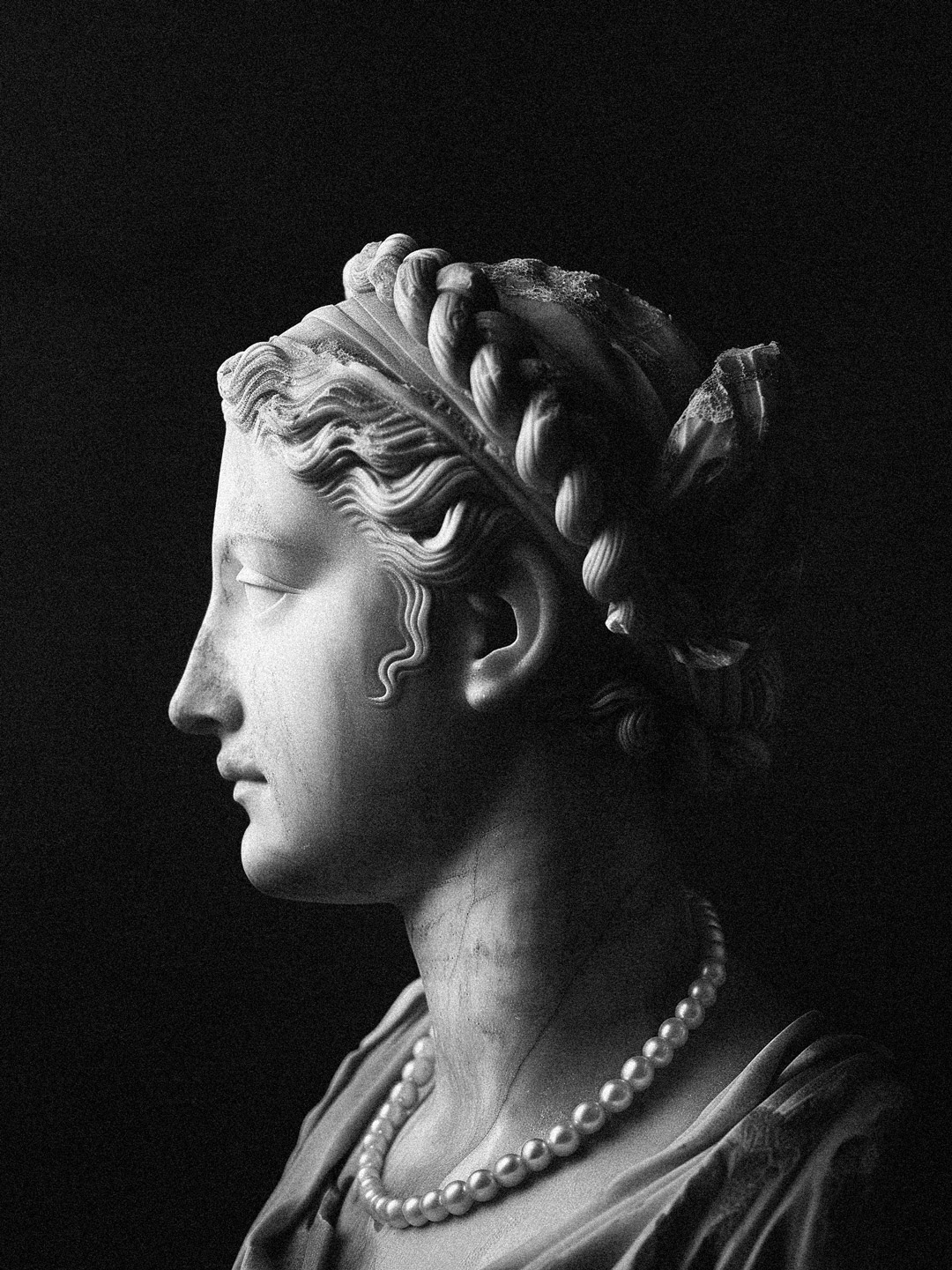
Sappho, spelled (in the dialect spoken by the poet) Psappho, (born c. 610, Lesbos, Greece — died c. 570 BCE). A lyric poet greatly admired in all ages for the beauty of her writing style.

Her language contains elements from Aeolic vernacular and poetic tradition, with traces of epic vocabulary familiar to readers of Homer. She has the ability to judge critically her own ecstasies and grief, and her emotions lose nothing of their force by being recollected in tranquillity.

Marble statue of Sappho on side profile.

Designed with WordPress