Bid a Warm Welcome to Ourselves & Our Friends on Twitter & their Linear B Sites Here are a few links to our collegial sites, first for Rita Roberts and myself on Twitter. For each site you wish to visit, simply click on its banner: Rita Roberts:Richard Vallance Janke:
You may very well want to sign up with Rita and me on Twitter, because between us we are following at least 1,500 Twitter accounts, a great many them archaeological or on ancient linguistics, often relating specifically to Minoan Linear A, Mycenaean Linear B & Arcado-Cypriot Linear C, the ancient Cycladic, Cypriot, Cretan and Mycenaean civilizations, among others directly related to them, as well as other contemporaneous civilizations such as ancient Egypt, Syria etc. Although we follow well over 2,000 Twitter accounts between us, the overlap is certain to be considerable, which is why I have given an estimate of 1,500. If you are not already a member of Twitter, I really do advise you to do so, if not for these reasons: (a) you will automatically be able to pick up your own followers from the approximately 1,500 Rita and I already follow. (b) by so doing, you will help widen the Twitter community already focused on our very own concerns, as noted above (c) you will hopefully become an active member of the international Twitter community focused on the same issues as ourselves. And even though Linear A, B & C and related archaeological disciplines are esoteric, to say the least, Richard already has over 600 followers, and Rita over 300. Even with considerable overlap, our followers may very well exceed 700 in all. Note that, unlike Facebook, which I loathe, Twitter is not greedily invasive on personal privacy. Also of great interest to our community are our shared Pinterest boards. which I strongly urge you to join. All the images posted on our blog, Linear B, Knossos & Mycenae are posted here:
where you will be able to view and download at your leisure any images, illustrations, charts etc. etc. directly related to early Cretan & Minoan hieroglyphics, Minoan Linear A, Mycenaean Linear B & Arcado-Cypriot Linear C, and any and all ancient scripts of possible interest to you as a researcher or translator. I, Richard, am by far the primary contributor to this board, which already has over 750 pins to date, but if you join, I will be delighted to invite you to post your own images directly related only to the ancient scripts mentioned here: where you will find any and all images, photos and artwork of Knossos, Mycenae, the Minoan/Mycenaean civilizations, and plenty of other illustrations of related interest. Rita Roberts is the moderator by default of this amazing board, since she has posted the vast majority of images there (almost 900 pins to date). I leave it to her to take care of this board, as I simply do not have the time to do so.
and Ancient Sea People, which Violet Shimmer Love just recently invited me to join. The overlap between Violet’s board and Knossos & Mycenae, Civilizations and with Mycenaean Linear B, Progressive Grammar & Vocabulary is not considerable, so I really do encourage you to subscribe to Ancient Sea Peoples as well.
We also have just invited aboard our newest member, Gretchen E. Leonhardt, here at Linear B, Knossos & Mycenae. Here is her site:
Gretchen is a linguistic specialist of the highest order who has been studying, deciphering and translating Linear B for well over a decade. I for one know that I will often need to rely on her to clarify matters related to Linear B with which I am unfamiliar. Although her approach to the decipherment and translation of Linear B is very much add odds with my own, this is of little consequence, as we all know that I encourage truly scholarly debate and differences in points of view and theoretical constructs, in the sure knowledge that everyone who is adept with Linear B has his or her own unique contribution to make, and that no one is in competition with anyone else. Anyone who visits our blog can decide for him- or herself which translations of Linear B tablets and fragments he or she prefers, whether they be those of myself, Rita Roberts, Gretchen Leonhardt or of absolutely anyone else who becomes a new member in the future. Or if you are like me, you may prefer to entertain the merits of any and all translations of the same original tablet or fragment, or to cull from them those elements which you find most to your taste, should you yourself wish to post translations of the same originals. No translator of Linear B, no matter how competent or advanced, has a monopoly on the “best” translations of Linear B originals, since as we all know, Linear B texts can – and more often than not – are very ambiguous. And of course, we must not forget about Minoan Linear A & Mycenaean Linear B, Dead Languages of the Mediterranean, one of the Internet’s most prestigious primary resources, here:
As new key sites related to Linear A B & C come to light, I shall of course add them to our list, so that you may decide for yourselves which ones you really wish to take an interest in. On a final note, ours is an extremely busy Blog, having seen tens of thousands of visitors in only a year and a half, so I would greatly appreciate it if member contributors and authors would take this into account, as I can sometimes easily feel overwhelmed. I believe it is called burnout when it goes over the top. That is just the way I am. Richard
Tag: LinearB
-
Our Translations of Key Linear B Translations now on Minoan Linear A & Mycenaean Linear B, Dead Languages of the Mediterranean
Our Translations of Key Linear B Translations now on Minoan Linear A & Mycenaean Linear B, Dead Languages of the Mediterranean (Click the logo to reach them):
This is a significant, indeed pivotal step forward for us as a primary resource and international site into exhaustive research, decipherment and translation of Mycenaean Linear B tablets, regardless of provenance (Knossos, Pylos, Mycenae, Phaistos etc.) We are immensely proud to have been invited to play an active rôle in such a leading international resource as this. Any and all researchers truly committed as proponents of the true linguistic import of Linear B should seriously consider playing a contributory rôle to this key resource into Mycenaean Greek.
Illustrative of our ongoing contributions in translation to Minoan Linear A & Mycenaean Linear B is this comment, posted on our almost complete decipherment of Linear B tablet Mycenae MY Oe 106:
 Scroll to the bottom of the page for my comment.
Richard
Scroll to the bottom of the page for my comment.
Richard
Share this:
-
The First Ever Almost Complete Translation of the Famous Linear B Tablet MY Oe 106 (Mycenae)
The First Ever Almost Complete Translation of the Famous Linear B Tablet MY Oe 106 (Mycenae) Click to ENLARGE:
 My translation of this famous Linear B was a hard slog, to say the very least. I had to rummage through Chris Tselentis’ fine Linear B Lexicon and through scores of entries in Liddell & Scott, 1986, to be able to come within sight of a translation which would make complete sense in context, and after hours of meticulous searching, I finally came up with the translation you see here. I think it not only rings true, but that it flies.
There are several critical comments I must make on my translation. In case anyone is wondering why I translated KOROTO as “young boy”, you needn’t look very far. This is why that picture of a boy appears to the right of the tablet. The scribe must have deliberately put it there to make damn certain that his fellow scribes and literate Mycenaeans knew perfectly well what the main thrust of this tablet is, namely, that we should put the emphasis squarely on the “young boy” as subject. He is the driving force behind all this wool business going on here. This is precisely why I am quite convinced that KOROTO is in fact an archaic Mycenaean neuter word for young boy. Of course, the daughter mentioned here cannot be his daughter! She is someone’s daughter, and I would bet my bottom dollars that she is their mother.
Moving on, we run smack dab up against the single syllabogram RE. We must not be deceived. It is not untranslatable. In fact, the direct opposite is true. Why on earth Linear B translators have not seen this phenomenon in the past 60 years is quite beyond me. I know perfectly well that single syllabograms are all over the place on Linear B tablets, because in the 3,000 odd Linear B tablets I have meticulously examined in Scripta Minoa, there are hundreds of tablets and fragments sporting single syllabograms. Two questions immediately leap to mind. First of all, why on earth would the Linear B scribes at Knossos, Mycenae, Pylos and elsewhere resort to inscribing single syllabograms on so many tablets (100s is a heck of lot of tablets!) unless they meant to. I think it goes quite without saying that that is precisely what they meant to do. Secondly, what on earth are these single syllabograms? Believe it or not, we have practically beaten this subject to death on our blog, and if you are really itching to know what they are (and if you are a Linear B translator, scholar or researcher, may I suggest you should be), then you ought to visit our blog and read the scores of posts which not only define what they are, viz. supersyllabograms, but provide scores of examples of Linear B tablets from Knossos which sport them, especially tablets referring to sheep, rams and ewes. Tablets on sheep constitute fully 20% and then some of all 3,000 Linear B tablets I closely examined from Knossos, far surpassing Linear B tablets on any other area of Minoan civilization (economic, agricultural, industrial, military, you name it). This of course raises another inescapable question. Why, why such an overwhelming number of Linear B tablets on sheep alone – even far surpassing all other livestock, crops etc. etc. - ? This is one critical question, and it demands answers. I have provided some myself, but it is up to the research community at large to fully investigate this phenomenon and in depth, so that within a few years we can really account for supersyllabograms... because they will not simply go away.
Now, as for that very long name, Toteweyasewe (and I truly believe it is a name, the name of the young boy), I would be willing to bet it is a Minoan, and not Mycenaean name. Have you ever noticed how many Linear A words are very long, many of them in excess of 5 syllables? I have. There is something going on there too, a factor which we must clearly take strictly into account if we are ever to even approach even a partial decipherment of Linear A. Another peculiarity I have noticed about Linear A tablets versus Linear B ones is that the majority of the former are vertical rectangular in shape, while the majority of the latter are horizontal and usually only 1-4 lines long. The longer Linear B tablets, of course, have to be rectangular as well, as if...
What does the sypersyllabogram RE mean? It was almost ridiculously easy for me to find that out. Consulting Tselentis once again, I discovered that the one and only Mycenaean Greek word beginning with the syllabogram RE that could possibly fit this context, i.e. that of wool, is REPOTO, which means “fine or thin”, and it fits the context beautifully. Given that the repertoire of Mycenaean vocabulary on extant tablets and fragments in Linear B is quite thin, amounting to no more than 3,000 words at the very most, I think we can pretty much rely on this translation of the supersyllabogram RE, because nothing else fits the context, period.
And, in case you are wondering how I discovered supersyllabograms in the first place, you need only to refer to the very first post in which I discuss the two Linear B tablets from Knossos, one of which gave the whole show away. The scribe actually spelled out the entire word on one of the tablets, and then used only the supersyllabogram on the other, thank you very much. To keep you all on tenterhooks, I am not going to tell you here which tablets these were, but point you to the ground-breaking post which goes right to the core of the matter. That post is titled, A Major Milestone in the Further Decipherment of Linear B – the Supersyllabogram Defined, here:
My translation of this famous Linear B was a hard slog, to say the very least. I had to rummage through Chris Tselentis’ fine Linear B Lexicon and through scores of entries in Liddell & Scott, 1986, to be able to come within sight of a translation which would make complete sense in context, and after hours of meticulous searching, I finally came up with the translation you see here. I think it not only rings true, but that it flies.
There are several critical comments I must make on my translation. In case anyone is wondering why I translated KOROTO as “young boy”, you needn’t look very far. This is why that picture of a boy appears to the right of the tablet. The scribe must have deliberately put it there to make damn certain that his fellow scribes and literate Mycenaeans knew perfectly well what the main thrust of this tablet is, namely, that we should put the emphasis squarely on the “young boy” as subject. He is the driving force behind all this wool business going on here. This is precisely why I am quite convinced that KOROTO is in fact an archaic Mycenaean neuter word for young boy. Of course, the daughter mentioned here cannot be his daughter! She is someone’s daughter, and I would bet my bottom dollars that she is their mother.
Moving on, we run smack dab up against the single syllabogram RE. We must not be deceived. It is not untranslatable. In fact, the direct opposite is true. Why on earth Linear B translators have not seen this phenomenon in the past 60 years is quite beyond me. I know perfectly well that single syllabograms are all over the place on Linear B tablets, because in the 3,000 odd Linear B tablets I have meticulously examined in Scripta Minoa, there are hundreds of tablets and fragments sporting single syllabograms. Two questions immediately leap to mind. First of all, why on earth would the Linear B scribes at Knossos, Mycenae, Pylos and elsewhere resort to inscribing single syllabograms on so many tablets (100s is a heck of lot of tablets!) unless they meant to. I think it goes quite without saying that that is precisely what they meant to do. Secondly, what on earth are these single syllabograms? Believe it or not, we have practically beaten this subject to death on our blog, and if you are really itching to know what they are (and if you are a Linear B translator, scholar or researcher, may I suggest you should be), then you ought to visit our blog and read the scores of posts which not only define what they are, viz. supersyllabograms, but provide scores of examples of Linear B tablets from Knossos which sport them, especially tablets referring to sheep, rams and ewes. Tablets on sheep constitute fully 20% and then some of all 3,000 Linear B tablets I closely examined from Knossos, far surpassing Linear B tablets on any other area of Minoan civilization (economic, agricultural, industrial, military, you name it). This of course raises another inescapable question. Why, why such an overwhelming number of Linear B tablets on sheep alone – even far surpassing all other livestock, crops etc. etc. - ? This is one critical question, and it demands answers. I have provided some myself, but it is up to the research community at large to fully investigate this phenomenon and in depth, so that within a few years we can really account for supersyllabograms... because they will not simply go away.
Now, as for that very long name, Toteweyasewe (and I truly believe it is a name, the name of the young boy), I would be willing to bet it is a Minoan, and not Mycenaean name. Have you ever noticed how many Linear A words are very long, many of them in excess of 5 syllables? I have. There is something going on there too, a factor which we must clearly take strictly into account if we are ever to even approach even a partial decipherment of Linear A. Another peculiarity I have noticed about Linear A tablets versus Linear B ones is that the majority of the former are vertical rectangular in shape, while the majority of the latter are horizontal and usually only 1-4 lines long. The longer Linear B tablets, of course, have to be rectangular as well, as if...
What does the sypersyllabogram RE mean? It was almost ridiculously easy for me to find that out. Consulting Tselentis once again, I discovered that the one and only Mycenaean Greek word beginning with the syllabogram RE that could possibly fit this context, i.e. that of wool, is REPOTO, which means “fine or thin”, and it fits the context beautifully. Given that the repertoire of Mycenaean vocabulary on extant tablets and fragments in Linear B is quite thin, amounting to no more than 3,000 words at the very most, I think we can pretty much rely on this translation of the supersyllabogram RE, because nothing else fits the context, period.
And, in case you are wondering how I discovered supersyllabograms in the first place, you need only to refer to the very first post in which I discuss the two Linear B tablets from Knossos, one of which gave the whole show away. The scribe actually spelled out the entire word on one of the tablets, and then used only the supersyllabogram on the other, thank you very much. To keep you all on tenterhooks, I am not going to tell you here which tablets these were, but point you to the ground-breaking post which goes right to the core of the matter. That post is titled, A Major Milestone in the Further Decipherment of Linear B – the Supersyllabogram Defined, here: One thing I will tell you is this. The supersyllabogram O means ONATO, a leased field & KI means KITIMENA, a plot of land. These two are plastered all over tablets on sheep. There are plenty more. We have deciphered at least 8 of them, but the rest elude us... for the time being.
Richard
One thing I will tell you is this. The supersyllabogram O means ONATO, a leased field & KI means KITIMENA, a plot of land. These two are plastered all over tablets on sheep. There are plenty more. We have deciphered at least 8 of them, but the rest elude us... for the time being.

Richard
Share this:
-
Knossos Tablet KN 952 G a 01 & the Ideogram for “Wool”
Knossos Tablet KN 952 G a 01 & the Ideogram for “Wool” (Click to ENLARGE):
 This Tablet is pretty much self-explanatory. Just remember that, since this tablet consists of ideograms only, reconstructing the syntax of such a tablet is quite another matter. In the case of this tablet in particular, the precise meaning of the two (2) sentences on this tablet (if indeed there are two, one on each line) somewhat eludes us. On the other hand, whatever translation we assign to a tablet such as this one, that translation is more than likely to reflect the original sense of the tablet (as its scribe understood it) fairly accurately.
Richard
This Tablet is pretty much self-explanatory. Just remember that, since this tablet consists of ideograms only, reconstructing the syntax of such a tablet is quite another matter. In the case of this tablet in particular, the precise meaning of the two (2) sentences on this tablet (if indeed there are two, one on each line) somewhat eludes us. On the other hand, whatever translation we assign to a tablet such as this one, that translation is more than likely to reflect the original sense of the tablet (as its scribe understood it) fairly accurately.
Richard
Share this:
-
Knossos Tablet KN 935 G d 02 & the Ideogram for “Wool”
Knossos Tablet KN 935 G d 02 & the Ideogram for “Wool” (Click to ENLARGE):
 As we come to master Linear B, we soon discover, to our great relief, that it is actually quite easy to translate the substance at least of a great many Linear B tablets, for the simple reason that these tablets use ideograms only, and no syllabograms. Of course, it should come as no surprise to anyone relatively adept at translating Linear B tablets, regardless of provenance (Knossos, Pylos, Phaistos etc.) that the Linear B scribes were so keen on using ideograms to replace syllabograms as often as they possibly could, to save valuable space on the small tablets they had to inscribe their texts, inventories, statistics and varia on. So if anything, this tablet in particular is nothing short of a breeze to translate.
However, whenever we are confronted with any Linear B tablet using ideograms alone, reconstructing the syntax of such a tablet is quite another matter. In the case of this tablet in particular, the precise meaning of the two (2) sentences on this tablet (if indeed there are two, one on each line) somewhat eludes us. On the other hand, whatever translation we assign to a tablet such as this one, that translation is more than likely to reflect the original sense of the tablet (as its scribe understood it) fairly accurately.
On a final note, observe that the Linear B words for “ram” KIRIO or KIRIYO and “ewe” POROQETO do not appear on any extant Linear B tablet, but are in fact derivative constructs I have derived from their alphabetical ancient Greek descendants. As such, they may not be technically “correct”, but as far as I am concerned, that is neither here nor there. As I always say, better to take a stab at it than do nothing.
In this light, we shall eventually be compiling a topical English to Mycenaean Linear B Lexicon, which is to include not only the vast majority of Linear B vocabulary on extant tablets, but a significant number of derived [D] words, such as the two I have provided here. Our ground-breaking lexicon is due to be published in PDF format sometime in 2015 or early 2016. Rita Roberts, my Linear B co-researcher and I shall be working as a team to produce this magnificent Lexicon, which we sincerely hope will leave the shoddily edited Mycenaean (Linear B) – English Glossary in the dust, where it belongs, and will equal or even surpass Chris Tselentis’ well conceived, highly comprehensive Linear B Lexicon.
Richard
As we come to master Linear B, we soon discover, to our great relief, that it is actually quite easy to translate the substance at least of a great many Linear B tablets, for the simple reason that these tablets use ideograms only, and no syllabograms. Of course, it should come as no surprise to anyone relatively adept at translating Linear B tablets, regardless of provenance (Knossos, Pylos, Phaistos etc.) that the Linear B scribes were so keen on using ideograms to replace syllabograms as often as they possibly could, to save valuable space on the small tablets they had to inscribe their texts, inventories, statistics and varia on. So if anything, this tablet in particular is nothing short of a breeze to translate.
However, whenever we are confronted with any Linear B tablet using ideograms alone, reconstructing the syntax of such a tablet is quite another matter. In the case of this tablet in particular, the precise meaning of the two (2) sentences on this tablet (if indeed there are two, one on each line) somewhat eludes us. On the other hand, whatever translation we assign to a tablet such as this one, that translation is more than likely to reflect the original sense of the tablet (as its scribe understood it) fairly accurately.
On a final note, observe that the Linear B words for “ram” KIRIO or KIRIYO and “ewe” POROQETO do not appear on any extant Linear B tablet, but are in fact derivative constructs I have derived from their alphabetical ancient Greek descendants. As such, they may not be technically “correct”, but as far as I am concerned, that is neither here nor there. As I always say, better to take a stab at it than do nothing.
In this light, we shall eventually be compiling a topical English to Mycenaean Linear B Lexicon, which is to include not only the vast majority of Linear B vocabulary on extant tablets, but a significant number of derived [D] words, such as the two I have provided here. Our ground-breaking lexicon is due to be published in PDF format sometime in 2015 or early 2016. Rita Roberts, my Linear B co-researcher and I shall be working as a team to produce this magnificent Lexicon, which we sincerely hope will leave the shoddily edited Mycenaean (Linear B) – English Glossary in the dust, where it belongs, and will equal or even surpass Chris Tselentis’ well conceived, highly comprehensive Linear B Lexicon.
Richard
Share this:
-
Hey, Honey, the Linear B Ideogram MA+RE for MALI = wool
Hey, Honey, the Linear B Ideogram MA+RE for MALI = wool (Click to ENLARGE): While the ideogram for the Mycenaean Greek word for “wool” in Linear B is quite straightforward, being as you can see the syllabogram RE superimposed on the syllabogram MA, there is one thing about it which stumped me for quite a long time. Why on earth would the Linear B scribes at Knossos and elsewhere substitute the syllabogram RE for RI to superimpose on MA, when obviously the word is spelled MARI in Linear B? On the surface, there does not seem to be any good reason for them to have done this, except that if we recall that the Linear B scribes were real sticklers for practicality, amongst other things, it really does not come as much of a suprise to me now that they substituted RE for RI, given that it is, to put it plainly, a simpler syllabogram to superimpose on MA than RI is. I have no idea whether or not that was their reasoning when they assigned this logogram, or ideogram, if you like, to symbolize the Linear B word for wool (MARI) other than the explanation I have just given here, which is consistent with the scriptural economy the Linear B scribes were so fond of.
I of course welcome any and all conjectures as to why they would have done this. One thing is clear: it was not a decision based on boring old reason, but rather on practical application, a factor which was always uppermost in the minds of the Linear B scribes, a clever gang if I ever saw one.
There is another quite cogent reason why the Linear B scribes went for MARE instead of MARI for wool, and that was, quite simply, to clearly contradistinguish it from the extremely similar logogram for honey, MERI, as illustrated here so that you can immediately see the difference for yourself (Click to ENLARGE):
While the ideogram for the Mycenaean Greek word for “wool” in Linear B is quite straightforward, being as you can see the syllabogram RE superimposed on the syllabogram MA, there is one thing about it which stumped me for quite a long time. Why on earth would the Linear B scribes at Knossos and elsewhere substitute the syllabogram RE for RI to superimpose on MA, when obviously the word is spelled MARI in Linear B? On the surface, there does not seem to be any good reason for them to have done this, except that if we recall that the Linear B scribes were real sticklers for practicality, amongst other things, it really does not come as much of a suprise to me now that they substituted RE for RI, given that it is, to put it plainly, a simpler syllabogram to superimpose on MA than RI is. I have no idea whether or not that was their reasoning when they assigned this logogram, or ideogram, if you like, to symbolize the Linear B word for wool (MARI) other than the explanation I have just given here, which is consistent with the scriptural economy the Linear B scribes were so fond of.
I of course welcome any and all conjectures as to why they would have done this. One thing is clear: it was not a decision based on boring old reason, but rather on practical application, a factor which was always uppermost in the minds of the Linear B scribes, a clever gang if I ever saw one.
There is another quite cogent reason why the Linear B scribes went for MARE instead of MARI for wool, and that was, quite simply, to clearly contradistinguish it from the extremely similar logogram for honey, MERI, as illustrated here so that you can immediately see the difference for yourself (Click to ENLARGE): This second explanation makes even more sense than the first.
The text of these two tablets, consisting as it does of logograms and ideograms alone, is quite clear, and warrants no comment.
Richard
This second explanation makes even more sense than the first.

The text of these two tablets, consisting as it does of logograms and ideograms alone, is quite clear, and warrants no comment.


Richard
Share this:
-
SITO = “wheat” again, this time on a contextually considerably clearer fragment
SITO = “wheat” again, this time on a contextually considerably clearer fragment (Click to ENLARGE):
 Unlike the previous Linear B tablet sporting the ideogram for wheat = SITO in Linear B (transliterated into Latin script), which was a pure headache for me from beginning to end, I dare say I found this particular Linear BC fragment from Knossos much easier to decipher, or more to the point, to unravel. As it turns out, even the missing portions of the text were practically handed to me on a silver platter, well, at least almost.
Even in the first line of this fragment, the presence of the feminine singular adjective for “planted or cultivated” pretty much gave the show away. The one noun which fits this adjective like a glove is the Linear B word, KOTONA = “a plot of land”, the very word Chris Tselentis pairs with this adjective in his Linear B Lexicon, where he has this to say of PU2TERIYA, “planted, cultivated (of ‘ ktoina’ = plots”). And who am I to argue with him? Sometimes, translations of even missing words, in this case, the noun KOTONA, also feminine singular, seem just to leap up and bite you. I have almost no doubt whatsoever that this is indeed the word missing to the left of the alternate spelling PUTARIYA for PU2TERIYA.
The truncated word beginning with PERI was a considerably tougher challenge, but as I have so often said on this blog, who am I to refuse a good challenge? So I never do. Basing myself on the various possible spellings of Linear B PERI in alphabetical ancient Greek, meticulous consultation of Liddell & Scott, 1986, yielded no less than nine (9) distinct possibilities for Greek words beginning with the alternatives you see in the illustration above. I have included them all, even though some of them seem more far-fetched than others. What really struck me was that five (5) of these words were all in the same range of meanings, and so I naturally opted for any one of these variants... take your pick, while eliminating the others. Of course, there is no real justification for tossing all of the others out, especially “by the sea”, except that Chris Tselentis himself has an entry in his excellent and comprehensive Linear B Lexicon, which is almost perfectly matched with all five of the alternative meanings I have opted for. Given that this entry, “the further provinces” is the one and only entry beginning with PERA in any available online Linear B glossary or lexicon, there is absolutely no reason to doubt that this may indeed be the very word that originally appeared intact at this position on the tablet. But there is no way to know.
The rest of the notes on the illustration of this fragment from Knossos are self-explanatory. The translation of the second line is completely unambiguous.
Now, on to the alternative translations... take your choice. These are:
A: a cultivated (plot of land) close by, with wheat amounting to a total of 130+ units (bales)... where “amounting to a total of” is a free translation of “so much wheat 130+”
B: a cultivated (plot of land) just beyond, with wheat amounting to a total of 130+ units (bales)...
C: a cultivated (plot of land) on the other side of (... the island or peninsula or whatever...), with wheat amounting to a total of 130+ units (bales)...
D: a cultivated (plot of land) on the opposite side of (... the island or peninsula or whatever...), with wheat amounting to a total of 130+ units (bales)...
E: a cultivated (plot of land) in a distant province, with wheat amounting to a total of 130+ units (bales)...
and even possibly:
F: a cultivated (plot of land) by the sea, with wheat amounting to a total of 130+ units (bales)...
Again, I say, take your pick. All of these translations are perfectly sound, and since the context of this fragment is no longer fully intact, any one of them could very well have been the original integral text. I would much rather entertain all the probabilities for this context, partial as it is. If it is possible to cross-correlate the context of this fragment with that of a more complete tablet using almost exactly the same text as this one, then we may be able to confirm the best translation(s) from the seven (7) alternatives above, possibly even rounding them down to two. I am a real stickler for context. Where a very similar or almost identical context does exist on another Linear B tablet, regardless of its provenance, we simply must not fail to take its entire text into strict account, in order to flesh out the missing text on the tablet we have in front of ourselves. Of course, where no cross-correlated context is to be found on any extant Linear B tablets or fragments, we have to make do without it.
At this moment in time, I can think of no other Linear B tablet or fragment from among the 3,000+ I have closely examined, the content of which cross-correlates with that of this tablet. Given the fact, however, that even the missing text of this tablet appears not to be so mysterious after all, we can, I think, rest assured that we are on the right track.
On a final note, even where context is sufficient to establish meaning with a fair degree of certainty, as in this instance, it is not everything. We must prepare ourselves for all possible contingencies, which is precisely what I have done here, and what I attempt to do to the best of my ability with any Linear B tablet or fragment I must struggle with to decipher it... in the exact same scenario which faces any and all Linear B translators.
Richard
Unlike the previous Linear B tablet sporting the ideogram for wheat = SITO in Linear B (transliterated into Latin script), which was a pure headache for me from beginning to end, I dare say I found this particular Linear BC fragment from Knossos much easier to decipher, or more to the point, to unravel. As it turns out, even the missing portions of the text were practically handed to me on a silver platter, well, at least almost.
Even in the first line of this fragment, the presence of the feminine singular adjective for “planted or cultivated” pretty much gave the show away. The one noun which fits this adjective like a glove is the Linear B word, KOTONA = “a plot of land”, the very word Chris Tselentis pairs with this adjective in his Linear B Lexicon, where he has this to say of PU2TERIYA, “planted, cultivated (of ‘ ktoina’ = plots”). And who am I to argue with him? Sometimes, translations of even missing words, in this case, the noun KOTONA, also feminine singular, seem just to leap up and bite you. I have almost no doubt whatsoever that this is indeed the word missing to the left of the alternate spelling PUTARIYA for PU2TERIYA.
The truncated word beginning with PERI was a considerably tougher challenge, but as I have so often said on this blog, who am I to refuse a good challenge? So I never do. Basing myself on the various possible spellings of Linear B PERI in alphabetical ancient Greek, meticulous consultation of Liddell & Scott, 1986, yielded no less than nine (9) distinct possibilities for Greek words beginning with the alternatives you see in the illustration above. I have included them all, even though some of them seem more far-fetched than others. What really struck me was that five (5) of these words were all in the same range of meanings, and so I naturally opted for any one of these variants... take your pick, while eliminating the others. Of course, there is no real justification for tossing all of the others out, especially “by the sea”, except that Chris Tselentis himself has an entry in his excellent and comprehensive Linear B Lexicon, which is almost perfectly matched with all five of the alternative meanings I have opted for. Given that this entry, “the further provinces” is the one and only entry beginning with PERA in any available online Linear B glossary or lexicon, there is absolutely no reason to doubt that this may indeed be the very word that originally appeared intact at this position on the tablet. But there is no way to know.
The rest of the notes on the illustration of this fragment from Knossos are self-explanatory. The translation of the second line is completely unambiguous.
Now, on to the alternative translations... take your choice. These are:
A: a cultivated (plot of land) close by, with wheat amounting to a total of 130+ units (bales)... where “amounting to a total of” is a free translation of “so much wheat 130+”
B: a cultivated (plot of land) just beyond, with wheat amounting to a total of 130+ units (bales)...
C: a cultivated (plot of land) on the other side of (... the island or peninsula or whatever...), with wheat amounting to a total of 130+ units (bales)...
D: a cultivated (plot of land) on the opposite side of (... the island or peninsula or whatever...), with wheat amounting to a total of 130+ units (bales)...
E: a cultivated (plot of land) in a distant province, with wheat amounting to a total of 130+ units (bales)...
and even possibly:
F: a cultivated (plot of land) by the sea, with wheat amounting to a total of 130+ units (bales)...
Again, I say, take your pick. All of these translations are perfectly sound, and since the context of this fragment is no longer fully intact, any one of them could very well have been the original integral text. I would much rather entertain all the probabilities for this context, partial as it is. If it is possible to cross-correlate the context of this fragment with that of a more complete tablet using almost exactly the same text as this one, then we may be able to confirm the best translation(s) from the seven (7) alternatives above, possibly even rounding them down to two. I am a real stickler for context. Where a very similar or almost identical context does exist on another Linear B tablet, regardless of its provenance, we simply must not fail to take its entire text into strict account, in order to flesh out the missing text on the tablet we have in front of ourselves. Of course, where no cross-correlated context is to be found on any extant Linear B tablets or fragments, we have to make do without it.
At this moment in time, I can think of no other Linear B tablet or fragment from among the 3,000+ I have closely examined, the content of which cross-correlates with that of this tablet. Given the fact, however, that even the missing text of this tablet appears not to be so mysterious after all, we can, I think, rest assured that we are on the right track.
On a final note, even where context is sufficient to establish meaning with a fair degree of certainty, as in this instance, it is not everything. We must prepare ourselves for all possible contingencies, which is precisely what I have done here, and what I attempt to do to the best of my ability with any Linear B tablet or fragment I must struggle with to decipher it... in the exact same scenario which faces any and all Linear B translators.
Richard
Share this:
-
Trying to make sense of a seriously damaged Linear B tablet, KN 842 K j 01 SITO = wheat
Trying to make sense of a seriously damaged Linear B tablet, KN 842 K j 01 SITO = wheat (Click to ENLARGE):
 I have come across quite a few Linear B tablets which are so badly damaged that it is almost impossible to make any sense of them. This is the second such tablet I have valiantly attempted to decipher, at least in part, with some measure of “success”, however dubious... and it is dubious. However, as I have so often stressed in our blog, I am not one to shy away from a challenge, especially one as daunting as this.
I wish to make clear from the outset that my decipherment, as far it goes (which is not very far) is entirely tautological, amounting to no more than wish fulfilment, but in this respect, it does not stray very far, if at all, from so many Linear B decipherments, which are partial reconstructions of text actually present, in whole or in part, on seriously compromised Linear B tablets, regardless of provenance. And since I am such a stickler for context, the chopped up context of this damaged tablet makes my decipherment all the more tentative, or if you will, fishy.
But as I said before, it is far better to have tried than never to have tried at all.
So, here goes nothing. As far as I can make out, with all the gaps indicated by... passim..., this tablet seems to be saying something like this:
Line 1: Messenger, sacrifice (imperative) to the god Zeus!
Line 2: Unintelligible, except for “2 units (bales?) of wheat”
This line also appears to contain two of my “pet” sypersyllabograms, ME and NA (if the second even is NA), but I haven’t the faintest idea what they mean, because I have never seen them before on any of the 3,000 or so Linear B tablets from Knossos I have closely examined. Anyway, the whole theory of supersyllabograms is wide open to debate and possible rejection by the Linear B research & translation community at large.
Line 3: The first word, PERIYOPU or PERIYOAI, possibly truncated on the left, and almost certainly on the right, is undecipherable. The word KIDARO may mean a “flute or harp player”, but that is highly conjectural and really disputable. MOPOMEYA appears to contain the Linear B word for “shepherd”, but even for me, that is quite a stretch. Nevertheless, you never know.
Whatever you do, please do not quote me on this highly tentative and probably even fanciful translation of the apparently legible portions of this otherwise badly damaged tablet.
Richard
I have come across quite a few Linear B tablets which are so badly damaged that it is almost impossible to make any sense of them. This is the second such tablet I have valiantly attempted to decipher, at least in part, with some measure of “success”, however dubious... and it is dubious. However, as I have so often stressed in our blog, I am not one to shy away from a challenge, especially one as daunting as this.
I wish to make clear from the outset that my decipherment, as far it goes (which is not very far) is entirely tautological, amounting to no more than wish fulfilment, but in this respect, it does not stray very far, if at all, from so many Linear B decipherments, which are partial reconstructions of text actually present, in whole or in part, on seriously compromised Linear B tablets, regardless of provenance. And since I am such a stickler for context, the chopped up context of this damaged tablet makes my decipherment all the more tentative, or if you will, fishy.
But as I said before, it is far better to have tried than never to have tried at all.
So, here goes nothing. As far as I can make out, with all the gaps indicated by... passim..., this tablet seems to be saying something like this:
Line 1: Messenger, sacrifice (imperative) to the god Zeus!
Line 2: Unintelligible, except for “2 units (bales?) of wheat”
This line also appears to contain two of my “pet” sypersyllabograms, ME and NA (if the second even is NA), but I haven’t the faintest idea what they mean, because I have never seen them before on any of the 3,000 or so Linear B tablets from Knossos I have closely examined. Anyway, the whole theory of supersyllabograms is wide open to debate and possible rejection by the Linear B research & translation community at large.
Line 3: The first word, PERIYOPU or PERIYOAI, possibly truncated on the left, and almost certainly on the right, is undecipherable. The word KIDARO may mean a “flute or harp player”, but that is highly conjectural and really disputable. MOPOMEYA appears to contain the Linear B word for “shepherd”, but even for me, that is quite a stretch. Nevertheless, you never know.
Whatever you do, please do not quote me on this highly tentative and probably even fanciful translation of the apparently legible portions of this otherwise badly damaged tablet.
Richard
Share this:
-
Rita Roberts’ Translation of Knossos Tablet KN 634 Bn 03, People, More Girls & Boys
Rita Roberts’ Translation of Knossos Tablet KN 634 Bn 03, People, More Girls & Boys (Click to ENLARGE):
 And here is Rita’s translation of Knossos Tablet KN 634 Bn 03, which is trickier than the previous one, since it is right truncated, and it introduces the ideogram, people. Since this is only a fragment, it is impossible to determine what the giver is giving the boys and girls, as Rita so rightly asserts.
Richard
And here is Rita’s translation of Knossos Tablet KN 634 Bn 03, which is trickier than the previous one, since it is right truncated, and it introduces the ideogram, people. Since this is only a fragment, it is impossible to determine what the giver is giving the boys and girls, as Rita so rightly asserts.
Richard
Share this:
-
Rita Roberts’ Translation of Knossos Tablet KN 194 Bg 03, Girls & Boys
Rita Roberts’ Translation of Knossos Tablet KN 194 Bg 03, Girls & Boys (Click to ENLARGE):
 Not too long ago, my most advanced Linear B student graduated to actually translating Linear B tablets from Scripta Minoa at Knossos. But I did not simply assign her ordinary tablets with syllabograms only on them. Instead, I tossed her headlong in the sea, expecting her to sink or swim, as the old saying goes. And she swam, and is swimming better and better with every translation she accomplishes. While this translation of one of scores of Linear B tablets at Knossos is relatively straightforward, the one in the next post is trickier, and she got them both bang on.
I also recently assigned several sheep, rams and ewes tablets to Rita, and she should be starting to post her translations of these relatively soon. In this endeavour, she will be assisting me greatly in the decipherment and translation of scores and scores of the most significant of some 700 Linear B tablets on sheep, rams and ewes from Knossos. These tablets comprise by far the largest portion of Linear B tablets at Knossos, accounting for fully 20% of the entire find of some 3,000 + tablets. There is no other category of Linear B tablets, whether economic (trade, crafts, carpentry, industry, household affairs, agricultural (livestock other than sheep, rams and ewes, crops, including the all-pervasive olive oil and other agricultural practices), and military, all of which come a very distant second to the hundreds of tablets on sheep.
Richard
Not too long ago, my most advanced Linear B student graduated to actually translating Linear B tablets from Scripta Minoa at Knossos. But I did not simply assign her ordinary tablets with syllabograms only on them. Instead, I tossed her headlong in the sea, expecting her to sink or swim, as the old saying goes. And she swam, and is swimming better and better with every translation she accomplishes. While this translation of one of scores of Linear B tablets at Knossos is relatively straightforward, the one in the next post is trickier, and she got them both bang on.
I also recently assigned several sheep, rams and ewes tablets to Rita, and she should be starting to post her translations of these relatively soon. In this endeavour, she will be assisting me greatly in the decipherment and translation of scores and scores of the most significant of some 700 Linear B tablets on sheep, rams and ewes from Knossos. These tablets comprise by far the largest portion of Linear B tablets at Knossos, accounting for fully 20% of the entire find of some 3,000 + tablets. There is no other category of Linear B tablets, whether economic (trade, crafts, carpentry, industry, household affairs, agricultural (livestock other than sheep, rams and ewes, crops, including the all-pervasive olive oil and other agricultural practices), and military, all of which come a very distant second to the hundreds of tablets on sheep.
Richard
Share this:
-
The Linear B Ideogram for “wheat” = SITO. Ideograms are fun!
The Linear B Ideogram for “wheat” = SITO. Ideograms are fun! (Click to ENLARGE):
 I don’t know about you, but I think learning Linear B ideograms is fun. Since there are so many of them (at least 100!), it makes for easier translation of a lot of Linear B tablets. As is their usual practice, Linear B scribes writing Mycenaean Greek frequently resorted to ideograms, since they were a great way to save precious space on those small tablets they used. Once again, we see Linear B scribes resorting to what I prefer to call Linear B shorthand. Ideograms are only 1 way to achieve this goal. Logograms and supersyllabograms are another. Scribes also routinely did not even bother with nominal and adjectival declensions and verb conjugations, because what was the point when (yes, here we go again!) they could save valuable space on the tablets. These scribes were a clever bunch, who had the routine down pat, following strict standard universal guidelines which apply to tablets, no matter what their provenance (Knossos, Phaistos, Pylos etc.).
The use of a script, in this case, a syllabary as shorthand is a highly unusual trait for ancient writing systems, unless of course they are hieroglyphic, in which case they are automatically shorthand. We must nevertheless make a clear distinction between so-called hieroglyphic “shorthand”, since the Egyptian scribes almost certainly were not conscious that this is what hieroglyphics actually are. Since the entire system of Egyptian writing was hieroglyphic, from top to bottom, it was simply writing to them, and nothing more. On the other hand, it is quite clear that the Minoan scribes writing Mycenaean Greek in Linear B almost certainly were conscious that they were using shorthand, because they deliberately mixed logograms, ideograms and supersyllabograms with regular text spelled out, a practice totally unheard of in Egyptian writing, or for that matter in cuneiform and other earlier scripts prior to Linear B. Whether Linear A shared this characteristic with Linear B is an open question, but if it did, this would give us yet another clue to the eventual decipherment of Linear A. We note also that when the Greek alphabet was finally adopted ca. 900 – 800 BCE, shorthand, as practised in Linear B, disappeared, because it was no longer needed, being impractical and redundant in the earliest alphabetic system.
In fact, I am now quite confident to postulate that Linear B is in fact to a large extent a shorthand for Mycenaean Greek. Yes, the scribes did spell out words, but they just as often did not, resorting instead to the totally innovative, clever tricks I have mentioned above.
It also strikes me that the practice of cultivating grain and wheat right at the port of Knossos, Amnisos, was a truly intelligent economic practice. By so doing, the Minoans were able to expedite the international shipping of grain and wheat supplies, especially in the case of emergencies or famine abroad. This is yet another reminder that the Minoans were eminently practical businessmen, familiar at least with some of the fundamental principles of economics, as we understand that term nowadays.
Incidentally, my translation “cultivation practices for grain” is entirely speculative, and probably wrong. But as is my usual practice, I would much rather take a shot at some sort of translation that at least makes contextual sense than not try at all. After all, nobody’s going to shoot me for doing this... I hope!
Richard
I don’t know about you, but I think learning Linear B ideograms is fun. Since there are so many of them (at least 100!), it makes for easier translation of a lot of Linear B tablets. As is their usual practice, Linear B scribes writing Mycenaean Greek frequently resorted to ideograms, since they were a great way to save precious space on those small tablets they used. Once again, we see Linear B scribes resorting to what I prefer to call Linear B shorthand. Ideograms are only 1 way to achieve this goal. Logograms and supersyllabograms are another. Scribes also routinely did not even bother with nominal and adjectival declensions and verb conjugations, because what was the point when (yes, here we go again!) they could save valuable space on the tablets. These scribes were a clever bunch, who had the routine down pat, following strict standard universal guidelines which apply to tablets, no matter what their provenance (Knossos, Phaistos, Pylos etc.).
The use of a script, in this case, a syllabary as shorthand is a highly unusual trait for ancient writing systems, unless of course they are hieroglyphic, in which case they are automatically shorthand. We must nevertheless make a clear distinction between so-called hieroglyphic “shorthand”, since the Egyptian scribes almost certainly were not conscious that this is what hieroglyphics actually are. Since the entire system of Egyptian writing was hieroglyphic, from top to bottom, it was simply writing to them, and nothing more. On the other hand, it is quite clear that the Minoan scribes writing Mycenaean Greek in Linear B almost certainly were conscious that they were using shorthand, because they deliberately mixed logograms, ideograms and supersyllabograms with regular text spelled out, a practice totally unheard of in Egyptian writing, or for that matter in cuneiform and other earlier scripts prior to Linear B. Whether Linear A shared this characteristic with Linear B is an open question, but if it did, this would give us yet another clue to the eventual decipherment of Linear A. We note also that when the Greek alphabet was finally adopted ca. 900 – 800 BCE, shorthand, as practised in Linear B, disappeared, because it was no longer needed, being impractical and redundant in the earliest alphabetic system.
In fact, I am now quite confident to postulate that Linear B is in fact to a large extent a shorthand for Mycenaean Greek. Yes, the scribes did spell out words, but they just as often did not, resorting instead to the totally innovative, clever tricks I have mentioned above.
It also strikes me that the practice of cultivating grain and wheat right at the port of Knossos, Amnisos, was a truly intelligent economic practice. By so doing, the Minoans were able to expedite the international shipping of grain and wheat supplies, especially in the case of emergencies or famine abroad. This is yet another reminder that the Minoans were eminently practical businessmen, familiar at least with some of the fundamental principles of economics, as we understand that term nowadays.
Incidentally, my translation “cultivation practices for grain” is entirely speculative, and probably wrong. But as is my usual practice, I would much rather take a shot at some sort of translation that at least makes contextual sense than not try at all. After all, nobody’s going to shoot me for doing this... I hope!
Richard
Share this:
-
What Are the Symbols on the Wisconsin U.S.A. Shard & What Might They Mean? PART B: Linguistic Implications
What Are the Symbols on the Wisconsin U.S.A. Shard & What Might They Mean? PART B: LINGUISTIC IMPLICATIONS: A Shard from Wisconsin, U.S.A. Click to ENLARGE):
 James R. Heath, who unearthed the Wisconsin shard, has this to say about the symbols (whatever they are) on the shard:
As you might see, in the upper left corner; three symbols. Certainly distinguishable is the symbol ‘u’, appears, with the ‘boat’ ideogram. Preceding the symbol for ‘u’ is the first character shaped like the letter ‘C’... passim … what does the obtrusive “S”, in the middle; mean? Is it an S?
I’m not going to pretend to translate, just show anyone willing to view this piece; there is more to discover at this site.
Please present your arguments, I can only tell you where I unearthed them, not who or why they were made.
James
___________________________________________________________________________________
In response to James’ comments above, I would like to make this observation first, that it is not a question of arguments we should be focusing on in this particular case of an archeological find which may turn out to be of some true significance once it is carbon-dated, simply because there is nothing to “argue” about, even in the strictly academic understanding of this word, argumenta (Latin), an argument in the sense of proof. Yet it is clear that with respect to these findings, the Wisconsin tablet and shard, no proof of any kind is yet forthcoming, pending substantiation of the findings by carbon-dating and, if possible, examination by petrological microscope, as our resident archaeologist, Rita Roberts, who specializes in Minoan ware, has urged be done.
On the linguistic level, however, I believe I am on much firmer ground. What becomes immediately obvious when we compare all of the 70-odd basic values of the Linear B syllabary with the symbols (whatever they are) on both the Wisconsin tablet and shard, is that none of the Linear B syllabograms and homophones, which in fact are writing, correspond in any meaningful way with any of the symbols on the Wisconsin tablet and shard, with the possible exception of symbol B on the Wisconsin tablet, which looks remarkably like the Linear B syllabogram ZO and C&F on the Wisconsin tablet, which appears to be similar to the syllabogram, the vowel I in Linear B. Other than that, we come up empty-handed. Here is the basic Linear B syllabary set (Click to ENLARGE):
James R. Heath, who unearthed the Wisconsin shard, has this to say about the symbols (whatever they are) on the shard:
As you might see, in the upper left corner; three symbols. Certainly distinguishable is the symbol ‘u’, appears, with the ‘boat’ ideogram. Preceding the symbol for ‘u’ is the first character shaped like the letter ‘C’... passim … what does the obtrusive “S”, in the middle; mean? Is it an S?
I’m not going to pretend to translate, just show anyone willing to view this piece; there is more to discover at this site.
Please present your arguments, I can only tell you where I unearthed them, not who or why they were made.
James
___________________________________________________________________________________
In response to James’ comments above, I would like to make this observation first, that it is not a question of arguments we should be focusing on in this particular case of an archeological find which may turn out to be of some true significance once it is carbon-dated, simply because there is nothing to “argue” about, even in the strictly academic understanding of this word, argumenta (Latin), an argument in the sense of proof. Yet it is clear that with respect to these findings, the Wisconsin tablet and shard, no proof of any kind is yet forthcoming, pending substantiation of the findings by carbon-dating and, if possible, examination by petrological microscope, as our resident archaeologist, Rita Roberts, who specializes in Minoan ware, has urged be done.
On the linguistic level, however, I believe I am on much firmer ground. What becomes immediately obvious when we compare all of the 70-odd basic values of the Linear B syllabary with the symbols (whatever they are) on both the Wisconsin tablet and shard, is that none of the Linear B syllabograms and homophones, which in fact are writing, correspond in any meaningful way with any of the symbols on the Wisconsin tablet and shard, with the possible exception of symbol B on the Wisconsin tablet, which looks remarkably like the Linear B syllabogram ZO and C&F on the Wisconsin tablet, which appears to be similar to the syllabogram, the vowel I in Linear B. Other than that, we come up empty-handed. Here is the basic Linear B syllabary set (Click to ENLARGE):
 This is, as I have already pointed out in a previous post, a serious impediment to cross-correlating the symbols (whatever they are) on the Wisconsin tablet and shard with absolutely any and all Linear B syllabograms, homophones, logograms and ideograms. Although I have not illustrated the Linear B logograms and ideograms in the table above, since there are far too many of them, I can assure you that none of them, with the sole exception of the Linear B ideogram for “month”, corresponds in any meaningful way with any of the symbols on the Wisconsin tablet and shard.
There is also no ideogram for “boat” in Linear B.If anything, this renders any attempt cross-correlation between the Wisconsin symbols and the entire Linear B script corpus a futile exercise at best. Readers of our blog can see the Linear B ideogram for themselves on Linear B tablet KN 162a D b 01, Scripta Minoa, on the post, A KEY TO THE MINOAN ECONOMY? An emphatic YES. 21,904 sheep in one place? Guess where... However, what has really unsettled me right from the outset, when I first viewed the Wisconsin tablet and then subsequently, the Wisconsin shard, is that no less than 4 of the symbols look uncannily like alpha-numerics in the Latin alphabet, namely, C S U and 5. Their appearance on either one or the other of the Wisconsin finds actually spooks me. It strikes me as very peculiar indeed that no less than 4 symbols out of a total of at best a score or so actually look painfully like alpha-numeric Latin characters. I simply cannot wrap my head around this. I have yet to see any ancient script from anywhere in the Mediterranean, the Mid-East and India which includes any more than 2 or 3 symbols at best that look almost exactly or even approximately like any alpha-numeric Latin characters. This is probably the one characteristic of the Wisconsin tablet and shard which scares me off more than anything else. Should it turn out that the tablet is carbon-dated to the any historical era post dating the birth of Christ (anno domini = AD), say, for instance, to the sixteenth to eighteenth centuries AD, the symbols would then become rather more explicable. They could in fact turn out to be exactly what they look like, the letters C S & U and the number 5. But what could that possibly imply? Well, I am not entirely sure, but it could mean that the tablet and the shard, even though perfectly authentic, were a latter-day, early modern exercise in magical, alchemy or occult symbols or glyphs, secret cyphers or esoteric arcane runes such as the so-called “Theban” alphabet, a mystical script used to conceal meanings or make signs, blessings or cursings:
 Yet again, this arcane German script, 250 years old, also shares some symbols in common with the Wisconsin script and, quite by accident of course, 3 with Linear B (annotated with an asterisk):
  All of this may just be a figment of my imagination, but I simply cannot brush aside my own misgivings. On the other hand, pending carbon dating, there is simply no way on earth we can verify whether or not the Wisconsin tablet and shard are a relatively recent or more ancient phenomenon. If carbon-dating should prove that these fragments are indeed ancient, then my misgivings are just that, misgivings, and nothing more. If the Wisconsin tablet and shard are ancient, by which I mean at least a millennium old, then my concerns about thee symbols C S U & 5 looking eerily like alpha-numerics fly right out the window. I believe I have quite exhausted any and all observations I could possibly make on the Wisconsin tablet and shard. So I will have to leave it at that. In the meantime, all the three of us, James, Rita and I, can do now is patiently await the results of carbon-dating.
Richard
All of this may just be a figment of my imagination, but I simply cannot brush aside my own misgivings. On the other hand, pending carbon dating, there is simply no way on earth we can verify whether or not the Wisconsin tablet and shard are a relatively recent or more ancient phenomenon. If carbon-dating should prove that these fragments are indeed ancient, then my misgivings are just that, misgivings, and nothing more. If the Wisconsin tablet and shard are ancient, by which I mean at least a millennium old, then my concerns about thee symbols C S U & 5 looking eerily like alpha-numerics fly right out the window. I believe I have quite exhausted any and all observations I could possibly make on the Wisconsin tablet and shard. So I will have to leave it at that. In the meantime, all the three of us, James, Rita and I, can do now is patiently await the results of carbon-dating.

Richard
Share this:
-
What Are the Symbols on the Wisconsin U.S.A. Shard & What Might They Mean?
What Are the Symbols on the Wisconsin U.S.A. Shard & What Might They Mean? PART A: ARCHEOLOGICAL IMPLICATIONS: A Shard from Wisconsin, U.S.A. (A: Top Left), Minoan Pottery (B, C & D) Click to ENLARGE:
 Is the shard from a giant storage container something like the Minoan pithos?
In response to James’ newest post, illustrating a shard from Wisconsin, allow me to make the following observations and comments. In the first place, leaving aside all consideration of pictographs or script (whatever the symbols are on this shard), from a strictly archaeological point of view, the shard seems to conform most closely in its apparent thickness to the giant Minoan pithoi or storage jars found at Knossos. These pithoi are huge (I know, I have seen them myself). They were used to store such commodities as wine, grain, olive oil etc. This observation might lead us to the conclusion that the Wisconsin shard is also from a North American vessel of the approximate configuration of a pithos, but there is really no way to know. What I am saying is simply this: just because the shard looks as if it is approximately the same thickness as a Minoan pithos does not necessarily mean that it comes from a pithos at all. What kind of vessel it comes from I simply cannot tell. Since I am a linguist, and not an archaeologist, I leave it up to Rita Roberts, our resident archaeologist, and specialist in Minoan wares, to shed further light on this issue. It is not up to me to draw any conclusions either way (or any way, for that matter), due to my ignorance of the archaeological implications of such ancient artifacts, no matter what their provenance, Asian, Australasian, Mediterranean, European, North or South American etc.
I have eliminated the other examples (B & C) of Minoan pottery in the illustration above for the simple reason that they appear to be too thin. But here again, I may very well be deceived by appearances. Only Rita Roberts is qualified to determine whether the apparent thickness of the Wisconsin shard falls within the parameters of thickness for Minoan pithoi, and in order for her to accomplish this, she would need a precise measurement of the thickness of the Wisconsin shard from James. So James and Rita, the ball is in your court.
Snake Goddess or Priestess or...?
Click to ENLARGE:
Is the shard from a giant storage container something like the Minoan pithos?
In response to James’ newest post, illustrating a shard from Wisconsin, allow me to make the following observations and comments. In the first place, leaving aside all consideration of pictographs or script (whatever the symbols are on this shard), from a strictly archaeological point of view, the shard seems to conform most closely in its apparent thickness to the giant Minoan pithoi or storage jars found at Knossos. These pithoi are huge (I know, I have seen them myself). They were used to store such commodities as wine, grain, olive oil etc. This observation might lead us to the conclusion that the Wisconsin shard is also from a North American vessel of the approximate configuration of a pithos, but there is really no way to know. What I am saying is simply this: just because the shard looks as if it is approximately the same thickness as a Minoan pithos does not necessarily mean that it comes from a pithos at all. What kind of vessel it comes from I simply cannot tell. Since I am a linguist, and not an archaeologist, I leave it up to Rita Roberts, our resident archaeologist, and specialist in Minoan wares, to shed further light on this issue. It is not up to me to draw any conclusions either way (or any way, for that matter), due to my ignorance of the archaeological implications of such ancient artifacts, no matter what their provenance, Asian, Australasian, Mediterranean, European, North or South American etc.
I have eliminated the other examples (B & C) of Minoan pottery in the illustration above for the simple reason that they appear to be too thin. But here again, I may very well be deceived by appearances. Only Rita Roberts is qualified to determine whether the apparent thickness of the Wisconsin shard falls within the parameters of thickness for Minoan pithoi, and in order for her to accomplish this, she would need a precise measurement of the thickness of the Wisconsin shard from James. So James and Rita, the ball is in your court.
Snake Goddess or Priestess or...?
Click to ENLARGE:
 As for the appearance of what looks like a snake goddess or priestess or someone of that kind on the Wisconsin shard, may I make the following observations? It all boils down to one thing: there were snake goddesses all over the place in the ancient world, as can be seen above. However, in all fairness to James, the Minoans were the most obsessed of all ancient civilizations with the worship of the snake goddess, so there is a very remote possibility that the snake goddess or snake priestess or whatever the symbol on the Wisconsin shard might be of Minoan origin, but I for one certainly would not count on that. Just because a snake symbol on an archaeological artifact from one part of the world (Wisconsin, U.S.A) looks like a similar symbol on an artifact from another, far-off region of the world, does not imply that they are (even remotely) the “same” symbol or, and this is even more critical, that they are from the (relatively) “same” historical period, as I go on to elaborate in the next section, carbon-dating.
The Absolute Necessity for Carbon-Dating (yet again):
On the other hand, as I pointed out in a previous post, the necessity for carbon-dating is absolutely paramount for both the tablet and the shard. Although carbon-dating is most likely to reveal that they both originate from the same pre-historical or historical period, there is still the possibility that they do not, and in that case, we would find ourselves at an impasse yet again. Without carbon-dating, however, there is simply no way to come close to an accurate determination of the approximate historical timeline within which these artifacts fall. Moreover, given that we are dealing with an enormous timeline, from paleolithic to as recent as the early modern era, when North American aboriginals still held sway all over the North American content (say, from as early as 10,000 BCE to as late as the 18th. century AD), the chances that these artifacts would actually fall within the timeline of the Minoan civilization (ca. 1900 – 1200 BCE, or about 700 years) is about 1/17, if we operate solely from this hypothesis, excluding all others, namely, that the total timeline rounds out to about 12 millennia (12,000 years, BCE to AD). If we were to extend the timeline further back in time, the odds would get even worse. If we were to restrict the timeline to, say, 5,000 BCE until today, the timeline is still 7 millennia, leaving us with odds of about 1/10, which is to say that there is still a 90% chance that the Wisconsin artifacts do not fall within the entire timeline of the Minoan/Mycenaean civilization, i.e. 1,900 – 1,200 BCE (700 years). There is simply no way around this road block, unless we do carbon-dating, and even then, the chances that the Wisconsin artifacts are contemporary with the Minoan/Mycenaean era are still only 1 in 10, in the best case scenario, or 1 in 17 in a more realistic timeline of 12,000 years.
Chronological and Geographic Considerations:
Moreover, even if carbon-dating of the Wisconsin artifacts does result in an approximate timeline of something like 2,000 – 1,000 BCE, this is only an indication that the Wisconsin artifacts versus any and all artifacts of the Minoan/Mycenaean civilization share the same timeline, give or take a few centuries (!), and nothing more. In other words, we are dealing with rough chronological simultaneity, but beyond that, what else can we say? Add to this the fact that, even if carbon-dating should result in an almost perfect chronological alignment, we are still faced with such an enormous geographical distance between the sites (Wisconsin, U.S.A. versus Crete) that the chances of these two far-flung sites sharing the “same” or similar civilization are very remote indeed. I hasten to add that Minoan ships, with their extremely low gunwales and profile, were suitable only for navigation in the Mediterranean in the spring and summer only, trade routes pretty much lying dormant for the winter. Here we see two images of a Cycladic/Minoan/Cretan ship, one a model and the other a fresco. Click to ENLARGE:
As for the appearance of what looks like a snake goddess or priestess or someone of that kind on the Wisconsin shard, may I make the following observations? It all boils down to one thing: there were snake goddesses all over the place in the ancient world, as can be seen above. However, in all fairness to James, the Minoans were the most obsessed of all ancient civilizations with the worship of the snake goddess, so there is a very remote possibility that the snake goddess or snake priestess or whatever the symbol on the Wisconsin shard might be of Minoan origin, but I for one certainly would not count on that. Just because a snake symbol on an archaeological artifact from one part of the world (Wisconsin, U.S.A) looks like a similar symbol on an artifact from another, far-off region of the world, does not imply that they are (even remotely) the “same” symbol or, and this is even more critical, that they are from the (relatively) “same” historical period, as I go on to elaborate in the next section, carbon-dating.
The Absolute Necessity for Carbon-Dating (yet again):
On the other hand, as I pointed out in a previous post, the necessity for carbon-dating is absolutely paramount for both the tablet and the shard. Although carbon-dating is most likely to reveal that they both originate from the same pre-historical or historical period, there is still the possibility that they do not, and in that case, we would find ourselves at an impasse yet again. Without carbon-dating, however, there is simply no way to come close to an accurate determination of the approximate historical timeline within which these artifacts fall. Moreover, given that we are dealing with an enormous timeline, from paleolithic to as recent as the early modern era, when North American aboriginals still held sway all over the North American content (say, from as early as 10,000 BCE to as late as the 18th. century AD), the chances that these artifacts would actually fall within the timeline of the Minoan civilization (ca. 1900 – 1200 BCE, or about 700 years) is about 1/17, if we operate solely from this hypothesis, excluding all others, namely, that the total timeline rounds out to about 12 millennia (12,000 years, BCE to AD). If we were to extend the timeline further back in time, the odds would get even worse. If we were to restrict the timeline to, say, 5,000 BCE until today, the timeline is still 7 millennia, leaving us with odds of about 1/10, which is to say that there is still a 90% chance that the Wisconsin artifacts do not fall within the entire timeline of the Minoan/Mycenaean civilization, i.e. 1,900 – 1,200 BCE (700 years). There is simply no way around this road block, unless we do carbon-dating, and even then, the chances that the Wisconsin artifacts are contemporary with the Minoan/Mycenaean era are still only 1 in 10, in the best case scenario, or 1 in 17 in a more realistic timeline of 12,000 years.
Chronological and Geographic Considerations:
Moreover, even if carbon-dating of the Wisconsin artifacts does result in an approximate timeline of something like 2,000 – 1,000 BCE, this is only an indication that the Wisconsin artifacts versus any and all artifacts of the Minoan/Mycenaean civilization share the same timeline, give or take a few centuries (!), and nothing more. In other words, we are dealing with rough chronological simultaneity, but beyond that, what else can we say? Add to this the fact that, even if carbon-dating should result in an almost perfect chronological alignment, we are still faced with such an enormous geographical distance between the sites (Wisconsin, U.S.A. versus Crete) that the chances of these two far-flung sites sharing the “same” or similar civilization are very remote indeed. I hasten to add that Minoan ships, with their extremely low gunwales and profile, were suitable only for navigation in the Mediterranean in the spring and summer only, trade routes pretty much lying dormant for the winter. Here we see two images of a Cycladic/Minoan/Cretan ship, one a model and the other a fresco. Click to ENLARGE:
 Note the extremely low gunwales. James, being a former naval officer, as I recall, fully appreciates the implications of such a configuration for seaworthiness on the high Atlantic. After all, if the Wisconsin artifacts are conceivably Minoan, Cypriot or of a related Mediterranean civilization, the people had to cross the Atlantic even to get to the Eastern shores of North America, let alone having to trek another 3,000 kilometres or more to get to Wisconsin!
Yet, for all I have to say here, it is not up to me to draw any conclusions in the archaeological sphere, as I am not qualified to do so. I leave that task to our esteemed colleague, Rita Roberts.
The Pre-Historical or Historical Significance of the Wisconsin Artifacts in their own right:
On a final note, regardless of the timeline of the Wisconsin artifacts, once verified by carbon-dating, they are bound to be of great historical significance in and of themselves, without the need to take into account reference to any other ancient or more recent civilization whatsoever. This is the prime consideration I believe James should keep uppermost in mind. Again, it is up to Rita to confirm or dissent on this point, but it strikes me that any and all major archaeological finds, regardless of where in the world they are unearthed, must perforce be evaluated in their own geological, historical and geographic context, as telling sign posts to the very civilization they represent, and to none other. To illustrate: just because the Minoan civilization was contemporaneous with much of the ancient Egyptian does not mean they were the same or even similar civilization, regardless of geographical proximity, because they were not. The same could be said for the Sumerian and Hittite Empires, also co-existent with the Minoan/Mycenaean. And yet all of these Empires were situated smack dab in the same geographical area of the world!... not 10s of thousands of kilometres apart.
I shall turn my attention to address the linguistic implications of the Wisconsin tablet and shard in the next post.
Richard
Note the extremely low gunwales. James, being a former naval officer, as I recall, fully appreciates the implications of such a configuration for seaworthiness on the high Atlantic. After all, if the Wisconsin artifacts are conceivably Minoan, Cypriot or of a related Mediterranean civilization, the people had to cross the Atlantic even to get to the Eastern shores of North America, let alone having to trek another 3,000 kilometres or more to get to Wisconsin!
Yet, for all I have to say here, it is not up to me to draw any conclusions in the archaeological sphere, as I am not qualified to do so. I leave that task to our esteemed colleague, Rita Roberts.
The Pre-Historical or Historical Significance of the Wisconsin Artifacts in their own right:
On a final note, regardless of the timeline of the Wisconsin artifacts, once verified by carbon-dating, they are bound to be of great historical significance in and of themselves, without the need to take into account reference to any other ancient or more recent civilization whatsoever. This is the prime consideration I believe James should keep uppermost in mind. Again, it is up to Rita to confirm or dissent on this point, but it strikes me that any and all major archaeological finds, regardless of where in the world they are unearthed, must perforce be evaluated in their own geological, historical and geographic context, as telling sign posts to the very civilization they represent, and to none other. To illustrate: just because the Minoan civilization was contemporaneous with much of the ancient Egyptian does not mean they were the same or even similar civilization, regardless of geographical proximity, because they were not. The same could be said for the Sumerian and Hittite Empires, also co-existent with the Minoan/Mycenaean. And yet all of these Empires were situated smack dab in the same geographical area of the world!... not 10s of thousands of kilometres apart.
I shall turn my attention to address the linguistic implications of the Wisconsin tablet and shard in the next post.
Richard
Share this:
-
A KEY TO THE MINOAN ECONOMY? An emphatic YES. 21,904 sheep in one place? Guess where…
A KEY TO THE MINOAN ECONOMY? An emphatic YES. 21,904 sheep in one place? Guess where... (Click to ENLARGE):
 Knossos, of course! I have a number of relevant comments to make on this fascinating numeric tablet, which is is typical of the scads of numeric tablets the Minoan scribes (mostly at Knossos) produced for inventory, just as they did with pretty much every other agricultural animals or crops, or economic merchandise or trade in general. One of my comments in particular [2 infra] turns on the possibility, if not probability, that the word in question may even be Minoan!
Following the NOTES in the illustration above, we notice that:
[1] the numbers to the left of the generic ideogram for sheep seem to be meaningless, for lack of context, the usual bugbear that plagues so many Linear B tablets. What these numbers, which seem quite haphazard, refer to is anyone’s guess, but I prefer to think of them as mere practice scribblings. On the other hand, they may refer to the ideogram [3] below. See infra.
[2] This is undoubtedly the ideogram for “month”. The problem is, what does the supersyllabogram RE immediately preceding it refer to, if not the name of the month itself? And that is just what I take it to mean. The difficulty we are now faced with, what is the name of the month which begins with the first syllable, the syllabogram RE? We cannot assume it is a Classical Greek name for any month, because in the Minoan & Mycenaean era (ca. 1900 BCE – 1200 BCE), Classical Greek month names did not exist. So either the month name referred to here beginning with the supersyllabogram RE is a Mycenaean Greek month name or even a Minoan month name, for the simple reason that the Minoan scribes writing in Mycenaean Greek sometimes very likely transposed (i.e. used) Minoan names for islands, municipalities, names of people, names of the seasons and months etc. This practice, if indeed it was their practice, may very well serve to provide a definite clue to the categories of Minoan vocabulary I refer to above, and then some. It is an approach to the partial decipherment of Linear A we need to take seriously. The problem with supersyllabograms such as RE is that they are only the first syllable of any word they represent, and are thus incapable of revealing what the word behind the supersyllabogram in question refers to, unless we already know the language the supersyllabogram is used for. If the language is Mycenaean Greek in Linear B, then we stand a (usually remote) chance of deciphering the word, but if the word is Minoan, and – I must strongly emphasize this – a Minoan month name written, not in Linear A, but in Linear B (since this is after all a Linear B tablet) we stand no chance whatsoever of deciphering the month name, at least for the present.
[3] This ideogram looks remarkably like the ideogram for “honey”, but wait! Hold on now! Does that make any sense at all in the context of this tablet, which otherwise and principally provides meaningful statistics on sheep, and nothing else? So it appears that suggesting this is the ideogram for “honey” may be stretching the limits of credibility, especially in light of the fact that the numbers to the left of the generic ideogram for “sheep” appear haphazard at best, hence, probably meaningless, except as (practice) doodles. There is simply no way of knowing.
[4] The scribe appears to have effaced the lower half of this 1K (1,000), but I prefer to assume that he did so in error. If not, then the total number of sheep would be 21,804 rather than 21,904, as if that makes much of a difference! It is still a helluva lot of sheep.
[5] This modified ideogram for “person”, in which the person appears to be holding a spear or something of that ilk, poses a few problems, none of them insurmountable, and any of which may be valid in the context of this tablet. First of all, why would a person hanging around sheep bear a spear, except to chase off predators such as wolves? If we assume that this modified ideogram actually means “shepherd”, then the problem almost resolves itself. Almost. The difficulty now is, what is the shepherd holding? It certainly could still be a spear, but shepherds usually hold staffs, and so that it what I take it to mean for this modified ideogram, unless... this is the signature of the scribe, which is an entirely plausible alternative. So this ideogram could mean 1 of 3 things. Take your pick.
Last, but far from least, we are still left with two nagging questions. How is it possible that this tablet, in combination with the 5 tablets on rams from Knossos, all 6 of them, can yield a mind-boggling total of over 45,000 sheep? Was the even countryside around Knossos capable of sustaining such an immense number of livestock, let alone only sheep, not counting bulls & cows, horses etc. etc.? What is going on here? Have our assiduous scribes gone overboard? The answer is simply, no. The second part of our question must reference the time, i.e. the year, season or month each and every one of these tablets was composed. This is no idle matter for speculation. The tablet in this post seems to refer only to the month RE, though only on the left side of the ideogram for sheep, leaving us with the question whether the rest of the tablet dealing only with sheep to the right of the ideogram for sheep, refers to the same time period, i.e. on month, that month being RE. It could go either way. But once again, we shall never know.
It simply strikes me as a little odd, in fact bordering on the ridiculous, that there would be 45,000 sheep around Knossos all at once! However, the explanation for this oddity follows. Once we clear that up, we can then conclude, within reasonable parameters, that there more than likely were never as many as 45,000 sheep wandering around, stinking up the countryside, and posing an awful environmental hazard to the city of Knossos. Otherwise, the city, as prosperous and as clean as the Minoans were, would never have survived more a few years. But ostensibly it did. I have addressed this issue before in posts where I refer to the strong likelihood that the Minoans, being the advanced civilization they were, were not only plainly familiar with the basic principles of hydrology and plumbing (which they most certainly were), but equally with the principles and practice of crop rotation and even rotation of animals in husbandry. If we allow for this scenario, then there would more likely than not, be far fewer than 45,000 sheep hanging around Knossos in any given running or fiscal year, though how many there would be we can never know... except that, given the fact that almost all sheep-related tablets from Knossos itself rarely inventory fewer than 5,000 sheep on any one tablet. So we can at least speculate an annual figure of some 5,000-10,000 sheep, if nothing else.
And who is to say this tablet, and any or all of the remaining tablets, were inscribed in the same year? Again, no idle question, for two inescapable reasons.
[1] The Minoan scribes kept annual statistics for absolutely anything and everything they inventoried, and erased the very same tablets on which these annual statistics were inscribed, and replaced the whole shebang with the new statistics for the next fiscal year for the same inventories of whatever they were recording (sheep, rams, ewes, cows, bulls, horses, chariots, armour, vessels and vases of all kinds, cloth, jewelry, you name it, the list goes on and on and on). In other words, putting it in a nutshell, there is simply no way of determining whether any or all of these 6 tablets in this and the previous post originate from the same “wetos” or “running year” = fiscal year, as the Minoan scribes so aptly called each inventory year.
[2] Add on top of this scenario the fact that all 4,000 or so of the tablets at Knossos were unearthed from the rubble of either a massive earthquake or the destruction of the city by invasion (the place is scarred with burns), or both, how can anyone be sure that any fragments laying side-by-side in the messy rubble on any aspect of Minoan life whatsoever, are from the same year, let alone the same category of inventory shelves on which they were almost certainly stored according to some classification system making it easy for the scribes to retrieve any tablet on any aspect of the Minoan agri-economy for any given running year, i.e. fiscal year? Once again we are at an impasse, up against a solid (or if you like, crumbling) brick wall. The likelihood that there is a strong relationship, some sort of relationship, or little relationship at all between one tablet and the next lying beside aside in the rubble that Sir Arthur Evans and company had to all too meticulously and cautiously rummage through remains an open question at best. True enough, as I have myself discovered in certain sequential ranges of tablets and fragments in Scripta Minoa, there are several instances in which the tablets in a particular entirely intact series, say speculatively, KN 1610 – KN 1654, for the sake of argument, all deal with the very same aspect of the Minoan agri-economy, for instance, sheep, rams and ewes, but even when they do, there is still absolutely no guarantee that any of these intact sequences all deal with the same running or fiscal year. And all too many adjacent tablets are not directly related. So we are left with the same enigma we were confronted with in the first place.
Richard
Knossos, of course! I have a number of relevant comments to make on this fascinating numeric tablet, which is is typical of the scads of numeric tablets the Minoan scribes (mostly at Knossos) produced for inventory, just as they did with pretty much every other agricultural animals or crops, or economic merchandise or trade in general. One of my comments in particular [2 infra] turns on the possibility, if not probability, that the word in question may even be Minoan!
Following the NOTES in the illustration above, we notice that:
[1] the numbers to the left of the generic ideogram for sheep seem to be meaningless, for lack of context, the usual bugbear that plagues so many Linear B tablets. What these numbers, which seem quite haphazard, refer to is anyone’s guess, but I prefer to think of them as mere practice scribblings. On the other hand, they may refer to the ideogram [3] below. See infra.
[2] This is undoubtedly the ideogram for “month”. The problem is, what does the supersyllabogram RE immediately preceding it refer to, if not the name of the month itself? And that is just what I take it to mean. The difficulty we are now faced with, what is the name of the month which begins with the first syllable, the syllabogram RE? We cannot assume it is a Classical Greek name for any month, because in the Minoan & Mycenaean era (ca. 1900 BCE – 1200 BCE), Classical Greek month names did not exist. So either the month name referred to here beginning with the supersyllabogram RE is a Mycenaean Greek month name or even a Minoan month name, for the simple reason that the Minoan scribes writing in Mycenaean Greek sometimes very likely transposed (i.e. used) Minoan names for islands, municipalities, names of people, names of the seasons and months etc. This practice, if indeed it was their practice, may very well serve to provide a definite clue to the categories of Minoan vocabulary I refer to above, and then some. It is an approach to the partial decipherment of Linear A we need to take seriously. The problem with supersyllabograms such as RE is that they are only the first syllable of any word they represent, and are thus incapable of revealing what the word behind the supersyllabogram in question refers to, unless we already know the language the supersyllabogram is used for. If the language is Mycenaean Greek in Linear B, then we stand a (usually remote) chance of deciphering the word, but if the word is Minoan, and – I must strongly emphasize this – a Minoan month name written, not in Linear A, but in Linear B (since this is after all a Linear B tablet) we stand no chance whatsoever of deciphering the month name, at least for the present.
[3] This ideogram looks remarkably like the ideogram for “honey”, but wait! Hold on now! Does that make any sense at all in the context of this tablet, which otherwise and principally provides meaningful statistics on sheep, and nothing else? So it appears that suggesting this is the ideogram for “honey” may be stretching the limits of credibility, especially in light of the fact that the numbers to the left of the generic ideogram for “sheep” appear haphazard at best, hence, probably meaningless, except as (practice) doodles. There is simply no way of knowing.
[4] The scribe appears to have effaced the lower half of this 1K (1,000), but I prefer to assume that he did so in error. If not, then the total number of sheep would be 21,804 rather than 21,904, as if that makes much of a difference! It is still a helluva lot of sheep.
[5] This modified ideogram for “person”, in which the person appears to be holding a spear or something of that ilk, poses a few problems, none of them insurmountable, and any of which may be valid in the context of this tablet. First of all, why would a person hanging around sheep bear a spear, except to chase off predators such as wolves? If we assume that this modified ideogram actually means “shepherd”, then the problem almost resolves itself. Almost. The difficulty now is, what is the shepherd holding? It certainly could still be a spear, but shepherds usually hold staffs, and so that it what I take it to mean for this modified ideogram, unless... this is the signature of the scribe, which is an entirely plausible alternative. So this ideogram could mean 1 of 3 things. Take your pick.
Last, but far from least, we are still left with two nagging questions. How is it possible that this tablet, in combination with the 5 tablets on rams from Knossos, all 6 of them, can yield a mind-boggling total of over 45,000 sheep? Was the even countryside around Knossos capable of sustaining such an immense number of livestock, let alone only sheep, not counting bulls & cows, horses etc. etc.? What is going on here? Have our assiduous scribes gone overboard? The answer is simply, no. The second part of our question must reference the time, i.e. the year, season or month each and every one of these tablets was composed. This is no idle matter for speculation. The tablet in this post seems to refer only to the month RE, though only on the left side of the ideogram for sheep, leaving us with the question whether the rest of the tablet dealing only with sheep to the right of the ideogram for sheep, refers to the same time period, i.e. on month, that month being RE. It could go either way. But once again, we shall never know.
It simply strikes me as a little odd, in fact bordering on the ridiculous, that there would be 45,000 sheep around Knossos all at once! However, the explanation for this oddity follows. Once we clear that up, we can then conclude, within reasonable parameters, that there more than likely were never as many as 45,000 sheep wandering around, stinking up the countryside, and posing an awful environmental hazard to the city of Knossos. Otherwise, the city, as prosperous and as clean as the Minoans were, would never have survived more a few years. But ostensibly it did. I have addressed this issue before in posts where I refer to the strong likelihood that the Minoans, being the advanced civilization they were, were not only plainly familiar with the basic principles of hydrology and plumbing (which they most certainly were), but equally with the principles and practice of crop rotation and even rotation of animals in husbandry. If we allow for this scenario, then there would more likely than not, be far fewer than 45,000 sheep hanging around Knossos in any given running or fiscal year, though how many there would be we can never know... except that, given the fact that almost all sheep-related tablets from Knossos itself rarely inventory fewer than 5,000 sheep on any one tablet. So we can at least speculate an annual figure of some 5,000-10,000 sheep, if nothing else.
And who is to say this tablet, and any or all of the remaining tablets, were inscribed in the same year? Again, no idle question, for two inescapable reasons.
[1] The Minoan scribes kept annual statistics for absolutely anything and everything they inventoried, and erased the very same tablets on which these annual statistics were inscribed, and replaced the whole shebang with the new statistics for the next fiscal year for the same inventories of whatever they were recording (sheep, rams, ewes, cows, bulls, horses, chariots, armour, vessels and vases of all kinds, cloth, jewelry, you name it, the list goes on and on and on). In other words, putting it in a nutshell, there is simply no way of determining whether any or all of these 6 tablets in this and the previous post originate from the same “wetos” or “running year” = fiscal year, as the Minoan scribes so aptly called each inventory year.
[2] Add on top of this scenario the fact that all 4,000 or so of the tablets at Knossos were unearthed from the rubble of either a massive earthquake or the destruction of the city by invasion (the place is scarred with burns), or both, how can anyone be sure that any fragments laying side-by-side in the messy rubble on any aspect of Minoan life whatsoever, are from the same year, let alone the same category of inventory shelves on which they were almost certainly stored according to some classification system making it easy for the scribes to retrieve any tablet on any aspect of the Minoan agri-economy for any given running year, i.e. fiscal year? Once again we are at an impasse, up against a solid (or if you like, crumbling) brick wall. The likelihood that there is a strong relationship, some sort of relationship, or little relationship at all between one tablet and the next lying beside aside in the rubble that Sir Arthur Evans and company had to all too meticulously and cautiously rummage through remains an open question at best. True enough, as I have myself discovered in certain sequential ranges of tablets and fragments in Scripta Minoa, there are several instances in which the tablets in a particular entirely intact series, say speculatively, KN 1610 – KN 1654, for the sake of argument, all deal with the very same aspect of the Minoan agri-economy, for instance, sheep, rams and ewes, but even when they do, there is still absolutely no guarantee that any of these intact sequences all deal with the same running or fiscal year. And all too many adjacent tablets are not directly related. So we are left with the same enigma we were confronted with in the first place.
Richard
Share this:
-
Where are all these tens of thousands of rams from? Guess. One guess & you’re right!
Where are all these tens of thousands of rams from? Guess. One guess & you’re right! Click to ENLARGE:
 As I pointed out in great detail in a previous post, the Minoan/Mycenaean economy ca. 1450 BCE, with its home base at the city of Knossos itself, spread out its sheep husbandry locales among several key sites, notably, Kytaistos, Phaistos & Lykinthos, mentioned 20 times each, Exonos 15 times, Davos 14, Lato & Syrimos 12, Lasynthos 9, Sugrita 8, Tylisos (or Tyllisos) 5 & Raia 3 times. But Knossos is never mentioned at all! All of this is threshed out in the previous post, CRITICAL Post: The Minoans Counted Sheep While They Were Wide Awake,
https://linearalinearblinearc.ca/2014/08/21/vital-post-the-minoans-counted-sheep-while-they-were-wide-awake-big-time/
which I strongly suggest you read, if you are at all fascinated by the Minoan economy and their international trade, especially in the area of sheep raising and husbandry, which was the vital underpinning of their entire subsistence as a people, outweighing by far all other economic activities of any kind whatsoever.
Regardless of the fact that the scribes at Knossos never mention the city as a sheep raising site, it was in fact the primary locale for sheep husbandry, for the simple, plain reason that only a city of this size, with a population probably in excess of 50,000, enormous for the ancient world, had the human and land resources to accommodate such huge numbers of sheep as illustrated above, i.e. 24,000 at the very minimum, and only on these 5 tablets! In the next post, I shall post a Linear B tablet from Knossos, in which the numbers of sheep mentioned will literally blow you away!
If anyone thinks even for a moment that any of the other sheep raising locales mentioned at the outset of this post had anywhere near the land space and human resources sufficient to raise such huge numbers of sheep, that person is probably deluding him- or herself.
We are left with one bizarre mystery. The only thing that utterly baffles me is, where are all the ewes! That question, not a rhetorical question at all, begs the issue. I simply cannot figure this out for the life of me. How can you raise any new sheep, i.e. newborns, if there are no ewes around! If anyone has any suggestions or comments whatsoever to help us unravel this plainly weird mystery, be my guest!
Richard
As I pointed out in great detail in a previous post, the Minoan/Mycenaean economy ca. 1450 BCE, with its home base at the city of Knossos itself, spread out its sheep husbandry locales among several key sites, notably, Kytaistos, Phaistos & Lykinthos, mentioned 20 times each, Exonos 15 times, Davos 14, Lato & Syrimos 12, Lasynthos 9, Sugrita 8, Tylisos (or Tyllisos) 5 & Raia 3 times. But Knossos is never mentioned at all! All of this is threshed out in the previous post, CRITICAL Post: The Minoans Counted Sheep While They Were Wide Awake,
https://linearalinearblinearc.ca/2014/08/21/vital-post-the-minoans-counted-sheep-while-they-were-wide-awake-big-time/
which I strongly suggest you read, if you are at all fascinated by the Minoan economy and their international trade, especially in the area of sheep raising and husbandry, which was the vital underpinning of their entire subsistence as a people, outweighing by far all other economic activities of any kind whatsoever.
Regardless of the fact that the scribes at Knossos never mention the city as a sheep raising site, it was in fact the primary locale for sheep husbandry, for the simple, plain reason that only a city of this size, with a population probably in excess of 50,000, enormous for the ancient world, had the human and land resources to accommodate such huge numbers of sheep as illustrated above, i.e. 24,000 at the very minimum, and only on these 5 tablets! In the next post, I shall post a Linear B tablet from Knossos, in which the numbers of sheep mentioned will literally blow you away!
If anyone thinks even for a moment that any of the other sheep raising locales mentioned at the outset of this post had anywhere near the land space and human resources sufficient to raise such huge numbers of sheep, that person is probably deluding him- or herself.
We are left with one bizarre mystery. The only thing that utterly baffles me is, where are all the ewes! That question, not a rhetorical question at all, begs the issue. I simply cannot figure this out for the life of me. How can you raise any new sheep, i.e. newborns, if there are no ewes around! If anyone has any suggestions or comments whatsoever to help us unravel this plainly weird mystery, be my guest!
Richard
Share this:
-
Tentative Translation of Knossos Tablet KN 686 E X 321 as “spinning a carpet”…
Tentative Translation of Knossos Tablet KN 686 E X 321 as “spinning a carpet”... or something like that, a bit of a stretch no matter how you look at it. Here is my tentative translation of this tablet (Click to ENLARGE):
 But, as per my usual approach to Linear B translations, I would much rather make an attempt at it, however bizarre the translation may seem, because not to do so is simply to cop out, which I never do. Here is my translation of this truly recalcitrant tablet, a translation which does make sense IF you take it at its face value, since all of the words I have preselected meet my own needs to make sense of it. But all this of course, is a nice little exercise in tautology, as indeed are quite a number of translations of Linear B tablets, the presumed (yet plausible) texts of which are ambiguous at best. This problem of ambiguity plagues our attempts at deciphering or translating so many tablets for a number of obvious reasons, among which we count, as I have mentioned several times already in our blog,
1. A large number of Linear B syllabograms are ambiguous in and of themselves, as they must do service for more than one Greek alphabetic consonant + more than 1 Greek vowel. This tablet makes this all too painfully obvious. TEKI is NOT teki but texnh&, omitting the “n”, a common practice in Linear B, while the Linear B K is equivalent to Greek x in this case. Instances of such glides abound in Linear B, and we must always be on our guard not to interpret Linear B syllabograms being literally what they look like.
2. So many Linear B tablets are truncated, i.e. chopped off, on either or both the left and/or right that it we should practically count on this being the case, rather than vice versa, i.e. assuming that the tablet is complete, which is, more often than not, not the case.
3. Ideograms further complicate matters. What is the grammatical relationship between 1 or more ideograms with the other words on any tablet whatsoever? Since pretty much all ideograms are nouns, I mean by this, What is the case relationship between the ideogram(s) and the other word(s) on the tablet or fragment? This is no idle matter, and it must always be kept uppermost in mind when translating any tablet or fragment whatsoever; otherwise, the translation is likely to be false.
4. When a tablet or fragment (this one is definitely a fragment) ends with an ideogram, there may very well be followed by other ideograms or logograms. If we accept something like my translation as being even partially tenable, then there is no reason at all not to assume that, in this context, the logogram for “wool” may just follow the ideogram for “ram”, at least in the context of my tentative translation on this particular tablet alone, and nowhere else.
I could go on, but you get the point. I have raised these issues and others relevant to the same problem so many times in our blog that I feel I am beating a dead horse. But I must insist on raising them again and again, to make certain that would-be students of Linear B get the picture, so to speak.
Richard
But, as per my usual approach to Linear B translations, I would much rather make an attempt at it, however bizarre the translation may seem, because not to do so is simply to cop out, which I never do. Here is my translation of this truly recalcitrant tablet, a translation which does make sense IF you take it at its face value, since all of the words I have preselected meet my own needs to make sense of it. But all this of course, is a nice little exercise in tautology, as indeed are quite a number of translations of Linear B tablets, the presumed (yet plausible) texts of which are ambiguous at best. This problem of ambiguity plagues our attempts at deciphering or translating so many tablets for a number of obvious reasons, among which we count, as I have mentioned several times already in our blog,
1. A large number of Linear B syllabograms are ambiguous in and of themselves, as they must do service for more than one Greek alphabetic consonant + more than 1 Greek vowel. This tablet makes this all too painfully obvious. TEKI is NOT teki but texnh&, omitting the “n”, a common practice in Linear B, while the Linear B K is equivalent to Greek x in this case. Instances of such glides abound in Linear B, and we must always be on our guard not to interpret Linear B syllabograms being literally what they look like.
2. So many Linear B tablets are truncated, i.e. chopped off, on either or both the left and/or right that it we should practically count on this being the case, rather than vice versa, i.e. assuming that the tablet is complete, which is, more often than not, not the case.
3. Ideograms further complicate matters. What is the grammatical relationship between 1 or more ideograms with the other words on any tablet whatsoever? Since pretty much all ideograms are nouns, I mean by this, What is the case relationship between the ideogram(s) and the other word(s) on the tablet or fragment? This is no idle matter, and it must always be kept uppermost in mind when translating any tablet or fragment whatsoever; otherwise, the translation is likely to be false.
4. When a tablet or fragment (this one is definitely a fragment) ends with an ideogram, there may very well be followed by other ideograms or logograms. If we accept something like my translation as being even partially tenable, then there is no reason at all not to assume that, in this context, the logogram for “wool” may just follow the ideogram for “ram”, at least in the context of my tentative translation on this particular tablet alone, and nowhere else.
I could go on, but you get the point. I have raised these issues and others relevant to the same problem so many times in our blog that I feel I am beating a dead horse. But I must insist on raising them again and again, to make certain that would-be students of Linear B get the picture, so to speak.
Richard
Share this:
-
More humour: composites of ancient tablets and hieroglyphs .. ancient grammar police!
More humour: composites of ancient tablets and hieroglyphs .. ancient grammar police! Oh wait! I think they were just kidding (Click to ENLARGE):
 I’ve never seen this symbol before (Click to ENLARGE):

Share this:
-
The Wisconsin U.S.A. Tablet – Is it Minoan? PART B: Cross-Linguistic Comparison with the Indus Valley Harappan Script, 2,600 BCE
The Wisconsin U.S.A. Tablet – Is it Minoan? PART B: Cross-Linguistic Comparison with the Indus Valley Harappan Script, 2,600 BCE Firmly keeping in mind, and if at all possible, downloading and displaying my annotated version of the Wisconsin Tablet, so that you can view it alongside my annotated illustration of the Harappan script, I urge you to carefully consider the points I raise below, with reference to them both, as well as yet again to the early Cretan script, and to Linear A, B & C, allowing for a cross-comparative symbolic linguistic analysis of a total of no less than 6 ancient scripts, of which 3 are syllabic, 2 are in ancient Greek (Linear B and C), and 4 are undeciphered, the Wisconsin Tablet, the Harappan ad early Cretan scripts and the Linear a syllabary, all of which span an enormous historical timeline of 2,200 years, from ca. 2,600 – ca 400 BCE. Before we proceed any further, let us take a good close look at the Harappan script (Click to ENLARGE):
 which predates all of the other scripts, except for the Wisconsin Tablet, which itself apparently is not even approximately dated for a timeline, by at least 500 years (from 2,600 BCE onwards), the early Cretan script running as it does from ca 1,900 – ca. 1,600 BCE. I have resorted to invoking the Indus Valley or Harappan script for precisely this reason, that I wanted to be certain that we end up dealing with various scripts and syllabaries spanning a huge timeline of some 2,200 years, making it literally impossible to correlate the symbols or syllabograms in any of these scripts, including the Wisconsin, in any meaningful fashion, without trapping ourselves in a quagmire of irresolvable contradictions and in a blatant reductio ad absurdum. It is abundantly clear that all 6 of these scripts share at least a couple of symbols, if not several, in common, while at the same time, these very same symbols are totally undecipherable in 4 of the scripts, the Wisconsin, Harappan, early Cretan scripts, and in the Linear A syllabary, for which we know most of the values, these being either close to identical or identical to those in Linear B, at least where they overlap. And that is not always, given that Linear A has considerably more syllabograms and ideograms than Linear B. Unfortunately, this means that a large portion of Linear A is not only undecipherable, but that many of its syllabograms and ideograms are still totally impermeable to us at the present juncture.
Of course, all of this amounts to, shall we say, one hell of a mess, given that even where the some of symbols, syllabograms and ideograms in any of these 6 scripts either closely resemble one another or are identical to one another, they are either completely undecipherable and beyond our ken, or have been almost completely deciphered (with a few queer exceptions in the 2 Greek scripts, Mycenaean Linear B, ca. 1500 – 1200 BCE, and its closest historical cousin or offspring, if you will, Arcado-Cypriot, written in Linear C from ca. 1100 – ca. 400 BCE). My point is simply this, that it is very nearly impossible arrive at any reasonable correlation of any of these symbols or syllabograms in any of these 6 scripts, even when they match up perfectly, with the sole exception of Linear A & B, which after all were employed by one and the same civilization, the Minoan, without a perceptible break, from ca. 1,800 to ca. 1,200 BCE, i.e. over 600 years, and – get this! - even though though they actually overlap, undeciphered Linear A being in continual use from ca. 1,800 – ca. 1,400 BCE, and Linear B, which was the syllabary for the earliest East Greek dialect, Mycenaean Greek, from ca. 1,500 – ca. 1,200 BCE, making for a century or so when they were in bed together.
This throws yet another wrench into our linguistic equation. Since it makes perfect sense for the Minoan scribes to continue using a simpler variant of Linear A in Linear B, why on earth would the same scribes continue to resort to Linear A alongside of Linear B for a period of at least a century (1,500 – 1,400 BCE)? This might appear to be a flat contradiction in terms, but in fact, it is highly doubtful that it is, since after all, nowadays we use the Latin script for many European languages, some of which held sway over all the others for considerable periods, for instance, Italian from ca. 1200 – ca. 1550 AD, French from ca. 1500 to ca. 1700 AD (again overlapping), and English, from ca. 1500 AD to the present, once again overlapping with Italian and French. In other words, all three of these modern languages held the ascendancy in tandem with at least one other at the same time, while English has been at the top of the heap since at least the beginning of the 20th. century.
Likewise, there were eminently practical reasons for Minoan Linear A and Mycenaean Linear B to have been in use concomitantly for about 100 years or so, since after all, they used pretty much the same script, even if the former is undeciphered today, and I emphasize today. However, There can be no doubt whatsoever that the Minoan scribes were perfectly bilingual in this period of about a century, when the two scripts overlapped, and it is perfectly reasonable to assume that the Minoans and Mycenaeans clearly understood one another’s language, which they surely must have. Otherwise, why continue using Linear A alongside Linear B for at least a century? There was no question of their having to decipher the Minoan language, because there was nothing to decipher. The language was then a known one, spoken and written, all during that period. Some scribes and some literates must have not only been familiar with both languages, but perfectly bilingual in both. What a shame we have lost the Minoan language to the Lethe of history, while our dear genius Michael Ventris succeeded, against all odds, in deciphering Linear B as Greek!
But, you are probably asking yourselves, why am I bringing this point up in the first place? Well, it is pretty obvious, I think. We can clearly see that the same syllabary, common to Linear A & B, with minor variations and with a shift to greater simplicity in Linear B, can be used to write two completely unrelated languages, just as the modern Latin script is used for several Indo-European languages, English, French, Spanish, German and so forth, and even some Slavic languages to boot, while at the same time doing perfect service for the Finno-Ugaric languages, Finnish, Estonian, Latvian and Hungarian, which are not Indo-European at all.
On the other hand, as can clearly be observed in our cross-correlation of 6 scripts from Harappan on down to Arcado-Cypriot Linear C, even though a few symbols and syllabograms appear to be in common with at least some of these 6 languages, the pattern is totally haphazard, the result being a meaningless crazy-quilt. The same scenario exists for modern Indo-European languages, of which the majority use the Latin alphabet, while Greek has its own peculiar alphabet predating the Latin, and almost all of the Slavic languages use the Cyrillic (though not all). While the Latin and Cyrillic (accidentally) share some letters in common, Cyrillic has far more in common with Greek. Once again, we find ourselves up against a hodge-podge of alphabets, all of which have some, but scarcely all, letters in common, just as our 6 ancient scripts share some, but scarcely all, of the symbols and syllabograms they – and here again, I lay particular stress on this point – accidentally have in common, with the sole exception of Linear A and Linear B, which form a clear continuum.
Taken to its extreme, this observation leads us to the inevitable conclusion that, regardless or not whether or not any 2 or more languages share the same pictographs, hieroglyphics, ideograms, logograms, syllabograms or alphabets in common, whether almost totally or in more or less part, there is absolutely no guarantee whatsoever that these languages are related in any meaningful way by linguistic family or sub-class. For instance, early Mediterranean, such as early Cretan and Linear A, appear to be closely related, but may very well not be. Meanwhile Linear A, which is used for the Minoan language, remains undeciphered, and in all probability, is in no way related to Greek, including Mycenaean, written in Linear B,even though these scripts are almost identical. We find the same scenario with modern Occidental Indo-European languages versus their Finno-Ugaric counterparts, which are not Indo-European at all, and yet which share the same alphabet, just as Linear A and Linear B share the same syllabary, for all intents and purposes.
What then does all this imply if not this? - that any and all ancient, including prehistoric, scripts must be deciphered within the ambit of their own hieroglyphics, ideograms, syllabograms or alphabet, whether or not these look (even exactly) like the hieroglyphics, ideograms, syllabograms or alphabet of any other language whatsoever. In other words, forget about the nature of the script in which any undeciphered language is written, whether hieroglyphic, ideogrammatic, syllabogrammatic or alphabetical, and concentrate solely and entirely on endeavouring to decipher it in its own right sui generis, without reference at all to any other language, dead or living. That this is surely the case is made abundantly clear by the co-existence, indeed, entente cordiale, that comfortably existed between the syllabary used for the undeciphered Minoan language written in Linear A and the linguistically completely unrelated language, Mycenaean Greek, written in Linear B, the syllabary which for all intents and purposes was the brain-child of Linear A, which the Minoan scribes clearly adapted to suit their own eminently practical purposes. After all, why re-invent the wheel, and why fix something when it isn’t even broken in the first place? It is precisely for the same reason that the Greek alphabet, which has been in continual use for at least 2,800 years (ca. 800 BCE to the present), the Latin alphabet for at least 2,750 years (from the time of the time of the founding of Rome if not before), and last, but far from least, the much younger Cyrillic alphabet, from the ninth century AD onwards, are all still going gang-busters.
This is precisely why the presence of even a few symbols which look like Linear A or Linear B syllabograms on the Wisconsin Tablet is utterly meaningless.
You could cross-correlate the symbols in God knows how many pre-historic or ancient languages, and still come up with matches or near-matches, but these would be, and in fact, are utterly meaningless, especially where one language dates from as early as 10,000 or 5,000 BCE, having symbols in common with any one or more languages from a (far) later historical period. And they all too frequently do. In a word, the whole exercise of cross-comparing identical, near identical or similar looking symbols, pictographs, hieroglyphics, ideograms, syllabograms or alphabets, whether prehistoric, ancient or modern, is entirely meaningless in determining the nature or linguistic class of any and all of these languages whatsoever.
So any attempt to cross-correlate symbols from one language to another, even where they leap out at us, yelling, hey, I am the “same” symbol in such and such language (for instance that of the Wisconsin Tablet) as in another (for instance, Minoan in Linear A or Mycenaean Greek in Linear B), I regret to say, sadly amounts to a hill of beans, and nothing more.
Richard
which predates all of the other scripts, except for the Wisconsin Tablet, which itself apparently is not even approximately dated for a timeline, by at least 500 years (from 2,600 BCE onwards), the early Cretan script running as it does from ca 1,900 – ca. 1,600 BCE. I have resorted to invoking the Indus Valley or Harappan script for precisely this reason, that I wanted to be certain that we end up dealing with various scripts and syllabaries spanning a huge timeline of some 2,200 years, making it literally impossible to correlate the symbols or syllabograms in any of these scripts, including the Wisconsin, in any meaningful fashion, without trapping ourselves in a quagmire of irresolvable contradictions and in a blatant reductio ad absurdum. It is abundantly clear that all 6 of these scripts share at least a couple of symbols, if not several, in common, while at the same time, these very same symbols are totally undecipherable in 4 of the scripts, the Wisconsin, Harappan, early Cretan scripts, and in the Linear A syllabary, for which we know most of the values, these being either close to identical or identical to those in Linear B, at least where they overlap. And that is not always, given that Linear A has considerably more syllabograms and ideograms than Linear B. Unfortunately, this means that a large portion of Linear A is not only undecipherable, but that many of its syllabograms and ideograms are still totally impermeable to us at the present juncture.
Of course, all of this amounts to, shall we say, one hell of a mess, given that even where the some of symbols, syllabograms and ideograms in any of these 6 scripts either closely resemble one another or are identical to one another, they are either completely undecipherable and beyond our ken, or have been almost completely deciphered (with a few queer exceptions in the 2 Greek scripts, Mycenaean Linear B, ca. 1500 – 1200 BCE, and its closest historical cousin or offspring, if you will, Arcado-Cypriot, written in Linear C from ca. 1100 – ca. 400 BCE). My point is simply this, that it is very nearly impossible arrive at any reasonable correlation of any of these symbols or syllabograms in any of these 6 scripts, even when they match up perfectly, with the sole exception of Linear A & B, which after all were employed by one and the same civilization, the Minoan, without a perceptible break, from ca. 1,800 to ca. 1,200 BCE, i.e. over 600 years, and – get this! - even though though they actually overlap, undeciphered Linear A being in continual use from ca. 1,800 – ca. 1,400 BCE, and Linear B, which was the syllabary for the earliest East Greek dialect, Mycenaean Greek, from ca. 1,500 – ca. 1,200 BCE, making for a century or so when they were in bed together.
This throws yet another wrench into our linguistic equation. Since it makes perfect sense for the Minoan scribes to continue using a simpler variant of Linear A in Linear B, why on earth would the same scribes continue to resort to Linear A alongside of Linear B for a period of at least a century (1,500 – 1,400 BCE)? This might appear to be a flat contradiction in terms, but in fact, it is highly doubtful that it is, since after all, nowadays we use the Latin script for many European languages, some of which held sway over all the others for considerable periods, for instance, Italian from ca. 1200 – ca. 1550 AD, French from ca. 1500 to ca. 1700 AD (again overlapping), and English, from ca. 1500 AD to the present, once again overlapping with Italian and French. In other words, all three of these modern languages held the ascendancy in tandem with at least one other at the same time, while English has been at the top of the heap since at least the beginning of the 20th. century.
Likewise, there were eminently practical reasons for Minoan Linear A and Mycenaean Linear B to have been in use concomitantly for about 100 years or so, since after all, they used pretty much the same script, even if the former is undeciphered today, and I emphasize today. However, There can be no doubt whatsoever that the Minoan scribes were perfectly bilingual in this period of about a century, when the two scripts overlapped, and it is perfectly reasonable to assume that the Minoans and Mycenaeans clearly understood one another’s language, which they surely must have. Otherwise, why continue using Linear A alongside Linear B for at least a century? There was no question of their having to decipher the Minoan language, because there was nothing to decipher. The language was then a known one, spoken and written, all during that period. Some scribes and some literates must have not only been familiar with both languages, but perfectly bilingual in both. What a shame we have lost the Minoan language to the Lethe of history, while our dear genius Michael Ventris succeeded, against all odds, in deciphering Linear B as Greek!
But, you are probably asking yourselves, why am I bringing this point up in the first place? Well, it is pretty obvious, I think. We can clearly see that the same syllabary, common to Linear A & B, with minor variations and with a shift to greater simplicity in Linear B, can be used to write two completely unrelated languages, just as the modern Latin script is used for several Indo-European languages, English, French, Spanish, German and so forth, and even some Slavic languages to boot, while at the same time doing perfect service for the Finno-Ugaric languages, Finnish, Estonian, Latvian and Hungarian, which are not Indo-European at all.
On the other hand, as can clearly be observed in our cross-correlation of 6 scripts from Harappan on down to Arcado-Cypriot Linear C, even though a few symbols and syllabograms appear to be in common with at least some of these 6 languages, the pattern is totally haphazard, the result being a meaningless crazy-quilt. The same scenario exists for modern Indo-European languages, of which the majority use the Latin alphabet, while Greek has its own peculiar alphabet predating the Latin, and almost all of the Slavic languages use the Cyrillic (though not all). While the Latin and Cyrillic (accidentally) share some letters in common, Cyrillic has far more in common with Greek. Once again, we find ourselves up against a hodge-podge of alphabets, all of which have some, but scarcely all, letters in common, just as our 6 ancient scripts share some, but scarcely all, of the symbols and syllabograms they – and here again, I lay particular stress on this point – accidentally have in common, with the sole exception of Linear A and Linear B, which form a clear continuum.
Taken to its extreme, this observation leads us to the inevitable conclusion that, regardless or not whether or not any 2 or more languages share the same pictographs, hieroglyphics, ideograms, logograms, syllabograms or alphabets in common, whether almost totally or in more or less part, there is absolutely no guarantee whatsoever that these languages are related in any meaningful way by linguistic family or sub-class. For instance, early Mediterranean, such as early Cretan and Linear A, appear to be closely related, but may very well not be. Meanwhile Linear A, which is used for the Minoan language, remains undeciphered, and in all probability, is in no way related to Greek, including Mycenaean, written in Linear B,even though these scripts are almost identical. We find the same scenario with modern Occidental Indo-European languages versus their Finno-Ugaric counterparts, which are not Indo-European at all, and yet which share the same alphabet, just as Linear A and Linear B share the same syllabary, for all intents and purposes.
What then does all this imply if not this? - that any and all ancient, including prehistoric, scripts must be deciphered within the ambit of their own hieroglyphics, ideograms, syllabograms or alphabet, whether or not these look (even exactly) like the hieroglyphics, ideograms, syllabograms or alphabet of any other language whatsoever. In other words, forget about the nature of the script in which any undeciphered language is written, whether hieroglyphic, ideogrammatic, syllabogrammatic or alphabetical, and concentrate solely and entirely on endeavouring to decipher it in its own right sui generis, without reference at all to any other language, dead or living. That this is surely the case is made abundantly clear by the co-existence, indeed, entente cordiale, that comfortably existed between the syllabary used for the undeciphered Minoan language written in Linear A and the linguistically completely unrelated language, Mycenaean Greek, written in Linear B, the syllabary which for all intents and purposes was the brain-child of Linear A, which the Minoan scribes clearly adapted to suit their own eminently practical purposes. After all, why re-invent the wheel, and why fix something when it isn’t even broken in the first place? It is precisely for the same reason that the Greek alphabet, which has been in continual use for at least 2,800 years (ca. 800 BCE to the present), the Latin alphabet for at least 2,750 years (from the time of the time of the founding of Rome if not before), and last, but far from least, the much younger Cyrillic alphabet, from the ninth century AD onwards, are all still going gang-busters.
This is precisely why the presence of even a few symbols which look like Linear A or Linear B syllabograms on the Wisconsin Tablet is utterly meaningless.
You could cross-correlate the symbols in God knows how many pre-historic or ancient languages, and still come up with matches or near-matches, but these would be, and in fact, are utterly meaningless, especially where one language dates from as early as 10,000 or 5,000 BCE, having symbols in common with any one or more languages from a (far) later historical period. And they all too frequently do. In a word, the whole exercise of cross-comparing identical, near identical or similar looking symbols, pictographs, hieroglyphics, ideograms, syllabograms or alphabets, whether prehistoric, ancient or modern, is entirely meaningless in determining the nature or linguistic class of any and all of these languages whatsoever.
So any attempt to cross-correlate symbols from one language to another, even where they leap out at us, yelling, hey, I am the “same” symbol in such and such language (for instance that of the Wisconsin Tablet) as in another (for instance, Minoan in Linear A or Mycenaean Greek in Linear B), I regret to say, sadly amounts to a hill of beans, and nothing more.
Richard
Share this:
-
The Wisconsin U.S.A. Tablet — Is it Minoan? PART A: Comparison with 4 Ancient Northern Mediterranean Scripts
The Wisconsin U.S.A. Tablet — Is it Minoan? PART A: Comparison with 4 Ancient Northern Mediterranean Scripts A Thorough Linguistic Analysis of the Wisconsin Tablet (Click to ENLARGE):
 When I first saw the Wisconsin Tablet, which our friend, E.J. Heath, posted here on our blog, I stood amazed. Staring me in the face were 3 symbols, 2 of which which looked uncannily like 2 syllabograms (B, C&F) common to Linear A & B, and one of which (H) looked like the number 20, again in common with Linear A & B. Well now, that’s a real find, or so it would appear.
But my wonderment quickly faded as I began to closely, then more meticulously, examine its symbols, discovering as I did that only 1 other symbol looked anything like symbols in any early (pre-historic) Northern Mediterranean scripts, that being symbol A on the Wisconsin Tablet, which is identical to the same symbol in the early Cretan script, and closely resembles 2 similar symbols, called syllabograms, in Linear C, the latter being the vowels a & e in that script. But Linear C is a far later historical Greek script, in use continually from ca. 1100 BCE to 400 BCE, alongside the ancient Greek alphabet. And that period is more than likely to be much later than the Wisconsin Tablet. As for the rest of the symbols on the Wisconsin tablet, they bear little or no resemblance at all to the symbols in early Cretan (an undeciphered pictographic or ideographic script), or to the syllabograms in Linear A (which, though undeciphered, shares a great many of its syllabograms in common with deciphered Linear B, or at least shares some features of these), to the 200 or so syllabograms and ideograms in Linear B or yet again to any syllabograms other than the vowels a & e in deciphered Cypro-Minoan Linear C.
All this leaves me at a complete impasse, and opens a real can of worms. Questions, which are not hypothetical, but historically pregnant, pop up left, right and centre. For instance:
1. How on earth can a tablet unearthed in the north-western U.S.A. reasonably be considered to be Minoan, when its shares symbols in common with 4 different ancient scripts, 2 of them similar to one another (Linear A & B), but one being undeciphered and the other decidedly Greek (Mycenaean), and the other two completely dissimilar, not only to one another, but also to Linear A & B. Even granted that the 2 symbols (and only 2), and the apparent “number 20” which I can clearly see on the Wisconsin Tablet, which apparently look like their Linear A & B counterparts, are, for the sake of argument, actually those very syllabograms in Linear A & B, this raises another thorny question, how can we be even remotely sure that this is in fact the case, when all of the other symbols on the Wisconsin – I repeat – bear no resemblance with any syllabograms or ideograms in either Linear A or B (and that means 100s of them!). We have landed in a real quagmire. In short, we cannot decipher it under these conditions. Here is a chart summarizing my findings (Click to ENLARGE):
When I first saw the Wisconsin Tablet, which our friend, E.J. Heath, posted here on our blog, I stood amazed. Staring me in the face were 3 symbols, 2 of which which looked uncannily like 2 syllabograms (B, C&F) common to Linear A & B, and one of which (H) looked like the number 20, again in common with Linear A & B. Well now, that’s a real find, or so it would appear.
But my wonderment quickly faded as I began to closely, then more meticulously, examine its symbols, discovering as I did that only 1 other symbol looked anything like symbols in any early (pre-historic) Northern Mediterranean scripts, that being symbol A on the Wisconsin Tablet, which is identical to the same symbol in the early Cretan script, and closely resembles 2 similar symbols, called syllabograms, in Linear C, the latter being the vowels a & e in that script. But Linear C is a far later historical Greek script, in use continually from ca. 1100 BCE to 400 BCE, alongside the ancient Greek alphabet. And that period is more than likely to be much later than the Wisconsin Tablet. As for the rest of the symbols on the Wisconsin tablet, they bear little or no resemblance at all to the symbols in early Cretan (an undeciphered pictographic or ideographic script), or to the syllabograms in Linear A (which, though undeciphered, shares a great many of its syllabograms in common with deciphered Linear B, or at least shares some features of these), to the 200 or so syllabograms and ideograms in Linear B or yet again to any syllabograms other than the vowels a & e in deciphered Cypro-Minoan Linear C.
All this leaves me at a complete impasse, and opens a real can of worms. Questions, which are not hypothetical, but historically pregnant, pop up left, right and centre. For instance:
1. How on earth can a tablet unearthed in the north-western U.S.A. reasonably be considered to be Minoan, when its shares symbols in common with 4 different ancient scripts, 2 of them similar to one another (Linear A & B), but one being undeciphered and the other decidedly Greek (Mycenaean), and the other two completely dissimilar, not only to one another, but also to Linear A & B. Even granted that the 2 symbols (and only 2), and the apparent “number 20” which I can clearly see on the Wisconsin Tablet, which apparently look like their Linear A & B counterparts, are, for the sake of argument, actually those very syllabograms in Linear A & B, this raises another thorny question, how can we be even remotely sure that this is in fact the case, when all of the other symbols on the Wisconsin – I repeat – bear no resemblance with any syllabograms or ideograms in either Linear A or B (and that means 100s of them!). We have landed in a real quagmire. In short, we cannot decipher it under these conditions. Here is a chart summarizing my findings (Click to ENLARGE):
 Here are two Linear A tablets, which shed further light on the issue of the Wisconsin tablet sharing (or not) symbols with Linear A syllabograms (Click to ENLARGE):
 Refer back to the Wisconsin Tablet above for 2 of the symbols highlighted with the same letters (E & H) on both it and these two Linear A tablets.
2. On the other hand, if we take the stance that the 3 so-called “Minoan” symbols on the Wisconsin Tablet are not Linear A or B syllabograms or numerics – which is a perfectly reasonable assumption to proceed from – then what on earth are they? Are they even syllabograms or numerics? Or are they any one of the following: pictographs, such as we see in the famous Peterborough Pictographs, unearthed near Peterborough, Ontario, Canada, some time ago, or perhaps hieroglyphics, or yet again logographic, ideogrammatic, syllabogrammatic or even, as far fetched as it may seem (and it is) alphabetic? This stretches my poor imagination and my powers of reason almost beyond bearing.
3. When was the Wisconsin Tablet composed? This is an absolutely critical question, because, failing any knowledge of even the approximate date of its composition, the whole thing remains a complete mystery. There are, of course, two tried-and-tested archaeological approaches to getting closer to resolving this vital question, at least to some extent. First of all, has the Wisconsin Tablet been carbon-dated? If it has not, the mystery remains just that, and nothing more. If it has (which apparently seems not to be the case, but hopefully E.J. Heath can enlighten me on this matter), then the carbon-dating is entirely capable of determining whether or not it falls at least somewhere near or within the historical timeline of both Linear A and Linear BC together, i.e. 1,800 – 1,200 BCE. If the carbon-dating proves this to be the case, then at least our friend has a leg to stand on, however shaky. On the other hand, if the carbon-dating should prove that the Wisconsin tablet pre-dates or post-dates the Minoan/Mycenaean era (ca. 1,900 – 1,200 BCE), then it is, even in the very best scenario, highly unlikely that the Wisconsin Tablet is composed in anything like or near to Linear A or B, and the whole hypothesis falls apart like a house of cards.
4. Another way of establishing the approximate timeline of the Wisconsin tablet is to submit it to as many as possible eminently qualified North American, as well as European and Mediterranean, archaeologists, and eventually to draw up a team of archaeologist to address this sticky issue head on, by which I mean in conference or in writing and online or better still, all. All this would take considerable time, conceivably close to a decade.
It goes entirely without saying that both of these approaches to attempting to establish the approximate dating of the Wisconsin tablet are absolutely essential to the process of identifying in any way what it is, and can in no wise be omitted. I leave it to our friend E.J. Heath to get in touch with at least a few archaeologists in the field (pardon the pun!) in the U.S.A, first and foremost at the University of Wisconsin itself, to establish the credentials of the Wisconsin Tablet, as it were.
5. On yet another level, I am forcibly struck by the curious absence of any other tablet(s), especially in light of the fact that the Minoan scribes writing in both Minoan Linear A and in Mycenaean Greek in Linear B, were completely obsessed with record-keeping, inventories and statistics. While there is a dearth of Linear A tablets still in existence compared with Linear B tablets, there are still plenty enough of them. We can only assume that those Linear A tablets which have disappeared in the maelstrom of history have done so for various reasons bearing on lack of archaeological findings or evidence, which may nevertheless may be corrected, at least to some degree, by potential findings in the future. But there can be no assurance of this. So if we have a few hundred Linear A tablets at our disposal, why is there only 1 single tablet to be found in Wisconsin, when we know perfectly well that the Linear A and Linear B scribes were concerned with one thing and one thing only, keeping exhaustive records, inventories and statistics on absolutely anything and everything that affected their economy? This surely begs the question: why has only 1 and one only so-called “Minoan” tablet been unearthed in Wisconsin? If as E.J. Heath claims, this tablet is likely to be just that, Minoan, then surely at least a few, if not a few scores of other tablets, or ideally hundreds just like it, should have been unearthed with it. Since none have, the question is why – and it is a question that must eventually bear answering in some way or another, sooner or later.
On the other hand, there are literally 1,000s of Linear B Tablets (close to 6,000 at last count), and we can read them! Even if the 3 so-called Linear A & B look-alikes on the Wisconsin Tablet were in fact either Linear A or Linear B, we would still be stuck in the mud, right where we are. Since Linear A is undeciphered, even if 2 of the symbols on the Wisconsin Tablet are in Linear A (which I highly doubt), they too remain undecipherable (with the possible exception of the so-called number 20. For more in this, see infra).
If on the other hand, these are Linear B symbols, i.e. the 2 syllabograms ZO (B) and NO (C& F), along with the apparent numeric = 20?, the tablet is still undecipherable, because we can make no sense of any of the other symbols on it, and in order to decipher it, we must place the apparent Linear B ZO & NO strictly in context with all of the symbols immediately preceding and following them, if indeed these other symbols are syllabograms (which I highly doubt). Remember what I said above, that the symbols on the Wisconsin tablet must all either be pictographics, hieroglyphics, ideograms or (very unlikely) syllabograms, and almost inconceivably letters, but never an admixture of any one of the above, with the possible sole exception of syllabograms and ideograms, which do in fact co-exist happily in Linear A & B. At least we can admit of that. Yet, even with this single exception at our disposal, we will have practically backed ourselves up against a solid brick wall, given that there is a substantial likelihood of the symbols on the Wisconsin Tablet being either pictographs or hieroglyphics.
6. As for that presumed number 20, even if it is a number, is it the number 20, i.. in the tens, or is it a single digit, i.e. 2? This is no small matter. In several of the ancient and not so ancient scripts, single digit numbers are either denoted by parallel horizontal lines, in which case the tens are designated by parallel vertical lines (if at all), or vice versa, i.e. single digits are vertical parallels and 10s horizontal. The easiest way to illustrate this is by invoking the numbers 1, 2 & 3 in (ichi, ni & san) in Japanese Kanji, which are the exact reverse of the paradigms for numerics in Linear A & B. Whereas Linear A & B denote single digits with vertical parallel lines and 10s with horizontal, Japanese Kanji resorts to the horizontal for single digits, as seen here:
Refer back to the Wisconsin Tablet above for 2 of the symbols highlighted with the same letters (E & H) on both it and these two Linear A tablets.
2. On the other hand, if we take the stance that the 3 so-called “Minoan” symbols on the Wisconsin Tablet are not Linear A or B syllabograms or numerics – which is a perfectly reasonable assumption to proceed from – then what on earth are they? Are they even syllabograms or numerics? Or are they any one of the following: pictographs, such as we see in the famous Peterborough Pictographs, unearthed near Peterborough, Ontario, Canada, some time ago, or perhaps hieroglyphics, or yet again logographic, ideogrammatic, syllabogrammatic or even, as far fetched as it may seem (and it is) alphabetic? This stretches my poor imagination and my powers of reason almost beyond bearing.
3. When was the Wisconsin Tablet composed? This is an absolutely critical question, because, failing any knowledge of even the approximate date of its composition, the whole thing remains a complete mystery. There are, of course, two tried-and-tested archaeological approaches to getting closer to resolving this vital question, at least to some extent. First of all, has the Wisconsin Tablet been carbon-dated? If it has not, the mystery remains just that, and nothing more. If it has (which apparently seems not to be the case, but hopefully E.J. Heath can enlighten me on this matter), then the carbon-dating is entirely capable of determining whether or not it falls at least somewhere near or within the historical timeline of both Linear A and Linear BC together, i.e. 1,800 – 1,200 BCE. If the carbon-dating proves this to be the case, then at least our friend has a leg to stand on, however shaky. On the other hand, if the carbon-dating should prove that the Wisconsin tablet pre-dates or post-dates the Minoan/Mycenaean era (ca. 1,900 – 1,200 BCE), then it is, even in the very best scenario, highly unlikely that the Wisconsin Tablet is composed in anything like or near to Linear A or B, and the whole hypothesis falls apart like a house of cards.
4. Another way of establishing the approximate timeline of the Wisconsin tablet is to submit it to as many as possible eminently qualified North American, as well as European and Mediterranean, archaeologists, and eventually to draw up a team of archaeologist to address this sticky issue head on, by which I mean in conference or in writing and online or better still, all. All this would take considerable time, conceivably close to a decade.
It goes entirely without saying that both of these approaches to attempting to establish the approximate dating of the Wisconsin tablet are absolutely essential to the process of identifying in any way what it is, and can in no wise be omitted. I leave it to our friend E.J. Heath to get in touch with at least a few archaeologists in the field (pardon the pun!) in the U.S.A, first and foremost at the University of Wisconsin itself, to establish the credentials of the Wisconsin Tablet, as it were.
5. On yet another level, I am forcibly struck by the curious absence of any other tablet(s), especially in light of the fact that the Minoan scribes writing in both Minoan Linear A and in Mycenaean Greek in Linear B, were completely obsessed with record-keeping, inventories and statistics. While there is a dearth of Linear A tablets still in existence compared with Linear B tablets, there are still plenty enough of them. We can only assume that those Linear A tablets which have disappeared in the maelstrom of history have done so for various reasons bearing on lack of archaeological findings or evidence, which may nevertheless may be corrected, at least to some degree, by potential findings in the future. But there can be no assurance of this. So if we have a few hundred Linear A tablets at our disposal, why is there only 1 single tablet to be found in Wisconsin, when we know perfectly well that the Linear A and Linear B scribes were concerned with one thing and one thing only, keeping exhaustive records, inventories and statistics on absolutely anything and everything that affected their economy? This surely begs the question: why has only 1 and one only so-called “Minoan” tablet been unearthed in Wisconsin? If as E.J. Heath claims, this tablet is likely to be just that, Minoan, then surely at least a few, if not a few scores of other tablets, or ideally hundreds just like it, should have been unearthed with it. Since none have, the question is why – and it is a question that must eventually bear answering in some way or another, sooner or later.
On the other hand, there are literally 1,000s of Linear B Tablets (close to 6,000 at last count), and we can read them! Even if the 3 so-called Linear A & B look-alikes on the Wisconsin Tablet were in fact either Linear A or Linear B, we would still be stuck in the mud, right where we are. Since Linear A is undeciphered, even if 2 of the symbols on the Wisconsin Tablet are in Linear A (which I highly doubt), they too remain undecipherable (with the possible exception of the so-called number 20. For more in this, see infra).
If on the other hand, these are Linear B symbols, i.e. the 2 syllabograms ZO (B) and NO (C& F), along with the apparent numeric = 20?, the tablet is still undecipherable, because we can make no sense of any of the other symbols on it, and in order to decipher it, we must place the apparent Linear B ZO & NO strictly in context with all of the symbols immediately preceding and following them, if indeed these other symbols are syllabograms (which I highly doubt). Remember what I said above, that the symbols on the Wisconsin tablet must all either be pictographics, hieroglyphics, ideograms or (very unlikely) syllabograms, and almost inconceivably letters, but never an admixture of any one of the above, with the possible sole exception of syllabograms and ideograms, which do in fact co-exist happily in Linear A & B. At least we can admit of that. Yet, even with this single exception at our disposal, we will have practically backed ourselves up against a solid brick wall, given that there is a substantial likelihood of the symbols on the Wisconsin Tablet being either pictographs or hieroglyphics.
6. As for that presumed number 20, even if it is a number, is it the number 20, i.. in the tens, or is it a single digit, i.e. 2? This is no small matter. In several of the ancient and not so ancient scripts, single digit numbers are either denoted by parallel horizontal lines, in which case the tens are designated by parallel vertical lines (if at all), or vice versa, i.e. single digits are vertical parallels and 10s horizontal. The easiest way to illustrate this is by invoking the numbers 1, 2 & 3 in (ichi, ni & san) in Japanese Kanji, which are the exact reverse of the paradigms for numerics in Linear A & B. Whereas Linear A & B denote single digits with vertical parallel lines and 10s with horizontal, Japanese Kanji resorts to the horizontal for single digits, as seen here:
 All this still leaves us with one unanswered question, which is very much moot. Are these 2 parallel horizontal lines on the Wisconsin tablet either the number 20 or the number 2, or are they numbers at all? Pending decipherment, we can never really know.
To Summarize:
Given all the issues I have raised with respect to the Wisconsin Tablet, I sincerely doubt that it is composed in Linear A or Linear B, or anything remotely like that. This leaves the tablet not only undecipherable, but for now highly resistant to any attempt at decipherment. On the other hand, its discovery is significant. Writing as such, if indeed this is writing we have here on the Wisconsin Tablet, is almost unheard of in the annals of North American aboriginal tribes. Pictographs, such as the Peterborough Pictographs, occasionally appear, and they do contribute to the continuing search for symbolic evidence of North American aboriginal settlements. What strikes me about this particular tablet is that it does not appear to be composed of simple pictographs, but of something – I cannot imagine what – more sophisticated... hieroglyphics or ideograms or... heavens no what? In this light, I greatly encourage E. J. Heath and any and all researchers or aficionados of ancient scripts to pour their efforts into attempting to figure out the nature of the symbols on this fascinating tablet, if not to decipher it outright.
In the next post, I shall raise even more issues and concerns I have with the Wisconsin tablet, or for that matter with any tablet in any undeciphered language anywhere in the ancient pre-historic world. To do so, I shall have recourse to the 417 symbols of the ancient Harappan script of the Indus Valley civilization, which considerably predates by several centuries – ca. 2,600 to ca. 2,000 BCE -all four of the scripts we have held under consideration here (early Cretan, Linear A, Linear B and the historical Greek script, Arcado-Cypriot Linear C). What we will discover with this script is bound to increase, not decrease, the shock we all to often encounter, however valiantly we struggle to decipher any undeciphered ancient pre-historic script, let alone the Wisconsin Tablet.
That said, the fact that the Wisconsin Tablet remains a baffling mystery warrants more than its fair share of attention (whatever that might be), and so I applaud E. J. Heath for posting it here on our blog, and I invite him to counter each of the issues and objections I have raised here, and more of which I shall raise again in the next post, as he feels inclined.
Richard
All this still leaves us with one unanswered question, which is very much moot. Are these 2 parallel horizontal lines on the Wisconsin tablet either the number 20 or the number 2, or are they numbers at all? Pending decipherment, we can never really know.
To Summarize:
Given all the issues I have raised with respect to the Wisconsin Tablet, I sincerely doubt that it is composed in Linear A or Linear B, or anything remotely like that. This leaves the tablet not only undecipherable, but for now highly resistant to any attempt at decipherment. On the other hand, its discovery is significant. Writing as such, if indeed this is writing we have here on the Wisconsin Tablet, is almost unheard of in the annals of North American aboriginal tribes. Pictographs, such as the Peterborough Pictographs, occasionally appear, and they do contribute to the continuing search for symbolic evidence of North American aboriginal settlements. What strikes me about this particular tablet is that it does not appear to be composed of simple pictographs, but of something – I cannot imagine what – more sophisticated... hieroglyphics or ideograms or... heavens no what? In this light, I greatly encourage E. J. Heath and any and all researchers or aficionados of ancient scripts to pour their efforts into attempting to figure out the nature of the symbols on this fascinating tablet, if not to decipher it outright.
In the next post, I shall raise even more issues and concerns I have with the Wisconsin tablet, or for that matter with any tablet in any undeciphered language anywhere in the ancient pre-historic world. To do so, I shall have recourse to the 417 symbols of the ancient Harappan script of the Indus Valley civilization, which considerably predates by several centuries – ca. 2,600 to ca. 2,000 BCE -all four of the scripts we have held under consideration here (early Cretan, Linear A, Linear B and the historical Greek script, Arcado-Cypriot Linear C). What we will discover with this script is bound to increase, not decrease, the shock we all to often encounter, however valiantly we struggle to decipher any undeciphered ancient pre-historic script, let alone the Wisconsin Tablet.
That said, the fact that the Wisconsin Tablet remains a baffling mystery warrants more than its fair share of attention (whatever that might be), and so I applaud E. J. Heath for posting it here on our blog, and I invite him to counter each of the issues and objections I have raised here, and more of which I shall raise again in the next post, as he feels inclined.
Richard
Share this:
-
HAIKU in Linear B: Spices from the boughs of the terebinth… for whom, I wonder?
HAIKU in Linear B: Spices from the boughs of the terebinth... Click to ENLARGE
RichardShare this:


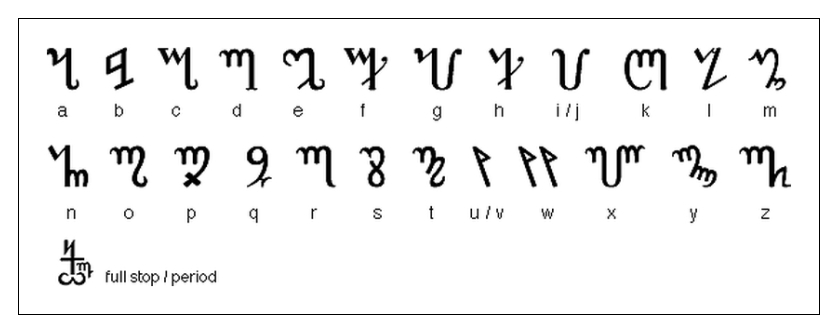


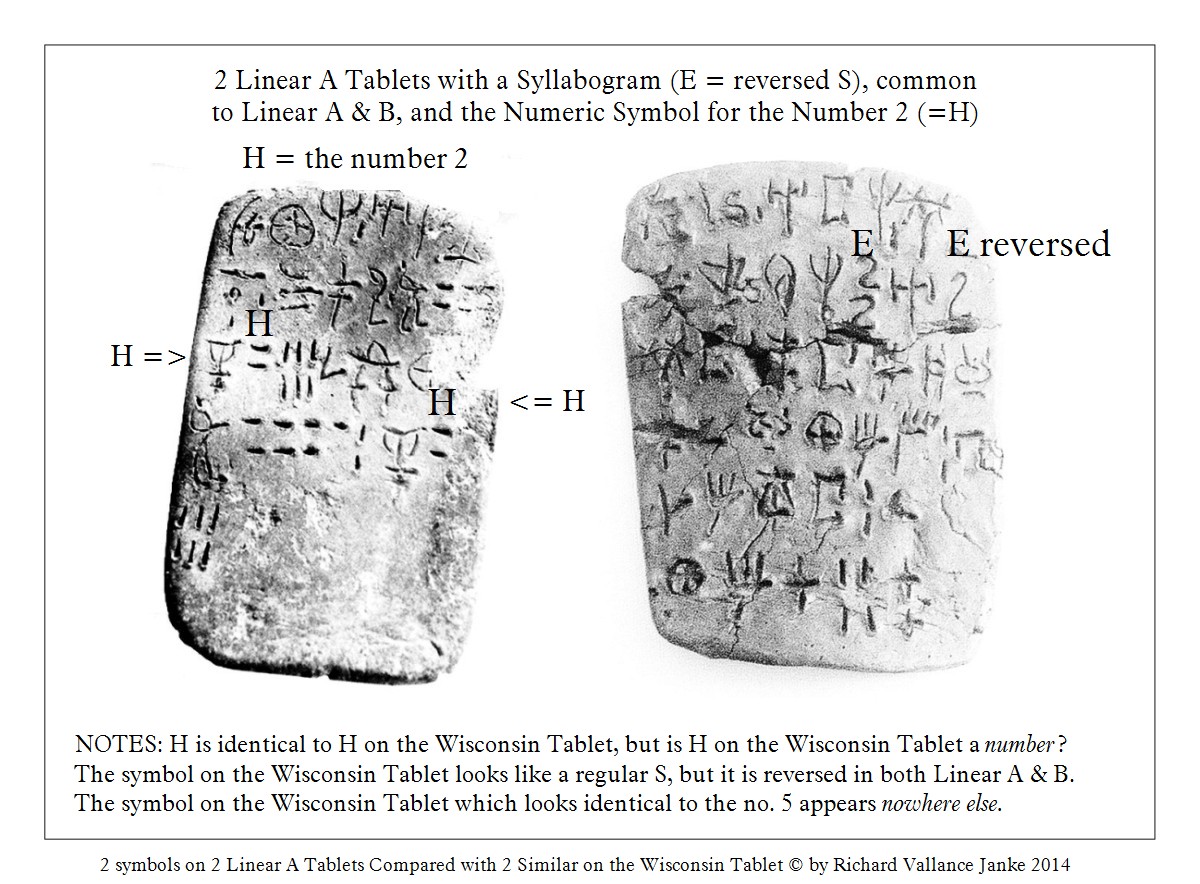


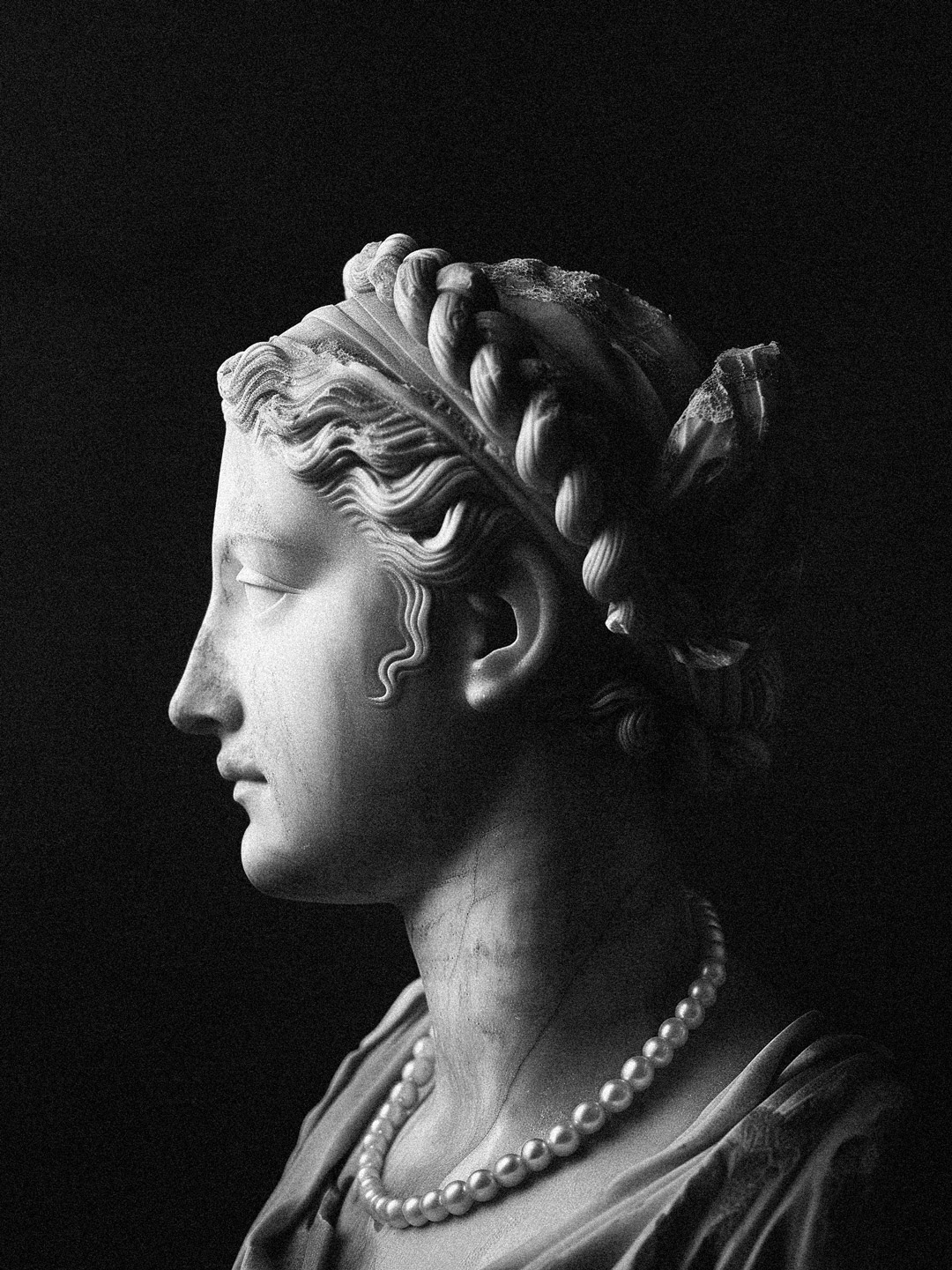
You must be logged in to post a comment.