2 Haiku in Mycenaean Linear B, archaic Greek, English & French on the Mycenaean invasion of Troy: Click to ENLARGE = 2 haïkou en linéaire B, en grec archaïque, en anglais et en français sur l’nvasion mycénienne de Troie: Cliquer pour ELARGIRThe latinized Linear B texts of these haiku read as follows: soteria * aneu Akireyo mene Toroya Omero Toroyade peree * Note that the archaic dative termination -i- does not appear in Mycenaean Greek.
Tag: Iliad
-
Just added to my academia.edu page, Translation of the Introduction to Book II of the Iliad, and its Profound Implications in the Regressive-Progressive Reconstruction of Unattested, Derived (D) Mycenaean Greek Vocabulary and Grammar, here:
Just added to my academia.edu page, Translation of the Introduction to Book II of the Iliad, and its Profound Implications in the Regressive-Progressive Reconstruction of Unattested, Derived (D) Mycenaean Greek Vocabulary and Grammar, here:
 This is the first of a series of several papers I shall be publishing this year and next (2016) on my hypothesis underpinning the theoretical and proposed actual links between the archaic Greek of Book II of the Iliad by Homer, and in particular of the Catalogue of Ships (lines 459-815). These papers are of extreme significance to the methodology, process and procedure of regressive extrapolation of Mycenaean Greek vocabulary or grammatical constructs derived from the most archaic Greek in the Iliad, considered by many researchers to be an in)direct offshoot of Mycenaean Greek itself. Vocabulary or grammatical constructs thus derived are then progressively applied to reconstruct parallel elements missing from any attested Linear B sources regardless.
I cannot stress too much the extreme significance of this particular line of research I am pursuing in the reconstruction of numerous elements (possibly even into the hundreds) of Mycenaean Greek derived from these sections alone of the Iliad.
Richard
This is the first of a series of several papers I shall be publishing this year and next (2016) on my hypothesis underpinning the theoretical and proposed actual links between the archaic Greek of Book II of the Iliad by Homer, and in particular of the Catalogue of Ships (lines 459-815). These papers are of extreme significance to the methodology, process and procedure of regressive extrapolation of Mycenaean Greek vocabulary or grammatical constructs derived from the most archaic Greek in the Iliad, considered by many researchers to be an in)direct offshoot of Mycenaean Greek itself. Vocabulary or grammatical constructs thus derived are then progressively applied to reconstruct parallel elements missing from any attested Linear B sources regardless.
I cannot stress too much the extreme significance of this particular line of research I am pursuing in the reconstruction of numerous elements (possibly even into the hundreds) of Mycenaean Greek derived from these sections alone of the Iliad.
Richard
Share this:
-
New article on academia.edu. My translation of Sappho’s Ode, “The Moon has set, and the Pleiades…” from Aeolic Greek to Mycenaean Linear B, Arcado-Cypriot Linear C, English and French
New article on academia.edu. My translation of Sappho’s Ode, “The Moon has set, and the Pleiades...” from Aeolic Greek to Mycenaean Linear B, Arcado-Cypriot Linear C, English and French, here: Click to OPEN
 This article with my translation of Sappho’s Ode, “The Moon has set, and the Pleiades...” into two archaic Greek dialects (Linear B & Linear C), as well as into English and French, is the first of its kind ever to appear on the Internet.
 It will eventually be followed by my translations of several other splendid lyrics by Sappho, as well as by serial installments of my translation of the entire Catalogue of Ships in Book II of the Iliad by Homer, and several haiku which I have already composed in parallel Mycenaean Linear B, English & French (I kid you not!)
If you would like to keep up with my ongoing research on academia.edu, you should probably sign yourself up with them, and follow me. Additionally, you can follow anyone else you like, especially those researchers, scholars and authors who are of particular interest to you (not me). And of course, once you have signed up with academia.edu, which is free, you can upload your own research papers, documents, articles, book reviews etc. to your heart’s content.
Oh and by the way, we have a surprise coming up for you all, a research paper by none other than my co-administrator, Rita Roberts of Crete.
Richard
It will eventually be followed by my translations of several other splendid lyrics by Sappho, as well as by serial installments of my translation of the entire Catalogue of Ships in Book II of the Iliad by Homer, and several haiku which I have already composed in parallel Mycenaean Linear B, English & French (I kid you not!)
If you would like to keep up with my ongoing research on academia.edu, you should probably sign yourself up with them, and follow me. Additionally, you can follow anyone else you like, especially those researchers, scholars and authors who are of particular interest to you (not me). And of course, once you have signed up with academia.edu, which is free, you can upload your own research papers, documents, articles, book reviews etc. to your heart’s content.
Oh and by the way, we have a surprise coming up for you all, a research paper by none other than my co-administrator, Rita Roberts of Crete.
Richard
Share this:
-
Now on academia.edu: References, Notes & Bibliography for the Presentation, “The Rôle of Supersyllabograms in Mycenaean Linear B” Has just been uploaded as my second research paper at (click to VISIT):
 Comments, observations and criticisms welcome here at Linear B, Knossos & Mycenae and on my academia.edu pages.
The next paper I upload to academia.edu will deal specifically with the Gezer Algricultural Almanac in Paleo-Hebrew and its translation into Mycenaean Linear B.[
Richard
Comments, observations and criticisms welcome here at Linear B, Knossos & Mycenae and on my academia.edu pages.
The next paper I upload to academia.edu will deal specifically with the Gezer Algricultural Almanac in Paleo-Hebrew and its translation into Mycenaean Linear B.[
Richard
Share this:
-
KEY POST! Introduction to the Complete Bibliography of 138 Citations for “The Rôle of Supersyllabograms in Mycenaean Linear B”
Introduction to the Complete Bibliography of 138 Citations for “The Rôle of Supersyllabograms in Mycenaean Linear B”, Presentation by Richard Vallance Janke at the 2015 Conference in the Pultusk Academy of the Humanities, Pultusk, Poland, June 30-July 2, 2015. In the next 2 posts, I shall present my exhaustive bibliography of 138 items (79 citations in each of the two parts) for the talk I shall be giving on “The Rôle of Supersyllabograms in Mycenaean Linear B” at the 2015 Conference, “Thinking in Symbols” in the Pultusk Academy of the Humanities, Pultusk, Poland, June 30-July 2, 2015. It is so exhaustive that I doubt I have missed any sources of any significance to the topic at hand. Of course, the paper of the talk itself cannot be released at this time, as it is still under wraps. Certain researchers past and present, above all Marie-Louise Nosch, have made significant contributions towards the realization of the General Theory of Supersyllabograms which I have just finalized this year, after a year of intensive research (spring 2014 – spring 2015). Previous researchers have sometimes come right up to the edge of a general theory correlating the single or multiple syllabograms they usually designate as “adjuncts” or “endograms” to the Linear B ideograms to which they are “surcharged” (i.e. attached), and which they invariably qualify. But all of these definitions are lacking in one sense or another, for the following reasons: 1. Although designated as (mere) “adjuncts” to the ideograms they invariably qualify, these associative single or multiple syllabograms (up to a maximum of 5!) are far more than that. Standing in as first-syllable abbreviations for words and even entire phrases in Mycenaean Greek, they play an absolutely critical rôle in significantly qualifying the ideograms to which they are attached, all the more so when the tablet on which they are found contains no text whatsoever, but only ideograms with these so-called “adjuncts”. But since these “adjuncts” invariably replace either Mycenaean words or (very often) entire phrases, they cannot be relegated to the status of simple adjuncts. In far too many instances, these single syllabograms encompass so much text that their inherent meaning as such turns out to be much more comprehensive and significant than that of the ideograms to which they are presumably attached. In other words, the single syllabogram(s) embodies/embody so much more than what would have otherwise been nothing but wasteful discursive text. So it appears that we should expediently and practically refer to as the ideogram as the adjunct, rather than the other way around. On tablets with no text whatsoever and with 3 or more syllabograms performing this function, it is more than apparent that all of the single syllabograms functioning as the first syllable of a Mycenaean Greek word or an entire phrase replace so much discursive text that they literally cut down the amount of space used on the tablet in question by as much as two-thirds! Since the Linear B scribes at Knossos and Pylos in particular were real sticklers for saving as much space as they possibly could on what were (and are) extremely small extant tablets (rarely more than 15 cm. or 6 inches wide), they resorted to this stratagem so often (on at least 23% of the Linear B tablets at Knossos) that the practice is, if anything, of far greater importance to an accurate decipherment of those tablets on which they appear than was previously thought. It is for this reason that I have come to designate syllabograms playing this rôle as supersyllabograms, and certainly not as mere “adjuncts” or “endograms”, since that is patently what they are – supersyllabograms. 2. The designation of supersyllabograms as “endograms” is extremely misleading and quite inaccurate, since as many of these supersyllabograms precede as follow the ideograms to which they are attached. So “endograms” account for only half of supersyllabograms at best. Besides, what are we to call the supersyllabograms which precede the ideograms to which they are attached? Has anyone thought of that or even mentioned it in previous research? Not that I have ever seen, and I have read every single document (monographs, journal articles and articles in every past conference) I could lay my hands on. The reason for this lacuna is clear enough. Past researchers have focused solely on “adjuncts” or “endograms” related solely to the field of research in Mycenaean Linear B which is of primary and frequently exclusive interest to themselves. Even Marie-Louise Nosch, who has done an astonishing amount of truly remarkable research in this area, has restricted herself to the textiles sector of the Minoan-Mycenaean economy, as that is her primary field of interest. Fair enough. Given this scenario, it appears to me that researchers past and present have been focusing exclusively on the trees or even sometimes, as with Marie-Louise Nosch, on whole clearings in forest. But none have ever concentrated on the entire forest, at least until last year, when I myself decided to ransack every single syllabogram on some 3,000 tablets (not fragments) from Knossos, in order to hypothesize, if at all possible, a general pattern to the use of supersyllabograms with ideograms. I succeeded beyond my wildest dreams. So far, I have discovered that at least 33 of the 61 syllabograms plus one of the homophones (“rai” for saffron) frequently function as supersyllabograms. Under the circumstances, and given that so many scribes so often resorted to this strategy, I soon enough concluded that it was not only a standard convention in the compilation of some 700 tablets at Knossos, but that the supersyllabograms found on these tablets were almost invariably formulaic codes. And in ancient Greek – witness Homer alone - any practice which was both conventional and formulaic was always deliberate. No-one ever resorts to such strategies in any language, unless they have abundant reason to do so. This is all the more true for the practices the Linear B scribes routinely ascribed to, given that they would do absolutely anything, if they possibly could, to save precious space on their tiny clay tablets. This too is another crucial factor past researchers have overlooked. Linear B scribes only recorded information which was absolutely essential to the precise compilation of what were (and are) after all statistical accounts and inventories. We can take the far-reaching consequences and implications of this conclusion even further. Have you ever seen a modern-day inventory which resorts to similar tactics to conserve precious space and to make the inventory as clear, precise and accurate as possible? Of course you have. As illustrated in the following two examples, the most efficient of modern inventories resort to the same tactics, the formulaic use of code abbreviations as substitutes for wasteful discursive text with predictable frequency – which is almost always: Click to ENLARGE each one with its relevant notes

 In other words, just as abbreviations serve as default codes in modern inventories, supersyllabograms function pretty much the same way on the Linear B tablets. Supersyllabograms are in fact inventory codes for the Mycenaean Linear B words or entire phrases they replace. This revelation surely substantiates the claim I am now going to make: the Linear B scribes were far ahead of their time in the compilation of inventories and statistics. No other ancient language, including classical Greek and even Latin, came remotely close to this extremely advanced practice the Linear scribes so brilliantly and consciously contrived for their astonishing ability to create practical templates they consistently applied to inventorial management. And no-one until the Italian bankers in Renaissance was to revive the practice with equal skill. As for the standard practices of the Linear B scribal inventories, they are so remarkably alike modern 20th. & 20st. Century practices that it is uncanny.
3. But there is more. Why previous researchers have not drawn attention to the fact that many supersyllabograms, especially in the field of textiles, neither precede nor follow the ideograms they qualify, but are almost invariably inside them, is beyond me. Once again, no one in any language resorts to any stratagem without solid practical and even logical reason(s). Such is the case with the textile “intragrams”, as opposed to “exograms” in Linear B, the latter of which invariably qualify pretty much all ideograms in the field of agriculture. Again, this raises the critical, hardly hypothetical, question, why. And again, there are substantive and strictly functional reasons why the Linear B scribes made this critical distinction – because they knew they had to. Supersyllabograms functioning as “exograms” are always associative, while those operating as “intragrams” are invariably attributive. The Linear B scribes made this fundamental distinction between the two sub-classes of supersyllabograms for the simple reason that they, as a guild, knew perfectly well what the operative distinction was which each of these types of supersyllabograms played on the tablets on which they were inscribed. The talk I am giving at the Conference in Pultusk between June 30 and July 2 2015 will make this perfectly clear.
4. I have no objection to the designation “surcharged” for “exograms” as supersyllabograms, because they are not only literally surcharged onto the ideograms with which they are always associated, they also figuratively surcharge the meaning(s) of these ideograms, in a sense somewhat akin to super-charged gasoline or petrol which beefs up engine performance in cars - or by symbolic association, something along those lines. But I am forced to object to the designation of “intragrams” as surcharged in the textiles sector of the Minoan-Mycenaean economies, for the obvious reason that they are both literally and figuratively not surcharged at all. Again, the scribes never resorted to “intragrams”, unless they were absolutely critical to an actual attribute, whenever required in a particular case, such as the frequent designation of colour for textiles. Ask yourselves, why would any scribe in his right mind write out the full name of the default colour white for linen, when he did not have to? He simply would not. On the other hand, the Linear B scribes did make use of an attributive supersyllabogram when they knew perfectly well that it was critical to the economic class status of the cloth so designated. For instance, purple cloth, designated by the supersyllabogram PU for Mycenaean Linear B pupureyo – a royal colour par excellence – was much more refined and far more expensive than the heavier and coarser plain white linen cloth (rino) spun for the hoi polloi (the lower classes). So they had to mention that for the sake of the “wanaka” or King (of Knossos or Mycenae) to whom this distinction was all too important, given that neither he nor his Queen no any of the princes royal would ever be caught dead wearing cheap cloth.
There is much more to this than meets the eye, as I shall clearly illustrate in the book, The Decipherment of Supersyllabograms in Linear B, which is to appear sometime in 2016, if all goes well.
I would be truly remiss were I not to acknowledge the major contributions the French researcher, Marie-Louise Nosch, whom I have cited 15 times (!) in my bibliography, has made to fundamentally accurate definitions of supersyllabograms in the textile sector of the Minoan-Mycenaean economy. Although I happened upon all of her astonishingly insightful research articles only after I had deciphered 32 of the 34 supersyllabograms (the other two being beyond me, as well as her), the truly accurate and intrinsically logical conclusions she came to on her own back up my conclusions on the meanings of practically all the intragrams for textiles almost to the letter. This amazing co-incidence, if that is merely what it is, serves as solid circumstantial collateral evidence to substantiate my Theory of Supersyllabograms. Co-incidence? I rather doubt that. It is a given that researchers in any scientific field tend to strike their bearings in the same general direction in any age, including our own. Like Odysseus, we are all heading for the same shore. The most convincing conclusions which will eventually be drawn from the research we are all sharing in now are yet in the offing. But in my eyes one thing is certain. Everything we researchers in Mycenaean Linear B, as a community, are aiming for now is bound to make a ground-breaking, perhaps even profound, contribution in the near future to make the further decipherment of Linear B considerably much more accurate than any we have seen to date.
The Bibliography to follow in two parts (1-69 & 70-138) in the next two posts.
ADDENDUM: I shall be publishing this post & the next two in academia.edu very soon, prior to my presentation at the Conference in Pultusk, Poland, June 30 - July 2, 2015.
Richard
In other words, just as abbreviations serve as default codes in modern inventories, supersyllabograms function pretty much the same way on the Linear B tablets. Supersyllabograms are in fact inventory codes for the Mycenaean Linear B words or entire phrases they replace. This revelation surely substantiates the claim I am now going to make: the Linear B scribes were far ahead of their time in the compilation of inventories and statistics. No other ancient language, including classical Greek and even Latin, came remotely close to this extremely advanced practice the Linear scribes so brilliantly and consciously contrived for their astonishing ability to create practical templates they consistently applied to inventorial management. And no-one until the Italian bankers in Renaissance was to revive the practice with equal skill. As for the standard practices of the Linear B scribal inventories, they are so remarkably alike modern 20th. & 20st. Century practices that it is uncanny.
3. But there is more. Why previous researchers have not drawn attention to the fact that many supersyllabograms, especially in the field of textiles, neither precede nor follow the ideograms they qualify, but are almost invariably inside them, is beyond me. Once again, no one in any language resorts to any stratagem without solid practical and even logical reason(s). Such is the case with the textile “intragrams”, as opposed to “exograms” in Linear B, the latter of which invariably qualify pretty much all ideograms in the field of agriculture. Again, this raises the critical, hardly hypothetical, question, why. And again, there are substantive and strictly functional reasons why the Linear B scribes made this critical distinction – because they knew they had to. Supersyllabograms functioning as “exograms” are always associative, while those operating as “intragrams” are invariably attributive. The Linear B scribes made this fundamental distinction between the two sub-classes of supersyllabograms for the simple reason that they, as a guild, knew perfectly well what the operative distinction was which each of these types of supersyllabograms played on the tablets on which they were inscribed. The talk I am giving at the Conference in Pultusk between June 30 and July 2 2015 will make this perfectly clear.
4. I have no objection to the designation “surcharged” for “exograms” as supersyllabograms, because they are not only literally surcharged onto the ideograms with which they are always associated, they also figuratively surcharge the meaning(s) of these ideograms, in a sense somewhat akin to super-charged gasoline or petrol which beefs up engine performance in cars - or by symbolic association, something along those lines. But I am forced to object to the designation of “intragrams” as surcharged in the textiles sector of the Minoan-Mycenaean economies, for the obvious reason that they are both literally and figuratively not surcharged at all. Again, the scribes never resorted to “intragrams”, unless they were absolutely critical to an actual attribute, whenever required in a particular case, such as the frequent designation of colour for textiles. Ask yourselves, why would any scribe in his right mind write out the full name of the default colour white for linen, when he did not have to? He simply would not. On the other hand, the Linear B scribes did make use of an attributive supersyllabogram when they knew perfectly well that it was critical to the economic class status of the cloth so designated. For instance, purple cloth, designated by the supersyllabogram PU for Mycenaean Linear B pupureyo – a royal colour par excellence – was much more refined and far more expensive than the heavier and coarser plain white linen cloth (rino) spun for the hoi polloi (the lower classes). So they had to mention that for the sake of the “wanaka” or King (of Knossos or Mycenae) to whom this distinction was all too important, given that neither he nor his Queen no any of the princes royal would ever be caught dead wearing cheap cloth.
There is much more to this than meets the eye, as I shall clearly illustrate in the book, The Decipherment of Supersyllabograms in Linear B, which is to appear sometime in 2016, if all goes well.
I would be truly remiss were I not to acknowledge the major contributions the French researcher, Marie-Louise Nosch, whom I have cited 15 times (!) in my bibliography, has made to fundamentally accurate definitions of supersyllabograms in the textile sector of the Minoan-Mycenaean economy. Although I happened upon all of her astonishingly insightful research articles only after I had deciphered 32 of the 34 supersyllabograms (the other two being beyond me, as well as her), the truly accurate and intrinsically logical conclusions she came to on her own back up my conclusions on the meanings of practically all the intragrams for textiles almost to the letter. This amazing co-incidence, if that is merely what it is, serves as solid circumstantial collateral evidence to substantiate my Theory of Supersyllabograms. Co-incidence? I rather doubt that. It is a given that researchers in any scientific field tend to strike their bearings in the same general direction in any age, including our own. Like Odysseus, we are all heading for the same shore. The most convincing conclusions which will eventually be drawn from the research we are all sharing in now are yet in the offing. But in my eyes one thing is certain. Everything we researchers in Mycenaean Linear B, as a community, are aiming for now is bound to make a ground-breaking, perhaps even profound, contribution in the near future to make the further decipherment of Linear B considerably much more accurate than any we have seen to date.
The Bibliography to follow in two parts (1-69 & 70-138) in the next two posts.
ADDENDUM: I shall be publishing this post & the next two in academia.edu very soon, prior to my presentation at the Conference in Pultusk, Poland, June 30 - July 2, 2015.
RichardShare this:
-
Happy Second Anniversary to Linear B, Knossos & Mycenae! Now the largest Linear B blog on the Internet
Happy Second Anniversary to Linear B, Knossos & Mycenae! Now the largest Linear B blog on the Internet We are delighted to announce that Linear B, Knossos & Mycenae
 reaches its second anniversary on May 1 2015.
What have we accomplished in the past two years? A great deal indeed. Here are the highlights.
1. The discovery, extrapolation, collation and classification of supersyllabograms in Mycenaean Linear B, of which there are 34 (to date) out of 61 syllabograms in Linear B, excluding counting homophones (with the sole exception of RAI = saffron).
2. We have entered into close partnership with The Association of Historical Studies, Koryvantes (Athens, Greece), here:
reaches its second anniversary on May 1 2015.
What have we accomplished in the past two years? A great deal indeed. Here are the highlights.
1. The discovery, extrapolation, collation and classification of supersyllabograms in Mycenaean Linear B, of which there are 34 (to date) out of 61 syllabograms in Linear B, excluding counting homophones (with the sole exception of RAI = saffron).
2. We have entered into close partnership with The Association of Historical Studies, Koryvantes (Athens, Greece), here:
 where we have been assigned our own category for posting on their blog,
 WE STRONGLY RECOMMEND THIS BLOG, AND URGE YOU ALL TO FOLLOW THE IMPRESSIVE RESEARCH CONDUCTED BY KORYVANTES.
3. As a direct result of 1. & 2. above, Richard, our blog moderator, has been invited to give his talk
at the Conference, “Thinking Symbols” (June 30-July 2 2015), sponsored by The Association of Historical Studies (Koryvantes), Athens:
WE STRONGLY RECOMMEND THIS BLOG, AND URGE YOU ALL TO FOLLOW THE IMPRESSIVE RESEARCH CONDUCTED BY KORYVANTES.
3. As a direct result of 1. & 2. above, Richard, our blog moderator, has been invited to give his talk
at the Conference, “Thinking Symbols” (June 30-July 2 2015), sponsored by The Association of Historical Studies (Koryvantes), Athens:
 at the Pultusk Academy of the Humanities, just outside of Warsaw.
 His talk, and those of all other presenters at the Conference will be published by the University of Warsaw. The University of Warsaw also plans to publish the General of Supersyllabograms and its application to the translation of some 700+ Mycenaean Linear B tablets across the board, in a book to be titled, The Decipherment of Supersyllabograms in Mycenaean Linear B, to appear sometime in 2016.
4. In the past two years, Richard and his research colleague, Rita Roberts of Crete, have translated in excess of 100 Linear B tablets, most of them from Knossos, along with some from Pylos, Mycenae and Thebes.
5. Richard has compiled the following elements in his ongoing project to reconstruct as much as possible of Mycenaean Greek grammar from the ground up:
5.1 the complete table for the conjugations of the active voice, present, future, imperfect, aorist & perfect of Mycenaean verbs;
5.2 the table of adjectives and nouns ending in the archaic “eus” in the nominative singular.
5.3 Richard plans to continue with the compilation of Mycenaean Greek grammar throughout the remainder of 2015 and into 2016.
6. Richard has translated most of The Catalogue of Ships from Book II of the Iliad by Homer, and will finish off his translation this year (2015). This will be followed by his translation of Book I of the Iliad in its entirety (2015-2016).
7. We are in the process of compiling the largest Lexicon of both attested and derived Mycenaean Greek in Linear B ever to have appeared anywhere, in print or on the Internet. We have already finished with the draft of the first Section on Military Affairs, which is to appear on our blog and on the blog of The Association of Historical Studies, Koryvantes (Athens, Greece) sometime in the summer or autumn 2015. It is to be subdivided into several primary Sections, (1) Agriculture (2) Crafts, Trade and Commerce (3) Military Affairs (4) Domestic Affairs, including the production of vessels and pottery & (5) Religious Affairs. This is such a huge undertaking that it is unlikely that we will be able to complete it before 2018.
8. Richard has offered his services as Professor to Rita Roberts, Crete, who is now in her first year of university, working towards her three-year Bachelor of Arts in Linguists (BAL) in the field of Mycenaean Linear B. Both Rita and I can assure you that the curriculum is of the highest order and extremely demanding. Already, in her first semester of her first year, Rita has been tasked with the tough chore of translating several difficult Linear B tablets from Knossos on military affairs, and this is just the beginning! As far as we can tell, this online university undergraduate course, specifically focusing on Mycenaean Linear B, will be the first ever of its kind ever to have been offered worldwide. I am of course open to inviting others who are seriously committed to learn Mycenaean Linear B, but just as Rita has had to do, new students will have to first finish their secondary school level in Linear B before moving onto university studies. It took Rita two years to fulfill the requirements for a secondary school matriculation in Linear B. This and the full course of studies (secondary school and a bachelor’s degree) requires 5 full years of unstinting commitment to the mastery of Mycenaean Linear B. At the end of these five years, the student (Rita being our first) will possess the credentials to be an expert in the field.
9. We have begun posting on Arcado-Cypriot Linear C, having already translated 3 tablets in that syllabary. We have also made available for the first time ever the standard keyboard layout for Arcado-Cypriot Linear C, which you may download free at your convenience. We plan on continuing with posts on Linear C throughout 2016 & 2016, eventually tackling the famous Idalion Tablet of the 5th. Century BCE. Throughout 2015 and 2016, Arcado-Cypriot Linear C, the closest cousin dialect to Mycenaean Linear B, will play a significantly greater rôle than it presently does on our blog. Both Linear B and Linear C will be thoroughly cross-compared with the archaic grammar and vocabulary of the Catalog of Ships in Book II of the Iliad, the latter generally being considered as an indirect descendant of the Mycenaean & Arcado-Cypriot Greek dialects, at least in these two respects. This cross-comparative study will help us to properly situate the Mycenaean & Arcado-Cypriot Greek dialects in the diachronic time line of ancient Greek dialects.
10. We have begun a thorough-going investigation of the relationship between the Minoan Linear A & Mycenaean Linear B syllabaries, which are almost identical in most respects, the latter being derived from the former with other major Bronze Age scripts and alphabets, including the Phoenician and Proto-Hebrew alphabets, soon the Proto-Arabic, and any others which bear up well under comparison with Linear A & Linear B.
12. We have posted some information on Minoan Linear A, but it is not our intention to attempt to decipher this unknown language – at least for the next five years. However, certain aspects of Linear A itself are of prime importance to our concerns, especially its intimate relationship with Linear B, as well as its place in the development of ancient scripts in the context of 10. above.
13. We have begun exploring the possibilities for the application of Linear B & C to extraterrestrial communication. If this sounds wacky or even peculiar to you, think twice. NASA itself has already begun its own investigation of such intriguing prospects for Linear B and Linear C.
As the direct result of our unflagging commitments to these areas of research into Mycenaean Linear B, Arcado-Cypriot Linear C and several other areas relating to these, our blog has grown to be the largest on the entire Internet devoted to the study of Mycenaean Linear B. I had hope for 50,000 visitors in the first two years, but these were exceeded, as we have had over 51,000. We thank everyone from the bottom of our hearts for your interest in what is manifestly an extremely specialized and narrow area of interest in the vast sea of linguistics, ancient and modern, and we look forward to seeing more of you visit our site throughout our third year, May 2015-April 2016. I am confident that we shall exceed 100,000 visits by the end of our third year. With our gratitude. Richard
ALL OF THE ABOVE NICHES IN THE FIELD OF LINGUISTIC RESEARCH INTO LINEAR B, LINEAR C AND THEIRS APPLICATION TO ARCHAIC GREEK, ESPECIALLY IN THE CATALOGUE OF SHIPS OF BOOK II OF THE ILIAD, CAN BE DIRECTLY ACCESSED BY CATEGORY ON OUR BLOG, as seen here:
These are the primary concerns of our Blog, but there are others, which are intriguing to special interest groups. Our goals are ambitious but we mean to fulfill them.
At the same time, our Twitter account has attracted some 920 followers, compared with about 500 at the end of first year (May 1 2014). We have sent out over 13,600 tweets in the past 2 years. Click here to visit our Twitter account:
His talk, and those of all other presenters at the Conference will be published by the University of Warsaw. The University of Warsaw also plans to publish the General of Supersyllabograms and its application to the translation of some 700+ Mycenaean Linear B tablets across the board, in a book to be titled, The Decipherment of Supersyllabograms in Mycenaean Linear B, to appear sometime in 2016.
4. In the past two years, Richard and his research colleague, Rita Roberts of Crete, have translated in excess of 100 Linear B tablets, most of them from Knossos, along with some from Pylos, Mycenae and Thebes.
5. Richard has compiled the following elements in his ongoing project to reconstruct as much as possible of Mycenaean Greek grammar from the ground up:
5.1 the complete table for the conjugations of the active voice, present, future, imperfect, aorist & perfect of Mycenaean verbs;
5.2 the table of adjectives and nouns ending in the archaic “eus” in the nominative singular.
5.3 Richard plans to continue with the compilation of Mycenaean Greek grammar throughout the remainder of 2015 and into 2016.
6. Richard has translated most of The Catalogue of Ships from Book II of the Iliad by Homer, and will finish off his translation this year (2015). This will be followed by his translation of Book I of the Iliad in its entirety (2015-2016).
7. We are in the process of compiling the largest Lexicon of both attested and derived Mycenaean Greek in Linear B ever to have appeared anywhere, in print or on the Internet. We have already finished with the draft of the first Section on Military Affairs, which is to appear on our blog and on the blog of The Association of Historical Studies, Koryvantes (Athens, Greece) sometime in the summer or autumn 2015. It is to be subdivided into several primary Sections, (1) Agriculture (2) Crafts, Trade and Commerce (3) Military Affairs (4) Domestic Affairs, including the production of vessels and pottery & (5) Religious Affairs. This is such a huge undertaking that it is unlikely that we will be able to complete it before 2018.
8. Richard has offered his services as Professor to Rita Roberts, Crete, who is now in her first year of university, working towards her three-year Bachelor of Arts in Linguists (BAL) in the field of Mycenaean Linear B. Both Rita and I can assure you that the curriculum is of the highest order and extremely demanding. Already, in her first semester of her first year, Rita has been tasked with the tough chore of translating several difficult Linear B tablets from Knossos on military affairs, and this is just the beginning! As far as we can tell, this online university undergraduate course, specifically focusing on Mycenaean Linear B, will be the first ever of its kind ever to have been offered worldwide. I am of course open to inviting others who are seriously committed to learn Mycenaean Linear B, but just as Rita has had to do, new students will have to first finish their secondary school level in Linear B before moving onto university studies. It took Rita two years to fulfill the requirements for a secondary school matriculation in Linear B. This and the full course of studies (secondary school and a bachelor’s degree) requires 5 full years of unstinting commitment to the mastery of Mycenaean Linear B. At the end of these five years, the student (Rita being our first) will possess the credentials to be an expert in the field.
9. We have begun posting on Arcado-Cypriot Linear C, having already translated 3 tablets in that syllabary. We have also made available for the first time ever the standard keyboard layout for Arcado-Cypriot Linear C, which you may download free at your convenience. We plan on continuing with posts on Linear C throughout 2016 & 2016, eventually tackling the famous Idalion Tablet of the 5th. Century BCE. Throughout 2015 and 2016, Arcado-Cypriot Linear C, the closest cousin dialect to Mycenaean Linear B, will play a significantly greater rôle than it presently does on our blog. Both Linear B and Linear C will be thoroughly cross-compared with the archaic grammar and vocabulary of the Catalog of Ships in Book II of the Iliad, the latter generally being considered as an indirect descendant of the Mycenaean & Arcado-Cypriot Greek dialects, at least in these two respects. This cross-comparative study will help us to properly situate the Mycenaean & Arcado-Cypriot Greek dialects in the diachronic time line of ancient Greek dialects.
10. We have begun a thorough-going investigation of the relationship between the Minoan Linear A & Mycenaean Linear B syllabaries, which are almost identical in most respects, the latter being derived from the former with other major Bronze Age scripts and alphabets, including the Phoenician and Proto-Hebrew alphabets, soon the Proto-Arabic, and any others which bear up well under comparison with Linear A & Linear B.
12. We have posted some information on Minoan Linear A, but it is not our intention to attempt to decipher this unknown language – at least for the next five years. However, certain aspects of Linear A itself are of prime importance to our concerns, especially its intimate relationship with Linear B, as well as its place in the development of ancient scripts in the context of 10. above.
13. We have begun exploring the possibilities for the application of Linear B & C to extraterrestrial communication. If this sounds wacky or even peculiar to you, think twice. NASA itself has already begun its own investigation of such intriguing prospects for Linear B and Linear C.
As the direct result of our unflagging commitments to these areas of research into Mycenaean Linear B, Arcado-Cypriot Linear C and several other areas relating to these, our blog has grown to be the largest on the entire Internet devoted to the study of Mycenaean Linear B. I had hope for 50,000 visitors in the first two years, but these were exceeded, as we have had over 51,000. We thank everyone from the bottom of our hearts for your interest in what is manifestly an extremely specialized and narrow area of interest in the vast sea of linguistics, ancient and modern, and we look forward to seeing more of you visit our site throughout our third year, May 2015-April 2016. I am confident that we shall exceed 100,000 visits by the end of our third year. With our gratitude. Richard
ALL OF THE ABOVE NICHES IN THE FIELD OF LINGUISTIC RESEARCH INTO LINEAR B, LINEAR C AND THEIRS APPLICATION TO ARCHAIC GREEK, ESPECIALLY IN THE CATALOGUE OF SHIPS OF BOOK II OF THE ILIAD, CAN BE DIRECTLY ACCESSED BY CATEGORY ON OUR BLOG, as seen here:
These are the primary concerns of our Blog, but there are others, which are intriguing to special interest groups. Our goals are ambitious but we mean to fulfill them.
At the same time, our Twitter account has attracted some 920 followers, compared with about 500 at the end of first year (May 1 2014). We have sent out over 13,600 tweets in the past 2 years. Click here to visit our Twitter account:
 Our research colleague, Rita Roberts, now has over 380 followers on her Twitter account, here:
 This makes for some 1,300 followers for us both on Twitter, a considerable number indeed, in light of the fact that the study of Linear B and the specialized interests in archaeology and similar arcane fields which Rita follows are rare birds indeed!
I also urge you to follow Rita’s superb blog, here:
This makes for some 1,300 followers for us both on Twitter, a considerable number indeed, in light of the fact that the study of Linear B and the specialized interests in archaeology and similar arcane fields which Rita follows are rare birds indeed!
I also urge you to follow Rita’s superb blog, here:
 Finally, we have set ourselves up on Google +, where you can find our page here:
 We started up on Google + just a couple of months ago, and we already have 383 followers in our Circle.
Richard
We started up on Google + just a couple of months ago, and we already have 383 followers in our Circle.
Richard
Share this:
-
Did you know you speak Mycenaean Greek? You do! K-Z = kunaya to zeukesi
Did you know you speak Mycenaean Greek? You do! K-Z = kunaya to zeukesi Mycenaean Greek in Modern English: korete to zeukesi: Click to ENLARGE
 [1] kunaya – Mycenaean Greek has no “g”, but ancient Greek does. Many English words begin with Greek words, as for instance gynecology + all others in this table marked with [1]
[2] The same goes with prefixes. Many English words begin with the Greek prefix “peda”.
[3] The ancient Phoenicians were famous for their purple cloth, which they inherited from the splendid purple cloth, the finest in the entire then known world (the middle Mediterranean & the Aegean) the Minoans at Knossos had produced before them. Hence, Phoenician is a synonym for “purple”.
[4]The Mycenaean syllabary can express words beginning with “te”, but for some reason, they spelled 4 the same was the Romans did, “qetoro”, and there is nothing wrong with that. Archaic Greek sometimes expressed the number 4 with “petro” and sometimes with “tetro”. This too is not at all unusual with early alphabetic Greek, in which the various East Greek dialects derived from Mycenaean Linear B & Arcado-Cypriot Linear C flipped between these two spellings. Orthography was uncertain in archaic Greek, in other words, it had not yet fossilized into the final spelling used in Attic Greek in Classical Athens = tettares.
[5] The English word “quartet” is derived from the Latin “quattro”, which in turn was preceded historically by the Mycenaean “qetoro”, although the Latin spelling is unlikely to have derived from the latter. It is just that Mycenaean Greek and Latin happened to resort to the same basic spelling for 4.
[6] Since Mycenaean Greek had no “l”, words beginning with “lambda” in (archaic) Greek had to be spelled with “r” + a vowel in the syllabary. Hence, “rewo” = archaic Greek “lewon” = English “lion” & “rino” = ancient Greek “linon” = English “linen”
[7] The ancient words “sasama” = “sesame” & Mycenaean “serino” = ancient Greek “selinon” = English “celery” are in fact not Greek words, but proto-Indo European.
[8] While “sitophobia” = “fear of eating” in English does not seem to correspond with “sitos” = “wheat” in ancient Greek, in fact it does, since wheat was one of the main staples of their diet, just as it was for the Egyptians, Romans and most other ancient civilizations. In other words, wheat was a staple food.
[9] Although the Mycenaean infinitive “weide” = archaic Greek “weidein” = English “to see”, the aorist began with “weis”, hence “vision” in English.
Richard
[1] kunaya – Mycenaean Greek has no “g”, but ancient Greek does. Many English words begin with Greek words, as for instance gynecology + all others in this table marked with [1]
[2] The same goes with prefixes. Many English words begin with the Greek prefix “peda”.
[3] The ancient Phoenicians were famous for their purple cloth, which they inherited from the splendid purple cloth, the finest in the entire then known world (the middle Mediterranean & the Aegean) the Minoans at Knossos had produced before them. Hence, Phoenician is a synonym for “purple”.
[4]The Mycenaean syllabary can express words beginning with “te”, but for some reason, they spelled 4 the same was the Romans did, “qetoro”, and there is nothing wrong with that. Archaic Greek sometimes expressed the number 4 with “petro” and sometimes with “tetro”. This too is not at all unusual with early alphabetic Greek, in which the various East Greek dialects derived from Mycenaean Linear B & Arcado-Cypriot Linear C flipped between these two spellings. Orthography was uncertain in archaic Greek, in other words, it had not yet fossilized into the final spelling used in Attic Greek in Classical Athens = tettares.
[5] The English word “quartet” is derived from the Latin “quattro”, which in turn was preceded historically by the Mycenaean “qetoro”, although the Latin spelling is unlikely to have derived from the latter. It is just that Mycenaean Greek and Latin happened to resort to the same basic spelling for 4.
[6] Since Mycenaean Greek had no “l”, words beginning with “lambda” in (archaic) Greek had to be spelled with “r” + a vowel in the syllabary. Hence, “rewo” = archaic Greek “lewon” = English “lion” & “rino” = ancient Greek “linon” = English “linen”
[7] The ancient words “sasama” = “sesame” & Mycenaean “serino” = ancient Greek “selinon” = English “celery” are in fact not Greek words, but proto-Indo European.
[8] While “sitophobia” = “fear of eating” in English does not seem to correspond with “sitos” = “wheat” in ancient Greek, in fact it does, since wheat was one of the main staples of their diet, just as it was for the Egyptians, Romans and most other ancient civilizations. In other words, wheat was a staple food.
[9] Although the Mycenaean infinitive “weide” = archaic Greek “weidein” = English “to see”, the aorist began with “weis”, hence “vision” in English.
Richard
Share this:
-
Did you know you speak Mycenaean Greek? You do! A-K = akero to kono
Did you know you speak Mycenaean Greek? You do! Mycenaean Greek in Modern English: akero to kono: Click to ENLARGE
 NOTES:
[1] The Mycenaean word “anemon” is genitive plural (“of the winds”) for “anemo” = “wind”, and like so many other Mycenaean words, it serves as the first part of English words dealing with various aspects of wind (generation), such as “anemometer”. All other entries with the tag [1] are of this type.
[2] The first syllabogram i.e. the first syllable of the Mycenaean word for “labyrinth” begins with “da”, since it is impossible for any Mycenaean word to begin with “la”, as they had no “l”. Normally, the “r” + vowel series of syllabograms replaces a Greek lambda, but in this case, the Mycenaeans opted for “da” instead of “ra” (which would have been “rapuritoyo”). This is not unusual.
[3] “at the teacher’s” = French chez le professeur, with is an archaic version of either the dative or the instrumental singular.
[4] “duwo” is Mycenaean for ancient Greek “duo”. It must be expressed by the special syllabogram for “talent, scale or two”, which in fact does look like a scale.
[5] A great many modern English words begin with the ancient Greek preposition “epi”. I have provided two examples here.
[6] The original Mycenaean & Homeric meaning of the English word for “elephant” meant “ivory”, but the meaning gradually changed to the former by the time of Classical Athens. In the Attic dialect, the word meant “elephant”. Remember, Mycenaean Greek had no “l” series of syllabograms, using the “r” series instead. There is confusion in many languages over the liquids “l” & “r”, modern Japanese being a prime example of this phenomenon.
[7] Many English words begin with the Mycenaean and ancient Greek prefix “eu”, which always means “well” (healthy) or “positive” or similar notions. Hence the English word you see here.
[8] Mycenaean “kadamiya” is a pre-Greek, proto-Indoeuropean word.
[9] The Mycenaean word “kono” omits the initial “s” in the ancient Greek word “schoinos”. This is very common in Mycenaean Greek. Since the ancient Greek work means “rush” (plant), the modern English scientific word is also a plant, although a different one.
Richard
NOTES:
[1] The Mycenaean word “anemon” is genitive plural (“of the winds”) for “anemo” = “wind”, and like so many other Mycenaean words, it serves as the first part of English words dealing with various aspects of wind (generation), such as “anemometer”. All other entries with the tag [1] are of this type.
[2] The first syllabogram i.e. the first syllable of the Mycenaean word for “labyrinth” begins with “da”, since it is impossible for any Mycenaean word to begin with “la”, as they had no “l”. Normally, the “r” + vowel series of syllabograms replaces a Greek lambda, but in this case, the Mycenaeans opted for “da” instead of “ra” (which would have been “rapuritoyo”). This is not unusual.
[3] “at the teacher’s” = French chez le professeur, with is an archaic version of either the dative or the instrumental singular.
[4] “duwo” is Mycenaean for ancient Greek “duo”. It must be expressed by the special syllabogram for “talent, scale or two”, which in fact does look like a scale.
[5] A great many modern English words begin with the ancient Greek preposition “epi”. I have provided two examples here.
[6] The original Mycenaean & Homeric meaning of the English word for “elephant” meant “ivory”, but the meaning gradually changed to the former by the time of Classical Athens. In the Attic dialect, the word meant “elephant”. Remember, Mycenaean Greek had no “l” series of syllabograms, using the “r” series instead. There is confusion in many languages over the liquids “l” & “r”, modern Japanese being a prime example of this phenomenon.
[7] Many English words begin with the Mycenaean and ancient Greek prefix “eu”, which always means “well” (healthy) or “positive” or similar notions. Hence the English word you see here.
[8] Mycenaean “kadamiya” is a pre-Greek, proto-Indoeuropean word.
[9] The Mycenaean word “kono” omits the initial “s” in the ancient Greek word “schoinos”. This is very common in Mycenaean Greek. Since the ancient Greek work means “rush” (plant), the modern English scientific word is also a plant, although a different one.
Richard
Share this:
-
Mycenaean Greece & Linear B, our NEW Circle on Google +
Mycenaean Greece & Linear B, our NEW Circle on Google + Click to VISIT & Join:
 Welcome to Mycenaean Greece & Linear B, our new Circle on Google +, and the only one of its kind. We shall be posting a great many Linear B tablets, photos, illustrations, tables, charts, graphics, etc. here so you will not want to miss our great new Google + Circle, and I suspect that many of you will certainly want to join. We shall also be posting information, photos and the like on Arcado-Cypriot Linear C, The Catalogue of Ships in Book II of the Iliad by Homer, ancient East Greek dialects (Mycenaean, Arcado-Cypriot, Aeolic, Ionic & Attic), and any other information we deem relevant.
So if you are at all interested in these areas of interest and research into ancient Greek studies, linguistic or otherwise, and ancient Greece itself, you will probably want to join our circle.
Thanks
Richard
Welcome to Mycenaean Greece & Linear B, our new Circle on Google +, and the only one of its kind. We shall be posting a great many Linear B tablets, photos, illustrations, tables, charts, graphics, etc. here so you will not want to miss our great new Google + Circle, and I suspect that many of you will certainly want to join. We shall also be posting information, photos and the like on Arcado-Cypriot Linear C, The Catalogue of Ships in Book II of the Iliad by Homer, ancient East Greek dialects (Mycenaean, Arcado-Cypriot, Aeolic, Ionic & Attic), and any other information we deem relevant.
So if you are at all interested in these areas of interest and research into ancient Greek studies, linguistic or otherwise, and ancient Greece itself, you will probably want to join our circle.
Thanks
Richard
Share this:
-
A Lovely Ode to the Archangel Michael in Mycenaean Linear B: Click to ENLARGE
A Lovely Ode to the Archangel Michael in Mycenaean Linear B: Click to ENLARGE
 NOTE that the English & French translations of my Ode to the Archangel Michael appear in the next post. Have you ever wondered what Mycenaean Linear B poetry would have sounded like? I know I have, many times over. I invite you to simply read aloud the Latinized version of the Ode in Mycenaean Linear B, even if you do not understand it. The point is to enjoy the music of the poetry, not to worry about your pronunciation or your accent. Nobody really knows how any ancient Greek dialect sounded anyway.
Here a few hints on how to bring out the music in the Mycenaean Greek.
1. Whenever you see the ending, oyo (genitive singular), pronounce it like “oiyo”, but in a single breath. It will sing that way.
2. If you put a little stress on the second-last syllable (penultimate) of words such as “peDIra ”“euZOno” “doSOmo” & “paraDEso”, this will also assist the melody of the poem.
3. Be sure to pronounce all “u”s & “eu”s (euzono) as you would “u” in French, if you can.
4. The disposition of the phrase “para paradeso para meso” is very peculiar for Greek poetry... “meso ” should be on the same line as the previous words. But I did this deliberately, again for melodic reason. If you read this phrase like this, “PAra paraDEso PAra MEso”, it should sound very nice.
5. The word “mana” (“manna” in English) is obviously not Mycenaean, and not even Greek. It is Hebrew. But I could take liberties introducing this word into a Christian poem. So I did.
6. Recite “pamako atanatoyo” (medicine of the immortal...) like this “PAmako aTAnaTOyo”...
So long as you are consistent and satisfied with how it sounds to you, that is all you need. Yes, and do read it aloud. Otherwise, you will not benefit from hearing the music and the harmony of the Mycenaean Greek, which is after all the earliest of the ancient East Greek dialects, the great-great-grandfather of dialects such as the Ionic & Attic. Besides, you can always allow yourself the pleasure of admiring the pretty Linear B script, however weird it may look to you at first. Just give it a chance.
Being a poet of sorts myself, I decided to write this lyric ode, somewhat along the lines of Sappho (although I cannot even remotely claim a foothold on her astonishing lyrical powers!) It is by no means inconceivable that poetry may very well have been composed in the Mycenaean era, ca. 1450 – 1200 BCE. Simply because we do not have any evidence at all of such activity does not mean that the Minoan/Mycenaean scribes never wrote any poetry at all. The problem lies not with the non-survival of any Mycenaean poetry, but with the impossibility of conserving anything written on papyrus in a humid environment, such as that of Minoan Crete and of Mycenae.
It is indeed fortunate, fortuitous and a great asset to us today that so many Egyptian papyri have been preserved intact since a distant period equal to that of the Mycenaean civilization at its apogee. Call it what you like, the extremely arid sand of Egypt was far far more favourable to the survival of ancient papyrus than the moist climate of Mycenaean Crete and the Mycenaean mainland. That is the real reason why we have no extant literature from their great civilization. But given the astonishing levels their civilization reached in so many areas, in art, architecture, fresco painting, the textile industry, crafts of all kinds, international commerce and even science, it strikes me as passingly strange that no literature of any kind survives, apart from the thousands of Linear B inventory, accounting and ritual tablets, which can hardly be called literature in any sense of the word.
There are those who contend that in fact the Catalogue of Ships in Book II of the Iliad was derived from an earlier Mycenaean epic poem, no doubt in a much simpler and more earthy guise, stripped of much of the telling Homeric metaphorical language which is his hallmark even in the Catalogue of Ships. You can count me among these. For this reason, it strikes me as a distinct possibility that, if the Mycenaeans were able to tackle even a mini-epic poem, even if it were a much shorter, stripped down version of its descendant (if ever there was) of the Catalogue of Ships in the Iliad, they surely would have been up to the task of composing considerably shorter poems along the lines of this one you see posted here. Of course, they would never have written about angels and archangels. But that is beside the point. Simply by successfully composing this lyric poem, I believe I have demonstrated that such poetry was, at least conceivably, within the grasp of soi-disant Mycenaean bards. We shall never know, but it is well worth the speculation.
A comment on the phrase epi pedira euzona. As a preposition, epi should take the dative. But here I have used the accusative plural. My reason is this: in archaic Greek, prepositions were less common than adverbs, and in many cases, what we would recognize as a preposition in classical, say, Attic Greek, could very well have been an adverb in Mycenaean Greek. This is how it should be read in this context... pedira euzona is thus to be seen as accusative of aspect or aspectual accusative, reading literally something like this:
with his feet on them...
I welcome comments on any aspect, as suggested above or otherwise, of my stab at composing a lyric poem in Mycenaean Linear B, Christian though it be.
English and French versions to follow in the next post.
Richard
NOTE that the English & French translations of my Ode to the Archangel Michael appear in the next post. Have you ever wondered what Mycenaean Linear B poetry would have sounded like? I know I have, many times over. I invite you to simply read aloud the Latinized version of the Ode in Mycenaean Linear B, even if you do not understand it. The point is to enjoy the music of the poetry, not to worry about your pronunciation or your accent. Nobody really knows how any ancient Greek dialect sounded anyway.
Here a few hints on how to bring out the music in the Mycenaean Greek.
1. Whenever you see the ending, oyo (genitive singular), pronounce it like “oiyo”, but in a single breath. It will sing that way.
2. If you put a little stress on the second-last syllable (penultimate) of words such as “peDIra ”“euZOno” “doSOmo” & “paraDEso”, this will also assist the melody of the poem.
3. Be sure to pronounce all “u”s & “eu”s (euzono) as you would “u” in French, if you can.
4. The disposition of the phrase “para paradeso para meso” is very peculiar for Greek poetry... “meso ” should be on the same line as the previous words. But I did this deliberately, again for melodic reason. If you read this phrase like this, “PAra paraDEso PAra MEso”, it should sound very nice.
5. The word “mana” (“manna” in English) is obviously not Mycenaean, and not even Greek. It is Hebrew. But I could take liberties introducing this word into a Christian poem. So I did.
6. Recite “pamako atanatoyo” (medicine of the immortal...) like this “PAmako aTAnaTOyo”...
So long as you are consistent and satisfied with how it sounds to you, that is all you need. Yes, and do read it aloud. Otherwise, you will not benefit from hearing the music and the harmony of the Mycenaean Greek, which is after all the earliest of the ancient East Greek dialects, the great-great-grandfather of dialects such as the Ionic & Attic. Besides, you can always allow yourself the pleasure of admiring the pretty Linear B script, however weird it may look to you at first. Just give it a chance.
Being a poet of sorts myself, I decided to write this lyric ode, somewhat along the lines of Sappho (although I cannot even remotely claim a foothold on her astonishing lyrical powers!) It is by no means inconceivable that poetry may very well have been composed in the Mycenaean era, ca. 1450 – 1200 BCE. Simply because we do not have any evidence at all of such activity does not mean that the Minoan/Mycenaean scribes never wrote any poetry at all. The problem lies not with the non-survival of any Mycenaean poetry, but with the impossibility of conserving anything written on papyrus in a humid environment, such as that of Minoan Crete and of Mycenae.
It is indeed fortunate, fortuitous and a great asset to us today that so many Egyptian papyri have been preserved intact since a distant period equal to that of the Mycenaean civilization at its apogee. Call it what you like, the extremely arid sand of Egypt was far far more favourable to the survival of ancient papyrus than the moist climate of Mycenaean Crete and the Mycenaean mainland. That is the real reason why we have no extant literature from their great civilization. But given the astonishing levels their civilization reached in so many areas, in art, architecture, fresco painting, the textile industry, crafts of all kinds, international commerce and even science, it strikes me as passingly strange that no literature of any kind survives, apart from the thousands of Linear B inventory, accounting and ritual tablets, which can hardly be called literature in any sense of the word.
There are those who contend that in fact the Catalogue of Ships in Book II of the Iliad was derived from an earlier Mycenaean epic poem, no doubt in a much simpler and more earthy guise, stripped of much of the telling Homeric metaphorical language which is his hallmark even in the Catalogue of Ships. You can count me among these. For this reason, it strikes me as a distinct possibility that, if the Mycenaeans were able to tackle even a mini-epic poem, even if it were a much shorter, stripped down version of its descendant (if ever there was) of the Catalogue of Ships in the Iliad, they surely would have been up to the task of composing considerably shorter poems along the lines of this one you see posted here. Of course, they would never have written about angels and archangels. But that is beside the point. Simply by successfully composing this lyric poem, I believe I have demonstrated that such poetry was, at least conceivably, within the grasp of soi-disant Mycenaean bards. We shall never know, but it is well worth the speculation.
A comment on the phrase epi pedira euzona. As a preposition, epi should take the dative. But here I have used the accusative plural. My reason is this: in archaic Greek, prepositions were less common than adverbs, and in many cases, what we would recognize as a preposition in classical, say, Attic Greek, could very well have been an adverb in Mycenaean Greek. This is how it should be read in this context... pedira euzona is thus to be seen as accusative of aspect or aspectual accusative, reading literally something like this:
with his feet on them...
I welcome comments on any aspect, as suggested above or otherwise, of my stab at composing a lyric poem in Mycenaean Linear B, Christian though it be.
English and French versions to follow in the next post.
Richard
Share this:
-
The Archangel Michael in Mycenaean Linear B, Ancient Greek, English & French
The Archangel Michael in Mycenaean Linear B, Ancient Greek, English & French: Click to ENLARGE
 I found this stunning painting of The Archangel Michael on the Internet, and I could not resist posting it here on our blog, with his name emblazoned in in Mycenaean Linear B, ancient New Testament or Koine Greek, English & French. The problem with the Mycenaean Linear B text is that you cannot say Archangel, and so I wrote his name as Mikaro akero ouranoyo, which literally means, “Michael, the messenger of the sky” or “Michael, the messenger of heaven”, where akero = messenger (nominative sing.) & ouranoyo = of heaven (archaic Greek genitive sing., also often found in Homer, the Iliad, especially in Iliad II, The Catalogue of Ships). After all, the Mycenaean Linear B meaning of akero was “messenger”. And when you come right down to it, that is what it literally means in the New Testament as well. The word “Michael” is not Greek at all, but Hebrew, here translated into Greek. “Michael” in Hebrew means, “who is like God”, and who is referred to only three times in the Old Testament, always in the Book of Daniel, where he is called “Prince of the First Rank” as follows:
10:21
... but first I will tell you what is written in the Book of Truth. No one supports me against them except Michael, your prince.
12:1
At that time Michael, the great prince who protects your people, will arise. There will be a time of distress such as has not happened from the beginning of nations until then. But at that time your people--everyone whose name is found written in the book--will be delivered.
How beautiful are the feet of those who walk with God.
Perhaps you can guess who my angel, or more to the point, my patron saint is. Yes, you are right. He is none other than Michael Ventris. How strange & wonderful that his name is the same as that of the Archangel!
I found this stunning painting of The Archangel Michael on the Internet, and I could not resist posting it here on our blog, with his name emblazoned in in Mycenaean Linear B, ancient New Testament or Koine Greek, English & French. The problem with the Mycenaean Linear B text is that you cannot say Archangel, and so I wrote his name as Mikaro akero ouranoyo, which literally means, “Michael, the messenger of the sky” or “Michael, the messenger of heaven”, where akero = messenger (nominative sing.) & ouranoyo = of heaven (archaic Greek genitive sing., also often found in Homer, the Iliad, especially in Iliad II, The Catalogue of Ships). After all, the Mycenaean Linear B meaning of akero was “messenger”. And when you come right down to it, that is what it literally means in the New Testament as well. The word “Michael” is not Greek at all, but Hebrew, here translated into Greek. “Michael” in Hebrew means, “who is like God”, and who is referred to only three times in the Old Testament, always in the Book of Daniel, where he is called “Prince of the First Rank” as follows:
10:21
... but first I will tell you what is written in the Book of Truth. No one supports me against them except Michael, your prince.
12:1
At that time Michael, the great prince who protects your people, will arise. There will be a time of distress such as has not happened from the beginning of nations until then. But at that time your people--everyone whose name is found written in the book--will be delivered.
How beautiful are the feet of those who walk with God.
Perhaps you can guess who my angel, or more to the point, my patron saint is. Yes, you are right. He is none other than Michael Ventris. How strange & wonderful that his name is the same as that of the Archangel!
 How astonishing! I just realized that I am posting this beautiful image of the Archangel Michael on the 23rd. anniversary of my recovery from alcoholism, March 25, 1992. Although I have not attended Alcoholics Anonymous meetings for 18 years now, I credit AA for bringing me around to my first real experiences with God, though it has been a slow and slogging path towards his grace, at least until this year, when He suddenly burst in on my soul, and has illuminated me with His Light since then.
Matthew 5:14-16
14: You are the light of the world - like a city on a hilltop that cannot be hidden.
15: No one lights a lamp and then puts it under a basket. Instead, a light is put on a stand, where it gives light to everyone in the house.
16: In the same way, let your good deeds shine out for all to see, so that everyone will praise your heavenly Father.
(NLT: New Living Translation)
Richard
How astonishing! I just realized that I am posting this beautiful image of the Archangel Michael on the 23rd. anniversary of my recovery from alcoholism, March 25, 1992. Although I have not attended Alcoholics Anonymous meetings for 18 years now, I credit AA for bringing me around to my first real experiences with God, though it has been a slow and slogging path towards his grace, at least until this year, when He suddenly burst in on my soul, and has illuminated me with His Light since then.
Matthew 5:14-16
14: You are the light of the world - like a city on a hilltop that cannot be hidden.
15: No one lights a lamp and then puts it under a basket. Instead, a light is put on a stand, where it gives light to everyone in the house.
16: In the same way, let your good deeds shine out for all to see, so that everyone will praise your heavenly Father.
(NLT: New Living Translation)
Richard
Share this:
-
Our Twitter Account is growing rapidly! 15 new followers in the past 10 days: Click to visit & follow us:
Our Twitter Account is growing rapidly! 15 new followers in the past 10 days: Click to visit & follow us:
 It no longer comes as any surprise that the number of followers on our Twitter account is growing as fast as it is. We had about 800 followers in December 2014, and now we are at 855. Some months we grow as fast as 25 new followers. This is an extremely encouraging sign with respect to the considerable attention our Twitter account is getting, and for this we have to thank our blog’s newly acquired position as the largest Linear B blog on the Internet... and all this in less than 2 years. Now that we are on the brink of making a newsworthy announcement to the world on a major breakthrough in the decipherment of Mycenaean Linear B and our participation as an invited speaker at the Conference, Thinking Symbols, at the Pultusk Academy of Humanities, University of Warsaw, June 30-July 2, 2015, it is more than likely that the number of followers we have will increase to beyond 1,000 by the end of 2015 at the latest. For a blog as specialized and as narrowly focused as ours is, that is quite a spectacular accomplishment. And for this I have only to thank the hundreds of supporters who have already been so kind as to follow us so closely.
In passing, I should like to point out that a large number of the most prestigious language and linguistics Twitter accounts, especially those devoted to Greek, ancient and modern, as well as several major international archaeological associations & archaeologists, are following us assiduously, as we are of course following them.
And if you want to learn modern Greek, you can pick up quite a lot of it on our account, since I have already retweeted hundreds of quotations from modern Greek Twitter accounts.
Richard
It no longer comes as any surprise that the number of followers on our Twitter account is growing as fast as it is. We had about 800 followers in December 2014, and now we are at 855. Some months we grow as fast as 25 new followers. This is an extremely encouraging sign with respect to the considerable attention our Twitter account is getting, and for this we have to thank our blog’s newly acquired position as the largest Linear B blog on the Internet... and all this in less than 2 years. Now that we are on the brink of making a newsworthy announcement to the world on a major breakthrough in the decipherment of Mycenaean Linear B and our participation as an invited speaker at the Conference, Thinking Symbols, at the Pultusk Academy of Humanities, University of Warsaw, June 30-July 2, 2015, it is more than likely that the number of followers we have will increase to beyond 1,000 by the end of 2015 at the latest. For a blog as specialized and as narrowly focused as ours is, that is quite a spectacular accomplishment. And for this I have only to thank the hundreds of supporters who have already been so kind as to follow us so closely.
In passing, I should like to point out that a large number of the most prestigious language and linguistics Twitter accounts, especially those devoted to Greek, ancient and modern, as well as several major international archaeological associations & archaeologists, are following us assiduously, as we are of course following them.
And if you want to learn modern Greek, you can pick up quite a lot of it on our account, since I have already retweeted hundreds of quotations from modern Greek Twitter accounts.
Richard
Share this:
-
Associative Versus Attributive Supersyllabograms in Mycenaean Linear B: Appendix H
Associative Versus Attributive Supersyllabograms in Mycenaean Linear B: Appendix H Appendix H neatly summarizes the rôle of supersyllabograms in Mycenaean Linear B. Click to ENLARGE:
 I wish to stress one thing in particular. There is a marked difference in associative supersyllabograms, which account for the greatest number of SSYLS in Mycenaean Linear B, and attributive supersyllabograms, which appear primarily in the textiles and vessels (pottery, amphorae, cups etc.) sectors of the Late Minoan III & Mycenaean economies.
Associative supersyllabograms inform of us of some element, usually a land tenure factor, which relates to the ideogram itself, or which circumscribes its environment, especially in the livestock raising sub-sector of the agricultural sector. For instance, the supersyllabogram O, which you see in this Appendix, plus the ideogram for sheep + the number of sheep accounted for in the inventory of any particular tablet, informs us that the sheep are being raised on a lease(d) field, more specifically a usufruct lease field (i.e. a lease field which a farmer tenant cultivates for the use of his own family and village neighbours, with a taxation imposed by the overseer). In other words, the supersyllabogram is associated with the raising of x no. of sheep. The scribe could have simply informed us that x no. of sheep were raised, and left it at that. But he did not. By adding just one syllabogram, in this case a simple vowel = O, he has given us a great deal more information on the raising of the sheep (rams & ewes) on this particular tablet. And he has done all of this without having to resort to writing it all out as text. Since it was critical for the scribes to use as little space as possible on what were (and are) extremely small tablets, the use of supersyllabograms as a substitute for wasteful text is illustrative of just how far the scribes were willing to go to save such invaluable space. They did not do this only occasionally. They did it a great deal of the time, and they always followed the exact same formula in so doing. Not only are syllabograms such as O (on a lease field), KI (on a plot of land) & NE (in their sheep pens) in the field of sheep husbandry associative, they are all what I designate as dependent supersyllabograms, since they are meaningless unless they are immediately adjacent to the ideograms they qualify. No ideogram, no supersyllabogram. Period.
To illustrate the radical difference between a Linear B tablet on which a supersyllabogram + an ideogram is used, and another on which the text is spelled out, take a good hard look at this comparison: Click to ENLARGE
I wish to stress one thing in particular. There is a marked difference in associative supersyllabograms, which account for the greatest number of SSYLS in Mycenaean Linear B, and attributive supersyllabograms, which appear primarily in the textiles and vessels (pottery, amphorae, cups etc.) sectors of the Late Minoan III & Mycenaean economies.
Associative supersyllabograms inform of us of some element, usually a land tenure factor, which relates to the ideogram itself, or which circumscribes its environment, especially in the livestock raising sub-sector of the agricultural sector. For instance, the supersyllabogram O, which you see in this Appendix, plus the ideogram for sheep + the number of sheep accounted for in the inventory of any particular tablet, informs us that the sheep are being raised on a lease(d) field, more specifically a usufruct lease field (i.e. a lease field which a farmer tenant cultivates for the use of his own family and village neighbours, with a taxation imposed by the overseer). In other words, the supersyllabogram is associated with the raising of x no. of sheep. The scribe could have simply informed us that x no. of sheep were raised, and left it at that. But he did not. By adding just one syllabogram, in this case a simple vowel = O, he has given us a great deal more information on the raising of the sheep (rams & ewes) on this particular tablet. And he has done all of this without having to resort to writing it all out as text. Since it was critical for the scribes to use as little space as possible on what were (and are) extremely small tablets, the use of supersyllabograms as a substitute for wasteful text is illustrative of just how far the scribes were willing to go to save such invaluable space. They did not do this only occasionally. They did it a great deal of the time, and they always followed the exact same formula in so doing. Not only are syllabograms such as O (on a lease field), KI (on a plot of land) & NE (in their sheep pens) in the field of sheep husbandry associative, they are all what I designate as dependent supersyllabograms, since they are meaningless unless they are immediately adjacent to the ideograms they qualify. No ideogram, no supersyllabogram. Period.
To illustrate the radical difference between a Linear B tablet on which a supersyllabogram + an ideogram is used, and another on which the text is spelled out, take a good hard look at this comparison: Click to ENLARGE
 This comparison between the real tablet from Knossos using only supersyllabograms and ideograms (left) and a putative one using text in full (right) is precisely the reason why so many scribes much preferred the former formulaic approach to inscribing tablets to the latter discursive and space wasting technique. A textual version of this tablet would have been twice as long as the actual tablet. Even if no one nowadays has ever managed to decipher dependent supersyllabograms until now, that cannot conceivably mean that the Linear B scribes did not know what they were, since otherwise, they would never have used them so liberally in the first place. In other words, using SSYLS for no reason at all is tantamount to a reductio ad absurdum. There are thousands of supersyllabograms found on 700 tablets from Knossos. They are there because all of the scribes, as a team or, if you like, as a guild, all understood each and every supersyllabogram to mean one thing and one thing only in its proper context. In other words, supersyllabograms are standardized and always formulaic. This should come as no surprise to anyone familiar with Homer, who also heavily relied on formulaic expressions, though for entirely different reasons. My point is that formulaic language is a key characteristic of ancient Greek texts, right on down from Mycenaean times through to Attic and beyond. We should never overlook this extremely important characteristic of ancient Greek, regardless of period (1450 – 400 BCE).
Attributive dependent supersyllabograms always appear inside the ideogram which they qualify, never adjacent to it. They always describe an actual attribute (usually known as an adjectival function) of the ideogram. For instance, the syllabogram PO inside the ideogram for “cloth” is the first syllabogram, i.e. the first syllable of the Mycenaean word ponikiya = “purple”, hence the phrase = “purple cloth”. Likewise the syllabogram TE, when it appears inside the ideogram for “cloth” is the supersyllabogram for the Mycenaean word tetukuwoa, which means “well prepared” or if you like, “well spun”. Hence, the syllabogram TE inside the ideogram for cloth must mean one thing and one thing only, “well-prepared cloth”. I have discovered, identified & classified well over a dozen examples of associative supersyllabograms.
Neither type of dependent supersyllabogram, associative or attributive, was ever isolated and tabulated in Mycenaean Linear B until I systematically studied, deciphered and classified scores of them on some 700 tablets from Knossos.
Richard
This comparison between the real tablet from Knossos using only supersyllabograms and ideograms (left) and a putative one using text in full (right) is precisely the reason why so many scribes much preferred the former formulaic approach to inscribing tablets to the latter discursive and space wasting technique. A textual version of this tablet would have been twice as long as the actual tablet. Even if no one nowadays has ever managed to decipher dependent supersyllabograms until now, that cannot conceivably mean that the Linear B scribes did not know what they were, since otherwise, they would never have used them so liberally in the first place. In other words, using SSYLS for no reason at all is tantamount to a reductio ad absurdum. There are thousands of supersyllabograms found on 700 tablets from Knossos. They are there because all of the scribes, as a team or, if you like, as a guild, all understood each and every supersyllabogram to mean one thing and one thing only in its proper context. In other words, supersyllabograms are standardized and always formulaic. This should come as no surprise to anyone familiar with Homer, who also heavily relied on formulaic expressions, though for entirely different reasons. My point is that formulaic language is a key characteristic of ancient Greek texts, right on down from Mycenaean times through to Attic and beyond. We should never overlook this extremely important characteristic of ancient Greek, regardless of period (1450 – 400 BCE).
Attributive dependent supersyllabograms always appear inside the ideogram which they qualify, never adjacent to it. They always describe an actual attribute (usually known as an adjectival function) of the ideogram. For instance, the syllabogram PO inside the ideogram for “cloth” is the first syllabogram, i.e. the first syllable of the Mycenaean word ponikiya = “purple”, hence the phrase = “purple cloth”. Likewise the syllabogram TE, when it appears inside the ideogram for “cloth” is the supersyllabogram for the Mycenaean word tetukuwoa, which means “well prepared” or if you like, “well spun”. Hence, the syllabogram TE inside the ideogram for cloth must mean one thing and one thing only, “well-prepared cloth”. I have discovered, identified & classified well over a dozen examples of associative supersyllabograms.
Neither type of dependent supersyllabogram, associative or attributive, was ever isolated and tabulated in Mycenaean Linear B until I systematically studied, deciphered and classified scores of them on some 700 tablets from Knossos.
Richard
Share this:
-
Table of Athematic Third Declension Nouns & Adjectives in “eu” in Mycenaean Linear B: Click to ENLARGE
Table of Athematic Third Declension Nouns & Adjectives in “eu” in Mycenaean Linear B: Click to ENLARGE
 NOTE: this table took me 12 hours (!) to compile. I sincerely hope that some of our visitors will acknowledge this in some way or other, by tagging the post with LIKE, assigning it the numbers of STARS they believe it merits, by re-blogging it, posting it on Facebook, tweeting it, posting it on Scoopit, whatever...
Based on the template declension of the noun qasireu = “viceroy” in Mycenaean Linear B, itself derived in large part from extant archaic forms in The Catalogue of Ships of Book II of the Iliad by Homer, we have here all of the nouns, including proper, and adjectives I have been able to cull from various sources, all of which are referenced in the KEY at the top of the table.
There are a few items in particular we need to take into consideration:
(a) Apart from proper nouns, there are very few extant or derived nouns or adjectives in “eu” in Mycenaean Linear B;
(b) The astonishing thing about the extant proper nouns is that a considerable number of them are also found in The Catalogue of Ships of Book II of the Iliad, in the most archaic Greek, hence, the most reliable source for derived Mycenaean proper names. While some proper names which are found in the Linear B Lexicon by Chris Tselentis are not found in The Catalogue of Ships, they are nevertheless Homeric. When I say “Homeric”, I refer specifically to proper names solely from The Catalogue of Ships, as those which are found elsewhere in the Iliad or the Odyssey may not be authentic Mycenaean eponymns or names, unless of course they are replicated in The Catalogue of Ships. I am, in short, extremely reticent to accept proper names as Mycenaean, unless they occur in The Catalogue of Ships.
(c) On the other hand, the rest of the proper names found in this table may very well be, and some of them must be authentic Mycenaean proper names. Given this, it is quite probable that at least some of these names not to be found anywhere in Homer are nevertheless the names of original Mycenaean heroes and warriors, which might have been mentioned in an original Mycenaean epic of the Trojan War, almost certainly oral. It is absolutely critical in this scenario to underscore one point in particular: that if there ever did exist a Mycenaean epic upon which the Iliad was based, such a (stripped-down) epic could only have seeded The Catalogue of Ships, and no other part of the Iliad or Odyssey, since it is in The Catalogue of Ships alone that we find far and away the greatest number of occurrences of archaic Greek, and not in the remainder of the Iliad or the Odyssey. Some will of course argue that some archaic remnants still pop up here and there in the the remainder of the Iliad and Odyssey, but it is important to realize in this particular that Homer most likely – indeed, almost certainly – (unconsciously) carried over the habit of using bits and pieces of archaic Greek, much more common in The Catalogue of Ships, to the rest of the epic cycle.
In fact, there is real doubt that he ever did compose outright The Catalogue of Ships. Rather, it appears, he may very well have had access to an earlier, archaic epic, which had indeed been copied from its original Mycenaean template. He then in turn copied the whole thing lock-stock-and-barrel, embellishing it with his own peculiar style in so-called Epic Greek, as he went along. That seems the more likely scenario to me. At any rate, the more simplistic structure, and above all other considerations, the characteristically Mycenaean inventory have stamped themselves prominently on The Catalogue of Ships alone. If nothing else, there can be little or no doubt that the entire Catalogue of Ships (exclusive of the rest of Book II of the Iliad, which was a later addition) was composed well before the rest of the Iliad, and long before the Odyssey.
So the question remains, Who were all those Mycenaean warriors? Which ones had Homer forgotten, or conveniently omitted from The Catalogue of Ships? One thing appears almost undeniable. The proper names we see in this table, which are not in The Catalogue of Ships, are very likely those of Mycenaean wanaka or kings, qasirewe or viceroys, heroes and other assorted warriors. Why they do not appear anywhere in the Iliad is beyond our reckoning. But they do appear on extant Mycenaean Linear B tablets, and this constitutes enough evidence for me that they were important figures to the Mycenaeans.
Richard
NOTE: this table took me 12 hours (!) to compile. I sincerely hope that some of our visitors will acknowledge this in some way or other, by tagging the post with LIKE, assigning it the numbers of STARS they believe it merits, by re-blogging it, posting it on Facebook, tweeting it, posting it on Scoopit, whatever...
Based on the template declension of the noun qasireu = “viceroy” in Mycenaean Linear B, itself derived in large part from extant archaic forms in The Catalogue of Ships of Book II of the Iliad by Homer, we have here all of the nouns, including proper, and adjectives I have been able to cull from various sources, all of which are referenced in the KEY at the top of the table.
There are a few items in particular we need to take into consideration:
(a) Apart from proper nouns, there are very few extant or derived nouns or adjectives in “eu” in Mycenaean Linear B;
(b) The astonishing thing about the extant proper nouns is that a considerable number of them are also found in The Catalogue of Ships of Book II of the Iliad, in the most archaic Greek, hence, the most reliable source for derived Mycenaean proper names. While some proper names which are found in the Linear B Lexicon by Chris Tselentis are not found in The Catalogue of Ships, they are nevertheless Homeric. When I say “Homeric”, I refer specifically to proper names solely from The Catalogue of Ships, as those which are found elsewhere in the Iliad or the Odyssey may not be authentic Mycenaean eponymns or names, unless of course they are replicated in The Catalogue of Ships. I am, in short, extremely reticent to accept proper names as Mycenaean, unless they occur in The Catalogue of Ships.
(c) On the other hand, the rest of the proper names found in this table may very well be, and some of them must be authentic Mycenaean proper names. Given this, it is quite probable that at least some of these names not to be found anywhere in Homer are nevertheless the names of original Mycenaean heroes and warriors, which might have been mentioned in an original Mycenaean epic of the Trojan War, almost certainly oral. It is absolutely critical in this scenario to underscore one point in particular: that if there ever did exist a Mycenaean epic upon which the Iliad was based, such a (stripped-down) epic could only have seeded The Catalogue of Ships, and no other part of the Iliad or Odyssey, since it is in The Catalogue of Ships alone that we find far and away the greatest number of occurrences of archaic Greek, and not in the remainder of the Iliad or the Odyssey. Some will of course argue that some archaic remnants still pop up here and there in the the remainder of the Iliad and Odyssey, but it is important to realize in this particular that Homer most likely – indeed, almost certainly – (unconsciously) carried over the habit of using bits and pieces of archaic Greek, much more common in The Catalogue of Ships, to the rest of the epic cycle.
In fact, there is real doubt that he ever did compose outright The Catalogue of Ships. Rather, it appears, he may very well have had access to an earlier, archaic epic, which had indeed been copied from its original Mycenaean template. He then in turn copied the whole thing lock-stock-and-barrel, embellishing it with his own peculiar style in so-called Epic Greek, as he went along. That seems the more likely scenario to me. At any rate, the more simplistic structure, and above all other considerations, the characteristically Mycenaean inventory have stamped themselves prominently on The Catalogue of Ships alone. If nothing else, there can be little or no doubt that the entire Catalogue of Ships (exclusive of the rest of Book II of the Iliad, which was a later addition) was composed well before the rest of the Iliad, and long before the Odyssey.
So the question remains, Who were all those Mycenaean warriors? Which ones had Homer forgotten, or conveniently omitted from The Catalogue of Ships? One thing appears almost undeniable. The proper names we see in this table, which are not in The Catalogue of Ships, are very likely those of Mycenaean wanaka or kings, qasirewe or viceroys, heroes and other assorted warriors. Why they do not appear anywhere in the Iliad is beyond our reckoning. But they do appear on extant Mycenaean Linear B tablets, and this constitutes enough evidence for me that they were important figures to the Mycenaeans.
Richard
Share this:
-
All About Sypersyllabograms: Their Enormous Impact on the Nature of Linear B – Everything you ever wanted to know, but were afraid to ask!
All About Sypersyllabograms: Their Enormous Impact on the Nature of Linear B – Everything you ever wanted to know, but were afraid to ask!
Given that supersyllabograms invariably display the characteristics highlighted in the previous post, they must also be formulaic by nature. The several restrictions placed on their disposition next to or inside ideograms, the invariability of their meanings within each sector, and other such considerations means they are always formulaic. Although the language of Homer is also very often formulaic in the Iliad, especially in The Catalogue of Ships in Book II, there is probably little or no relationship between the formulaic nature of supersyllabograms in Mycenaean Linear B and his archaic formulae. Nevertheless, it cannot be denied that formulaic language is a particular characteristic of both Mycenaean Linear B and of Homer’s own so-called Epic Greek. However, the nature of the formulaic language of Linear B and that of Homeric Greek are of a different order. In the chart which follows, we see for the first time ever on our blog the disposition of each supersyllabogram in each sector of Minoan/Mycenaean society, with repetitions of certain supersyllabograms, which re-appear in different sectors, usually with different meanings from one sector to the next, with the exception of the supersyllabogram “newo/newa”, which always means “new”, regardless of sector. It alone appears in three sectors: agriculture (livestock, mainly sheep, rams & ewes), textiles & vessels, as seen in the chart here: Click to ENLARGE
 While the meanings of some supersyllabograms are firmly established, due primarily to their high frequency on Linear B tablets from Knossos, others are less firmly demonstrable. For instance, in the sector, agriculture, sub-sector sheep husbandry, the meanings of the supersyllabograms O = lease field, KI = plot of land , NE = new & PE = enclosure or sheep pen, are firmly established with a very high degree of probability, if not total accuracy. In the case of PE, the definition is 100 % confirmed, since on one of the tablets in that series, the scribe conveniently spelled out the word in full, instead of using the simple superyllabogram PE. It is this very tablet which establishes beyond a doubt the authenticity of supersyllabograms as a phenomenon innate to Linear B alone, and not found in Arcado-Cypriot Linear C. As for Minoan Linear A, no-one knows whether SSYLS exist, because the language remains recalcitrant to decipherment.
In the military sector, the supersyllabogram ZE almost certainly means “a pair of..” or “a team of...”, with a 90 % or greater probability. However, once we get past the two primary sectors in which supersyllabograms are used extremely frequently, given that there are so many tablets to be found in these two primary sectors of Minoan/Mycenaean society, the situation devolves by degrees into less certainty.
Supersyllabograms found adjacent to any ideogram, as for instance those with the ideograms for sheep, ram, ewe (livestock), or horse or chariot (military) are considered to be associative. Associative Supersyllabograms are those which define characteristics of the environment or specific context in which their associative ideograms appear. For instance, it is natural and logical to associate sheep with lease fields, plots of land & sheep enclosures. The same goes for military ideograms. The ideograms for horse and chariot naturally associate with pairs or teams of... (fill in the blanks).
There are still quite a large number of tablets in the textiles sector; so the meanings of most of the supersyllabograms in that sector are more than likely still very reliable, not the least because each of them still makes good sense: KU = gold cloth, PA = dyed cloth, PU = purple or Phoenician cloth (amounting to pretty much the same thing, anyway) & RI = linen. I would assign at least a 70 % to 90 % degree of probability to each of the definitions I have deduced for each of these supersyllabograms in textiles. The supersyllabograms in the sector of vessels (amphorae, drinking cups, water jugs etc.) may be a little less firm, but I am still convinced that I deduced most of them accurately, yielding a probability of 70 % - 80 %.
Supersyllabograms in the textile and vessels sector are another kettle of fish. Since they appear inside the ideograms they modify, they are attributive in nature. In other words, they describe attributes of the textiles or vessels which they modify, and are, in almost all instances, adjectival in nature. Their placement inside the ideograms makes it quite clear that this is what the scribes actually indented, since a symbol inside another always describes attributes of the ideogram in which it appears. Should anyone doubt this, we have only to appeal to symbols appearing inside others as they are found in today’s world, since they follow the exact same principle. For instance, we have: click to ENLARGE:
While the meanings of some supersyllabograms are firmly established, due primarily to their high frequency on Linear B tablets from Knossos, others are less firmly demonstrable. For instance, in the sector, agriculture, sub-sector sheep husbandry, the meanings of the supersyllabograms O = lease field, KI = plot of land , NE = new & PE = enclosure or sheep pen, are firmly established with a very high degree of probability, if not total accuracy. In the case of PE, the definition is 100 % confirmed, since on one of the tablets in that series, the scribe conveniently spelled out the word in full, instead of using the simple superyllabogram PE. It is this very tablet which establishes beyond a doubt the authenticity of supersyllabograms as a phenomenon innate to Linear B alone, and not found in Arcado-Cypriot Linear C. As for Minoan Linear A, no-one knows whether SSYLS exist, because the language remains recalcitrant to decipherment.
In the military sector, the supersyllabogram ZE almost certainly means “a pair of..” or “a team of...”, with a 90 % or greater probability. However, once we get past the two primary sectors in which supersyllabograms are used extremely frequently, given that there are so many tablets to be found in these two primary sectors of Minoan/Mycenaean society, the situation devolves by degrees into less certainty.
Supersyllabograms found adjacent to any ideogram, as for instance those with the ideograms for sheep, ram, ewe (livestock), or horse or chariot (military) are considered to be associative. Associative Supersyllabograms are those which define characteristics of the environment or specific context in which their associative ideograms appear. For instance, it is natural and logical to associate sheep with lease fields, plots of land & sheep enclosures. The same goes for military ideograms. The ideograms for horse and chariot naturally associate with pairs or teams of... (fill in the blanks).
There are still quite a large number of tablets in the textiles sector; so the meanings of most of the supersyllabograms in that sector are more than likely still very reliable, not the least because each of them still makes good sense: KU = gold cloth, PA = dyed cloth, PU = purple or Phoenician cloth (amounting to pretty much the same thing, anyway) & RI = linen. I would assign at least a 70 % to 90 % degree of probability to each of the definitions I have deduced for each of these supersyllabograms in textiles. The supersyllabograms in the sector of vessels (amphorae, drinking cups, water jugs etc.) may be a little less firm, but I am still convinced that I deduced most of them accurately, yielding a probability of 70 % - 80 %.
Supersyllabograms in the textile and vessels sector are another kettle of fish. Since they appear inside the ideograms they modify, they are attributive in nature. In other words, they describe attributes of the textiles or vessels which they modify, and are, in almost all instances, adjectival in nature. Their placement inside the ideograms makes it quite clear that this is what the scribes actually indented, since a symbol inside another always describes attributes of the ideogram in which it appears. Should anyone doubt this, we have only to appeal to symbols appearing inside others as they are found in today’s world, since they follow the exact same principle. For instance, we have: click to ENLARGE:
 Need I say more?
On the other hand, I have been quite unable to decipher at least one supersyllabogram, SE, which sadly appears only 3 times on extant tablets from Knossos. For this reason alone, I dare not assign it a meaning, since I am quite sure that if I did, I would probably be (way) off the mark.
There remain the supersyllabograms for place names, which are in a category of their own, since none of them appear with ideograms, and all of them are found on only 1 tablet, Heidelburg HE Fl 1994, which Prof. Thomas G. Palaima so expertly deciphered in 1994. Click on this banner to read his translation and my explanatory POST in its entirety:
Need I say more?
On the other hand, I have been quite unable to decipher at least one supersyllabogram, SE, which sadly appears only 3 times on extant tablets from Knossos. For this reason alone, I dare not assign it a meaning, since I am quite sure that if I did, I would probably be (way) off the mark.
There remain the supersyllabograms for place names, which are in a category of their own, since none of them appear with ideograms, and all of them are found on only 1 tablet, Heidelburg HE Fl 1994, which Prof. Thomas G. Palaima so expertly deciphered in 1994. Click on this banner to read his translation and my explanatory POST in its entirety:
 There can be no question whatsoever that these are in fact supersyllabograms, the very first ever to have been isolated, for which we owe Prof. Palaima full credit. Of course, he did not define them as supersyllabograms, as he was unaware of the high frequency of the rest of them as adduced above in this post. Nevertheless, they are what they are, supersyllabograms. We have KO for Konoso (Knossos), MU for Mukene (Mycenae), ZA for Zakros etc.
And if a few of you are still in doubt as to the viability of supersyllabograms in Mycenaean Linear B, remember: the very same phenomenon applies to internationally standardized signs nowadays.
Once again, nowadays, we have a symbol within a symbol, or if you like, a symbol inside an ideogram. It is truly amazing how such a practice has resurfaced after at least 32 centuries, even if it was only the Minoan/Mycenaean scribes in the ancient world who figured out the system in the first place, leaving it interred for 32 centuries before it re-appeared in the twentieth century. So once again, we find ourselves face to face with a very ancient script, namely the Linear B syllabary, which was so systematic, formulaic and logical that it can only be considered as a brilliant breakthrough in the art of writing. After all, supersyllabograms are not the only phenomenon Linear B sported with such bravado. Ideograms in and of themselves abounded (over 100 of them!). They even used ideograms as the equivalent of subject headings as they resurfaced in nineteenth century libaries, in the Dewey Decimal & Library of Congress systems.
Witness just one tablet alone, namely, Pylos 641-1952 (Ventris), the very first tablet ever translated with complete success by none other than the great Michael Ventris himself, and you can see these “subject headings” for yourself, plastered all over that amazing tablet! Why did the scribes use so many ideograms for vessel types on this single tablet? The answer was obvious, at least to them... the ideograms for vessels were the signposts or indexing markers of this tablet which instantly allowed the scribes to identify the precise type of vessel described in the full text immediately preceding each one, even before they bothered reading the descriptive text. That this is a very clever indexing system goes without saying. And it re-appears over and over on so many tablets that it is without question one of the hallmarks of the Linear B syllabary. Finally, their numeric accounting system was the most efficient ever devised in the ancient world. Summarizing all of the streamlined characteristics of Linear B we have just enumerated, it becomes obvious that Linear B was, first and foremost, a carefully devised form of shorthand for Mycenaean Greek. Once again, the Mycenaean scribes anticipated a methodology for writing business transactions which would not re-appear as modern shorthand – you guessed it – until the nineteenth century AD.
All of this adds up to one inescapable conclusion: Linear B was the world’s fist ever commercial shorthand, and until the nineteenth and twentieth centuries, there was nothing even remotely as efficient, logical and practical ever to be found throughout history until... the modern era. This is precisely why I am so in awe of Linear B, a script which was millennia ahead of its time. It is also why I refuse to characterize Linear B as being prehistoric. It is nothing of the sort. It is in a word, a proto-historic writing and accounting system, leading me to the inexorable conclusion that Minoan/Mycenaean society was in fact not prehistoric at all, but proto-historic. I am not the first linguist specializing in ancient linguistics to have asserted this claim, but I am the first to speak up as emphatically and unequivocally as this.
This then has been a brief summary of the functions and the key rôle supersyllabograms play in the decipherment of Mycenaean Linear B.
Richard
There can be no question whatsoever that these are in fact supersyllabograms, the very first ever to have been isolated, for which we owe Prof. Palaima full credit. Of course, he did not define them as supersyllabograms, as he was unaware of the high frequency of the rest of them as adduced above in this post. Nevertheless, they are what they are, supersyllabograms. We have KO for Konoso (Knossos), MU for Mukene (Mycenae), ZA for Zakros etc.
And if a few of you are still in doubt as to the viability of supersyllabograms in Mycenaean Linear B, remember: the very same phenomenon applies to internationally standardized signs nowadays.
Once again, nowadays, we have a symbol within a symbol, or if you like, a symbol inside an ideogram. It is truly amazing how such a practice has resurfaced after at least 32 centuries, even if it was only the Minoan/Mycenaean scribes in the ancient world who figured out the system in the first place, leaving it interred for 32 centuries before it re-appeared in the twentieth century. So once again, we find ourselves face to face with a very ancient script, namely the Linear B syllabary, which was so systematic, formulaic and logical that it can only be considered as a brilliant breakthrough in the art of writing. After all, supersyllabograms are not the only phenomenon Linear B sported with such bravado. Ideograms in and of themselves abounded (over 100 of them!). They even used ideograms as the equivalent of subject headings as they resurfaced in nineteenth century libaries, in the Dewey Decimal & Library of Congress systems.
Witness just one tablet alone, namely, Pylos 641-1952 (Ventris), the very first tablet ever translated with complete success by none other than the great Michael Ventris himself, and you can see these “subject headings” for yourself, plastered all over that amazing tablet! Why did the scribes use so many ideograms for vessel types on this single tablet? The answer was obvious, at least to them... the ideograms for vessels were the signposts or indexing markers of this tablet which instantly allowed the scribes to identify the precise type of vessel described in the full text immediately preceding each one, even before they bothered reading the descriptive text. That this is a very clever indexing system goes without saying. And it re-appears over and over on so many tablets that it is without question one of the hallmarks of the Linear B syllabary. Finally, their numeric accounting system was the most efficient ever devised in the ancient world. Summarizing all of the streamlined characteristics of Linear B we have just enumerated, it becomes obvious that Linear B was, first and foremost, a carefully devised form of shorthand for Mycenaean Greek. Once again, the Mycenaean scribes anticipated a methodology for writing business transactions which would not re-appear as modern shorthand – you guessed it – until the nineteenth century AD.
All of this adds up to one inescapable conclusion: Linear B was the world’s fist ever commercial shorthand, and until the nineteenth and twentieth centuries, there was nothing even remotely as efficient, logical and practical ever to be found throughout history until... the modern era. This is precisely why I am so in awe of Linear B, a script which was millennia ahead of its time. It is also why I refuse to characterize Linear B as being prehistoric. It is nothing of the sort. It is in a word, a proto-historic writing and accounting system, leading me to the inexorable conclusion that Minoan/Mycenaean society was in fact not prehistoric at all, but proto-historic. I am not the first linguist specializing in ancient linguistics to have asserted this claim, but I am the first to speak up as emphatically and unequivocally as this.
This then has been a brief summary of the functions and the key rôle supersyllabograms play in the decipherment of Mycenaean Linear B.
Richard
Share this:
-
TBP spring 2015: English — Mycenaean Linear B Lexicon of Military Affairs A — cargo (Draft): Click to ENLARGE
TBP spring 2015: English — Mycenaean Linear B Lexicon of Military Affairs A — cargo (Draft): Click to ENLARGE
 Here you see the very first draft of the English — Mycenaean Linear B Lexicon of Military Affairs, covering only the entries from A to cargo. Moreover, in this draft, only the English, Linear B and latinized Linear B are given, whereas in the final version of the English — Mycenaean Linear B Lexicon of Military Affairs, when it is published, each entry will contain:
English — Mycenaean Linear B + latinized Linear B + archaic ancient Greek + modern Greek
In other words, what you see here is only the SKELETON ENTRY for each word you see in this draft of the Lexicon.
The actual English — Mycenaean Linear B Lexicon of Military Affairs will contain at least twice as many words as found in the first draft, of which this is only the first part. For the moment, all words here are derived only from the:
MYCENAEAN (Linear B) — ENGLISH Glossary
- with numerous corrections, since this glossary is replete with errors and unreliable.
KEY:
(AME) = attested Linear B word from the MYCENAEAN (Linear B) — ENGLISH Glossary
(D) = derived Mycenaean Linear B words, not found anywhere on any Linear B tablets
NOTE: indicates that the original MYCENAEAN (Linear B) — ENGLISH Glossary entry is erroneous.
* The special use of “WE” as the final syllabogram of SOME Mycenaean Linear B words:
Many Mycenaean Linear B ending with “WE” indicate that “WE” as the last syllable of such Mycenaean words is actually the consonant “S”, for the plural form. I have deduced this from several Linear B entries from several sources. This is the one and only instance in Mycenaean Linear B where a syllabogram, i.e. “WE” can also be construed as the consonant “S”, but only at the end of a word to indicate its plural. There are many examples of this phenomenon in Mycenaean Linear B: for instance, in this draft,
TARAWANUWE = beams (plural)
So also:
APOREWE = amphorae or amphoras (plural)
KAKEWE = coppersmiths
KERAMEWE = workers of ceramics.
If this strikes you as peculiar, or even peculiar to Mycenaean Linear B, it is not. In fact, this phenomenon is far more common in Arcado-Cypriot Linear C, in which several syllabograms ending in “E”, such as ME RE (especially) SE & TE append the “E” as a filler vowel. Moreover, it is always a silent “E”. When these same words are written in the Arcado-Cypriot alphabet instead, the silent “E” disappears.
WARNING! With the aforementioned exception, “WE” as the last syllable of any Mycenaean Linear B usually means “WE”.
** is a special note on declension...
What is the English — Mycenaean Linear B Lexicon of Military Affairs?
When it is published in the spring of 2015, the English — Mycenaean Linear B Lexicon of Military Affairs will be at least twice as long as the first draft, which is already 10 pages single-spaced.
The English — Mycenaean Linear B Lexicon of Military Affairs is also the first section ONLY of the much more comprehensive English — Mycenaean Linear B Lexicon, which we will publish sometime in 2017-2018, and which will be modeled to some extent on Liddell & Scott, Greek-English Lexicon. The full Lexicon will also contain the following sections:
AGRICULTURE
ARCHITECTURE & TOWN PLANNING
COMMERCE, ECONOMY & TRADE, including MARITIME AFFAIRS
HOUSEHOLD AFFAIRS
MILITARY AFFAIRS
RELIGIOUS AFFAIRS
EPONYMS
TOPONYMS
PARTS OF SPEECH (adjectives, nouns, adverbs, verbs, prepositions & conjunctions etc.) + NOTES on CONJUGATIONS & DECLENSIONS where applicable
The final English — Mycenaean Linear B Lexicon (2017-2018) should run to at least 150 pages, possibly as many as 200. There will be nothing even remotely like it in print, online or in PDF format.
When it is finally published, our English — Mycenaean Linear B Lexicon will be by far the largest Mycenaean Linear B lexicon, dictionary or glossary ever published in print, online or in PDF. It should at least double the current Mycenaean vocabulary of some 2,500 Attested (A) words to 5,000 or even as much as 7,000 Attested (A) and Derived (D) words, from the following sources, in order of precedence:
(a) Attested (A) Mycenaean Linear B vocabulary;
(b) Mycenaean Linear B vocabulary Derived (D) from Attested (A) Mycenaean Linear B vocabulary;
(c) Mycenaean Linear B vocabulary Derived (D) from Arcado-Cypriot Linear C or Arcado-Cypriot alphabetic vocabulary. Arcado-Cypriot takes precedence even over (d) because of all ancient Greek dialects, no two are more closely allied than are the Mycenaean & Arcado-Cypriot. They are in fact “kissing cousins”. Even Ionic and Attic Greek are much less intimately related.
(d) The most archaic Greek found only in The Catalogue of Ships in Book II of The Iliad.
NO OTHER ancient sources will be considered, as almost all other ancient Greek dialects arrived on the scene too late for serious consideration for the derivation (D) of Mycenaean Linear B vocabulary.
Richard
Here you see the very first draft of the English — Mycenaean Linear B Lexicon of Military Affairs, covering only the entries from A to cargo. Moreover, in this draft, only the English, Linear B and latinized Linear B are given, whereas in the final version of the English — Mycenaean Linear B Lexicon of Military Affairs, when it is published, each entry will contain:
English — Mycenaean Linear B + latinized Linear B + archaic ancient Greek + modern Greek
In other words, what you see here is only the SKELETON ENTRY for each word you see in this draft of the Lexicon.
The actual English — Mycenaean Linear B Lexicon of Military Affairs will contain at least twice as many words as found in the first draft, of which this is only the first part. For the moment, all words here are derived only from the:
MYCENAEAN (Linear B) — ENGLISH Glossary
- with numerous corrections, since this glossary is replete with errors and unreliable.
KEY:
(AME) = attested Linear B word from the MYCENAEAN (Linear B) — ENGLISH Glossary
(D) = derived Mycenaean Linear B words, not found anywhere on any Linear B tablets
NOTE: indicates that the original MYCENAEAN (Linear B) — ENGLISH Glossary entry is erroneous.
* The special use of “WE” as the final syllabogram of SOME Mycenaean Linear B words:
Many Mycenaean Linear B ending with “WE” indicate that “WE” as the last syllable of such Mycenaean words is actually the consonant “S”, for the plural form. I have deduced this from several Linear B entries from several sources. This is the one and only instance in Mycenaean Linear B where a syllabogram, i.e. “WE” can also be construed as the consonant “S”, but only at the end of a word to indicate its plural. There are many examples of this phenomenon in Mycenaean Linear B: for instance, in this draft,
TARAWANUWE = beams (plural)
So also:
APOREWE = amphorae or amphoras (plural)
KAKEWE = coppersmiths
KERAMEWE = workers of ceramics.
If this strikes you as peculiar, or even peculiar to Mycenaean Linear B, it is not. In fact, this phenomenon is far more common in Arcado-Cypriot Linear C, in which several syllabograms ending in “E”, such as ME RE (especially) SE & TE append the “E” as a filler vowel. Moreover, it is always a silent “E”. When these same words are written in the Arcado-Cypriot alphabet instead, the silent “E” disappears.
WARNING! With the aforementioned exception, “WE” as the last syllable of any Mycenaean Linear B usually means “WE”.
** is a special note on declension...
What is the English — Mycenaean Linear B Lexicon of Military Affairs?
When it is published in the spring of 2015, the English — Mycenaean Linear B Lexicon of Military Affairs will be at least twice as long as the first draft, which is already 10 pages single-spaced.
The English — Mycenaean Linear B Lexicon of Military Affairs is also the first section ONLY of the much more comprehensive English — Mycenaean Linear B Lexicon, which we will publish sometime in 2017-2018, and which will be modeled to some extent on Liddell & Scott, Greek-English Lexicon. The full Lexicon will also contain the following sections:
AGRICULTURE
ARCHITECTURE & TOWN PLANNING
COMMERCE, ECONOMY & TRADE, including MARITIME AFFAIRS
HOUSEHOLD AFFAIRS
MILITARY AFFAIRS
RELIGIOUS AFFAIRS
EPONYMS
TOPONYMS
PARTS OF SPEECH (adjectives, nouns, adverbs, verbs, prepositions & conjunctions etc.) + NOTES on CONJUGATIONS & DECLENSIONS where applicable
The final English — Mycenaean Linear B Lexicon (2017-2018) should run to at least 150 pages, possibly as many as 200. There will be nothing even remotely like it in print, online or in PDF format.
When it is finally published, our English — Mycenaean Linear B Lexicon will be by far the largest Mycenaean Linear B lexicon, dictionary or glossary ever published in print, online or in PDF. It should at least double the current Mycenaean vocabulary of some 2,500 Attested (A) words to 5,000 or even as much as 7,000 Attested (A) and Derived (D) words, from the following sources, in order of precedence:
(a) Attested (A) Mycenaean Linear B vocabulary;
(b) Mycenaean Linear B vocabulary Derived (D) from Attested (A) Mycenaean Linear B vocabulary;
(c) Mycenaean Linear B vocabulary Derived (D) from Arcado-Cypriot Linear C or Arcado-Cypriot alphabetic vocabulary. Arcado-Cypriot takes precedence even over (d) because of all ancient Greek dialects, no two are more closely allied than are the Mycenaean & Arcado-Cypriot. They are in fact “kissing cousins”. Even Ionic and Attic Greek are much less intimately related.
(d) The most archaic Greek found only in The Catalogue of Ships in Book II of The Iliad.
NO OTHER ancient sources will be considered, as almost all other ancient Greek dialects arrived on the scene too late for serious consideration for the derivation (D) of Mycenaean Linear B vocabulary.
Richard
Share this:
-
SHARP rise in VISITS to our blog in January 2015: from an average of ca. 3,500 in the autumn of 2014 to 5,000 this month: Click to ENLARGE the BANNER:
SHARP rise in VISITS to our blog in January 2015: from an average of ca. 3,500 in the autumn of 2014 to 5,000 this month: Click to ENLARGE the BANNER:
 This is a lot for something as esoteric as Mycenaean Linear B. With our profoundest gratitude and thanks.
We have even more great news coming very soon! We have had a major breakthrough which very few Internet sites are privileged to receive. Keep posted.
Richard and Rita
This is a lot for something as esoteric as Mycenaean Linear B. With our profoundest gratitude and thanks.
We have even more great news coming very soon! We have had a major breakthrough which very few Internet sites are privileged to receive. Keep posted.
Richard and Rita
Share this:
-
Our own Page in PARTNERSHIP on Koryvantes, The Association of Historical Studies (Greece)
Our own Page in PARTNERSHIP on Koryvantes, The Association of Historical Studies (Greece) Click here to visit our own page in our professional partnership with Koryvantes, Koryvantes, The Association of Historical Studies:
 Koryvantes has done an extremely professional job of designing our page on his magnificent site, and we hope we have done the same for his Association on ours, here:
 We URGE all of our visitors to visit Koryvantes, The Association of Historical Studies, in Greece, as often as possible, since their research into ancient Greek warfare and weaponry is of the very highest order. Koryvantes discusses Greek warfare and weaponry from all historical eras, right down from the Mycenaean to the Byzantine, accompanied b magnificent illustrations of Greek warriors and weapons. His site is a must see!
Koryvantes is a MAJOR contributor and attendee at numerous International Conferences and Meetings all over Europe!
Richard
We URGE all of our visitors to visit Koryvantes, The Association of Historical Studies, in Greece, as often as possible, since their research into ancient Greek warfare and weaponry is of the very highest order. Koryvantes discusses Greek warfare and weaponry from all historical eras, right down from the Mycenaean to the Byzantine, accompanied b magnificent illustrations of Greek warriors and weapons. His site is a must see!
Koryvantes is a MAJOR contributor and attendee at numerous International Conferences and Meetings all over Europe!
Richard
Share this:
-
The Famous “Dolphin Fresco” at Knossos on Papyrus! Minoan Literature? Did any Exist? Religious? Military?
The Famous “Dolphin Fresco” at Knossos on Papyrus! Minoan Literature? Did any Exist? Click to ENLARGE
 Here you see a magnificent reproduction of the famous “Dolphin Fresco” at Knossos reprinted on Papyrus, which I purchased for the astonishing price of 10 euros while I was visiting the site on May 2, 2012. The colours on this papyrus version are so vibrant no photograph can fully do justice to them. Nevertheless, the photo turned out wonderfully, and if you would like to use it yourself, please feel free to do so. I even framed it to enhance it.
Papyrus in Minoan/Mycenaean Crete?
The very idea of reprinting one of the amazing Knossos frescoes onto papyrus may seem blasphemous to some, but certainly not to me. It raises the very astute question: did the Minoans, writing in Linear A or in Linear B, ever produce any literature as such? Consent is almost unanimous on the Internet and in print – No! They did not write any literature. But not so fast! It strikes me as peculiar - indeed very peculiar – that a civilization as advanced and sophisticated as that of Knossos, in both the Minoan Linear A eras (Middle Minoan – early Late Minoan) and in the Mycenaean Linear B era (Late Minoan), may very well have had a literature of its own, for these reasons, if none other:
(a) Creation Myths:
Ancient Egypt, Babylon, Assyria, the Hittites and other proto-literate civilizations, at least had a religious literature, whether or not it was composed on papyrus (as with Egypt), here at Wikipedia:
The sun rises over the circular mound of creation as goddesses pour out the primeval waters around it
Here you see a magnificent reproduction of the famous “Dolphin Fresco” at Knossos reprinted on Papyrus, which I purchased for the astonishing price of 10 euros while I was visiting the site on May 2, 2012. The colours on this papyrus version are so vibrant no photograph can fully do justice to them. Nevertheless, the photo turned out wonderfully, and if you would like to use it yourself, please feel free to do so. I even framed it to enhance it.
Papyrus in Minoan/Mycenaean Crete?
The very idea of reprinting one of the amazing Knossos frescoes onto papyrus may seem blasphemous to some, but certainly not to me. It raises the very astute question: did the Minoans, writing in Linear A or in Linear B, ever produce any literature as such? Consent is almost unanimous on the Internet and in print – No! They did not write any literature. But not so fast! It strikes me as peculiar - indeed very peculiar – that a civilization as advanced and sophisticated as that of Knossos, in both the Minoan Linear A eras (Middle Minoan – early Late Minoan) and in the Mycenaean Linear B era (Late Minoan), may very well have had a literature of its own, for these reasons, if none other:
(a) Creation Myths:
Ancient Egypt, Babylon, Assyria, the Hittites and other proto-literate civilizations, at least had a religious literature, whether or not it was composed on papyrus (as with Egypt), here at Wikipedia:
The sun rises over the circular mound of creation as goddesses pour out the primeval waters around it
 or on baked clay tablets, as with the Babylonians, here:
The Enûma_Eliš Epic (Creation Myth) ca. 1,000 lines long on 7 tablets:
or on baked clay tablets, as with the Babylonians, here:
The Enûma_Eliš Epic (Creation Myth) ca. 1,000 lines long on 7 tablets:
 Proemium:
When on high the heaven had not been named,
Firm ground below had not been called by name,
When primordial Apsu, their begetter,
And Mummu-Tiamat, she who bore them all,
Their waters mingled as a single body,
No reed hut had sprung forth, no marshland had appeared,
None of the gods had been brought into being,
And none bore a name, and no destinies determined--
Then it was that the gods were formed in the midst of heaven.
Lahmu and Lahamu were brought forth, by name they were called.
the famous Sumerian Myth of Gilgamesh on 7 Tablets here:
Proemium:
When on high the heaven had not been named,
Firm ground below had not been called by name,
When primordial Apsu, their begetter,
And Mummu-Tiamat, she who bore them all,
Their waters mingled as a single body,
No reed hut had sprung forth, no marshland had appeared,
None of the gods had been brought into being,
And none bore a name, and no destinies determined--
Then it was that the gods were formed in the midst of heaven.
Lahmu and Lahamu were brought forth, by name they were called.
the famous Sumerian Myth of Gilgamesh on 7 Tablets here:
 and the Sumerian & Akkadian Myths, including that of Gilgamesh, here:
Akkadian Gilgamesh:
and the Sumerian & Akkadian Myths, including that of Gilgamesh, here:
Akkadian Gilgamesh:
 (b) The implications of the astounding achievements of the highly advanced Minoan Civilization for a putative literature of their own:
Just because the Minoans, writing in Linear A or in Linear B, left behind no literature as such on their administrative inventory tablets, does not necessarily mean that they never wrote any literature at all. That strikes me as bordering on nonsensical, since Knossos always had the closest economic and cultural ties with Egypt and with all of the other great civilizations contemporaneous with her. Egypt, above all, set great store on the inestimable value of Knossian, Minoan and Mycenaean artifacts such as gold, in which the Mycenaean artisans were especially gifted, lapis lazuli, of which the finest quality in the entire known world issued from Knossos; Minoan & Mycenaean pottery and wares, which again were of the most splendid designs; Minoan textiles and dyes, again the finest to be found, and on and on. In fact, the Minoans were rightly renowned as the among the very best dyers in the entire known world.
But why stop there? Why should such an obviously advanced civilization as the Minoan, with its understanding of the basic principles of hydraulics, quite beyond the ken of any other contemporary civilization, and with its utterly unique airy architecture, based on the the most elegant geometric principles, again quite unlike anything else to found in the then-known world, not have a literature of its own? To me, the idea seems almost preposterous.
(c) If the Minoans & Mycenaeans did write any literature, what medium would they most likely have used for it?
The question remains, if they did have a literature of their own, it too was most likely religious in nature. But on what medium would they have written it down? - certainly not on their minuscule tablets, as these were so tiny as to virtually exclude the composition of any religious literature such as that of the origin of mankind (very much in currency at that era in the other civilizations mentioned above). Again, the Minoan scribes writing in Linear B used their tiny tablets solely for ephemeral annual accounting and inventories. Still, I can hear some of you objecting, “But the Babylonians and other civilizations wrote down their creation myths on tablets!” Fair enough. Yet those tablets were larger, and they were deliberately baked to last as long as possible (and they have!), quite unlike the Minoan & Mycenaean ephemeral administrative tablets, which were never baked. And, as if it isn’t obvious, one civilization is not necessary like another, not even in the same historical era. This is especially so when it comes to the Minoan civilization – and to a very large extent to its cousin, the Mycenaean, versus all others at the time, since clearly the socio-cultural, architectural and artistic defining characteristics of the former (Minoan/Mycenaean) were largely very much at odds with those of the latter, (Egypt, Babylon, Assyria etc.), much more ostentatious than the Minoans... except for one thing...
We are still left with the question of medium. If the Minoans, writing in Linear A and later in Linear B, did have a literature, and let us assume for the sake of argument that they did, which medium would they have used? Before I get right down to that, allow me to point out the Knossos was, as it were, the New York City of the Bronze Age, the metropolis at the very hub of all international trade and commerce on the Mediterranean Sea. All you need to do is look at any map of the Mediterranean, and you can see at a glance that Knossos was located smack dab in the centre of all trade routes to all other great civilizations of her day and age, as we quite clearly see on this composite map: Click to ENLARGE
(b) The implications of the astounding achievements of the highly advanced Minoan Civilization for a putative literature of their own:
Just because the Minoans, writing in Linear A or in Linear B, left behind no literature as such on their administrative inventory tablets, does not necessarily mean that they never wrote any literature at all. That strikes me as bordering on nonsensical, since Knossos always had the closest economic and cultural ties with Egypt and with all of the other great civilizations contemporaneous with her. Egypt, above all, set great store on the inestimable value of Knossian, Minoan and Mycenaean artifacts such as gold, in which the Mycenaean artisans were especially gifted, lapis lazuli, of which the finest quality in the entire known world issued from Knossos; Minoan & Mycenaean pottery and wares, which again were of the most splendid designs; Minoan textiles and dyes, again the finest to be found, and on and on. In fact, the Minoans were rightly renowned as the among the very best dyers in the entire known world.
But why stop there? Why should such an obviously advanced civilization as the Minoan, with its understanding of the basic principles of hydraulics, quite beyond the ken of any other contemporary civilization, and with its utterly unique airy architecture, based on the the most elegant geometric principles, again quite unlike anything else to found in the then-known world, not have a literature of its own? To me, the idea seems almost preposterous.
(c) If the Minoans & Mycenaeans did write any literature, what medium would they most likely have used for it?
The question remains, if they did have a literature of their own, it too was most likely religious in nature. But on what medium would they have written it down? - certainly not on their minuscule tablets, as these were so tiny as to virtually exclude the composition of any religious literature such as that of the origin of mankind (very much in currency at that era in the other civilizations mentioned above). Again, the Minoan scribes writing in Linear B used their tiny tablets solely for ephemeral annual accounting and inventories. Still, I can hear some of you objecting, “But the Babylonians and other civilizations wrote down their creation myths on tablets!” Fair enough. Yet those tablets were larger, and they were deliberately baked to last as long as possible (and they have!), quite unlike the Minoan & Mycenaean ephemeral administrative tablets, which were never baked. And, as if it isn’t obvious, one civilization is not necessary like another, not even in the same historical era. This is especially so when it comes to the Minoan civilization – and to a very large extent to its cousin, the Mycenaean, versus all others at the time, since clearly the socio-cultural, architectural and artistic defining characteristics of the former (Minoan/Mycenaean) were largely very much at odds with those of the latter, (Egypt, Babylon, Assyria etc.), much more ostentatious than the Minoans... except for one thing...
We are still left with the question of medium. If the Minoans, writing in Linear A and later in Linear B, did have a literature, and let us assume for the sake of argument that they did, which medium would they have used? Before I get right down to that, allow me to point out the Knossos was, as it were, the New York City of the Bronze Age, the metropolis at the very hub of all international trade and commerce on the Mediterranean Sea. All you need to do is look at any map of the Mediterranean, and you can see at a glance that Knossos was located smack dab in the centre of all trade routes to all other great civilizations of her day and age, as we quite clearly see on this composite map: Click to ENLARGE
 Is it any wonder that no-one was particularly bent on attacking her, or any other city on the island of Crete, such as Phaistos, since after all everyone everywhere strictly depended on Knossos as the very nexus of international trade? No wonder the city was never fortified. This pretty much how Knossos looked at her height: Click to ENLARGE
 No walls or fortifications of any kind in evidence! That alone is a very powerful indicator of the critical commercial value of Knossos as the very hub of international commerce in her era. But more than anywhere else, the archaeological evidence powerfully evinces a very close trade relationship between Knossos and Egypt, since Minoan jewelry, textiles, pottery and wares have shown up in considerable amounts – sometimes even hordes - in Egyptian archaeological sites. The Egyptians clearly placed extreme value on Minoan goods, as exquisitely crafted as they were. So what? - I hear you exclaim.
So what indeed. These major trading partners each must have had something to trade with the other that the other was in desperate need of. And in the case of Knossos and the Minoans, the Egyptian commodity they would probably have needed most of all would be, you have it, papyrus. The Cretan climate was not dry enough for them to produce it themselves. So they would have had to rely exclusively on Egypt for what was, after all, one of the most precious commodities of the entire Bronze Age.
If we accept this hypothesis – and I see no reason why we should not at least seriously entertain it – then the Minoans may very well have used papyrus and ink to record their religious literature. There is some evidence, however second-hand and circumstantial, that they may have composed religious texts, and possibly even a religious epic, on papyrus.
This evidence, although only secondary, if we are inclined to accept it as such – is the high incidence of the names of Minoan and Mycenaean deities and priestesses, and even of religious rites, on the Linear B accounting and inventory tablets from Pylos, over all other Minoan/Mycenaean sites. Why on earth even bother mentioning the names of so many gods so frequently on minuscule tablets otherwise dealing almost exclusively with anything as boring – yet naturally economically vital - as statistics and inventories of livestock, crops, military equipment, vases and pottery, and the like? There was nothing economically useful about religious rites or babbling on about deities. So why bother, unless it was a matter of real significance to the Minoans and Mycenaeans? But ostensibly, it was. Chuck economics, at least where religion is concerned, they apparently believed. This cannot come as any surprise in the ancient world, and of course, in the Bronze Age itself, where religions and superstitious beliefs were rampant, playing an enormous and absolutely essential rôle in virtually every civilization, every society, great or small. This composite of Minoan/Mycenaean deities, which were were found in droves on every single Minoan/Mycenaean site, makes this blatantly obvious: Click to ENLARGE
No walls or fortifications of any kind in evidence! That alone is a very powerful indicator of the critical commercial value of Knossos as the very hub of international commerce in her era. But more than anywhere else, the archaeological evidence powerfully evinces a very close trade relationship between Knossos and Egypt, since Minoan jewelry, textiles, pottery and wares have shown up in considerable amounts – sometimes even hordes - in Egyptian archaeological sites. The Egyptians clearly placed extreme value on Minoan goods, as exquisitely crafted as they were. So what? - I hear you exclaim.
So what indeed. These major trading partners each must have had something to trade with the other that the other was in desperate need of. And in the case of Knossos and the Minoans, the Egyptian commodity they would probably have needed most of all would be, you have it, papyrus. The Cretan climate was not dry enough for them to produce it themselves. So they would have had to rely exclusively on Egypt for what was, after all, one of the most precious commodities of the entire Bronze Age.
If we accept this hypothesis – and I see no reason why we should not at least seriously entertain it – then the Minoans may very well have used papyrus and ink to record their religious literature. There is some evidence, however second-hand and circumstantial, that they may have composed religious texts, and possibly even a religious epic, on papyrus.
This evidence, although only secondary, if we are inclined to accept it as such – is the high incidence of the names of Minoan and Mycenaean deities and priestesses, and even of religious rites, on the Linear B accounting and inventory tablets from Pylos, over all other Minoan/Mycenaean sites. Why on earth even bother mentioning the names of so many gods so frequently on minuscule tablets otherwise dealing almost exclusively with anything as boring – yet naturally economically vital - as statistics and inventories of livestock, crops, military equipment, vases and pottery, and the like? There was nothing economically useful about religious rites or babbling on about deities. So why bother, unless it was a matter of real significance to the Minoans and Mycenaeans? But ostensibly, it was. Chuck economics, at least where religion is concerned, they apparently believed. This cannot come as any surprise in the ancient world, and of course, in the Bronze Age itself, where religions and superstitious beliefs were rampant, playing an enormous and absolutely essential rôle in virtually every civilization, every society, great or small. This composite of Minoan/Mycenaean deities, which were were found in droves on every single Minoan/Mycenaean site, makes this blatantly obvious: Click to ENLARGE
 (d) The implications of a putative Minoan & Mycenaean military literature in The Catalogue of Ships in Book II of the Iliad:
Given this scenario, I am seriously inclined to believe that not only did the Minoan and Mycenaean scribes writing in Linear B (leaving Minoan Linear A aside for the time being) keep track of religious rites, and possibly even compose a creation myth of their own on papyrus, but that they may very well have also written down a stripped down written version of their oral military epic, their own story of the Trojan War, and if so, the most accurate version of the events of that war. Their original history of the Trojan war would have almost certainly been much more factual than the version of The Catalogue of Ships in Book II of The Iliad, which must have been derived from it, had it existed. This would go a long way to explaining why the Greek of The Catalogue of Ships in Book II of The Iliad is written in the most archaic, and the most-Mycenaean like Greek in the entire Iliad – not to say that Mycenaean Greek does not appear elsewhere in both the Iliad and the Odyssey, because, surprise, surprise, it most certainly does.
There is one passage in The Catalogue of Ships which really brings this sort of scenario to the fore. I refer specifically to lines 645-652, which read as follows in the original Greek and in my translation: Click to ENLARGE
(d) The implications of a putative Minoan & Mycenaean military literature in The Catalogue of Ships in Book II of the Iliad:
Given this scenario, I am seriously inclined to believe that not only did the Minoan and Mycenaean scribes writing in Linear B (leaving Minoan Linear A aside for the time being) keep track of religious rites, and possibly even compose a creation myth of their own on papyrus, but that they may very well have also written down a stripped down written version of their oral military epic, their own story of the Trojan War, and if so, the most accurate version of the events of that war. Their original history of the Trojan war would have almost certainly been much more factual than the version of The Catalogue of Ships in Book II of The Iliad, which must have been derived from it, had it existed. This would go a long way to explaining why the Greek of The Catalogue of Ships in Book II of The Iliad is written in the most archaic, and the most-Mycenaean like Greek in the entire Iliad – not to say that Mycenaean Greek does not appear elsewhere in both the Iliad and the Odyssey, because, surprise, surprise, it most certainly does.
There is one passage in The Catalogue of Ships which really brings this sort of scenario to the fore. I refer specifically to lines 645-652, which read as follows in the original Greek and in my translation: Click to ENLARGE
 It is passingly strange that Homer bluntly states, in no uncertain terms, that Knossos and Crete were major contributors to the Achaean fleet in the Trojan War, since everyone these days, archaeologists and literati alike, assume without question that Knossos fell long before the Trojan War (ca. 1450-1425 BCE). So who is right? Homer? - us? -anyone? How on earth can we resolve the blatant discrepancy? We cannot, nor shall we ever. But the fact remains that this extremely important passage in The Catalogue of Ships in Book II of The Iliad leaves me quite unsettled. Since Homer is obviously convinced that Knossos and some 100(!) Cretan cities did figure prominently in the Trojan War, where on earth did he get his information from? I for one believe it is quite conceivable that rewrites on papyrus of some Minoan documents from Knossos and possibly even Phaistos may still have been in existence when Homer wrote the Iliad, or that at least stories of their prior existence were still in circulation. If you think correlatively as I always do, this hypothesis cannot simply be dismissed out of hand.
For my in-depth discussion of this very important question, please refer to this post:
It is passingly strange that Homer bluntly states, in no uncertain terms, that Knossos and Crete were major contributors to the Achaean fleet in the Trojan War, since everyone these days, archaeologists and literati alike, assume without question that Knossos fell long before the Trojan War (ca. 1450-1425 BCE). So who is right? Homer? - us? -anyone? How on earth can we resolve the blatant discrepancy? We cannot, nor shall we ever. But the fact remains that this extremely important passage in The Catalogue of Ships in Book II of The Iliad leaves me quite unsettled. Since Homer is obviously convinced that Knossos and some 100(!) Cretan cities did figure prominently in the Trojan War, where on earth did he get his information from? I for one believe it is quite conceivable that rewrites on papyrus of some Minoan documents from Knossos and possibly even Phaistos may still have been in existence when Homer wrote the Iliad, or that at least stories of their prior existence were still in circulation. If you think correlatively as I always do, this hypothesis cannot simply be dismissed out of hand.
For my in-depth discussion of this very important question, please refer to this post:
 (e) If the Minoans and Mycenaeans wrote some sort of religious and/military literature of their own on papyrus, there is absolutely no evidence that they did!
This leaves us with only one final consideration. If the Minoans and Mycenaeans actually did compose documents on papyrus, where are they all? The answer to that stares us in the face. While the scribes would have taken great pains to assiduously preserve documents on papyrus in dry storage while the city of Knossos was still flourishing, these same documents would all have rotted away entirely and in no time flat, once Knossos and the Minoan civilization had collapsed. Crete was not Egypt. Egypt’s climate was bone dry; the climate of Crete was, and still is, Mediterranean. Ergo, the whole argument against the Minoans and Mycenaeans ever having had a literature of their own, composed on papyrus scrolls is de natura sua tautological, as is the argument they did. 50/50. Take your choice. But since I am never one to leave no stone unturned, I much prefer the latter scenario.
NOTE: This post took me over 8 (!) hours to compile. So I would appreciate if at least some of you would tag it LIKE, comment on it, or better still, reblog it!
For all the intense work Rita and I put into this great blog of ours, it often shocks me that so few people seem to take much interest in some of our most compelling posts. I am merely letting you know how I feel. Thanks so much.
Richard
(e) If the Minoans and Mycenaeans wrote some sort of religious and/military literature of their own on papyrus, there is absolutely no evidence that they did!
This leaves us with only one final consideration. If the Minoans and Mycenaeans actually did compose documents on papyrus, where are they all? The answer to that stares us in the face. While the scribes would have taken great pains to assiduously preserve documents on papyrus in dry storage while the city of Knossos was still flourishing, these same documents would all have rotted away entirely and in no time flat, once Knossos and the Minoan civilization had collapsed. Crete was not Egypt. Egypt’s climate was bone dry; the climate of Crete was, and still is, Mediterranean. Ergo, the whole argument against the Minoans and Mycenaeans ever having had a literature of their own, composed on papyrus scrolls is de natura sua tautological, as is the argument they did. 50/50. Take your choice. But since I am never one to leave no stone unturned, I much prefer the latter scenario.
NOTE: This post took me over 8 (!) hours to compile. So I would appreciate if at least some of you would tag it LIKE, comment on it, or better still, reblog it!
For all the intense work Rita and I put into this great blog of ours, it often shocks me that so few people seem to take much interest in some of our most compelling posts. I am merely letting you know how I feel. Thanks so much.
Richard
Share this:
-
LOL! A Trojan Horse or a Bunch of Lawyers – The Truculent War: Click to ENLARGE
LOL! A Trojan Horse or a Bunch of Lawyers – The Tucan War: Click to ENLARGE
Share this:


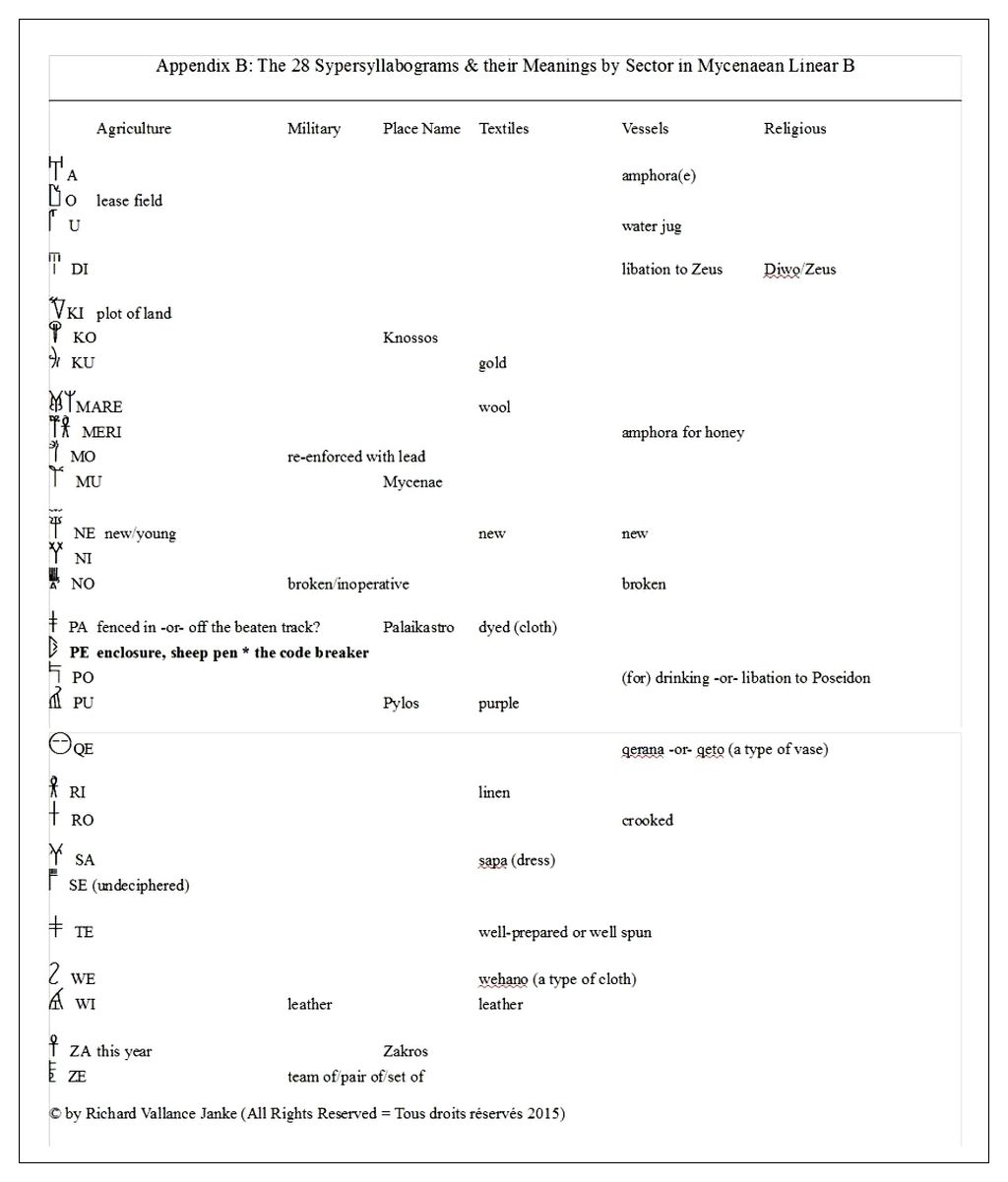


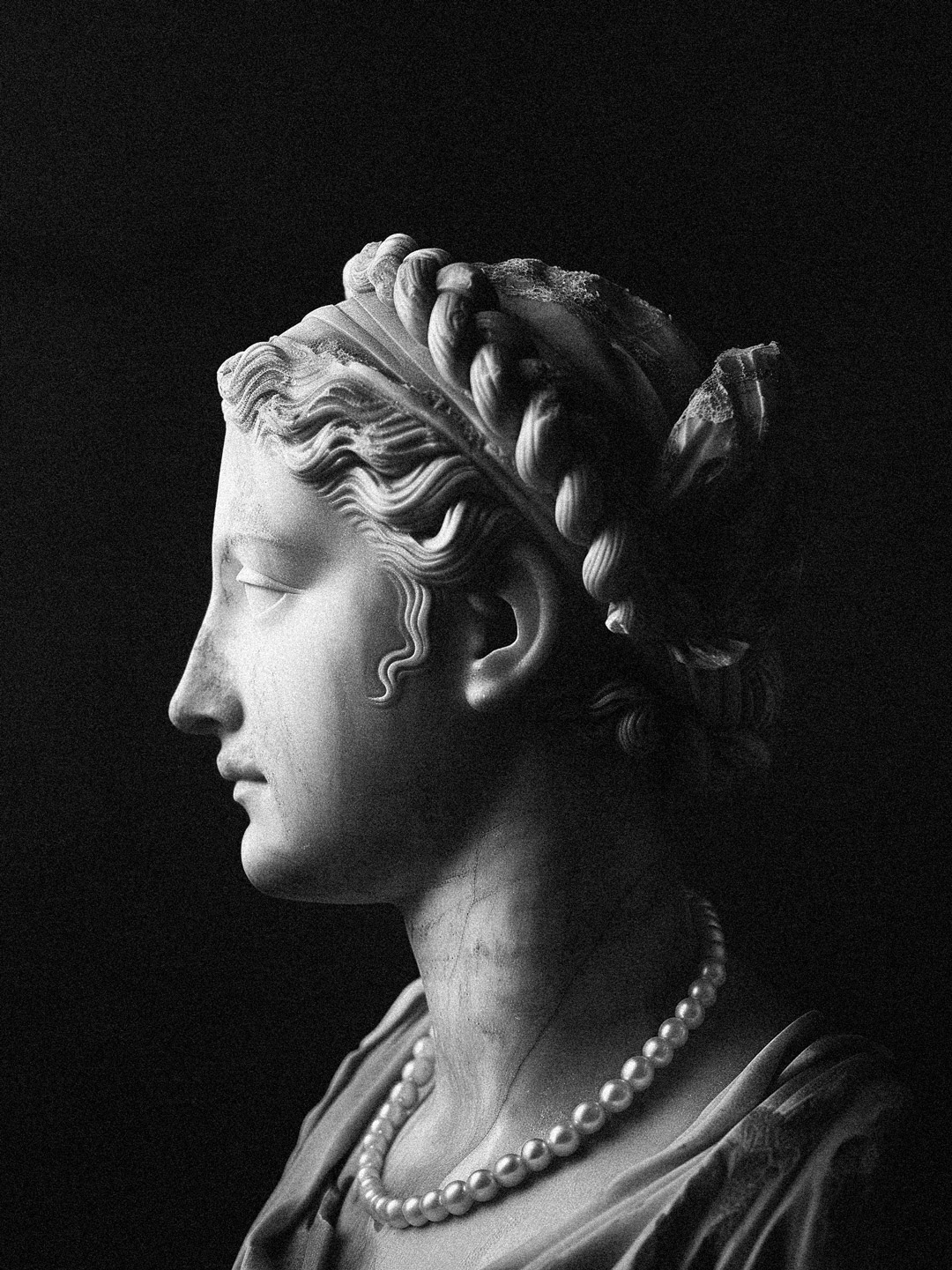
You must be logged in to post a comment.