Tag: barley

  • So-called Cretan hieroglyphs are not hieroglyphs at all. Example 2

    So-called Cretan hieroglyphs are not hieroglyphs at all. Example 2

    Cretan symboic writing ideograms b

    These 2 palm-leaf tablets incised with Cretan symbols are the second example of why so-called Cretan hieroglyphs are not hieroglyphs at all. We note right off the top that there are only 12 symbols, all of which are in fact ideograms or logograms. The numeric symbols, 20, 60 and 100 on the fist tablet do not conform to Linear A and B standards.

    As for the ideograms, they all appear to be indecipherable, but it is perhaps possible to assign meanings to a few of them. 2., which looks like Linear B ZU, may be a grain crop, possibly barley. 4. looks like some kind of animal, possibly a horse. 5. and 6. could be separate logograms, or put together, the could constitute one, in which case it could be a scythe. 7 is perhaps another kind of crop. 8 is probably an olive tree. 10. looks a great deal like 4., and may be the same ideogram. 11. looks like the Linear A syllabogram PA3 (PAI), but is indecipherable. 12 appears to be somewhat like the Linear A vowel E, and it may be a boars tusk helmet, but there is no way of telling for certain.

  • Statistical incidence of various types of gains and of flax on Linear A tablets from Haghia Triada and elsewhere, now on academia.edu

    Statistical incidence of various types of gains and of flax on Linear A tablets from Haghia Triada and elsewhere, now on academia.edu

    Statistical incidence of various types of grains and of flax on Linear A tablets from Haghia Triada and elsewhere


  • Statistical incidence of various types of grains on Linear A tablets from Haghia Triada and elsewhere

    Statistical incidence of various types of grains on Linear A tablets from Haghia Triada and elsewhere:

    incidence of barley einkorn emmer on Linear A tablets

    akaru = field HT 2 (20+) HT 86 X2 (20+ )

    TOTAL = 40+

    barley

    kireta2 (kiretai) = barley HT 85 (1) + HT 129 (33)

    TOTAL = 34

    kiretana = barley-like HT 2 (54+) HT 8 X 2 (5) HT 108 (1) HT 120 (60)

    TOTAL = 120

    einkorn wheat

    dideru = einkorn wheat HT 86 X 2 (2nd. trunc.) (20) HT 95 X 2 (20)

    TOTAL = 40

    emmer wheat

    kunisu = emmer wheat HT 10 (0) HT 86 X 2 (40+) HT 95 X 2 (30)

    TOTAL = 70+

    flax

    [sara2 = flax HT 18 (10) HT 28 X 2 (21) HT 30 (0) HT 32-34 (0) HT 90 (20) HT 93 (20) HT 94 (5) HT 97 (0) HT 99 (4+) HT 100-102 (985+) HT 105 (234) HT 114 (10) HT 121 (5) HT 125 (2) HT 130 (0)

    TOTAL = 1306+

    + saru (oblique case) HT 86 X 3 (41+) HT 95 X 2 (30) HT 123+124 (16 )

    TOTAL = 87+

    TOTAL for all references to flax = 1393]

    spelt or millet

    dame = spelt or millet HT 86 (20) HT 95 X2 (20) HT 120 (74)

    TOTAL = 94

    millet or spelt

    qera2u/qera2wa = millet or spelt HT 1 (197) HT 95 X2 (17)
    TOTAL = 214

    durare = durum wheat? Knossos KN Zc 7 (0)

    TOTAL = 0

    minute = a type of grain -or- and for a month HT 86 (20) HT 95 X2 (20) HT 106 (6+)

    TOTAL = 46+

    pura2 = a type of grain HT 28 (6) HT 116 (45) KN 54 (0)

    TOTAL = 51

    qanuma = ditto HT 116 (20) KH 88 (Khania) (10)

    TOTAL = 20

    standard units of measurement on all Linear A tablets:

    adu HT 85 (0) HT 86 (0) HT 88 (20) HT 92 (680) HT 95 (0) HT 99 (0) HT 133 (55) (bales?)

    TOTAL = 755

    adureza (0) = standard unit of dry measurement, something like a bushel

    dureza (7 ) = variant of the same

    TOTAL = 7

    kireza ( 42) = standard unit of measurement for figs, dates or grapes = 1 basket

    TOTAL = 42

    reza (67+ ) = standard unit of linear measurement

    TOTAL = 67+

    tereza (0) = standard unit of liquid measurement

    © by Richard Vallance Janke 2017

  • Now on academia.edu. Are Minoan and Mycenaean fractions fractions?

    Now on academia.edu. Are Minoan and Mycenaean fractions fractions?

    Click to download:

    MinoanandMycenaeanfractionsornotcrops


    This very brief, but informative tract is a real eye opener.


  • Credible decipherment of several grains mentioned on of Linear A tablet HT 10 (Haghia Triada)

    Credible decipherment of several grains mentioned on of Linear A tablet HT 10 (Haghia Triada):
    
    Linear A tablet HT 10 Haghia Triada dealing with several grain crops
    
    After several abortive attempts at realizing a relatively convincing decipherment of Linear A tablet HT 10 (Haghia Triada), I believe I have finally managed to come through. This has to be one of the most challenging Linear A tablets I have ever been confronted with. Any credible decipherment eluded me for months on end, until it finally struck me that all I needed to do was to identify the grain crops most commonly cultivated in the Neolithic and Bronze Age Mediterranean. And this is precisely what I have just done.  
    
    Neolithic and Bronze age grains cultivated in the Mediterranean during the Neolithic and Bronze Age eras (the most common italicized):
    
    barley (sara2/sarai?) *
    einkorn (dideru) *
    emmer (kunisu) *
    flax (sara2/sarai?) *
    freekeh (sara2/sarai?) *
    and
    bran (less common)
    bulgur (less common)
    groats (less common)
    lentils (less common)
    millet (dare -or- kasaru)
    spelt (dare -or- kasaru)
    vetch for fodder (less common)
    
    Now it strikes me that if we find any of these grains recurring on several Linear A tablets, and we do, these grains must be the most common cultivated then. As it so happens, the 3 grain crops most frequently referenced in Linear A tablets are dideru, kunisu and sarai2 (sarai). They appear over and over and in abundant quantities on several Linear A tablets from Haghia Triada (HT 8 HT 10 HT 28 HT 85-68 HT 91 HT 93 HT 95 HT 114 HT 121 & HT 133), on HM 570, on Khania KH 10, Kophinas KO Za 1 and on Zakros ZA 20. We now know for certain that dideru means “einkorn (wheat)” and kunisu “emmer (wheat)”. It is also highly likely that sara2 (sarai) references “barley”, “flax” or “freekah”. Which one we cannot be sure, but it almost certainly has to be one of these. In addition, we also find dare and kasaru on HT 10. It stands to reason that, by elimination, dare and kasaru are probably either “millet” or “spelt” or vice versa. I have eliminated bran, bulgur, groats, lentils and vetch, as these crops appear to have been relatively less common. 
    
    Free translation of HT 10:
    
    emmer wheat on 4 hills + PA? + 16 1/2 bushel-like units of another type of grain (millet or spelt) *333? + RO + 6 *u325 + 14 bushel-like units of groats (?) + 2 1/2  of *301 (whatever that is), all stored in 8 vases, of which 2 are pithoi (very large) and also stored in 1 vessel of another type + 2 bushel-like units of bran, flax, millet or spelt & 16 young shoots of grain + 6 /12 of *312 TA ? & 6 bushel-like units of millet or spelt, of which 9 1/4 units were lost to death (i.e. never matured)...
    
    My preliminary research into the types of grains cultivated in the Neolithic and Bronze Age Mediterranean has clearly facilitated this plausible decipherment of HT 10, and has moreover confirmed my even more accurate translations of several other Linear A tablets dealing with grain, almost all of them co-incidentally from Haghia Triada.


  • For the first time ever in history, a conjectural full restoration of an entire Linear A tablet, ZA 20 (Zakros)

    For the first time ever in history, a conjectural full restoration of an entire Linear A tablet, ZA 20 (Zakros):

    Linear A tablet ZA 20 Zakros restored

    In the previous post, I conjectured how the text of the missing top of Linear A tablet ZA 20 (Zakros) might have read. While we shall never know for certain, one thing is sure: we do know that the entire tablet dealt with grain crops. It therefore stands to reason that the missing text on the top must have inventoried grains. With this firmly in mind, I have endeavoured to reconstruct what I believe how the missing text may have read. It could very well have run something along these lines:

    kireta2 (kiretai) 11 dideru 42 dideru 30 qerie 22 qerie 6

    NOTE that kireta2 (kiretai) is the Minoan orthography for Greek krithai (Latinized), which of course is barley.

    Translation: 11 bushel-like units of barley, 42 units of emmer wheat, 30 units of emmer wheat mixed with 22 units of roasted einkorn, and 6 units of pure roasted einkorn

    for a total of 111

    which when taken into account with total of 19 on the bottom half of the tablet yields a grand total of 130.

    Hence the decipherment of the entire tablet with the top half restored as conjectured, reads as follows:

    11 bushel-like units of barley, 42 units of emmer wheat, 30 units of emmer wheat mixed with 22 units of roasted einkorn, and 6 units of pure roasted einkorn + ro? with dry units of measurement (i.e. bushel-like units) + 4 units of mi? + ? + ? + along with 1 bushel-like unit of wheat 7 12 bushel-like units of te*123 (flax?) + 2 bushels of rumatase (spelt?) for a grand total of 130.

    As you can readily see, this decipherment makes perfect sense, and in any case, even if the text of original tablet did not read quite this way, it must have read very much like this.

    You will forgive my awful scribal hand. I cannot hope to be able to replicate the finer hand of the original scribe.

  • A solid decipherment of Linear A tablet ZA 20 (Zakros), which definitely deals with several types of crops

    A solid decipherment of Linear A tablet ZA 20 (Zakros), which definitely deals with several types of crops:
    
    ZA 20
    
    Even though at the very least the top half of Linear A tablet ZA 20 (Zakros) is missing, it definitely deals with several types of crops. This is abundantly clear from the extant text on the bottom half (or less) of the tablet, in which we find, not one but 2 references to wheat, and to another crop, rumatase, which remains undeciphered, but which in all probability means “flax”. This word could also be Mycenaean-derived New Minoan for luma (Latinized Greek) for “offscourings”, the process whereby impurities are removed from grain crops, in this case, the extraction of chaff from wheat. It makes perfect sense in context.
    
    Given that at least half of the top of this tablet is lost, the question is, what does it reference? It is apparent from the remaining extant text on the bottom of this tablet, which deals with wheat twice, that the missing upper part of the tablet should deal with grain crops. There are indeed several words in Linear A which are grain crop-specific. These are dideru =  “emmer wheat”, qerie =  “roasted einkorn” and sara2/sarai =  “sharia wheat”. It is highly likely that the missing top portion of this tablet deals with at least one of these crops, or with 2 or even all 3 of them. In addition, mention may well have been made of either or both barley and flax crops.
    
    standard ideograms for crops in Linear A
    
    In view of the fact that the sum total for all crops on this tablet = 130, whereas the totals for the crops on the bottom half = 19 only, we are left with 111 units of something unaccounted for... and what might be that something?... other grain crops, of course. Otherwise, how are we to account for the 111 missing units on the lost portion of this tablet? We cannot. These 111 units, which were definitely tallied on the missing top of the tablet, must have been standard units of dry measurement for grain crops, something akin to our modern bushels. Of course, bushels are merely a speculative approximation, since there is no way we can know what the standard units of dry measurement for crops were either in the Minoan or Mycenaean eras, historically remote as they are.  All we can do is hazard an approximation. But at least bushels at least give us some idea of what we are dealing with here.
    
    Evidence for a substantive inventory of several grain crops on this tablet is further buttressed by the presence of the word durezase, in an oblique case of dureza, which I have (and I believe correctly) deciphered as one standard unit of dry measurement in Minoan, in other words one unit roughly approximating the modern bushel. So the accumulation of circumstantial evidence lends even further credence to our decipherment. Finally, the decipherment makes so much sense contextually that it is more likely than not correct.    
    
    
  • Linear A tablet HT 18 (Haghia Triada) in Old Minoan fully deciphered

    Linear A tablet HT 18 (Haghia Triada) in Old Minoan fully deciphered:

    Linear A ideogams for wheat and barley

    Linear A tablet HT 18 Haghia Triada

    Except for the word pase which introduces this tablet, and which is probably Mycenaean-derived, the entire tablet is in Old Minoan, i.e. the Minoan substratum. Since we know what all of the ideograms and supersyllabograms mean, the decipherment is straightforward. On the first line, we have the ideogram for wheat followed by the associative supersyllabogram QE, which stands for qeria, Old Minoan for “emmer roasted wheat”. Next we have the ideogram for “roasted einkorn”, which Prof. John G. Younger incorrectly identifies as the ideogram for “olives”. They are sometimes confused. In this context, it makes no sense whatsoever for this ideogram to signify “olives”, in view of the fact the rest of the tablet deals with wheat, except at the very end, where figs are introduced. The associative supersyllabogram KI with the ideogram for “roasted einkorn” may reference one of two things, either kiretana, which is apparently Old Minoan for “Cretan” or more likely than not kireta2 (kiretai), meaning “with barley”. In other words, the roasted einkorn is mixed with barley. Finally, we have the supersyllabogram NI for “figs”. In old Minoan, this word is either nire or nite in the plural. The assignment of “bushel-like units” to the wheat and barley on this tablet is merely an approximation, since we have no idea what the standard unit for the measurement of grains, wheat or barley was in Minoan or for that matter in Mycenaean Crete. But it gives us an approximation of the amounts we are dealing with on this tablet.

  • Common Linear A ideograms for livestock, crops, olives, barley and wheat

    Common Linear A ideograms for livestock, crops, olives, barley and wheat:
    
    Linear A ideograms 620
    
    These are the most common Linear A ideograms for livestock, crops, olives, barley and wheat. Unlike Mycenaean Linear B, Linear draws a distinction between certain species of wheat, with the ideogram for “wheat” accompanied by the supersyllabogram DI meaning dideru = “roasted einkorn” and the same ideogram accompanied by QE , signifying qerie = “emmer wheat”, while at the same time using a slightly different ideogram for “barley”.  In addition, the word sara2 (sarai) = “sharia wheat”. All of these words are firmly established and confirmed in either the Old Minoan or the pre-Greek substratum. Most of the Linear A ideograms are either very similar or identical to their Linear B counterparts.
    
    Here you see illustrations of emmer wheat and roasted einkorn:
    
    roasted einkorn and emmer wheat
    
    And here is sharia wheat:
    
    sharia wheat
    
    
  • Rational partial decipherment of Minoan Linear A tablet HT 117 (Haghia Triada) & the first real glimpse of Minoan grammar actualized

    Rational partial decipherment of Minoan Linear A tablet HT 117 (Haghia Triada)  & the first real glimpse of Minoan grammar actualized:
    
    LinearA tablet HT 117 Haghia Triada 620
    
    This albeit partial decipherment of Minoan Linear A tablet HT 117 (Haghia Triada) incorporates an approximately equal admixture of Old Minoan, i.e. the original Minoan language, also known as the Minoan substratum (of which I am unable to decipher most of the words) and of New Minoan, i.e. the superstratum of words of probable Mycenaean provenance, most of which I have been able to decipher with relative ease. While some of the New Minoan translations obviously appear to break the grammatical rules of Mycenaean Greek, such as mitu for “mint”, which is after all mita (and feminine) in Mycenaean Greek or daminu for “in 1 village”, which is damo in the nominative in Linear B, these adjustments can be readily accounted for by the fact that Old Minoan grammar is not at all the same beast as Mycenaean grammar. Although we are not yet familiar with much of Old Minoan grammar, which is after all the grammar of Minoan, just the same as modernized Anglo-Saxon grammar is the grammar of English, in spite of the enormous superstratum of French, Latin and Greek words in the latter language, this tablet alone perhaps affords us a first glimpse into the mechanics of Minoan grammar. Thus, it would appear that mitu may be the Minoan accusative of mita, and daminu may be the locative of damo in Minoan. Although there is no scientific way for me to substantiate this claim, I believe I am onto something, and that I may be making the first cracks in the obdurate wall of the grammar of the Minoan language substratum.  If this is so, then I may be actually pointing the way to unravelling at least a subset of Old Minoan grammar.  To illustrate my point, let us take a look at these phrases in English, as adapted from their Norman  French superstrata.  In French, the phrases would read as follows: avec la menthe”& “ dans le village”, whereas in English they read as “with mint” & “in the village”. Take special note of the fact that, while the Norman French superstrata words in English, “mint” and “village” are (almost) identical to their Norman French counterparts, the grammar of the phrases is entirely at odds, because after the grammar of French, which is a Romance language, and of English, which is a Germanic, cannot possibly coincide.  But here again, I must emphatically stress that English grammar is an entirely different matter than English vocabulary, of which the latter is only 26 % Germanic, but 29 % French, 29 % Latin and 4 % Greek, the latter 3 languages, namely, the superstrata, accounting for fully 64 % of all English vocabulary! We must always make this clear distinction between English grammar, which is essentially Anglo-Saxon modernized, and English vocabulary, which is only minimally Germanic.
    
    If we carry this hypothesis to its logical outcome, we can readily surmise that the same phenomenon applies to the Linear A syllabary. Where grammar is concerned, the Linear A syllabary is Old Minoan, i.e. the original Minoan language or substrate. Where vocabulary is concerned, Linear A represents an admixture of Old Minoan vocabulary, such as uminase, kuramu, kupa3nu (kupainu), tejare and nadare (all of which I cannot decipher) and of New Minoan Mycenaean derived vocabulary, such as makarite, mitu, sata, kosaiti and daminu on this tablet alone. The orthography of the latter words is not actually consistent with Mycenaean grammar, because constitutionally it cannot be. Once again, the grammar is always Minoan, whereas the vocabulary often falls into the New Minoan (Mycenaean derived) superstratum.
    
    In the case of makarite, it would appear that, if the word is dative in Minoan, the Minoan dative is similar to the Mycenaean, ending as it seems to in i. The ultimate te in makarite appears to be the Mycenaean or ancient Greek enclitic te (and). In the case of mitu, which is mita and feminine in Mycenaean Greek, it would appear that the Minoan word is either masculine or that in this case at least, it is instrumental, meaning “with mint”, in which case the Minoan feminine instrumental appears to terminate with u. The word kosaiti appears to follow the same lines. The first two syllables, kosai, apparently are Mycenaean, but the ultimate ti is Minoan, and once again, instrumental (plural). Again, daminu appears to repeat the same pattern. The word damo is masculine (or neuter) in Mycenaean. But the ultimate is inu here, which appears to be the Minoan locative, inu. To summarize, we must make a clear-cut distinction between any New Minoan vocabulary on any Linear A tablet, and its orthography, which must of necessity follow the orthographic conventions of the Minoan language, and not of the Mycenaean, from which any such words are derived. I intend to make this abundantly clear in subsequent posts.  
    
    
  • Proto-Greek or Mycenaean kiritai = “barley” on Minoan Linear A tablet HT 114 (Haghia Triada)

    Proto-Greek or Mycenaean kiritai = barley on Minoan Linear A tablet HT 114 (Haghia Triada):

    Like many other Linear A tablets, HT 114 (Haghia Triada) does not appear to be inscribed only in the Minoan language. The proto-Greek or, more accurately, the Mycenaean word, kirita2 (kiritai), which means barley and which is almost exactly equivalent to Linear B, kirita, meaning the very same thing, appears on the very first line of this tablet. The only difference is that the Linear A word, kiritai, is plural, whereas the Linear B, kirita, is singular, as we can see here:

    Minoan Linear A tablet HT 114 Haghia Triade

    While the rest of HT 114 is inscribed in Minoan, the appearance of this one Mycenaean word gives pause. Was Linear A the syllabary of proto-Greek or of Mycenaean Greek just before the advent of the new official syllabary, Linear B? The fact is that it was not. However, this does not mean that there was not proto-Greek or Mycenaean vocabulary on Linear A tablets. How can this be, when the language itself is not proto-Greek?

    The phenomenon of the superimposition of a superstratum of vocabulary from a source language (Mycenaean in the case of Linear A) onto a target language (Minoan), is historically not unique to the Minoan language. A strikingly similar event occurred in English with the conquest of England by William the Conqueror in 1066 AD. Before that date, the only English was Anglo-Saxon. This is what is called Old English. But after conquest of England in 1066 AD, over 10,000 Norman French words streamed into the language between 1100 and 1450 AD, altering the landscape of English vocabulary almost beyond recognition. In fact, believe it or not, only 26 % of English vocabulary is Germanic versus 29 % is French, 29 % Latin and 6 % Greek. So the latter 3 languages, amounting to 64 % of the entire English lexicon, have completely overshadowed the Old English (Anglo-Saxon) Germanic vocabulary, as illustrated in this Figure:

    origins of English vocabulary

    This phenomenon is unique to English alone among all of the Germanic languages. While the grammar and syntax of English is Germanic, the great majority of its vocabulary is not. A strikingly similar event appears to have occurred when the Mycenaeans conquered Knossos, is dependencies and Crete ca. 1500 – 1450 BCE. Just as the Norman French superstratum has imposed itself on Old English, giving rise to Middle and Modern English, Mycenaean Greek operated in much the same fashion when it superimposed itself on Old Minoan, leading to New Minoan vocabulary, which is proto-Greek or Mycenaean. I have already isolated no fewer than 150 proto-Greek or Mycenaean words out of 510 intact words (by my own arbitrary count) in the Linear A lexicon. Again, while the Minoan language itself is not proto-Greek in its grammar and syntax, but is of another, to date still unknown, origin, a large portion of its vocabulary is not Old Minoan, but instead proto-Greek or Mycenaean, as I shall demonstrate in no uncertain terms in my decipherments of numerous Linear A tablets to follow this one. One striking feature of New Minoan is this: the percentage of proto-Greek or Mycenaean vocabulary in Linear B comes to 29 %, precisely the same level as Norman French in English. Although this is sheer co-incidence, it is quite intriguing.

  • Illustrations of 5 Minoan Linear A tablets (Figures) in Archaeology and Science (2016)

    Illustrations of 5 Minoan Linear A tablets (Figures) in Archaeology and Science (2016):
    
    a-figure-1-linear-a-ht-31-pavel-serafimov-anton-perdih
    
    b-figure-2-linear-a-ht-13-translation-by-richard-vallance-janke
    
    figure-3-linear-a-tablet-19-puko-tripod
    
    linear-a-ht-12-qatidate-olive-tree
    
    ht-117-lineara-epigraphic-harvest-festival-ideogram-vessel-daro
    
    Above are 5 illustrations of some (not all) of the Minoan Linear A tablets, reduced to 620 pixels, as they will appear as Figures (with the Figure nos. assigned only to Figures 1 & 2, other Figure nos. not yet assigned) in my upcoming article, “Pylos Tablet Py TA 641-1952 (Ventris), the ‘Rosetta Stone’ for Minoan Linear A tablet HT 31 (Haghia Triada) vessels and pottery” in the prestigious international annual Archaeology and Science, Vol. 12 (2016) ISSN 1452-7448. This is to be the third major article in a row which I will see published in Archaeology and Science.
    
    This paper represents the first genuine breakthrough in the decipherment of Minoan Linear A vocabulary (not the language!) in the 116 years since the first Linear A tablets were unearthed by Sir Arthur Evans at Knossos in 1900.
    
    
  • Table of the distribution of 24 Supersyllabograms in Minoan Linear A by economic sector & sub-sector

    Table of the distribution of 24 Supersyllabograms in Minoan Linear A by economic sector & sub-sector:
    
    Following is the Table of the 24 Supersyllabograms in Minoan Linear A by economic sector & sub-sector. It is clear from this table that the majority of supersyllabograms (12) in Minoan Linear A fall in the olive trees, olives and olive oil sub-sector of the agricultural sector of the Minoan economy, primarily in Haghia Triada, but also in Khania (Chania). The next most common sector is grains (barley & wheat) with 7, the third are vases and pottery and also wine with 5, the fourth is figs with 2 and the fifth are military (men as attendants to the king) and textiles with 1 SSYL each.
    
    table-of-24-supersyllabograms-in-minoan-linear-a-640
    
    The distribution of supersyllabograms in both Minoan Linear A and Mycenaean Linear B by economic sector is of the utmost importance. I shall need to cross-correlate the key economic sector-by-sector distribution of supersyllabograms in both syllabaries to verify whether or not the distribution of SSYLs in the one syllabary (Linear A) and the other (Linear B) is closely aligned or not. The alignment of supersyllabograms in each syllabary relative to the other will determine with greater accuracy which economic sectors are the most and which the least important in each language, Minoan and Mycenaean. This way, we can get a much better idea of how the key economic sectors are distributed, from most to least important, in each of the two societies, Minoan and post-Minoan Mycenaean. It is of the utmost important to understand that all of the supersyllabograms in both of these syllabaries must refer only to major economic terms in each sector and sub-sector. 
    
    I shall explicitly compare the relative economic distribution of each society, the Minoan and Mycenaean in my upcoming article, Linear B tablet Pylos TA 641-1952 (Ventris) is the Mycenaean Linear B “Rosetta Stone” for Minoan Linear A tablet HT 31 (Haghia Triada, in Vol. 16 (2016) of the prestigious international annual, Archaeology and Science (Belgrade) ISSN 1452-7448. The Table of 24 Supersyllabograms in Minoan Linear A by economic sector & sub-sector is to appear in this article.
    
    I have deciphered the following 8 supersyllabograms more or less successfully in Minoan Linear A:
    
    DA = dadumata = grain/wheat measurer? = Linear B sitokowo
    KA = kapa = follower or foot soldier, attendant to the king 
    KI = kidata = to be accepted for delivery = Linear B dekesato
    OR
    kireta2 (kiritai) = delivery = Linear B apudosis
    kiretana = (having been) delivered (past participle passive) = Linear B amoiyeto
    AND
    kireza = unit of measurement for figs, probably 1 basket
    AND
    kiro = owed = Linear B oporo = they owed
    NI = nipa3 (nipai) or nira2 (nirai) = figs = Linear B suza. But Mycenaean Linear B shares NI with Minoan Linear A, in spite of the fact that the Mycenaean word for figs is suza.   
    PA = pa3ni (amphora for storing grain) + pa3nina = grain or wheat stored in an amphora
    RA ra*164ti = approx. 5 litres (of wine) 
    SA sara2 (sarai) = small unit of measurement: dry approx. 1 kg., liquid approx. 1 litre
    TE = tereza = standard unit of usually liquid measurement, sometimes of dry measurement
    
    
  • Kunisu, another Minoan Linear A word which might mean “bushel” or alternatively “emmer wheat/farro”

    Kunisu, another Minoan Linear A word which might mean “bushel” or alternatively “emmer wheat/farro”:
    
    kunisu grains wheat yield
    
    Kunisu is yet another Minoan Linear A word which might mean “bushel” or alternatively “emmer wheat/farro”. I am uncertain whether this is the suitable term for “bushel” in Minoan Linear A or whether ase is. The former (kunisu) is masculine, indicating a large amount, and can be either singular or plural. The latter, ase, is probably feminine plural. Because kunisu denotes something large, as apparently all words ending with ultimate U in Minoan Linear A do, it may be the better candidate for “bushel”. But I am leaving my options open. One thing is certain. As Prof. John G. Younger points out in his Linear A Texts in phonetic transcription, kunisu does not mean the same thing as Konoso in Mycenaean Linear B. Take a good look at the two words in their original syllabaries side by side at the bottom of the figure above. They do not even look alike. I am full agreement with Younger on this point.
    
    This brings the total number of Minoan Linear A words we have deciphered more or less accurately to eighty-one (81).
    
    
  • Minoan Linear A adaro = Mycenaean Linear B kirita = “barley”?

    Minoan Linear A adaro = Mycenaean Linear B kirita = “barley”?
    
    Linear A barley ARK5 ADARO
    
    It looks very much like Minoan Linear A adaro = Mycenaean Linear B kirita = “barley”, especially in light of the fact that the number assigned to the term is at least 400 (40 truncated right).  Anyone growing barley would want to grow a lot of it. The term zu*22di might mean “barley”, but that is much less likely, given that the number following it is only 40.
    
    This is the seventy-third (73) term in Minoan Linear A I have deciphered more or less accurately. 
      
    
  • It is very likely that Minoan Linear A pitakase means the same thing as epididato = “distributed” in Mycenaean Linear B

    It is very likely that Minoan Linear A pitakase means the same thing as epididato = “distributed” in Mycenaean Linear B:
    
    Dictionary.com distributed
    
    In all probability, Minoan Linear A pitakase means the same thing as epididato = “distributed” in Mycenaean Linear B. There is firm circumstantial evidence to support my hypothesis. Dictionary.com defines “distributed” as follows:
    
    HT 21  PITAKASE 161 distributed
    
    Pay close heed to the synonyms I have underlined for each of the definitions above. Note that the definition includes reference to “prizes”... “distributed among ten winners”. Ten prizes, ten winners. Likewise, on Linear A tablet HT 21 (Haghia Triada), Prof. Younger directly links pitakase to“mixed commodities” (in his own words). This leads me straight to conclusion I have drawn. The term pitakase fits the context very well indeed, especially in light of the fact that a relatively large number (161) of commodities are being distributed. These are all almost certainly agricultural in nature, most likely representing barley, wheat, figs and other commodities in the same vein. So I am quite convinced that pitakase does indeed mean “distributed”, rating 75% or more on the scale of accuracy I have assigned for Minoan Linear A words I have deciphered.
    
    This is the seventy-second (72) Minoan Linear A term I have deciphered, more or less accurately, to date.
    
    
  • Another Minoan Linear A word tentatively deciphered: sara2 = sarai = a small unit of measurement?

    Another Minoan Linear A word tentatively deciphered: sara2 = sarai = a small unit of measurement?
    
    Minoan Linear A sara2 = sarai = approx. kilogram or litre
    
    While I have encountered enormous challenges deciphering scores and scores of Minoan Linear A words which are not accompanied by an ideogram, being quite unable to decipher any of them at all, sara2 = sarai is a rare exception. I have tentatively assigned it the value of a small unit of dry measurement for wheat and barley (crops) and of wet measurement for olive oil or wine. Since it is impossible for us today to determine with any degree of accuracy what each unit of a sara2 = sarai actually was, I have had to resort to approximations, correlating the unit of dry measurement with the modern metric kilogram (more or less) and the unit of wet measurement with the metric litre (more or less). It is the best we can hope for. My decipherment is based entirely on the gross amounts of sara2 = sarai reported on several Minoan Linear A tablets with the ideograms for “grain/wheat”, “barley” or “olive oil”. The numbers on the following tablets range from a low of 1 (olive oil) on HT 28  to 2 (grain) on HT 125 to 10 (grain) on HT 18 and HT 114, to 20 (grain) on HT 28 & HT 90 to 41 (grain) on HT 101 to 976 (grain !) on HT 102. The totals for sara2 = sarai on all of these tablets from Haghia Triada = 1070 units, of which 1069 are small units of dry measurement for “grain/wheat” or “barley”. The remaining 1 shows 1 small unit of liquid measurement for “olive oil”.
    
    The only thing which troubles me with this tentative translation is that, although the total figures for dry and liquid measurement are sky high,  there is only 1 unit of liquid measurement on HT 28 (olive oil) and there are only 2 units of dry measurement on HT 125 (grain, wheat or barley). I find it difficult to believe that a Minoan scribe would tally only 2 small dry units (approx. = to 2 kg.) and 1 small liquid unit (approx. = 1 litre) on these two tablets. What is the point of that? On the other hand, all of the other figures for units of measurement range from a respectable low of 20, to 41 to the enormous amount of 976 on HT 102. These latter figures would appear to lend some credence to my tentative decipherment of sara2 = sarai. All this is not to say that I will necessarily adhere to this initial decipherment in the near to not so near future. Should reasonably reliable evidence arise to contradict this decipherment, I shall take it into close consideration,  and if the need arises, I may have to scrap this initial decipherment. 
    
    
  • Another Linear B tablet from Amnisos referencing olive oil and barley dedicated to all the gods, not once but twice

    Another Linear B tablet from Amnisos referencing olive oil and barley dedicated to all the gods, not once but twice:
    
    Linear B tablet Knossos KN 48 J f 12 olive oil and barley to all the gods
    
    Here we have yet another Linear B tablet from Amnisos referencing olive oil and barley dedicated to all the gods, but this time it flags the signal importance to the scribe as well as to the palace administration at Knossos by stressing twice the necessity of offering up olive oil and barley as sacrifices to all the gods. We have already accumulated four (4) tablets referencing offerings of olive oil or olive trees and barley to all the gods, and there are two more to come from Pylos, for a grand total of 6, making such offerings the most frequently mentioned on Linear B tablets which are to be cross-correlated with Minoan Linear A tablets. So apudosi = “delivery” and Keresiya (feminine) = “Cretan” with 3 references each now have to take a back seat to pasiteoi = “to all the gods”, mentioned twice as often as I had expected. I would like to stress as well that if the Minoan Linear A tablets on olive oil and barley contain a phrase as long as pasiteoi, it is more likely than not that such a phrase means the same thing in the Minoan language as it does in Mycenaean Greek. But this is not necessarily the case, given that the Minoan tablets in Linear A may divide the phrase into two words, which is what we would expect. We shall soon see.
    
    In addition, the frequent mention of units of dry measurement on previous Linear B tablets I have posted relating to olive oil and and barley strongly suggest that my earlier translations of reza, adureza and tereza, which refer to (linear) measurement, dry measurement and liquid measurement (of wine) respectively are probably correct after all. I was in considerable doubt of their meanings until I started deciphering the Linear B tablets on olive oil and barley, most of which directly reference dry measurement. These tablets seem to confirm that my initial decipherment of reza, adureza and tereza in Minoan Linear A are on the mark after all. 
     
    
  • Linear B tablet on olive trees and barley as debts to be paid to the gods

    Linear B tablet on olive trees and barley as debts to be paid to the gods:

    Linear B tablet Knossos debts to the gods of olive oil and barley

    This particular tablet serves as a minor variant on the others we have posted with reference to dedications of olive trees and barley to the gods. Twice over tt adds the notion of debts to be paid (to the gods). This emphasis is obviously of great importance to the fellow who must pay these debts to the gods, to the palace administration at Knossos (which benefits from said payment) and to the gods themselves (who do not, since no one can pay out debts to abstract beings).

    The tablet adds an extra dimension to the vocabulary on Linear B tablets on olive oil and barley owed to the gods, which hopefully can be successfully cross-correlated with Minoan Linear A tablets possibly referencing the same procedure.

  • Knossos tablet with all sorts of references to olive oil and barley

    Knossos tablet with all sorts of references to olive oil and barley:

    Knossos tablet 1 j olive oil barley etc

    This tablet is a real hodgepodge of references to olive oil, olive oil trees and barley, ranging from references the port of Amnisos, to units of dry measurement (which also frequently occur on Minoan Linear A tablets), to all the gods and to the goddess Erinu in particular. Not only that, it also tabulates bales of barley, even down to single units of dry measurement of barley. So this tablet serves as a real cornucopia for olive oil, olive oil trees and barley. Thus, it adds one more reference to every single facet of these commodities. I shall tally the totals for all references to each commodity when I have finished translating as many Linear B tablets as I can referencing olive oil.

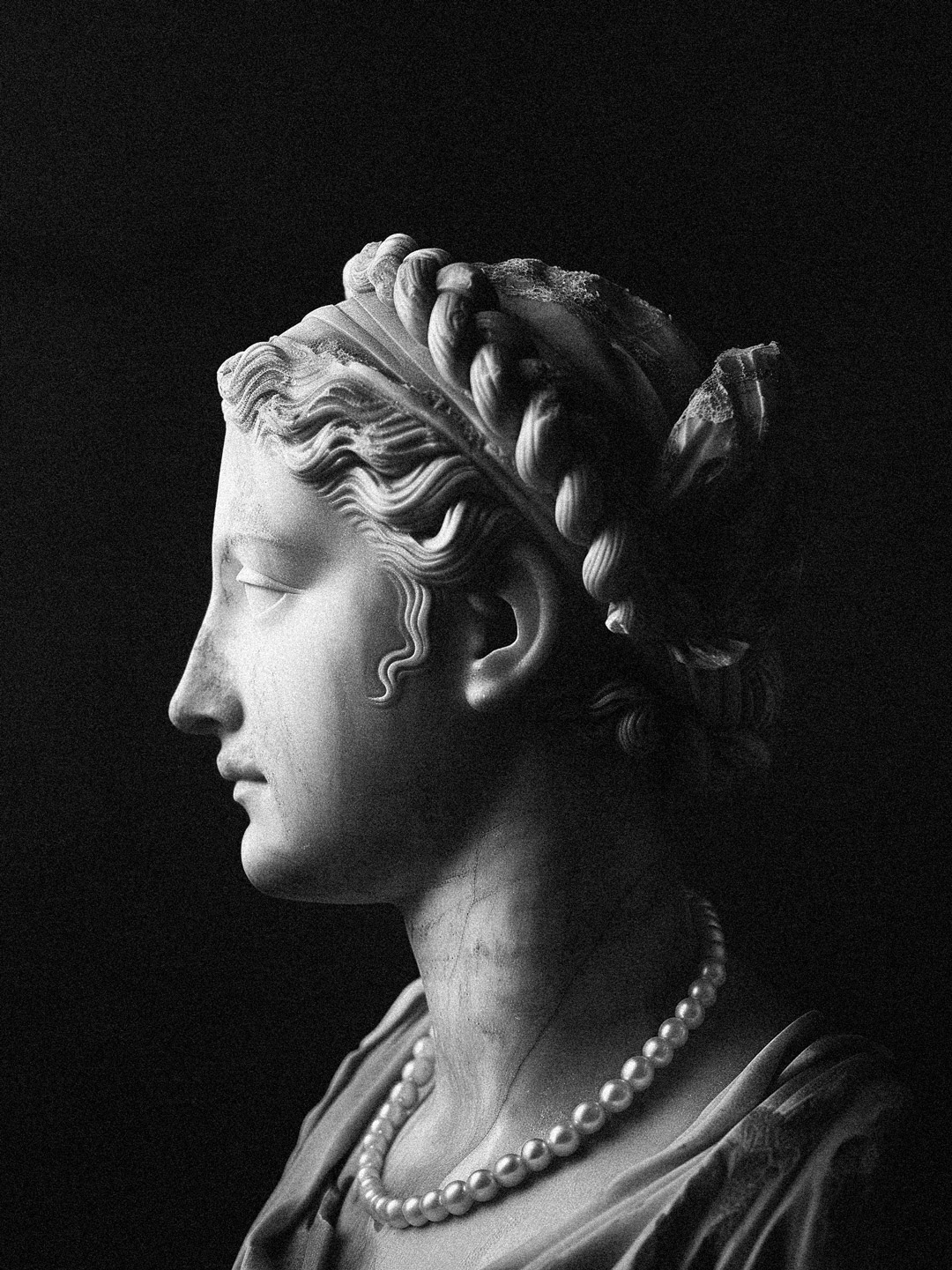
Sappho, spelled (in the dialect spoken by the poet) Psappho, (born c. 610, Lesbos, Greece — died c. 570 BCE). A lyric poet greatly admired in all ages for the beauty of her writing style.

Her language contains elements from Aeolic vernacular and poetic tradition, with traces of epic vocabulary familiar to readers of Homer. She has the ability to judge critically her own ecstasies and grief, and her emotions lose nothing of their force by being recollected in tranquillity.

Marble statue of Sappho on side profile.

Designed with WordPress