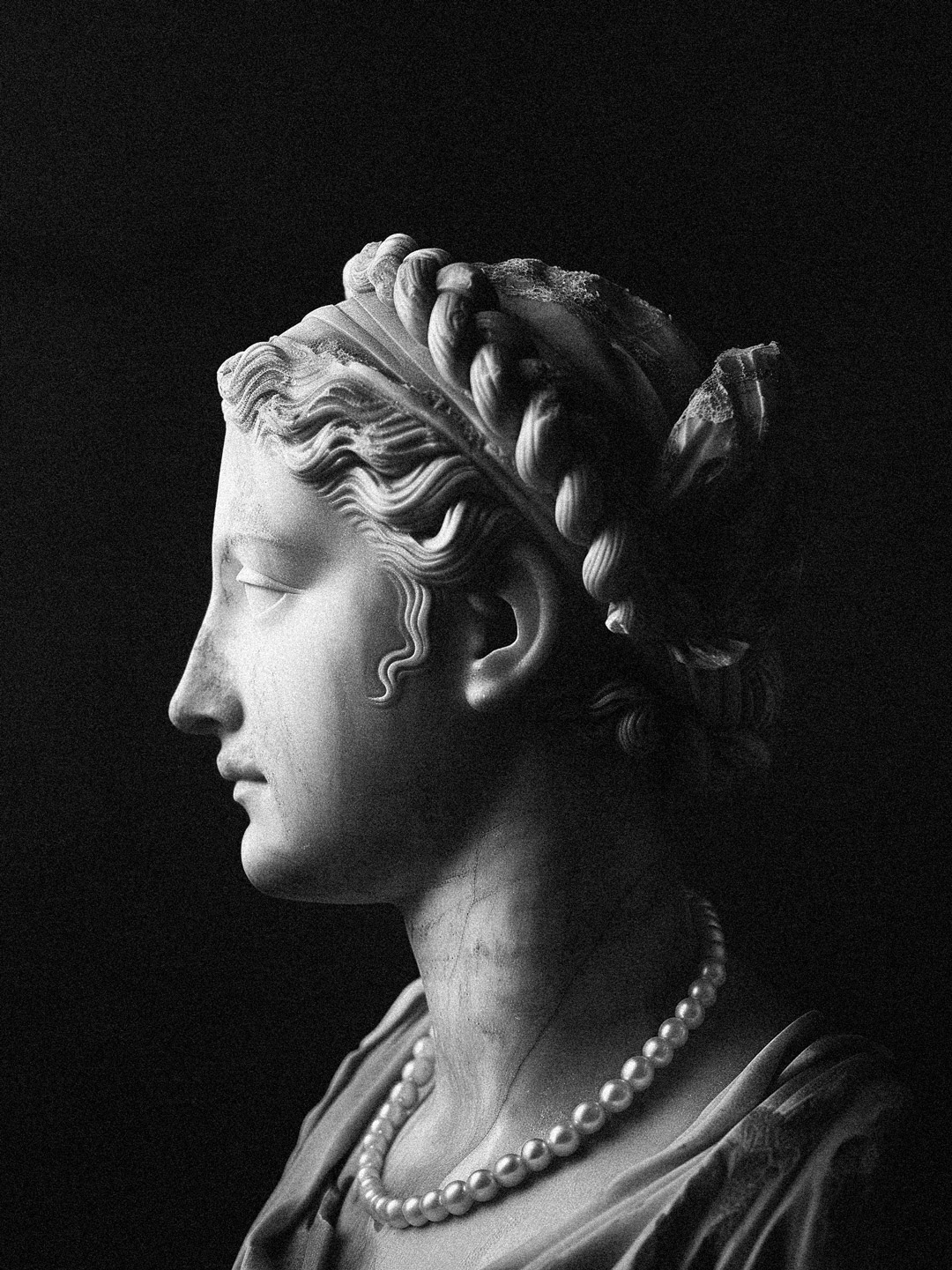
summer haiku/haiga/shahai – mother goddess = déesse mère = dea madremother goddess of Mount Ida, harvest queen... your sheer golden locks! * the earliest name for Demeter déesse mère du mont Ida, reine des moissons ... tes cheveux dorés ! dea madre del Monte Ida alto ... lucchetti dorati! Richard Vallance
Tag: Ancient Greek
-
summer haiku/haiga/shahai – mother goddess = déesse mère = dea madre
-
The top of Minoan Linear A Tablet ZA 20 (Zakros) restored on academia.edu
The top of Minoan Linear A Tablet ZA 20 (Zakros) restored on academia.edu Click on the link below to read this key contribution to research into Minoan Linear A tablets:
 Minoan Linear A tablets appear to be classed in two primary areas of interest (a) agriculture, and more specifically, crops and grains and (b) religious and sacerdotal. It is to the former that we turn our attention in this study. Focusing on certain Linear A tablets which deal primarily or almost exclusively with grains, we find that these three tablets yield the most promising results, Haghia Triada tablets HT 86 & 95 and Zakros tablet ZA 20. While HT 86 and HT 95 are intact, ZA 20 is not. Other Linear A tablets from Haghia Triada also contribute to our findings.
 Is it possible to envision an intact version of the original ZA 20 tablet from Zakros? We believe so, and with that firmly in mind we have attempted the first ever restoration of the top of ZA 20, resulting in what amounts to a plausible intact version, however hypothetical, of the original. So without further ado, we present the full restoration of our version of Linear A tablet ZA 20.

-
Restoration the full text of the badly damaged Linear A tablet from Gournia
Restoration the full text of the badly damaged Linear A tablet from Gournia:
 Here we see my restoration of the full text of the badly damaged Linear A tablet from Gournia, which includes line 0. at the top and line 4. at the bottom. This is just a personal interpretation, which may stray from the actual text of the original tablet... but we cannot really know this. Note that the RECTO (front side) and the VERSO (reverse side) are reversed. If you horizontally flip the VERSO it fits correctly into the RECTO. So this means that we have to read the text on the RECTO from left to right (dextrograde) and on the VERSO from right to left (sinistrograde). The reconstruction certainly makes sense. It was hard work, but worth it and fun!
-
summer haiku = virgin of the sea, in Mycenaean Linear B, ancient Greek, English and French
summer haiku = virgin of the sea, in Mycenaean Linear B, ancient Greek, English and French
 virgin of the sea,
the priestess of the winds
blesses our fleet
vièrge de la mer,
la prêtresse des vents
bénit notre flotte
Richard Vallance
virgin of the sea,
the priestess of the winds
blesses our fleet
vièrge de la mer,
la prêtresse des vents
bénit notre flotte
Richard Vallance
-
2 haiku in Mycenaean Linear B, ancient Greek, English and French, believe it or not! Believe it!
2 haiku in Mycenaean Linear B, ancient Greek, English and French, believe it or not! Believe it!
-
Translation of Linear B tablet KN 571 Rb 01 by Rita Roberts
Translation of Linear B tablet KN 571 Rb 01 by Rita Roberts:
 This is the very last tablet Rita Roberts has had to translate to fulfill the requirements of her third year of university. In 3 years she has translated at least 250 tablets. Congratulations are in order!
-
To the Land of Dreams: Overview of the Linear B Lexicon
To the Land of Dreams: Overview of the Linear B Lexicon
 This site provides us with a superb overview and summary of the contents of the Linear B Lexicon by Chris Tselentis.... a must read!
It includes examples of noun declensions and verb conjugations. The entire Linear B Lexicon is found on this site!
This site provides us with a superb overview and summary of the contents of the Linear B Lexicon by Chris Tselentis.... a must read!
It includes examples of noun declensions and verb conjugations. The entire Linear B Lexicon is found on this site!

-
Translation of Linear B tablet, KN 586 Rm 11, Knossos, by Rita Roberts
Translation of Linear B tablet, KN 586 Rm 11, Knossos, by Rita Roberts:
 This is far from being a straightforward tablet to decipher. It presents at least 3 difficulties:
1. the presence of the relatively rare logogram RIYO (see the tablet above) in the putative personal name ARIYOA.
2. the presence of digamma (#) twice in the name on line 2, which could be either the putative personal name, KOWOWEYA or RUWOWEYA, depending on how one is able to decipher the first left-truncated syllabogram on that line, which could be either KO or RU.
3. the presence of what appears to be the rare syllabogram JU at the end of the second line, but we cannot even be sure of that.
The tablet is damaged enough to raise the questions in 2. and 3. above.
This is far from being a straightforward tablet to decipher. It presents at least 3 difficulties:
1. the presence of the relatively rare logogram RIYO (see the tablet above) in the putative personal name ARIYOA.
2. the presence of digamma (#) twice in the name on line 2, which could be either the putative personal name, KOWOWEYA or RUWOWEYA, depending on how one is able to decipher the first left-truncated syllabogram on that line, which could be either KO or RU.
3. the presence of what appears to be the rare syllabogram JU at the end of the second line, but we cannot even be sure of that.
The tablet is damaged enough to raise the questions in 2. and 3. above.
-
Utube pronunciation of Linear B!
Utube pronunciation of Linear B!

You have to check this out if you want to know how to pronounce Linear B! This Utube video is just amazing!

-
winter haiku d’haiku – have you ever seen = as-tu jamais vu, translation of Hermippus, an ancient Greek poet
winter haiku d’haiku – have you ever seen = as-tu jamais vu, translation of Hermippus, an ancient Greek poet have you ever seen a pomegranate seed in drifts of snow?
 as-tu jamais vu
une graine de grenade
dans une congère ?
Hermippus
traduction en français par Richard Vallance
I converted this beautiful poem by Hermippus, an ancient Greek poet, into a haiku. It is not my original work at all, but I just love this poem! I think you will agree.
J’ai transformé ce beau poème par Hermippus, poète grec de l’antiquité, en un haiku. Ce n’est guère une oeuvre originale de ma part, mais je l’aime passionnément ! Je crois que vous serez d’accord.
as-tu jamais vu
une graine de grenade
dans une congère ?
Hermippus
traduction en français par Richard Vallance
I converted this beautiful poem by Hermippus, an ancient Greek poet, into a haiku. It is not my original work at all, but I just love this poem! I think you will agree.
J’ai transformé ce beau poème par Hermippus, poète grec de l’antiquité, en un haiku. Ce n’est guère une oeuvre originale de ma part, mais je l’aime passionnément ! Je crois que vous serez d’accord.
-
Summer haiku - Knossos by the sea = Knossos au bord de la mer in Linear B, ancient Greek, English and French
 Konoso
para tarasa
anemoiereya
Knwsso/j
para_ qa&ssash]
a21nemou i'e/ria
Knossos
by the sea
Priestess of the winds
Knossos
au bord de la mer
prêtresse des vents
Richard Vallance
Konoso
para tarasa
anemoiereya
Knwsso/j
para_ qa&ssash]
a21nemou i'e/ria
Knossos
by the sea
Priestess of the winds
Knossos
au bord de la mer
prêtresse des vents
Richard Vallance
-
Rule 10a: Converting Linear B to Greek: Q series of syllabograms to Greek k
Rule 10a: Converting Linear B to Greek: Q series of syllabograms to Greek k:
-
winter haiku in Mycenaean Linear B, ancient Greek, English and French, snow on the summit
winter haiku in Mycenaean Linear B, ancient Greek, English and French, snow on the summit, with the English version below and all of the other languages on the haiku image of the mountain and the church: snow on the summit of a Cretan mountain − a church
 Richard Vallance
REPOST from 2017
Richard Vallance
REPOST from 2017
-
Rule 9b: Linear B K = Greek g
Rule 9b: Linear B K = Greek g:

-
HOW TO SAY 8 WORDS in Egyptian hieroglyphics, Mycenaean Linear B, ancient Greek and modern Greek!
HOW TO SAY 8 WORDS in Egyptian hieroglyphics, Mycenaean Linear B, ancient Greek and modern Greek!

-
PYRAMID in Egyptian hieroglyphics, Mycenaean Linear B, ancient and modern Greek
PYRAMID in Egyptian hieroglyphics, Mycenaean Linear B, ancient and modern Greek:

-
FALCON in Egyptian hieroglyphics, Mycenaean Linear B, ancient Greek & modern Greek
FALCON in Egyptian hieroglyphics, Mycenaean Linear B, ancient Greek & modern Greek:

-
Translation of Linear B tablet Knossos KN 710 Ma 05 by Rita Roberts
Translation of Linear B tablet Knossos KN 710 Ma 05 by Rita Roberts:
 This translation is self-explanatory. The translation of the supersyllabogram O on top of the water jug is entirely appropriate. Notice that Rita Roberts is beginning to master the (archaic) ancient Greek alphabet.
-
Linear B – KN Dd1171, article by Peter J. Keyse on academia.edu
Linear B - KN Dd1171, article by Peter J. Keyse on academia.edu Click on this graphic to view Keyse’s article:
 Peter J. Keyse provides a thorough analysis of Linear B tablet KN Dd 1171 in this fascinating article, which is well worth reading for anyone who is familiar with the Linear B syllabary, and certainly for anyone who is studying Linear B in depth. His article is not without errors. For instance, he deciphers PoRo as the name of someone in what he calls the PoMe “worker class” = a shepherd,
 but his interpretation of of PORO is clearly incorrect, as this word has 3 distinct meanings, one of which is the Linear B word for “a foal”, as demonstrated by Chris Tselentis in his Linear B Lexicon, here:
 (The other 2 meanings of POME offered by Tselentis do not fit the context)
while POME is quite obviously Mycenaean Greek for “shepherd”:
(The other 2 meanings of POME offered by Tselentis do not fit the context)
while POME is quite obviously Mycenaean Greek for “shepherd”:
 Keyse also notes that Michael Ventris identified 3 major styles for incisions - those at Knossos, Pylos and Mycenae. In his own words: The vertical lines are quite faint scratches and not easily seen. The cuts in the clay are ‘under-cut’ i.e. pushed in at an angle . This preoccupation with Linear B scribal hands recurs in a great many articles on Linear B. Keyse also covers the what he ascertains to be the phonetic sounds of the numerics on this tablet. He also emphasizes the nature and particulars characteristics of the scribal hand on this tablet.
But it his conclusion which is most fascinating. He says,
In conclusion:
What would Dd1171 sound like if read aloud? Po-Ro. 20 OVISm, 72 OVISf. Pa-I-To. Pa 8 OVISm. While it reasonable to say that Linear B was no more the spoken language of its day than ‘double-entry bookkeeping’ speak is for accounting clerks today it is also true to say that accountants do on occasions talk in journals and double-entry (and not only when at dinner parties and down the pub) and they certainly call over inventories to each other. It is clear that Linear B had a sound but perhaps it is unlikely that we can fairly reproduce it today. Considering the importance of numbers within the Linear B archive I find it surprising that no phonic system has been devised to represent them or if devised is not clearly documented in the literature.
COMMENT by Richard Vallance Janke on the sound, i.e. the general pronunciation of Linear B. In actuality, we probably do have some idea of how Mycenaean Greek was pronounced. Its closest cousin was Arcado-Cypriot, represented both by its own syllabary, Linear C, and by its own archaic alphabet. The Mycenaean and Arcado-Cypriot dialects were much closer phonetically than even Ionic and Attic Greek. Phonological details of the archaic Arcado-Cypriot dialect appear in C.D. Buck, The Greek Dialects, © 1955, 1998. ISBN 1-85399-566-8, on pg. 144. He provides even more information on Arcado-Cypriot on pp. 7-8, and classifies it as an East Greek dialect, pg. 9. This is highly significant, because if Arcado-Cypriot is East Greek, ergo Mycenaean Greek also is. This places both of the archaic East-Greek dialects, Mycenaean and Arcado-Cypriot, firmly in the camp of all East Greek dialects, including Arcadian, Aeolic, Lesbian, Cyprian, Pamphylian, Thessalian, Boeotian, and the much later Ionic and Attic dialects. So it is probably fair to say that we may have at least an idea, even if somewhat inaccurate, of how Mycenaean Greek was pronounced. And this has huge implications for the further study of Mycenaean Greek phonology.
Keyse also notes that Michael Ventris identified 3 major styles for incisions - those at Knossos, Pylos and Mycenae. In his own words: The vertical lines are quite faint scratches and not easily seen. The cuts in the clay are ‘under-cut’ i.e. pushed in at an angle . This preoccupation with Linear B scribal hands recurs in a great many articles on Linear B. Keyse also covers the what he ascertains to be the phonetic sounds of the numerics on this tablet. He also emphasizes the nature and particulars characteristics of the scribal hand on this tablet.
But it his conclusion which is most fascinating. He says,
In conclusion:
What would Dd1171 sound like if read aloud? Po-Ro. 20 OVISm, 72 OVISf. Pa-I-To. Pa 8 OVISm. While it reasonable to say that Linear B was no more the spoken language of its day than ‘double-entry bookkeeping’ speak is for accounting clerks today it is also true to say that accountants do on occasions talk in journals and double-entry (and not only when at dinner parties and down the pub) and they certainly call over inventories to each other. It is clear that Linear B had a sound but perhaps it is unlikely that we can fairly reproduce it today. Considering the importance of numbers within the Linear B archive I find it surprising that no phonic system has been devised to represent them or if devised is not clearly documented in the literature.
COMMENT by Richard Vallance Janke on the sound, i.e. the general pronunciation of Linear B. In actuality, we probably do have some idea of how Mycenaean Greek was pronounced. Its closest cousin was Arcado-Cypriot, represented both by its own syllabary, Linear C, and by its own archaic alphabet. The Mycenaean and Arcado-Cypriot dialects were much closer phonetically than even Ionic and Attic Greek. Phonological details of the archaic Arcado-Cypriot dialect appear in C.D. Buck, The Greek Dialects, © 1955, 1998. ISBN 1-85399-566-8, on pg. 144. He provides even more information on Arcado-Cypriot on pp. 7-8, and classifies it as an East Greek dialect, pg. 9. This is highly significant, because if Arcado-Cypriot is East Greek, ergo Mycenaean Greek also is. This places both of the archaic East-Greek dialects, Mycenaean and Arcado-Cypriot, firmly in the camp of all East Greek dialects, including Arcadian, Aeolic, Lesbian, Cyprian, Pamphylian, Thessalian, Boeotian, and the much later Ionic and Attic dialects. So it is probably fair to say that we may have at least an idea, even if somewhat inaccurate, of how Mycenaean Greek was pronounced. And this has huge implications for the further study of Mycenaean Greek phonology.
-
NEW! Link to our POST on how to download Scripta Minoa on academia.edu here
NEW! Link to our POST on how to download Scripta Minoa on academia.edu here.
Just click on: How to download Sir Arthur Evan’s Scripta Minoa, Volumes 1 & 2, Linear B, in their entirety.pdf:
and you will immediately be taken to the page on which the article appears, here:

If you are interested in Scripta Minoa by Sir Arthur Evans at all, you will definitely want to download these 2 volumes, Scripta Minoa, Volume 1 and 2. The Linear B tablets all appear in Volume 2.
You must be logged in to post a comment.