Tag: agricultural

  • The Minoan Linear A word, kuruku, almost certainly means “crocus”

    The Minoan Linear A word, kuruku, almost certainly means “crocus” :

    minoan-linear-a-kuruku-crocus-or-saffron

    Moreover, it is more likely than not pre-Greek and not proto-Greek. This implies that the Mycenaean Linear A word, kuruku or kuroko, is also pre-Greek.

    Nothing surprising there at this point.

  • 3 of my articles in Archaeology and Science ISSN 1452-7448 (2014, 2015, & 2016) + Vol. 12 (2016) Figure 1 & 2 Tables

    3 of my articles in Archaeology and Science ISSN 1452-7448 (2014, 2015, & 2016) + Vol. 12 (2016) Figure 1 & 2 Tables:
    
    Figure 1
    
    table-1-failures-at-decipherment
    
    and
    
    2 Tables (nos. To be assigned)
    
    linear-horizontal-orientation
    
    linearbtabletsorientation
    
    as they will appear in the prestigious international hard-bound annual Archaeology and Science ISSN 1452-7448. Vol. 12 (2016). This annual generally runs to 250-300 pp. 
    
    It is impossible to cross-correlate Minoan Linear A tablets from Mycenaean Linear B tablets by means of retrogressive extrapolation without explicitly taking into account the fact that almost all Minoan Linear A tablets are vertical in their orientation (just as with modern inventories), while the vast majority of Mycenaean Linear B tablets are horizontal in their orientation. For more on this critical factor in the reasonably accurate decipherment of Minoan Linear A tablet, see (Click on the banner):
    
    orientation-of-linear-a-tablets
    
    Articles published and to be published in Archaeology and Science (Belgrade) ISSN 1452-7448:
    
    [1] My article, “An Archaeologist’s Translation of Pylos Tablet 641-1952 (Ventris)” has already been published in  Archaeology and Science (Belgrade) ISSN 1452-7448 Vol. 10 (2014). pp. 133-161 (Click banner to download it):
    
    archaeology-and-science-vol-10-2014
    
    [2] My article, “The Decipherment of Supersyllabograms in Mycenaean Linear B” is already slated for publication in the prestigious international annual Archaeology and Science (Belgrade) ISSN 1452-7448 Vol. 11 (2015), to be released in the spring of 2017. (Click the banner for the announcement):
    
    archaeology-and-science-vol-11-2015
    
    [3] My article,  “Pylos tablet Py TA 641-1952 (Ventris), the ‘Rosetta Stone’ for Minoan Linear B tablet HT 31 (Haghia Triada) vessels and pottery” is to be published in the prestigious international annual Archaeology and Science (Belgrade) ISSN 1452-7448 Vol. 12 (2016) (Click the banner for the announcement):
    
    archaeology-and-science-vol-12-2016
    
    This major announcement is shortly to appear on my academia.edu account.
    
    richard-vallance-academia-edu
    
    
  • Symbaloo/Google search ranks Minoan Linear A, Linear B, Knossos & Mycenae as fourth largest on the Internet

    Symbaloo/Google search ranks Minoan Linear A, Linear B, Knossos & Mycenae as fourth largest on the Internet:
    
    search-minoan-linear-a-mycenaean-linear-b-major-sites-sept-13-2016
    
    Since this is a Boolean AND search, if we omit sites dealing with only Minoan Linear A or only Mycenaean Linear B, which do not fulfill this requirement, our site ranks fourth. But since the site, Linear A and Linear B script: Britannica.com is a minor site, we actually rank third.
    
    Also, our PINTEREST board is ranked fifth (actually fourth). We have over 1.7 K Minoan Linear A & Mycenaean Linear B translations, photos, maps & images on our PINTEREST board, Minoan Linear A & Mycenaean Linear B, Progressive Grammar and Vocabulary. Click the banner to visit and join if you like!
    
    
    Minoan Linear A Linear B


  • Translations of 2 Linear B tablets from Knossos dealing with rams by Rita Roberts

    Translations of 2 Linear B tablets from Knossos dealing with rams by Rita Roberts:
    
    Here we see translations of 2 Linear B tablets from Knossos dealing with rams by Rita Roberts, Crete, who is now in her second year of university. Bravo, Rita!
    
    linear-b-kn-1069-f-b-09-rita-roberts-2016
    
    linear-b-kn-1094-h-b-22-rita-roberts-2016


  • Archaeology and Science, Glossary of 106 Minoan Linear A words deciphered with (reasonable) accuracy (the largest ever glossary of Linear A) accounting for 20 % of all intact Minoan Linear A terms in Prof. John G. Younger’s Linear A texts in phonetic transcription = 510

    Archaeology and Science, Glossary of 106 Minoan Linear A words deciphered with (reasonable) accuracy (the largest ever glossary of Linear A) accounting for 20 % of all intact Minoan Linear A terms in Prof. John G. Youngers Linear A texts in phonetic transcription = 510:
    
    This Glossary contains only Minoan Linear A terms which have been deciphered either with certainty or with a reasonable degree of certainty. It is more or less the version which will be published in my article slated for publication in Vol. 12 (2016), “Pylos tablet Py TA 641-1952 (Ventris), the ‘Rosetta Stone’ to Minoan Linear A tablet HT 31 (Haghia Triada) vessels and pottery” of the prestigious international annual, Archaeology and Science ISSN 1452-7448 (release date spring 2018). To be submitted by Nov. 15, 2016.    
     
    p-glossary
    
    KEY:
    
    Minoan Linear A words deciphered with certainty (90% - 100%) are in BOLD.
    Minoan Linear A words deciphered with a reasonable degree of certainty (75% - 85%) are in italics.
    
    All terms in Minoan Linear A and in Mycenaean Linear B have been Latinized for ease of access to persons not familiar with these syllabaries. 
    
    adaro = barley = Linear B kirita
    adu = so much, so many, all (persons, things, esp. grain/wheat), referencing all  accounts relevant to them. In the case of grains & wheat, adu would refer to all the “ bushel-like” units of wheat accounted for. In the case of the men measuring the wheat, it would appear that they are surveyors or comptrollers. Cf. Linear B, toso, tosa.
    adureza = unit of dry measurement (grain, wheat, barley, flour)
    aka = wineskin (two syllabograms overlaid)
    5 akipiete = (in) common, shared, allotted, allotment = Cf. Linear B kekemena ktoina = small plot of land
    akii = garlic
    asasumaise = cattle-driver or shepherd = Linear B qoukoro -or- qorokota 
    atare = figs overseer  = Linear B opisuko
    10 darida = large vase  
    daropa = stirrup jar = Linear B karawere
    datara= grove of fig trees
    datu = olives See also qatidate = olive trees = Linear B erawa
    daweda = medium size amphora with two handles
    15 dikise = a type of cloth = Linear B any number of types of cloth
    ditamana = dittany (medicinal herb)
    dumitatira2 (dumitatirai) = right or inner spindle wheel on one side of the distaff
    dureza = unit of measurement (unknown amount)
    jedi = man/men = Linear B atoroqo.
    20 kanaka = saffron = Linear B kanako
    kapa = follower or (foot) solder = Linear B eqeta
    karopa3 (karopai) = kylix (with two handles & smaller than a pithos) 
    kaudeta = to be distributed (fut. part. pass.) approx. = Linear B, epididato = having been distributed (aorist part. pass.) 
    keda = cedar
    25 kidata = to be accepted (for delivery to) = Linear B dekesato
    kidema*323na = type of vessel (truncated on HT 31)
    kidapa = (ash) wood, a type of wood. On Linear B tablet KN 894 N v 01 
    kireta2 (kiritai) = delivery = Linear B apudosis
    kiretana = (having been) delivered (past participle passive) = Linear B amoiyeto
    30 kireza = unit of measurement for figs, probably 1 basket
    kiro = owed = Linear B oporo = they owed 
    kukani = (deep) red wine Cf. Linear B wono mitowesa
    kuro = total
    kuruku = crocus
    35 maru = wool (syllabograms superimposed) = Linear B mari/mare
    mitu = a type of cloth 
    nasi = a type of cloth
    nere = larger amphora size
    nipa3 (nipai) or nira2 (nirai) = figs = Linear B suza
    40 orada = rose 
    pajare = in pay, hired = Linear B emito
    pazeqe = small handle-less cups = Linear B dipa anowe, dipa anowoto
    pimitatira2 (pimitatirai) = left or outer spindle wheel on one side of the distaff
    pitakase = harvested or field of = Linear B akoro
    45 puko = tripod = Linear B tiripode
    qapa3 = qapai = large handle-less vase or amphora 
    qatidate = olive trees See also datu = olives = Linear B erawo
    qareto = Linear B onato = “lease field” 
    quqani = medium size or smaller amphora
    50 ra*164ti = approx. 5 litres (of wine) 
    rairi = lily 
    reza = 1 standard unit of measurement
    sajamana = with handles = Linear B owowe
    sara2 (sarai) = small unit of measurement: dry approx. 1 kg., liquid approx. 1 litre
    55 sata = a type of cloth
    sedina = celery
    supa3 (supai) = small cup = Linear B dipa mewiyo
    supu = very large amphora
    tarawita = terebinth tree
    60 tejare = a type of cloth
    teki = small unit of measurement for wine @ 27 1/2 per tereza
    tereza = larger unit of liquid measurement (olive oil, wine)
    tesi = small unit of measurement
    tisa = description of pot or pottery = Linear B amotewiya/yo
    65 udimi = a type of cloth 
    uminase = harbour (cf. French Le Havre), famous Atlantic port in France  
    usu = a type of cloth
    
    Eponyms:
    
    Adunitana
    Akaru
    70 Asasumaise = name of cattle-driver or shepherd
    Asiyaka
    Dadumine
    Danekuti
    Daqera
    75 Ikurina
    Kanajami
    Kosaiti
    Kukudara
    Kuramu
    80 Kureju
    Makarita
    Mirutarare
    Qami*47nara
    Qetiradu
    85 Sidate
    Sirumarita2 = Sirumaritai
    Tateikezare
    Tesudesekei
    Tidiate
    90 Turunuseme
    Watumare
    
    Toponyms:
    
    Almost all the toponyms do not require decipherment as they are either identical or almost identical in Mycenaean Linear B:
    
    Akanu = Archanes (Crete)
    Dame
    Dawa (Haghia Triada)
    95 Dikate = Mount Dikte
    Idaa = Mount Ida
    Idunesi
    Kudoni = Kydonia
    Kura
    100 Meza (= Linear B Masa)
    Paito = Phaistos ( =Linear B)
    Qeka 
    Radu = Lato (= Linear B Rato)
    Setoiya = Seteia (= Linear B) 
    105 Sukirita/Sukiriteija = Sybrita
    Uminase = Linear B Amnisos
    106 Winadu = Linear B Inato
    
    COMMENTARY:
    
    This Glossary accounts for 20 % of all intact Minoan Linear A terms.
    
    The principle of cross-correlative cohesion operates on the assumption that terms in Minoan Linear A vocabulary should reflect as closely and as faithfully as possible parallel terms in Mycenaean Greek vocabulary. In other words, the English translations of Minoan words in a Minoan Linear A Glossary such as this one should look as if they are English translations of Mycenaean Greek terms in a Linear B glossary. I have endeavoured to do my best to achieve this goal, but even the most rational and logical approach, such as I take, does not and cannot guarantee reciprocity between Minoan Linear A and Mycenaean Linear B terms. It is precisely for this reason that I have had to devise a scale of relative accuracy for terms in this Linear A Glossary, as outlined in KEY at the top of it.
    
    The best and most reliable Linear B Lexicon is that by Chris Tselentis, Athens, Greece. If you wish to receive a  copy of his Lexicon, please leave a comment in Comments, with some way for me to get in touch with you.
    
    Are there any words in Mycenaean Greek of putative Minoan origin? It should surely not strike us as so surprising that there are. After all,  
    
    kidapa = ash? (Linear B tablet KN 894 N v 01)
    
    Several Minoan Linear A words very likely survived into Mycenaean Linear B. The problem is, if they did, we do not know which ones did.... except perhaps kidapa, which has a distinctly Minoan feel to it. Cf. kidata = to be accepted (for delivery to) = Linear B dekesato
    
    
  • “The Decipherment of Supersyllabograms in Mycenaean Linear B” to be published in Archaeology and Science (Vol. 11, 2015) ISSN 1452-7448

    The Decipherment of Supersyllabograms in Mycenaean Linear B” to be published in Archaeology and Science (Vol. 11, 2015) ISSN 1452-7448
    
    abstract
    
    archaeology-and-science-cover-vol-10


  • PINTEREST boards of interest related to Minoan Linear A & Mycenaean Linear B

    PINTEREST boards of interest related to Minoan Linear A & Mycenaean Linear B:
    
    This is a reasonably comprehensive directory of PINTEREST boards of interest related to Minoan Linear A & Mycenaean Linear B. To visit each board, simply CLICK on its banner, and sign up, if you like:  
    
    MAJOR BOARDS
    
    Minoan Linear A, Mycenaean Linear B: Progressive Grammar & Vocabulary (Click BANNER to visit): 
    
    Minoan Linear A Linear B
    
    
    Knossos & Mycenae, Sister Civilizations
    
    Knossos & Mycenae sister
    
    Cultura Minoica
    
    Cultura minoica
    
    Antiche scritture
    
    Antiche scritture
    
    
    Minoan
    
    Minoan
    
    Minoan | Mycenaean
    
    Minoan Mycenaean
    
    SCR Lineare prealfabetica
    
    SCR Lineare
    
    Minoan: the Art and Culture of Knossos, Crete
    
    
    Minoan Art and Culture
    
    Archaeology  – Minoan
    
    Archaeology Minoan
    
    Minoan Civilization
    
    Minoan Civilization
    
    Minoan & Mycenaean Arts & Architecture
    
    Minoan & Mycenaean Arts & Architecture
    
    Mycenaean, Minoan, Hittite
    
    Mycenaean Minoan Hittite


  • Rita Roberts’ first two translations of Linear B tablets for her second year of university, rams and ewes on a lease field

    Rita Roberts’ first two translations of Linear B tablets for her second year of university, rams and ewes on a lease field:
    
    Here we see Rita Roberts’ first two translations of Linear B tablets for her second year of university, both of them concerning rams and ewes on a lease field:
    
    KN 1069 F b 09
    
    KN 1084 E e 321
    
    Rita made a couple of small errors in her translations, which I have corrected on the tablets as illustrated above. Her first error was to have omitted the ideogram for “rams” on the first line of Linear B tablet KN 1069 F b09. Although the ideogram is partially effaced, it is clearly that for “rams”, because we can still see the two parallel bars. In addition, the number of rams given in the effaced part of the tablet is lost. Since we shall never know what their number was, I have replaced it by a question mark (?) on the tablet above. On the same tablet, she refers to “units” of wool, which are generally referred to as “bales”.
    
    On Linear B tablet KN 1084 E e 321, for some strange reason, she omitted “at Phaistos” on the second line.
    
    Nevertheless, her initiation into Linear B tablets in the agricultural sector of the Minoan/Mycenaean may be considered a success. We look forward with anticipation to her future translations.  Although I cannot possibly post all of them, as they run into the hundreds, I shall be posting some of the most intriguing in the near future and beyond.
    
    
  • Minoan Linear A tablet HT 12 & qatidate = Mycenaean Linear B erawa = olive tree(s)

    Minoan Linear A tablet HT 12 & qatidate = Mycenaean Linear B erawa = olive tree(s):
    
    HT 12 qatidate olive tree
    
    On Minoan Linear A tablet HT 12, we find the word qatidate, which in all likelihood is the equivalent Mycenaean Linear B erawa = olive trees. This decipherment is substantiated by or earlier decipherment  of datu = small olives. Notice the direct correlation between qatidate and datu.
    
    This raises the scalar value of both of these translations to > 60% (very reliable).
    
    This is term 110 I have deciphered in Minoan Linear A, more or less accurately (in this case, more).
    
    
  • Minoan Linear A tablet HT 19 & dadumata = Linear B sitokowo = grain/wheat measurers?

    Minoan Linear A tablet HT 19 & dadumata = Linear B sitokowo = grain/wheat measurers?
    
    HT 91 b dadumata  rain measurers
    
    Does dadumata on Minoan Linear A tablet HT 19 = Linear B sitokowo = grain/wheat measurers? It is a long shot, but at least I am willing to take it. The likelihood that this decipherment is correct is < 50%.
    
    This is term 108 in Minoan Linear A I have deciphered more or less accurately (in this case, less).
    
    
  • Minoan Linear A tablet HT 40 the terms nudu*331 = Linear B rino? = flax? & kidata = Linear B dekesato = to be accepted (for delivery)

    Minoan Linear A tablet HT 40 the terms nudu*331 = Linear B rino? = flax? & kidata = Linear B dekesato = to be accepted (for delivery):
    
    HT 40 nudu331 TE grains
    
    On Minoan Linear A tablet HT 40 the term nudu*331 appears to mean Linear B rino? = flax, while kidata = Linear B dekesato = to be accepted (for delivery). Given that there are 201 bushel-like units, which is a moderate amount, I have interpreted nudu*331 as signifying “flax”. Flax is not as common as wheat or barley. Since the participle kidata terminates in the ultimate “ta”, it is not a past participle passive. Past participle passives in Minoan Linear B end in “na”, for instance, kiretana = “having been delivered”.  Of these two words, nudu*331 is the less certain (<50% scalar value, not necessarily reliable), whereas kidata is more certain (probably 60%+ a reasonably reliable scalar value).
    
    These two new terms are nos. 106 & 107. Decipherment is more or less certain.  
    
    
  • Minoan Linear A tablet HT 17 (Haghia Triada) & ra*164ti = approx. 5 litres (of wine)

    Minoan Linear A tablet HT 17 (Haghia Triada) & ra*164ti  = approx. 5 litres (of wine):
    
    ra164ati wine litres gallons
    
    Close examination of Minoan Linear A tablet HT 17 (Haghia Triada), on which 38 units of wine + the supersyllabogram TE = tereza, which is the standard unit for liquid measurement in Minoan Linear A, appears ra*164ti  = approx. 5 litres (of wine), reveals that this total (38) would amount to something in the order of 190 litres of wine, which is a pretty substantial amount. An equally close look at the heading of this tablet, the illustration of the wine magazines at Knossos, would seem to validate our findings. All we need to do is compare the amount of 190 litres or so on this tablet with the sizes of the 11 amphorae in this magazine to get a fair idea of which of these 11 amphorae is most likely to contain 190 litres or so. That is the one which I have flagged. I cannot be sure whether that amphora is the closest in size to 190 litres or so, because I have never had occasion to fill any amphora of any size with wine. Perhaps one of our archaeologist friends can carry out this experiment (or may have already done so for a certain amount of litre-like units of measurement for amphorae). Such a person would be in a solid position to enlighten us on this account. I am thinking, for instance, of our archaeologist colleague Rita Roberts, who may be willing to fill a few small amphorae with 190 litres of water until she finds the one that does not spill over... if she can find enough small amphorae to carry out such an experiment. Just a thought.
    
    Caveat: as is the usual case, we can never be sure what the standard liquid unit of measurement for wine or other liquids was in Minoan or Mycenaean times, particularly at Knossos, but this approximation will do.
    
    This is term 105 I have deciphered, more or less accurately in Minoan Linear A. Since I am reasonably confident of this definition, I am assigning it a scalar value of 60% +.
    
    For the table of standard dry and liquid units of measurement in Mycenaean Linear B by Andras Zeke, click on the figure below:
    
    Mycenaean-measurement-system


  • Minoan Linear A tablet KH 10 (Khania/Chania) & akipiete = Mycenaean Linear B kekemena = “common, shared, allotted”

    Minoan Linear A tablet KH 10 (Khania/Chania) & akipiete = Mycenaean Linear B kekemena = “common, shared, allotted”:

    Linear A KH 10 akipiete = shared plot of land Linear B ktonia

    Minoan Linear A tablet KH 10 from Khania/Chania contains the word akipiete, which is very likely the equivalent of Mycenaean Linear B kekemena = “common, shared, allotted”. Note the number 90 following the number of “bushel-like” units of wheat. That number is too small to refer to anything other than something rather small in common, or if you like, shared or allotted to an equally small number of farmers or (more likely) tenant farmers sharing a rather small plot of land = ktoina. I had previously defined akipiete as “harvest”, but such an interpretation is quite out of the question in light of the small no. of “bushel-like” units of wheat = 90. Such a piddly amount of wheat would never be sufficient to victualize all of the inhabitants of Khania/Chania, not even for a month! So we have no alternative but to greatly reduce the number of people who can reasonably be fed by 90 bushels to a few farmers or more likely tenant farmers on a small plot of land.

    It is crucial to understand that the number of items following any object on a Minoan Linear A tablet is a critical factor determining the definition of said object. This factor will become clearer when I publish my draft article on our Minoan Linear A Glossary on academia.edu.

    This is term 105 I have deciphered, more or less accurately. I feel comfortable enough assigning a scalar value of 60%+ to this term, indicating a reasonable degree of accuracy.

  • Minoan Linear A tablet Zakros ZA 11 & kupa or sa*301ri = planter

    Minoan Linear A tablet Zakros ZA 11 & kupa or sa*301ri = planter:
    
    Zakros Linear A tablet ZA 11 planter
    
    On Minoan Linear A tablet Zakros ZA 11, we run across 2 terms which are likely to mean “planter”, kupa or sa*301ri. The problem is, which one does mean this? I really had no choice but too tag both of these words as candidates for “planter”. This predicament has faced me more than once in attempting to attribute suitable meanings to Minoan words. However, a decision must be made. In this case, the more appropriate term for “planter” appears to be sa*301ri rather than kupa, since the latter is more likely to be feminine.
    
    Whichever of these two terms is the more a propos remains an open question. At any rate, the term is no. 104 in our Glossary of Minoan Linear A.
    
    
  • Mycenaean Linear B tablet KN 160a J j 11 as a template for Minoan Linear A large unit of liquid measurement, tereza

    Mycenaean Linear B tablet KN 160a J j 11 as a template for Minoan Linear A large unit of liquid measurement, tereza:
    
    Mycenaean Linear B tablet Knossos KN 160a J j 11 wine PE wine DI
    
    Mycenaean Linear B tablet KN 160a J j 11 serves as a useful template for Minoan Linear A large unit of liquid measurement, tereza, which was one of the very first words I deciphered with reasonable accuracy back in May 2016. Moreover, the supersyllabogram DI following the ideogram (ID) for “wine” specifically references dipa, the Mycenaean word for “cup”, which in turn appears as supa3 (supai) for a small cup (300 of them) and pazeqe for a small cup without handles (3,000 of them) on Linear A tablet HT 31, which we have already translated in its entirety.  In addition, this particular Mycenaean Linear B tablet on wines is information-rich.
    
    
  • Minoan Linear A ADU on tablets dealing with grain & wheat refer to the TOTAL harvest = term 100

    Minoan Linear A ADU on tablets dealing with grain & wheat refer to the TOTAL harvest:
    
    Minoan Linear A ADU = ALL units grains wheat   &amp; ALL men
    
    Minoan Linear A ADU on tablets dealing with grain & wheat apparently refer to the TOTAL harvest. After spending the past three months wracking my brains out over this term, ADU, I have finally settled on its being the approximate, if not exact, equivalent of the Mycenaean Linear B terms, toso, tosa, as illustrated in the figure above. All this amounts to nothing more or less than taking into account the total harvest of grains or wheat, as seen on tablets HT 92, with no fewer than 680 “bushel-like” units of wheat! I say “bushel-like” because there is no way on earth that we in the twenty-first century can ever know what the standard unit for measuring wheat was for the Minoans. But there can be little doubt but that these tablets all deal with the standard unit for measuring grans and wheat, because the first two use the term tereza and the last one reza, which are the actual Minoan standard units for measuring large quantities.  On the first two tablets (HT 92 & HT 133) the total number (ADU) refers to the actual  large units of wheat measured (something like our modern “bushels”). But on Linear tablet HT 92. we are faced with a different scenario. Here ADU refers to all the men who are carrying out the measurement of 55 large “bushel-like” units of grains or wheat. So it is quite reasonable to assume that the occupational title (so to speak) of these folks would be something like surveyor or comptroller, since these are in fact the métiers of people who undertake such measurements. But remember. We are not just dealing with some of the comptrollers measuring the 55 large units of wheat. We are dealing with all 20 of them. In other words, ADU is the approximate, if not exact, equivalent of the Mycenaean Linear B term toso (masc. sing. & pl. & neut. sing.) and tosa (neut. pl.), which correspond precisely with the same forms of the ancient Greek words meaning all you see in the figure above. 
    
    This brings the number of Minoan Linear A words I have deciphered, more or less accurately, to an even 100.
    
    
  • Minoan Linear A tablet HT 128 (Haghia Triada) & 2 new eponyms, Turunuseme & Watumare

    Minoan Linear A tablet HT 128 (Haghia Triada) & 2 new eponyms, Turunuseme & Watumare:
    
    Linear A tablet HT 128 TRUNUSEME WATUMARE  wheat
    
    After carefully examining Minoan Linear A tablet HT 128 (Haghia Triada) several times, I have come to the belated conclusion that Turunuseme & Watumare are eponyms, the names of the farmers or farm tenants who are responsible for the harvesting and storage of grain on this tablet. My conclusion is perhaps bolstered by  the fact that the ideogram for “man” [3] appears on the last line (b.1). I have already tentatively deciphered the terms pa3ni (paini) & kunisu as possibly meaning “an amphora for the storage of grain” and “bushels” respectively. But these latter two translations are not very reliable at the time of this writing, and so they are wide open to re-interpretation.
    
    This brings the number of Minoan Linear A words I have deciphered, more or less accurately, to 97.
    
    
  • What is the Minoan Linear A word for “figs”? It only appears as a logogram on Linear A tablets, so we do not know how it might be spelled. However, informed speculation leads me…

    What is the Minoan Linear A word for “figs”? It only appears as a logogram on Linear A tablets, so we do not know how it might be spelled. However, informed speculation leads me...
    
    What is the Minoan Linear A word for figs
    
    What is the Minoan Linear A word for “figs”? As it only appears as a logogram on Linear A tablets and is never spelled out, we do not know its orthography. Or so it appears. However, informed speculation leads me to infer the following from what we already know about the syllabogram-cum-logogram for “figs” in Mycenaean Linear B, which just so happens to be exactly the same syllabogram/logogram as that for “figs” in Minoan Linear A. All this in spite of the fact that the Mycenaean Greek word for “figs” is suza, which is the same word as in many other ancient Greek dialects. So what is going on here? There is no doubt but that Mycenaean Linear B inherited the logogram for “figs” from Minoan Linear A. They simply lifted it lock-stock-and-barrel from the earlier syllabary. But why? Why didn’t they turn to their own word for “figs”, suza, and use its first syllabogram, SU, as the syllabogram/logogram for “figs”? It seems passingly strange. But is it?
    
    Turning to our Glossary of 95 Minoan Linear words, we set our sights on examining Minoan Linear A words which are typically diminutives. This we do because after all, figs are very small; hence, we can infer that the word referencing them, beginning with the syllabogram NI, should display orthographic characteristics reminiscent of other Minoan Linear A diminutives. Let us examine the latter in turn. In the Glossary, we find:
    
    dumitatira2 (dumitatirai) = right or inner spindle wheel on one side of the distaff
    karopa3 (karopai) = kylix (with two handles & much smaller than a pithos)
    kireta2 (kiritai) = delivery = Linear B apudosis
    kita2 (kitai) = scented olive oil? 
    pimitatira2 (pimitatirai) = left or outer spindle wheel on one side of the distaff
    sara2 (sarai) = small unit of measurement: dry approx. 1 kg., liquid approx. 1 litre
    supa3 (supai) = small cup = Linear B dipa mewiyo
    
    All of the terms above refer to small, i.e. diminutive, items. Hence, it is reasonable to assume that the Minoan Linear A word for “figs” may quite possibly be similar to any of the above. There are  3 diminutive ultimates in Minoan Linear A, pa3 (pai) and ra2 (rai) and ta2 (tai). Thus, the Minoan Linear A word for “figs” is likely to be one of these alternatives:
    
    nipai3 (nipai)
    -or- 
    nira2 (nirai)
    -or-
    nita2 (nitai)
    
    However, the last alternative (nita2/nitai) seems to be the least likely candidate. This is because one of the terms ending in ta2 (tai),  kireta2 (kiritai) = delivery = Linear B apudosis is abstract, while the other, kita2 (kitai) = scented olive oil? , apparently describes a something to which size cannot be directly attributed. One can have a little bit, a moderate amount, or a great deal of scented olive oil. The amount cannot be pinned down. This attribute is semi-abstract in and of itself, at least is kita2 (kitai) = scented olive oil. I cannot be sure of this meaning.
    
    So it appears we are now down to two alternatives for the orthography of  “figs” in Minoan Linear A, i.e.
    
    nipai3 (nipai)
    -or- 
    nira2 (nirai)
      
    Of course, we can never be certain which of these 3 alternatives might hit the proverbial target. We still can never really know what the Minoan term for “figs” is. But there are times when speculation leads us to a leap of faith which just might be grounded somewhere in the realm of reality.
    
    As for the rationale behind the Mycenaean Linear B scribes
     to retain the syllabogram/logogram NI from Minoan Linear A, we shall never know why they chose to do that. It may have been a matter of expediency, or it may have been that the Minoans at Knossos had used the word for “figs” beginning with NI so intensively that the Mycenaean scribes could see no point changing the syllabogram/logogram NI, or it may have been for some other less obvious, possibly esoteric, reason. Yet, we must keep firmly in mind that the Mycenaean word for figs was suza, regardless of their decision to keep on relying on the independent supersyllabogram NI to represent “figs”, as seen in this Linear B tablet:  
    
    K 841 NI independent


  • Minoan Linear A tablet GO Wc 1 (Gournia) asasumaise = “cattle-driver”

    Minoan Linear A tablet GO Wc 1 (Gournia) asasumaise = “cattle-driver”:
    
    Even at first glance, from Minoan Linear A tablet GO Wc 1 (Gournia), sporting the word asasumaise, it appears very much like this word means “cattle-driver” or “shepherd (of cattle)”.  Of course, it is also possible that this is just the cattle-driver’s name. So I have to account for both possibilities. Nevertheless, I am inclined to lean strongly on “cattle-driver” or “shepherd (of cattle), if only for the reason that it is a rather long word, just as are its equivalents in Mycenaean Linear B, qoukoro & qoukota, as illustrated here:
    
    Linear A table GO wc 1 cows
    
    This is the eighty-ninth (89) Minoan Linear A term I have deciphered, more or less accurately.
    
    
  • Minoan Linear A tablet HT 88 (Haghia Triada), ripe figs & fig gatherers in pay/hired: the next decisive step in the partial decipherment of Linear A

    Minoan Linear A tablet HT 88 (Haghia Triada), ripe figs & fig gatherers in pay/hired: the next decisive step in the partial decipherment of Linear A
    
    
    HT 88 facsimile
    
    Minoan Linear A tablet HT 88 (Haghia Triada), which was quite out of my reach just a week ago, has now become accessible to decipherment. This is a direct result of the fact that I had already deciphered these words on this tablet, namely, reza (standard unit of measurement), kiro (owed) & datare (fig overseer). This outcome has for the first time facilitated the task of deciphering Linear A tablets in and of themselves which do not contain enough clues or indicators to trigger a plausible decipherment. Thus, I was able to extrapolate 2 news terms from this tablet alone.
    
    kikina ostensibly means “purple” or, more accurately, “ripe” = Linear B popureyo.
    pajare = “in pay” or “hired”  = Linear B emito.
    
    This development may prove to be decisive, triggering a cascading domino effect, opening up preciously inaccessible vocabulary as a direct result of the 88 terms I have already managed to decipher, more or less accurately.
    
    Here is an abbreviated version of Prof. John G. Younger’s version of HT 88:
    
    HT 88 Figs


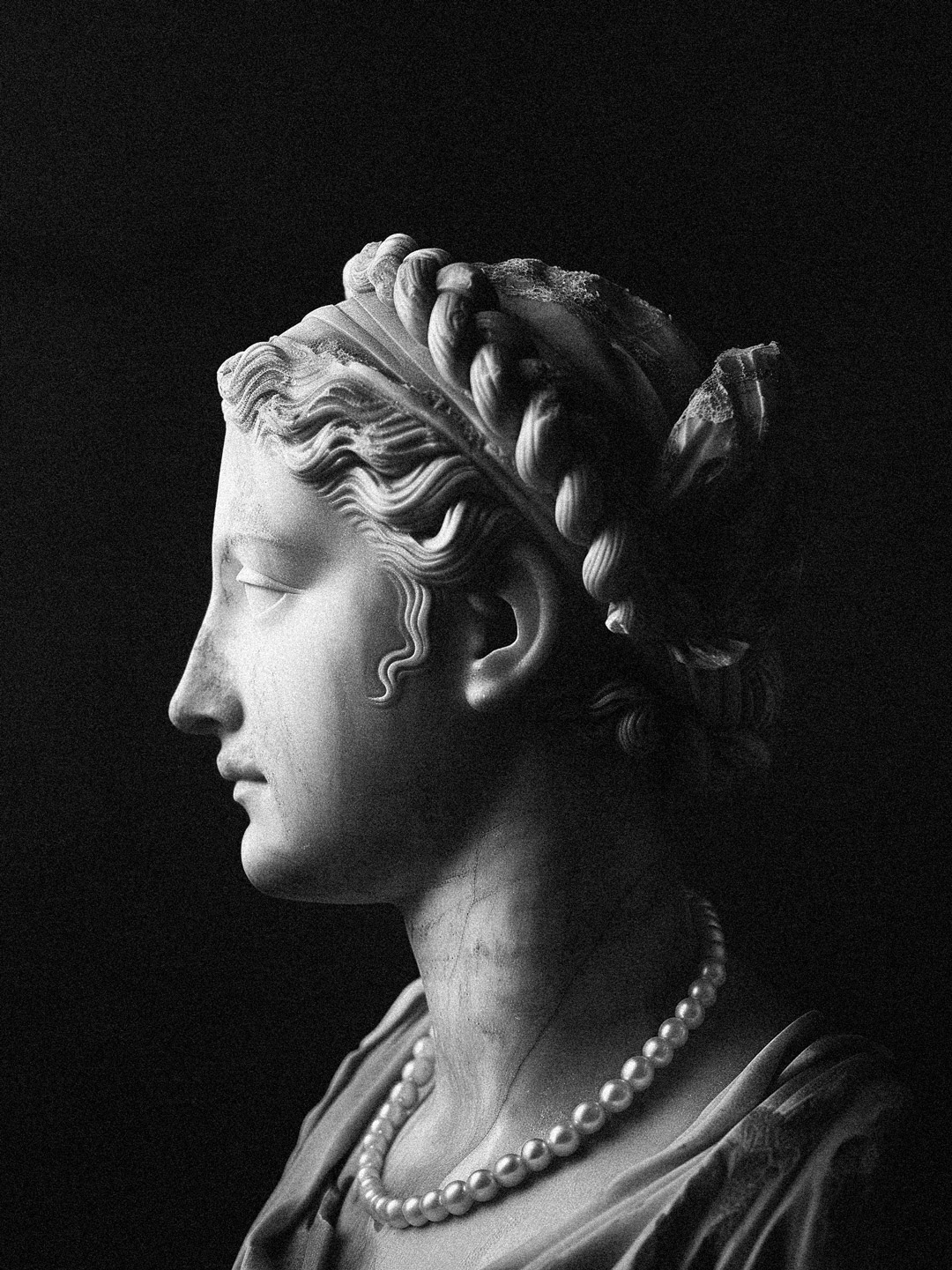
Sappho, spelled (in the dialect spoken by the poet) Psappho, (born c. 610, Lesbos, Greece — died c. 570 BCE). A lyric poet greatly admired in all ages for the beauty of her writing style.

Her language contains elements from Aeolic vernacular and poetic tradition, with traces of epic vocabulary familiar to readers of Homer. She has the ability to judge critically her own ecstasies and grief, and her emotions lose nothing of their force by being recollected in tranquillity.

Marble statue of Sappho on side profile.

Designed with WordPress