Tag: Proto Indo-European

  • Linear A Lexicon 2018 vocabulary only, no definitions: PART 1: entries 1-439

    Linear A Lexicon 2018 vocabulary only, no definitions: PART 1: entries 1-439
    
    Linear A Lexicon 2018 entries 1-439
    
    This lexicon adopts the conventions followed by L.R. Palmer in his ground-breaking work on Linear B, The Interpretation of Mycenaean Greek Texts. Cambridge: Cambridge University Press, © 1963, 1998. ix, 488 pp. ISBN 0-19-813144-5 (1998). For Palmers glossary, which follows these conventions, see pp. 402-473.  We have adopted these conventions to make the vocabulary of Linear A accessible to any and all, from lay persons not yet familiar with Linear A and non-linguists (somewhat) familiar with Linear B and/or A all the way to professional linguists adept in Linear B, and possibly also in Linear A, in order that everyone, regardless of education or scholastic background may readily access our Linear A Lexicon and come to familiarize him- or herself with at least the rudiments of Linear A, or in the case of professional linguists, with the intricacies of the syllabary.    
    
    This Lexicon represents all of the vocabulary Alexandre Solça and I myself have compiled, plus around 100 additional exograms deciphered by Peter van Soebergen in his superb 4 volume set, Minoan Linear. Amsterdam, Brave New Books, © 2016. ISBN 9789402157574  
    Originally published 1987 
    
    1. adai
    2. adakisika 
    3. ade
    4. adara/adaro/adaru 
    5. adidakitipaku 
    6. adikite(te)...
    7. adoro 
    8. adi
    9. adina/adine
    10. adu 
    11. adu2sara
    12. adukumina 
    13. Adunitana
    14. adure/adureza
    15. aduza
    16. ajesa 
    17. aju
    18. aka 
    19. Akanu/Akanuzati 
    20. Akanuzati 
    21. akara/akaru HT 2
    22. akarakitanasijase 
    23. ake 
    24. akipiete(ne?)

    25. akiro

    26. akoane

    27. akumina
    28. ama
    29. amaja 
    30. amarane... (truncated)
    31. amawasi
    32. amidao/amidau
    33. amata
    34. amita 
    35. ana
    36. ananusijase
    37. anaqa
    38. anatijowaja
    39. anatu 
    40. anau
    41. anepiti
    42. apa3di (apaidi)... (truncated)
    43. apadupa... (truncated 
    44. apaija
    45. apaki
    46. aparane
    47. apaki
    48. apero
    49. api 
    50. apu2nadu
    51. ara 
    52. araju 
    53. arako 

    54. arakokuzu

    55. aranare/aranarai HT 1
    56. aratiatu 
    57. aratu/aratumi... (truncated)
    58. arauda
    59. aredai

    60. Arekinedisa(?)ma

    61. Arenesidi  
    62. arepirena
    63. aresana
    64. ari
    65. arinita 
    66. arija
    67. aripa
    68. ari/aru 
    69. arisu 
    70. arenita
    71. aro/aru
    72. arokaku 
    73. arote
    74. arote2
    75. arisu
    76. aru
    77. arura 
    78. arudara  
    79. aruma 
    80. aruqaro 
    81. asadaka 
    82. asamune 
    83. Asara2
    84. Asasarame 
    85. asasumai(no)
    86. Asasumaise
    87. ase/asi
    88. asu
    89. aseja/asuja 
    90. asesina 
    91. asidatoi  
    92. asijaka
    93. asikira 
    94. asisupoa
    95. asona 
    96. Asuja
    97. asumi
    98. asupuwa 
    99. atade 
    100. ataijodeka
    101. ataijowa(e)
    102. atanate 

    103. A-ta-no-dju-wa-ja

    104. atare 
    105. atika 
    106. atiru
    107. atu 
    108. aurete
    109. auta 
    110. awapi 
    111. azura
    
    112. daa 
    113. dadai/dadana
    114. Dadakitipaku
    115. dadumata
    116. dadumina/dadumine 
    117. dadute
    118. dai/daina
    119. daipita
    120. daka/daki/daku
    121. dakuna
    122. Dakusene(ti) 
    123. damate 
    124. dame/dami
    125. daminu
    126. danasi
    127. danekuti
    128. daqaqa
    129. daqera 
    130. dare 
    131. darida (daweda)
    132. daropa 
    133. darunete
    134. daserate
    135. dasi
    136. datapa 
    137. datara/datare
    138. data2 (datai)
    139. datu 
    140. Dawa 
    141. dea 
    142. deauwase 
    143. dedi 
    144. dejuku 
    145. deka -or- kade 
    146. Demirirema
    147. depa/depu
    148. deponiza
    149. dewa -or- wide
    150. dide/didi
    151. dideru 
    152. didikase/didikaze HT 1
    153. dii
    154. dija/dije
    155. dika/dikaki.../dikatare (right truncated) 
    156. Dikate 
    157. dikime
    158. dikise 
    159. dima/dimaru 
    160. dimedu
    161. dinaro
    162. dinasuka
    163. dinau 
    164. dipa3a (dipaia)
    165. dipaja 
    166. diqe -or- qedi
    167. diqise
    168. dirasa
    169. diradina/diredina
    170. direna (diwena)
    171. dirina
    172. diru 
    173. disa
    174. disipita 
    175. ditajaru
    176. ditamana 
    177. du/dua/duja
    178. dudama
    179. duja
    180. dumaina 
    181. dumedi
    182. dumitatira2 (dumitatirai)
    183. dunawi
    184. dupa3na (dupaina)
    185. dupitewa 
    186. Dupu3re (dupure)
    187. dura2
    188. durare 
    189. duratiqe
    190. dureza/durezase
    191. durui... (truncated)
    192. dusi/dusini
    193. dusima 
    194. dusu 
    195. duti 
    196. duwi 
    197. duzu/duzuwa
    
    198. edamisa
    199. edija
    200. edu
    201. eka  
    202. enasi
    203. eniwa
    204. epa3 (epai)
    205. ero 
    206. esija
    207. etanasu
    208. eta2qe (etaiqe)
    209. etori 
    210. ezusiqe
    
    211. ia
    212. Ida/Idaa/Idada/Idapa3
    213. Idamate/Idamete 
    214. idami
    215. idapa3isari 
    216. Idarea
    217. idorinita
    218. Idunesi 
    219. iduti 
    220. ija 
    221. ijadi 
    222. ijapa
    223. Ijapame 
    224. ijaredija
    225. ijate
    226. ika 
    227. Ikesedesute  
    228. Ikurina
    229. ikuta
    230. imas
    231. imisara
    232. ina
    233. inaimadu
    234. inaja
    235. Inajapaqa 
    236. inasi
    237. inawa
    238. ipasaja
    239. ipinama/ipinamina
    240. ipinamasirute
    241. ira2 (irai)
    242. iruja 
    243. isari 
    244. ise 
    245. itaja 
    246. itaki
    247. itijukui
    248. Itinisa 

    249. itisapuko

    250. Ititikuna
    251. itowaja
    252. Izurinita
    
    252. jaa
    254. jadi/jadu
    255. jadikitetedupu2re
    256. jadikitu
    257. jadireja
    258. jadurati
    259. jai  
    260. jainwaza 
    261. jaiterikisu 
    262. jaitose 
    263. jaja 
    264. jakisikinu 
    265. jako/jaku/jakuti 
    266. jamaa 
    267. jamauti 
    268. jami/jamidare 
    269. januti 
    270. japa/japadi 
    271. japaka/japaku 
    272. Japametu 
    273. Japanidami
    274. japarajase 
    275. jara2qe (jaraiqe)
    276. jara/jare/jaremi 
    277. jarepu2
    278. jarete
    279. jari/jarina/jarinu 
    280. jaripa3ku  
    281. jarisapa 
    282. jaru -or- ruja
    283. jarui 
    284. jasaja 
    285. jasumatu 
    286. jasapai
    287. Jasaraanane 
    288. jasasaramana/jasasarame 
    289. jasidara 
    290. jasea/jasepa 
    291. jasie  
    292. jasuma(tu) 
    293. jataiouja
    294.  jate/jateo 
    295. jatimane 
    296. jatituku+ jatituku 
    297. jatoja
    298. jawapa3... (truncated)
    299. jaupamaida
    300. jawi 
    301. jedi 
    302. jeka
    303. jemanata 
    304. jetana 
    305. jua 
    306. judu 
    307. juerupi 
    308. juka
    309. jukunapakunuu
    310. juma/jumaku 
    311. juraa 
    312. jureku  
    313. juresa 
    314. jutiqa
    315. juu 
    
    316. kadi 
    317. kadumane
    318. kadusi
    319. kae/kai
    320. kaika 
    321. kairo 
    322. kaji/kaju
    323. kaki/kaku
    324. kakupa
    325. kakunete/kakusunetu
    326. kami  
    327. kana/kanatiti/kanau 
    328. kanaka 
    329. Kanijami 
    330. kanita 
    331. kanuti 
    332. kapa/kapaqe/kapate/kapi 
    333. kapasara2 (kapasarai)
    334. kaporu 
    335.  kapu3si 
    336.  kaqa/kaqe 
    337.  kara/karu  
    338.  karero
    339.  karona
    340.  karopa2 (karopai) 
    341.  karu 
    342.  karunau 
    343.  kasaru 
    344.  kasi
    345.  Kasidizuitanai 
    346. Kasikidaa
    347. kasitero 
    348. katanite
    349. kataro 
    350. kati 
    351. kaudeta 
    352. kaudoni
    353. kauzuni 
    354. keda 
    355. keire
    356. Kekiru
    357.  kera/kero
    358. keta/kete/ketu 
    359. Ketesunata 
    360. kezadidi
    361. kida/kidi 
    362. kidapa 
    363. kidaro 
    364. kidata/kidate
    365. kidini 
    366. kidiora
    367. kii/kiipa
    368. kija 
    369. kika 
    370. kikadi  
    371. kikina 
    372. kikiraja
    373. kimara2 (kimarai)
    374. kimu 
    375. kina  
    376. kinima
    377. kinite
    378. kipaa (see also unaa below)
    379. kipira2 (kipirai)/kipirija
    380. kiqa 
    381. kira 
    382. kireta2
    383. kiretana HT 2
    384. kiretaiwinu + kiretana winu
    385. kireza 
    386. kiro/kirisi/kiru HT 1
    387. kirusata -or- rusataki -or- satakiru
    388. kiso 
    389. kisusetu
    390. kitai/kitei  
    391. kitanite 
    392. kitanasija/kitanasijase
    393. kiti 
    394. kitina 
    395. kitiqa
    396. kito 
    397. koiru 
    398. koja 
    399. komu 
    400. kopu
    401. koru 
    402. Kosaiti 
    403. kuda 
    404. kudona
    405. kuduri (kuduwe?)
    406. kujude 
    407. kuka 
    408. kukudara 
    409. kumaju 
    410. kumapu
    411. kuminaqe 
    412. kunisu 
    413. kupa/kupi
    414. kupa3natu
    415. Kupa3nu HT 1 HT 3
    416. kupa3pa3 
    417. kupa3rija
    418. kupaja 
    419. kupari 
    420. Kupatikidadia
    421. kupazu 
    422. kupi
    423. kuqani
    424. kura
    425. kuramu 
    426. kurasaqa 

    427. kuratujo

    428. kureda 
    429. kureju
    430. kuro/kurotu 
    431. kuto/kutu
    432. kuruku
    433. kuruma 
    434. Kutiti 
    435. kutu 
    436. kutukore
    437. kuwa -or- waku 
    438. kuzu 
    439. kuzuni 
    
    
  • Proto-Greek Decipherment of Minoan Linear A silver pin from Mavro Spelio (Middle Minoan III = MM III) in the Heraklion Museum, Greece

    Proto-Greek Decipherment of Minoan Linear A silver pin from Mavro Spelio (Middle Minoan III = MM III) in the Heraklion Museum, Greece:
    
    epingle-argent-kn-zf-31 620
    
    This decipherment of Minoan Linear A silver pin from Mavro Spelio (Middle Minoan III = MM III) in the Heraklion Museum, Greece relies rather heavily on the debatable notion that Minoan Linear A is by and large proto-Greek, a theory espoused by Urii Mosenkis, one of the world’s most highly qualified linguists specializing in diachronic historical linguistics, including, but not limited to Minoan Linear A. Accordingly, I have deliberately interpreted ample chunks of the Minoan Linear a vocabulary on this silver pin as being proto-Greek, even though such a decipherment is surely contentious, at least in (large) part.
    
    While the first line of my decipherment makes sense by and large, the second is more dubious. It is apparent that the Minoan Linear A word dadu on the first line is almost certainly not proto-Greek, but the last two syllables of dadumine, ie. mine appear to be the dative singular for the (archaic) Greek word for month, i.e. meinei (Latinized), such that the decipherment of this word at least would appear to read  in the month of dadu. There is nothing really all that strange or peculiar about this interpretation, since we know the names of the months neither in Minoan Linear A nor in Mycenaean Linear B. However, a definite note of caution must be sounded with respect to the decipherment of this word, as well as of all of the other so-called proto-Greek words on this silver pin, since none of them can be verified with sufficient circumstantial evidence or on the contrary. Hence, all translations of putative proto-Greek words in Minoan Linear A must be taken with a grain of salt.
    
    While the second line on this pin, if taken as proto-Greek, makes some sense, it is much less convincing than the first, especially in light of the trailing word at the end, tatheis (Greek Latinized, apparently for the aorist participle passive of the verb teino (Latinized) = to stretch/strain, which actually does not make a lot of sense in the context.
    
    Nevertheless, it would appear that at least some of the Minoan Linear A words which I have interpreted  as being proto-Greek or proto-Mycenaean may in fact be that. I leave it up to you to decide which one(s) are and which are not, if any in fact are. Additionally, even if a few or some of them are proto-Greek, they may fall within the pre-Greek substratum. The most dubious of the so-called proto-Greek words on this pin probably are qami -, tasaza & tatei, since none of these are likely to have fallen within the pre-Greek substratum. 
    
    But if the Minoan language itself is not proto-Greek, then what is it? I shall have ample occasion to address this apparently thorny question in upcoming posts and especially in my second article on the decipherment of Minoan Linear A, which I shall be submitting to Archaeology and Science by no later than April 17, 2017. 
    
    
  • Minoan Linear provides significant evidence of the presence of proto-Greek or even (proto) – Mycenaean in its vocabulary

    Minoan Linear provides significant evidence of the presence of proto-Greek or even (proto) – Mycenaean in its vocabulary:

    Minoan Linear provides significant evidence of the presence of proto-Greek or even (proto) – Mycenaean in its vocabulary, as attested by this Table (Table 2a & Table 2B), which I have had to divide into two parts because it is so long. So we have

    Table 2a Minoan words of apparent proto-Greek origin… or are they in the pre-Greek substratum? A-M:


    Minoan Linear A apparent proto-Greek Table 2 a 620

    and Table 2b: N-W:

    Table 2b minoan apparent proto-greek 620

    It is readily apparent from this Table in two parts that all of the words listed in it may be interpreted as proto-Greek or possibly even (proto-) Mycenaean. But the operative word is may, not certainly. This is because (a) Minoan Linear A, like Mycenaean Linear B, makes no distinction between Greek short and long vowels and (b) like Mycenaean Linear B, the Linear A syllabary is deficient in representing a number of Greek consonants, which otherwise might have been the initial consonants of the successive syllabic series, e.g. da de di do du, ka ke ki ko ku, ta te ti to tu etc. The following Greek consonants, first illustrated in this table of the ancient Greek alphabet including the archaic digamma, which was in widespread use in Mycenaean Linear B, are tagged with an asterisk * :


    ancient Greek alphabet with digamma

    and here Latinized for accessibility to our visitors who cannot read Greek, i.e. b, g, eita (long i) , ksi, fi (pi), chi (as in Scottish loch), psi and omega. Because of these lacuna and the notable ambiguities which arise from it, it is not possible to verify that the so-called proto-Greek or (proto-) Mycenaean words listed in Tables 2a & 2b are in fact that. However, chances are good that they are proto-Greek. Additionally, it is not possible to verify whether or not a few, some or even all of the words in Tables 2a and 2b, which appear to be proto-Greek actually fall within the pre-Greek substratum. If the latter scenario is true, then it is more likely than not that a few, some or even all of these words are in fact Minoan. There is no way to verify this for certain. Nevertheless, numerous international researchers into Minoan Linear A, most notably, Urii Mosenkis, one of the world’s most highly qualified linguists specializing in diachronic historical linguistics, including, but not limited to Minoan Linear A, who stands in the top 0.1 % of 40 million users on academia.edu:


    Urii Mosenkis academia.edu

    have provided significant convincing circumstantial evidence that there are even hundreds of proto-Greek words in Minoan Linear A, which begs the question, is Minoan Linear A proto-Greek? But the answer to the question is not nearly so obvious as one might think, as I shall be demonstrating in my second article, Current prospects for the decipherment of Minoan Linear A”, which I will be submitting to the prestigious international annual journal, Archaeology and Science (Belgrade) by no later than April 17 2017, the deadline for submissions.

    There is no positive, indisputable proof that there are any number of proto-Greek or proto-Greek words in Minoan Linear A, any more than there is any positive proof whatsoever that, as Gretchen Leonhardt would have us believe, that there are any number of proto-Altaic or proto-Japanese words, if any at all, in the Minoan language. As for her hypothesis, for which there not even any substantive circumstantial evidence whatsoever, it is my firm belief and contention that she is, to use the common expression, wasting her time and energy barking up the wrong tree.

  • 6 Minoan Linear A words from KE to KO which might be proto-Greek or proto-Mycenaean

    6 Minoan Linear A words from KE to KO which might be proto-Greek or proto-Mycenaean:
    
    Here is the table of Minoan Linear A words from KE to KO in Prof. John G. Younger’s Reverse Linear A Lexicon.
    
    miinoan-linera-a-words-ki-ko-of-possible-proto-greek-origin
    
    As is the usual case, there are inherent problems with the “Greekness” of almost all of the Minoan Linear A words I have tagged as possibly being proto-Greek or proto-Mycenaean. This should come as no surprise in view of the fact that I made myself crystal clear on this account in the previous post. The most convincing Minoan Linear A word by far of apparent proto-Greek origin is keite, which is highly likely to be the equivalent of archaic Greek keithen = “thence/from there”.  The least credible is [6] koiru, which is far enough off in its orthography from ancient Greek, kairos = “due measure” to cast sufficient doubt on it.
    
    But in almost all cases, appearances can be, and often are, deceiving. I have said this already, and I repeat it for the sake of emphasis. We cannot be too overcautious.
    
    This brings the total number of so-called proto-Greek or proto-Mycenaean words I have managed to isolate in Minoan Linear A to 22.
    
  • Mycenaean Linear B Progressive Grammar: Derived (D) Verbs/Infinitives in O = 254 + 36/Total = 290

    Mycenaean Linear B Progressive Grammar: Derived (D) Verbs/Infinitives in O = 254 + 36/Total = 290
    
    In this post we find derived (D) infinitives in O. Here is the table of derived (D) thematic and athematic infinitives starting with the Greek letter O in Mycenaean Greek:
    
    mycenaean-derived-infinitives-in-o-620
    
    Be absolutely sure to read the extensive NOTES I have composed for the vowel O, as  there a a number of issues surrounding this vowel (O).
    
    We are also introducing the middle voice, which never appears on any extant Linear B tablet. This voice exists only in Greek (ancient and modern), a centum (Occidental) and Sanskrit, a satim (Oriental) language. Greek and Sanskrit are essentially the Western and Eastern versions of the same proto-Indo-European language from which they both derive. Hence, the middle voice exists in both these languages, but in scarcely any other language in the world, ancient or modern.
    
    But what is the middle voice? The middle voice is essentially self-referential, meaning that the person(s) any middle voice verb represents is or are acting of his or their own accord or in her or their own interest or that they are actively involved in the action the verb signifies. The middle voice is also used in reflexive verbs, such as dunamai, oduromai, onomai etc. etc., whereas the present indicative is found in Greek verbs such as oarizein, odaien, hodeuein = Mycenaean oarize, odaie, odeue. It is not the same thing as the present indicative, which is much simpler. Ancient and modern Greek both contain thousands of middle voice verbs, probably as many as thematic verbs, of which the infinitive always ends in ein in Greek and e in Mycenaean. READ ALL of the NOTES in the chart of Mycenaean verbs in O. Otherwise, what I am explaining here will not make much sense.  The complete conjugation of middle voice verbs in Mycenaean Linear B appears in the chart above.     
    
    The 4 sentences following Greek verbs in O make it perfectly clear that we are dealing with natural Mycenaean Greek as it was actually spoken. Note that the natural plural in OI is to found in spoken Mycenaean, rather than the singular in O we find almost (but not always) exclusively on the extant Linear B tablets.
    
    It was highly likely anyway that official documents, poetry (if any) and religious texts were written in natural Mycenaean Greek on papyrus. However, the moist climate of Crete and the Greek mainland meant that papyrus, unlike in the arid climate of Egypt, was doomed to rot away. So we shall never really know whether or not there were documents in natural Mycenaean Greek. But my educated hunch is that there were.
    
    The total number of natural Mycenaean Greek derived (D) infinitives we have posted so far = 290.
    
    
  • Is it even possible to determine what the word for “fig(s)” is in Minoan Linear A? You may be surprised!

    Is it even possible to determine what the word for “fig(s)” is in Minoan Linear A? You may be surprised!
    
    Among several other tablets in both Minoan Linear A and Mycenaean Linear B, Linear A tablet HT 88 contains the supersyllabogram NI on the second line:
    
    ht-88-facsimile-620
    
    The question is, what is the actual word for “fig(s)” in Minoan Linear A? Apparently, no-one knows. The odd thing about this supersyllabogram NI is that it was taken over lock-stock-and-barrel by the Mycenaeans. We will never know why, but it is clear that they thought it convenient simply to hang onto it. It may very well be that that the Mycenaeans continued to use the Minoan word for “fig” alongside their early Greek suza. If that is the case, it is all the more relevant for us to attempt to reconstruct the Minoan word for “fig”. Whatever the circumstances, we are still left with the perplexing question, what is the word for “fig” in Minoan Linear A anyway?
    
    In spite of apparently insurmountable obstacles, it may not be so difficult to reconstruct as we might imagine. If we stop to consider even briefly what the word for “fig” is that I have methodically selected in 13 languages, ancient and modern, belonging to 6 different classes, we discover that all but one of them are either monosyllabic or disyllabic. In one instance only is it trisyllabic, pesnika, in Serbian. This does not come as any surprise to me as a linguist, though it may to the so-called  “common person” . Here are the words for “fig” in 16 languages belonging to 6 different languages classes: 
      
    KEY to language classes:
    
    AU = Austronesian/ IN = Indo-European/ LI = language isolate/ NC = Niger-Congo/ SE = Semitic/ UR = Uralic. A language isolate is one which does not belong to any international language class whatsoever, but which stands entirely on its own. 
    
    AU: Indonesian ara Malay rajah Maori piki
    IN: French figue German Feige Greek (Mycenaean) suza (Attic) suchon Italian fico Latin ficus Norwegian fiken Portuguese figo Serbian pesnika Spanish higo
    LI: Basque piku
    NC: Swahili mtimi (sub-class = Bantu)
    SE: Maltese tin (the only Semitic language in Latin script)
    UR: Finnish kuva
    
    Under the circumstances, I am given to wonder whether or not the Minoan Linear A word for “fig” is monosyllabic, disyllabic or possibly even trisyllabic. It is clear that it cannot be monosyllabic, because the supersyllabogram for “fig” in both Minoan Linear A and Mycenaean Linear B is NI. And supersyllabograms are always the first syllable only of di- tri- or multi-syllabic words in both of these languages. Given this scenario, is it possible or even feasible to reconstruct the Minoan Linear A for “fig”? Surprisingly enough, the answer is yes. Why so? It just so happens that most Minoan Linear A words which are diminutives are feminine with the ultimate being either pa3 or ra2. Under the circumstances, it only takes one small step to restore the two mostly likely candidates for the Minoan Linear A for “fig”. And these are:
    
    what-is-the-minoan-linear-a-word-for-figs
    
    It is of course possible to argue that the Minoan word for “fig” is trisyllabic, but this is highly unlikely, since the only trisyllabic word for “fig” in all 13 of the languages cited above is the Serbian, pesnika. Hence, I am reasonably convinced that the Minoan Linear A word for “fig(s)” is either nipa3 (nipai) or nira2 (nirai).
    
    Finally, as it is clear that since the word for “fig(s)” does not even remotely correspond to any of the 13 words in 6 language classes, ancient and modern, above, not even Basque, it may very well turn out that, like Basque, the Minoan language is also a language isolate. I should not be the least but surprised if it were.  
    
    This discussion will be part and parcel in my upcoming article in Vol. 12 (2016) of Archaeology and Science (Belgrade) ISSN 1452-7448, “Pylos tablet Py TA 641-1952 (Ventris), the Rosetta Stone to Minoan Linear A tablet HT 31 (Haghia Triada) vessels and pottery” and a Glossary of 110 words”, the third article in a row I shall have published in this prestigious international annual by the beginning of 2018 at the very latest.
    
    
  • Proto-Slavic interpretation of Minoan Linear A tablet HT 13 (Haghia Triada) — another decipherment gone awry

    Proto-Slavic interpretation of Minoan Linear A tablet HT 13 (Haghia Triada) — another decipherment gone awry (Click on Tablet below to READ the original):
    
    HT 13 our interpretation
    
    Pavel Serafimov, Anton Perdih, in their Translation of the Linear A Tablet HT 13 from Crete (above) have made a valiant attempt to cross-correlate their contextual reading of Minoan Linear A tablet HT 13 (Haghia Triada) with Proto-Slavic. At first glance, at least some points of their decipherment seem more or less “accurate”. But the global decipherment swiftly crumbles into a morass of self-contradictions, severe ambiguities and mismatched cross-purposes. Like so many other philologists struggling to decipher Minoan Linear A, Serafimov and Perdih make the practically universal assumption, which I for one categorically reject as superfluous and spurious (at least for the time being), that if we are to succeed in deciphering Minoan Linear A at all, we must be in contact with an actual “known” proto-language upon which, as so many philologists insist, Linear A must be based, believing as they do that there is simply no way to escape this paradoxical box of it-must-be-this-proto-language-or-nothing-at-all approach. The fundamental universal problem inherent to this approach is that each and every one of these would-be decipherers has boxed himself into a proto-language which he assumes, in utter faith and sometimes rash confidence, must be the proto-language upon Minoan Linear A must be based, come hell or high water. Yet it is obvious to any truly professional historical linguist or philologist that it is impossible for all of the so-called proto-languages touted as the base of Minoan Linear A to be the right base for it, given that no two of these so-called proto-languages are alike, even if they are in the same class of ancient languages, for instance, Proto-European.
    
    Minoan Slavic Glossary


    A
    
    B
    
    It just does not wash. Either only one of these philologists has got it right or none of them have it at all. I am of the firm conviction that none of them have it. Let us take a closer look at just a few of these unavailing attempts at deciphering Minoan Linear A:
       
    First, we have J. MacGillivary’s review of various attempts to decipher Minoan Linear A, a very worthwhile read:
    
    J MacGillivray
    
    Then, on Jan Best’s “Decipherment” of Minoan Linear A, by Gary A. Rendsburg
    
    
    Jan Best
    
    Next, Breaking the Code: a first translation of the lost language of Linear A, by Sam Connolly
    
    Sam Connolly Beaking the Code Linear A
    
    Linear A Decipherment: Translation of Minoan Inscriptions in Linear A, by Stuart L. Harris  
    
    Sam Harris Linear A decipherment
    
    Finally, there is the truly bizarre cross-correlation of Minoan Linear A with an ancient Niger-Congo dialect, by C.J.K. Campbell-Dunn
    
    
    Minoan-signs-an-african-decipherment
    
    What is worse is that all of the aforementioned books make the preposterous claim that they have in fact deciphered Minoan Linear A, a claim which no professional philologist or historical linguistic, including myself, would ever dare make. The only case I can rationally make is for a partial decipherment at best of Minoan Linear A, a venture which I have myself undertaken, with mixed results. While some of the 134 terms in my Minoan Linear A Glossary are more than likely to be correct, others may be (though with a lesser degree of accuracy), while yet others are open to serious doubt.   
      
    EXCEPTION!
    
    which leaves me with the sole exception of David W. Packard’s Minoan Linear A, which relies solely on computational linguistics to analyze Minoan Linear A, and which is a study I for one shall order personally online (if at all possible, since it was published way back in 1974) and which I shall be keeping a very close eye on with reference to my own cross-correlative retrogressive extrapolations of Minoan Linear A tablets from their latter-day Mycenaean Linear B counterparts, where these exist:
    
    David Packard Minoan Signs
    
    computational
    
    And I quote:
    
    The very first work done on this was done by David W. Packard, the son of Hewlett-Packard (company) co-founder David Packard. He published a book on his work back in 1974 called Minoan Linear A and I highly recommend it. I tried reading it when I first got interested in Linear A and it was way over my head, so I took a few years to familiarize myself with the inscriptions, symbols and patterns and then went back to it. Much better! Ilse Schoep also relied heavily on his data in her dissertation on the Haghia Triada tablets and was able to provide some updates to the data which had occurred since Packard's time, though her dissertation was an overview of the Haghia Triada administration rather than a computational approach.
    
    by Kim Raymoure
     
    I have cited just a few of the many fruitless attempts at deciphering Minoan Linear A, but at least this cross-section gives us all a clear overview of this highly specialized field of research.
    
    
  • NEW link added: ANCIENTSCRIPTS.COM at the bottom of the page

    NEW link added: ANCIENTSCRIPTS.COM at the bottom of the page:
    
    You can click on it here:
    
    Ancient Scripts
    
    
    but once this post is passed, you will have to scroll down to the bottom of the page to:
    
    Friends & Links (Bottom left)
    
    and then click on the site’s name:
    
    ancient scripts link LBK&M
    
    
    This is an extremely comprehensive site on ancient languages, Occidental and Oriental.


  • Linear A KURO = Linear B TOSA = “total” POST 1 of 3

    Linear A KURO = Linear B TOSA = “total” POST 1 of 3
    
    KURO = total HT 31 Haghia Triada
    
    The Minoan Linear A word kuro unquestionably means “total”, primarily because it is always followed by numerics, sometimes in large numbers. It is of course the equivalent (though not exact) of the Linear B tosa = “so many”, i.e. “total”. I say not exact, since the Mycenaean Linear for “total” is plural, and I strongly suspect that the Minoan Linear A counterpart is singular. I am also of the opinion that Mycenaean Linear B inherited syllabograms which always end in a vowel directly from Minoan Linear A, because I am firmly convinced that Minoan Linear A words always ended in a vowel, never a consonant. Since the Mycenaean Linear B syllabograms all end in a vowel, whereas Greek words almost never do, terminating instead in consonants, it stands to reason that the Linear B syllabary is a direct calque on the Linear A syllabary. The newly ensconced Linear B scribes at Knossos simply took over a big chunk of the Linear A syllabary, without even bothering to account for Greek ultimate consonants. This may look weird or positively perverted to us, but we must recall that the scribes, many of whom worked in the transition period from Minoan Linear A to Mycenaean Linear B, would not have wanted to “re-invent the wheel”. After all, both the Linear A and Linear B tablets were first and foremost inventories, so why rock the boat?  The older Minoan scribes had to learn Mycenaean as fast as possible. They must have found Mycenaean very strange to their ears, since almost all of the words ended in a consonant. Be it as it may, it appears the younger scribes were quite willing to adapt the Minoan Linear A syllabary willy-nilly, and have done with it.
    
    CONCLUSIONS: All of the Mycenaean Linear B syllabograms inherited from Minoan Linear A end in vowels, in spite of the fact that (even archaic Mycenaean) Greek words almost always end in consonants because, in short, Minoan Linear A words (probably almost) invariably ended in vowels. If this is the case, this amounts to an extremely important discovery over the nature of the Minoan language. As far as I know, no previous researchers in Minoan Linear A have ever taken this basic premise into account. But I stand my ground on this one.  Finally, since almost all Minoan Linear A words probably ended in an ultimate vowel, the word kuro is very likely to be either masculine or neuter, based on the (untested) assumption that gender in Minoan Linear A would have assigned O ultimate to masculine or neuter and A ultimate to feminine ultimate. However, fair warning! There are a great number of Minoan Linear A words which terminate in U ultimate, and these may be in the masculine, while those words ending in O may be in the neuter, or vice versa. I shall have to test this hypothesis over the next few years, as I attempt to gradually decipher at least some Minoan Linear A vocabulary. I shall also be addressing other key characteristics of Minoan Linear A orthography in future posts.
    
    On the Mycenaean Linear B tablet tosa pakana = “so many swords” i.e. “the total” number of swords, tosa is in the plural, the exact opposite of kuro in Minoan Linear A, at least if my hypothesis is right.
    
    Linear A tabletr An1938_706_o tossa pakana
    
    Another consideration I would like you all to take into account is this: I personally do not care one jot what class of language Minoan Linear A falls into, whether or not it be Indo-European, for reasons which will become crystal clear in near future posts. In a nutshell, it is precisely because almost all philologists and specialists in Minoan Linear A try to pigeon hole the language into a particular class of languages that they are getting nowhere with its decipherment. Why not instead just accept the language for what it is( whatever it is!), by gradually deciphering as many words as we conceivably can, even if these amount to no more than a couple of dozen or so and, in addition, by reconstructing in so far as possible the grammar of Minoan Linear A, which may in turn provide further clues to other “undecipherable” vocabulary. You never know.
    
    
  • Linear B tablet K 04.5 from the Knossos Armoury: the redoubtable challenges for translation

    Linear B tablet K 04.5 from the Knossos Armoury: the redoubtable challenges for translation
    
    04.5 iqiya piriniyo opoqo keryapi opiiyapi
    
     Linear B tablet K 04.5 from the Knossos Armoury: the redoubtable challenges for translation
    
    While some of the military tablets from the Knossos Armoury dealing with the construction and design of chariots pose a few problems in the translation of certain words which yield at least two or possibly even three different possible meanings, others are much more of a challenge to the translator. Some vocabulary in the more challenging tablets proves to be much more fractious. There are several reasons for this phenomenon when we are dealing with Mycenaean Greek vocabulary, let alone that of any truly archaic ancient language, such as Babylonian and Assyrian cuneiform and Egyptian hieroglyphics. These are:
    
    1 Some words in Mycenaean Greek may closely or somewhat resemble their later counterparts in Homeric Greek or Classical Greek, conveying the same or a similar meaning. Such is the case with – wanax – = “king” in Mycenaean Greek.
    2 Some of the words in Mycenaean Greek may closely or somewhat resemble their later counterparts in Homeric Greek, and yet not convey precisely the same meaning or might even mean something more remotely associated, such as – qasireu – , which does not mean the same thing as “basileus” = “king” in Homeric Greek. A – qasireu – in Mycenaean Greek is merely a local leader of a town, citadel, redoubt or similar small centre and nothing more.   A king in Mycenaean Greek is a – wanax – , for which there is an almost exact match in Homer’s Iliad.  
    3 Some words in Mycenaean Greek may look like variants of later Homeric or Classic Greek words, although they are spelled in a fashion alien to the latter, never appearing in them. 
    4 Some of the words in Mycenaean Greek may closely or somewhat resemble their later counterparts in Classical Ionic or Attic Greek, and yet convey an entirely different meaning.
    5 Some vocabulary in Mycenaean Greek may be archaic Greek which later fell entirely out of use even prior to Homeric Greek, in which case it may be next to impossible to confirm that such words are even archaic Greek at all.
    6 Some vocabulary in Mycenaean Greek may possibly be proto-Greek or even more ancient proto Indo-European, but we can never be certain of this at all.
    7 Some vocabulary in Mycenaean Greek may possibly or even likely be Minoan or of Minoan origin. Such is the case with the word – kidapa – on tablet KN 894 N v 01, the very first tablet I translated in this series of tablets on chariots. L.R. Palmer assumes this word refers to a kind of wood, and I agree. This assumption is based on the fact that two other kinds of wood are referenced on the same tablet, i.e. elm and willow. With this evidence in hand, I have gone even further than L. R. Palmer and have taken the calculated risk to identify this word as meaning “ash (wood)”, a wood which Homer uses for weapons.
    8 Just as is the case with Classical Greek, in which a few thousand words are not of Indo-European origin, Mycenaean Greek contains a fair proportion of such vocabulary. Words such as – sasama –  (sesame) & – serino –  (celery) come to mind.
    
    This is the scenario which confronts us in the translation of at least two of the words on this tablet, namely, – piriniyo – and – mano –, both of which are certainly open to more than one possible interpretation. The first word - piriniyo – meets the criteria outlined in 1 & 3 above. It probably means “an ivory worker”, but we cannot be sure of this. Since the latter – mano – may not have any relation to later Homeric or Classical Greek at all, it is a crap shoot to try and translate it. This word meets the criteria in 1,2 and 4 above. But I took the chance (as I always do), on the assumption, however fanciful, that – mano – may be related to the Classical Greek word – manos – , meaning “thin”, as defined in Liddell & Scott.
    
    And what applies to Mycenaean vocabulary on this and all other tablets dealing with chariots, whether or not they originate from Knossos, equally applies to all of the vocabulary on each and every tablet in the military sector of the Mycenaean economy. By extension, this principle must also apply to all of the vocabulary on Linear B tablets, regardless of provenance (Knossos, Pylos, Mycenae, Thebes etc.) and regardless of the sector of the Mycenaean economy with which they are concerned. What is good for the goose is good for the gander. In short, the 8 criteria outlined above must be applied on an equal footing, through the procedure of cross-comparative extrapolation, to all of the vocabulary of Mycenaean Greek.
    
    We shall return to this phenomenon in our article on chariot construction and design, which is to appear on my

     account under the auspices of Koryvantes, the Association of Historical Studies (Athens):
    
    Koryvantes Association of Historical Studies Athens Category Linear B & the Iliad
    sometime later this winter.
    
    
  • Did you know you speak Mycenaean Greek? You do! K-Z = kunaya to zeukesi

    Did you know you speak Mycenaean Greek? You do! K-Z = kunaya to zeukesi
    
    Mycenaean Greek in Modern English: korete to zeukesi: Click to ENLARGE
    
    korete to zeukesi
    
    [1] kunaya – Mycenaean Greek has no “g”, but ancient Greek does. Many English words begin with Greek words, as for instance gynecology + all others in this table marked with [1] 
    [2] The same goes with prefixes. Many English words begin with the Greek prefix “peda”.
    [3] The ancient Phoenicians were famous for their purple cloth, which they inherited from the splendid purple cloth, the finest in the entire then known world (the middle Mediterranean & the Aegean) the Minoans at Knossos had produced before them. Hence, Phoenician is a synonym for “purple”.
    [4]The Mycenaean syllabary can express words beginning with “te”, but for some reason, they spelled 4 the same was the Romans did, “qetoro”, and there is nothing wrong with that. Archaic Greek sometimes expressed the number 4 with “petro” and sometimes with “tetro”. This too is not at all unusual with early alphabetic Greek, in which the various East Greek dialects derived from Mycenaean Linear B & Arcado-Cypriot Linear C flipped between these two spellings. Orthography was uncertain in archaic Greek, in other words, it had not yet fossilized into the final spelling used in Attic Greek in Classical Athens = tettares.
    [5] The English word “quartet” is derived from the Latin “quattro”, which in turn was preceded historically by the Mycenaean “qetoro”, although the Latin spelling is unlikely to have derived from the latter. It is just that Mycenaean Greek and Latin happened to resort to the same basic spelling for 4. 
    [6] Since Mycenaean Greek had no “l”, words beginning with “lambda” in (archaic) Greek had to be spelled with “r” + a vowel in the syllabary. Hence, “rewo” = archaic Greek “lewon” = English “lion” & “rino” = ancient Greek “linon” = English “linen”
    [7] The ancient words “sasama” = “sesame” & Mycenaean “serino” = ancient Greek “selinon” = English “celery” are in fact not Greek words, but proto-Indo European. 
    [8] While “sitophobia” = “fear of eating” in English does not seem to correspond with “sitos” = “wheat” in ancient Greek, in fact it does, since wheat was one of the main staples of their diet, just as it was for the Egyptians, Romans and most other ancient civilizations. In other words, wheat was a staple food.
    [9] Although the Mycenaean infinitive “weide” = archaic Greek “weidein” = English “to see”, the aorist began with “weis”, hence “vision” in English.
    
    Richard


  • Did you know you speak Mycenaean Greek? You do! A-K = akero to kono

    Did you know you speak Mycenaean Greek? You do!
    
    Mycenaean Greek in Modern English: akero to kono: Click to ENLARGE
    
    akero to kono
    
    NOTES:
    
    [1] The Mycenaean word “anemon” is genitive plural (“of the winds”) for “anemo” = “wind”, and like so many other Mycenaean words, it serves as the first part of English words dealing with various aspects of wind (generation), such as “anemometer”. All other entries with the tag [1] are of this type.
    [2] The first syllabogram i.e. the first syllable of the Mycenaean word for “labyrinth” begins with “da”, since it is impossible for any Mycenaean word to begin with “la”, as they had no “l”. Normally, the “r” + vowel series of syllabograms replaces a Greek lambda, but in this case, the Mycenaeans opted for “da”  instead of “ra” (which would have been “rapuritoyo”). This is not unusual. 
    [3] “at the teacher’s” = French chez le professeur, with is an archaic version of either the dative or the instrumental singular. 
    [4] “duwo” is Mycenaean for ancient Greek “duo”. It must be expressed by the special syllabogram for “talent, scale or two”, which in fact does look like a scale.   
    [5] A great many modern English words begin with the ancient Greek preposition “epi”. I have provided two examples here. 
    [6] The original Mycenaean & Homeric meaning of the English word for “elephant” meant “ivory”, but the meaning gradually changed to the former by the time of Classical Athens. In the Attic dialect, the word meant “elephant”. Remember, Mycenaean Greek had no “l” series of syllabograms, using the “r” series instead. There is confusion in many languages over the liquids “l” & “r”, modern Japanese being a prime example of this phenomenon.
    [7] Many English words begin with the Mycenaean and ancient Greek prefix “eu”, which always means “well” (healthy) or “positive” or similar notions. Hence the English word you see here.
    [8] Mycenaean “kadamiya” is a pre-Greek, proto-Indoeuropean word. 
    [9] The Mycenaean word “kono” omits the initial “s” in the ancient Greek word “schoinos”. This is very common in Mycenaean Greek. Since the ancient Greek work means “rush” (plant), the modern English scientific word is also a plant, although a different one.
    
    Richard


  • An Introductory Glossary of General Linguistics Terminology: Part C: R-Z

    An Introductory Glossary of General Linguistics Terminology: Part C: R-Z: This glossary is ostensibly not comprehensive in any sense of the term, but it serves as a solid baseline introduction to linguistics terminology.
    
    introductory glossary of general linguistics terminology Part C R-Z 
    
    R
    
    recursive definition: a definition that refers to itself and thus defines an infinite set of things. = circular definition. Recursive definitions are all too frequently found in research, and they are a dangerous trap.
    
    rhotacism: 1. an exaggerated use of the sound of the letter R 2. inability to pronounce the letter R. + 3. a linguistic phenomenon in which a consonant changes into an R, as in Latin flos, where flos becomes florem in the accusative case.
    
    root: a morpheme from a lexical class, typically verbal, nominal or adjectival, from which a lexical word is built (by adding affixes). Examples: -song- in -songster- + -sing- in -singer- + -singing- See also, stem
    
    S
    
    segment: any discrete unit or phone (sound), produced by the vocal apparatus, or a representation of such a unit. 
    
    semanteme: an indivisible unit of meaning. See also: semantics, semiology 
    
    semantic role: the underlying relationship that a participant has with the main verb in a clause. Also known as: semantic case, thematic role, theta role (generative grammar), and deep case (case grammar). Semantic role is the actual role a participant plays in some real or imagined situation, apart from the linguistic encoding of those situations.
    
    Examples (active & passive):
    If, in some real or imagined situation, someone named John purposely hits someone named Bill, then John is the agent and Bill is the patient of the hitting event. Therefore, the semantic role of Bill is the same (patient=object) in both of the following sentences: John hit Bill. Bill was hit by John. In both of the above sentences, John has the semantic role of agent.
    
    semantics: 1. (linguistics) the science of the meaning of words. 2. the study of the relationship between words and their meanings. 3. the individual meanings of words, as opposed to the overall meaning of a passage. 4. the study of meaning in language; in generative grammar: how the meanings of words combine to form complex meanings of phrases and sentences. 
    
    semi-consonant: see semi-vowel (English only)
    
    semiology: the study of meaning.
    
    semiotics: the study of signs and symbols, especially as means of language or communication.
    
    semi-vowel: speech sound produced with a little more constriction of the airflow in the oral cavity than a vowel. Semi-vowels in English = l & r, but not in any other modern Occidental Indo-European language, in which l & r are pure consonants. In English only, semi-vowels or semi-consonants are the result of the great vowel shift in the Middle Ages, which softened the harder consonantal pronunciation of l & r typical of French, German, Greek, Italian, Spanish, Russian and many other Occidental languages into a much softer l & r.
    
    simulfix: a change or replacement of vowels or consonants (usually vowels) which changes the meaning of a word. Examples (English): -eat- becomes -ate - in past tense + -tooth- becomes -teeth- when plural.
     
    speech community: a group of people sharing characteristic patterns of vocabulary, grammar, and pronunciation. 
    
    stative verb: a verb that expresses a state of affairs or being rather than action. Stative verbs differ from verbs of action not just in meaning but in formal structure and usage. Some verbs can be both stative, expressing a state of affairs, and active. Stative English verbs include: be, concern, have. The verb -become- is both stative and active. 
    
    stem: a morphological constituent larger than the root and smaller than the word. Derivational affixes are inside of the stem, and inflectional affixes attach to the stem. Examples: root = run + stem = runner + word = runners & root = sing + stem = singer + word = singers
    
    stress: a syllable having relative force or prominence.
    
    substantive: (broadly) a word or word group functioning syntactically as a noun.
    
    suffix: an affix that is attached to the end of a root or stem. Example (English): the past tense suffix -ed- attaches to the end of the verb stem -walk- to form the past tense -walked- Likewise, -ingest- to -ingested- & -transport- to -transported-.
      
    syllabary: 1. table or list of syllabic letters or syllables 2. writing system where each character represents a complete syllable. Minoan Linear A, Mycenaean Linear B & Arcado-Cypriot are all syllabaries.
    
    syllable: 1.a unit of spoken language that is next bigger than a speech sound and consists of one or more vowel sounds alone or of a syllabic consonant alone or of either with one or more consonant sounds preceding or following; 2. one or more letters (as syl, la, and ble) in a word (as syllable) usually set off from the rest of the word by a centered dot or a hyphen and roughly corresponding to the syllables of spoken language and treated as helps to pronunciation or as guides to placing hyphens at the end of a line.
    
    synchronic: relating to the study of a language at only one point in its history. For instance, when a researcher limits his or her study to Mycenaean Linear B in the context of ancient Greek, the research is synchronic. Thus, synchronic linguistics is a key definition in the study of Minoan Linear A, Mycenaean Linear B, Arcado-Cypriot Linear C & Homeric Greek.
    
    syncretism: the fusion of different inflexional forms. 
    
    synecdoche: a figure of speech in which the one of the following (or its reverse) is expressed either as: (a) a part stands for a whole (b) an individual stands for a class OR (c) a material stands for a thing. Examples (English): -fifty head- referring to -50 head of cattle- & -cat- referring to -lion-.
    
    synonomy: the relationship between words (or expressions) of sameness of meaning in some or all contexts. Synonyms: words (or expressions) that have the same meaning in some or all contexts. Examples: car = automobile + house = residence
    
    syntagma: syntactic string of words that forms a part of some larger syntactic unit; a construction. 
    
    syntax: the study of the rules governing the way words and morphemes are combined to form phrases and sentences. 
    
    synthetic: pertaining to the joining of bound morphemes in a word. Compare analytic  
    
    synthetic language: a language with a high morpheme-per-word ratio, as opposed to a low morpheme-per-word ratio in what is described as an isolating language. Agglutinative languages tend to exhibit synthetic properties. Indo-European languages, Greek + languages of the Romance family (Latin, Italian, French, Romanian, Spanish etc.), of the Germanic family (English, German, Swedish etc.), of the Slavic family (Russian, Ukrainian, Polish, Czech, Slovak,Serbo-Croatian etc.) and of the Indoaryan family (Sanskrit, Hindi, Persian etc.) are all synthetic languages.
     
    T
    
    time deixis: time diexis refers to time relative to a temporal reference point. Typically, this point is the moment of utterance. Examples (English)= Temporal adverbs: now/then/yesterday/today/tomorrow = adverbial function.
    
    tmesis: (prosody) the insertion of one or more words between the components of a compound word. Example: How bright (+the) chit (+and) chat, inserted into chit-chat 
    
    trope: the figurative use of an expression. Tropes include euphemisms, hyperbole (exaggeration), irony, litotes (understatement), metaphor, metonymy, onomatopoeia and various other devices.  
    
    typology: the systematic classification of the types of something according to their common characteristics.
    
    U
    
    unbound root: a root which can occur by itself as a separate word. Another morpheme need not be affixed to it to make it a word. Examples: root (instead of – roots- -rooted- - rooting- etc.) & think (instead of -thinks- -thinking- -think-tank- etc.)
    
    univocal: 1. having only one possible meaning. -or-  2. containing only one vowel 
    
    Ursprache: proto-language, such as the proto-language from ancient Greek and Sanskrit presumably arose. Although we can never know the actual structure, vocabulary etc. of a proto-language, we can attempt to re-construct it retrogressively. 
    
    
    V
    
    vocable: a word or utterance, especially with reference to its form rather than its meaning
    
    vowel: speech sound produced without a significant constriction of the airflow in the oral cavity. 
    
    vowel modification: an addition or alteration to the basic way that a vowel is articulated. For instance, in most languages, including English, most vowels can be articulated as long or short, as in: -a- in -father- (short) in -ate- (long), -e- in -set- (short) -meet- (long) & -o- in -got- (short) -goat- (long)
    
    
  • PROTO-GREEK: Online Resources – including my response to a query whether ASTU (town) & KAIO = KAUO (to burn) are Proto-Greek Words

    PROTO-GREEK: Online Resources – including my response to a query whether ASTU (town) & KAIO = KAUO (to burn) are Proto-Greek Words:
    
    A research colleague of mine recently asked me whether  ASTU (town) & KAIO = KAUO (to burn) are Proto-Greek Words. Here are my answers.  
    
    A: ASTU
    
    In answer to your question, is ASTU Proto-Greek, it appears so. But always remember that it is also a Classical Attic word meaning “town/ city”, equivalent to the Latin “urbs” Liddell & Scott, pg. 110 (1986), as opposed to “polis” meaning “the fortress of the city” or even a “whole country”  Liddell & Scott, pp. 570-571 (1986).
    
    B: KAIO/KAUO
    
    See Greek Civ., Quiz 1:
    
    http://quizlet.com/26471816/greek-civ-quiz-1-flash-cards/
    
    RE KAIO it appears, YES, again, probably Etruscan & Proto-Greek:
    
    from: Etruscan Phrases
    
    http://quizlet.com/26471816/greek-civ-quiz-1-flash-cards/
    
    And anyway, its variant, KAUO, to burn, is all over the place in Mycenaean Linear B, so the answer is a definite YES.
    
    __________________________________________________________________________________________________________________________________________
    
    Proto-Greek title
    PROTO-INDO-EUROPEAN & PROTO-GREEK ONLINE RESOURCES:
    
    NOTE that Mycenaean Greek is NOT Proto-Greek, and should never be considered as such. It is the earliest pre-Ionic Greek Dialect in the class of Eastern Greek Dialects, which include Mycenaean, Arcado-Cypriot, Aeolic, Ionic and much later, Attic Greek. 
    
    Sites and Pages with further informationon Proto-Greek:
    
    1 Wikipedia: Pree-Greek Substrate:
    
    https://en.wikipedia.org/wiki/Pre-Greek_substrate#Possible_Pre-Greek_loanwords
    
    2 Proto Indo-European Vocabulary
    
    https://en.wikipedia.org/wiki/Indo-European_vocabulary
    
    3 Proto-Greek Vocabulary: Quizlet
    
    http://quizlet.com/14227179/proto-greek-vocabulary-flash-cards/
    
    4 Hellenic Ancient Dialects, on hte Blog: We the Ecoumenists
    
    https://spacezilotes.wordpress.com/2010/12/09/hellenic-ancient-dialects-proto-graieak-meros-a/
    
    5 Brill Indo-European Languages Online
    
    http://iedo.brillonline.nl/dictionaries/content/greek/index.html
    
    (need a password to search: I will contact the professor and try and get one, Peter)
    
    6 Proto-European & Sanskrit (important grammatical observation on reduplicating athematic MI verbs)
    
    https://linearalinearblinearc.ca/tag/proto-indo-european/
    
    7 ***** Do Inscriptions in Linear A Belong to Different Languages? *****
    
    http://www.anistor.gr/english/enback/v011.htm
    
    PRINT IT OUT!
    
    8 Proto-Germanic & Indo-European Studies: Pre-Greek Substrate 
    
    http://www.protogermanic.com/search/label/Pro
    
    
    9 EUPEDIA: Forums = Proto-Greek
    
    http://www.eupedia.com/forum/threads/27821-Proto-Greek
    
    10 Current Status on the Controvery on the Date of the Indo-European Dispersion
    
    https://linguistics.stackexchange.com/questions/7259/current-status-of-the-controversy-on-the-date-of-indo-european-dispersion
    
    
    Richard


  • CRITICAL POST: The Present and Imperfect Tenses of Reduplicating – MI – Verbs in Linear B

    CRITICAL POST: The Present and Imperfect Tenses of Reduplicating – MI – Verbs in Linear B [Click to ENLARGE):
    
    linear b mi verbs present and imperfect tense
    NOTE: If you are a researcher in Linear B, it is highly advisable that you read and thoroughly digest this post in its entirety, as it constitutes a major milestone in the exegesis of my Theory of Regressive Linear B Grammar & Vocabulary.  Failure to read this post may result in an inability to further confirm or reject, either in whole or in part, the premises upon which my entire theory rests.
     
    Athematic – MI –verbs are shared in large part by Greek and and Sanskrit, respectively the Occidental & Oriental agnates or close/near descendents of the same extremely ancient (proto-) Indo-European class.  All verbs of this athematic class invariably share the standard ending –  mi –  in the 1st. person sing. of the present tense.
    
    Ancient Greek and Indic (Sanskrit) are similar in many respects, which may strike some as surprising since they cross the hypothetical “satem/centum” line, which the Occidental sub-class (all ancient Greek dialects & Latin & its dialects) treats the Proto IE gutturals as hard (Gr.e9kato/n Lat. centum = 100,) as against Sanscrit, chatam, and Old Persian, satem. But there are so many structural affinities, from parallel verb forms down to musical pitches, that some special connections must have existed between and prior to these two groups, which appear to have almost certainly sprung from the same Proto IE ancestral language. On the other hand, while Sanskrit is normally considered solidly IE, less than 40% of Greek vocabulary and grammar appears to derive directly from Proto IE roots, giving rise to the hypothesis that other extra-structural factors are surely involved in the evolution of ancient Greek. This phenomenon, peculiar to Greek alone, may also have significant implications for the eventual decipherment of Linear A. But this is mere speculation on my part.  Still... you never know. At any rate, I intend eventually to follow this avenue of approach, my small contribution to the eventual decipherment of at least a tiny substrate (superstrate?) of Linear A sometime in 2016.
    
    Seminal Characteristics of Athematic MI Verbs:
    
    Athematic MI verbs are characterized, for the most part, by their own unique set of endings, although the 2nd. and 3rd. plurals are virtually the same as those of the Thematic so-called “regular” verbs in ancient Greek. It would appear, then, that “regular” verbs retained the athematic 2nd. and 3rd. plurals of their ancestors, the athematic Mi verbs, while casting all other athematic endings aside.
    
    Reduplication in the Present Tense:
    
    The most striking phenomenon of MI verbs is reduplication in the present tense, which is restricted to perfect formations of “regular” thematic verbs in ancient Greek. This state of affairs raises two critical questions in my mind: [1] are so-called “regular” verbs in ancient Greek derived from the more ancient athematic  MI verbs, or did they simply borrow the athematic endings of the athematic 2nd. and 3rd. plurals the ancestral MI verbs? Later this year, I shall demonstrate the apparent yet quite possibly significant link between the SI endings of the present indicative and san endings of the perfect indicative in both classes of verbs, thematic and athematic. Another truly striking similarity between the more archaic and early “regular” forms in Homeric Greek is the sharing of the SI ending in the dative plural. I am highly inclined to stress the statistically probable significance of these endings, in both their verbal and nominal forms, shared by their more ancestral and and early “regular” forms in both Mycenaean and Homeric Greek.
    
    This phenomenon will re-appear frequently in both the attested [A] and derivative [D] forms of the 3rd. person plural of all verbs, thematic or athematic regardless and in the SI ending of the dative plural, not only in Homeric, but also in Mycenaean Linear B, which attests to their extreme antiquity in ancient Greek. The fact that these forms were already fully developed in Mycenaean Greek strongly points to the likelihood that they arose from the earliest ancestral (proto-) Greek of Mycenaean and Homeric Greek alike (above all in the Catalogue of Ships in Book II of the Iliad). All of these grammatical constructs are already firmly rooted in Mycenaean and Homeric Greek, giving rise to my hypothesis that it is not only possible, but highly feasible to regressively reconstruct huge chunks of Mycenaean Greek grammar and vocabulary from their (quasi-direct) descendent, the Homeric Greek of (the Catalogue of Ships) of the second Book of the Iliad.
    
    All of this raises another hypothetical question in my mind: did there exist ancestral forms of thematic verbs in ancient Greek which shared all or most of their endings, in all tenses, with their (apparently) more ancient MI counterparts, giving rise to the hypothesis that both athematic and thematic verbs were derived from even more ancient verbal constructs, in which all remotely ancient (proto-) Greek verbs were in fact athematic? That this is possible, and even probable, is reinforced by the uncontested fact that in Sanskrit both MI and O verbs alike share reduplication, meaning there is no marked distinction between “thematic” and “athematic” verbs in Sanskrit, in other words, they are of one and the same class. This phenomenon then reappears in a restricted number of Latin perfects, like tutudi from tundo "beat", old tetuli from thw stem tul- which supplements the forms of Latin. fero (Gr.fe/rw ). Since Latin developed in parallel with ancient Greek, but independently from the latter, this then raises the question yet again, how on earth can it be that such reduplication occurs in Latin but not in Greek, unless there is a possibility (however remote) that reduplication occurred in both thematic and athematic verbs of their proto-Greek and proto-Latin ancestors?
    
    If indeed that is the case, then it would appear that proto-Greek and proto-Latin shared this seminal characteristic with not only Sanskrit, but proto-Sanskrit, and hence, by inference, with the proto IE ancestor of all three of these languages. If this is that case, it necessarily follows that both the thematic O endings and athematic MI endings share one and the same singular ancestor, which must have been neither thematic nor athematic, but one and the very same root of both classes. So I have to wonder out loud whether thematic O and athematic MI verbs in Sanskrit, Mycenaean Greek and Homeric Greek alike all derive from a single class of verbs, embodying the characteristics of both of these classes of verbs. If that is even remotely a possibility, then we cannot afford to ignore it, since it allows us to regressivly reconstruct, to some degree at least, even some of the tenses of the Proto-IE ancestor of all of these languages. Wouldn't that be a revelation? Of course, all this is speculation on my part, but I love to indulge in speculative hypotheses, if there is even a remote chance that someday some of them may prove to be sound.
    
    Only time and future refinements in the science of linguistics may lend some credence to the hypotheses I am making here. If anything, computational linguistics and the great leaps in the application of artificial intelligence to linguistic theory (-ies) are likely to give rise to even more speculative hypotheses, hypotheses which may yet prove to rest on a much more solid foundation in applied linguistics than we can hope to approach at present. We shall see.
    
    In other words, the foundation of my theory of the Regressive Reconstruction of Mycenaean Linear B grammar and vocabulary rests firmly on the regressive extrapolation of all such forms from he Homeric Greek of (the Catalogue of Ships) of the second Book of the Iliad or from any of the following dialects, Cypriot Linear C (above all others), Aeolic, Arcadian and early Ionic Greek, all of which appear to have been (quasi-) direct descendents of Mycenaean Greek. Doric Greek does not properly enter into the equation.
    
    Conclusions:
    
    On thing, however, is certain: the athematic – mi – verbs, in all tenses & moods, and in the all-pervasive participial constructions in ancient Homeric Greek must have been already firmly entrenched in Mycenaean Greek, from the simple observation of the facts, namely, that at least some these forms of all tenses, moods and participles are already almost all attested [A] on Mycenaean Linear B tablets. And even where some forms of all tenses, moods and participles in verbs are not to be found on any Linear B tablets, enough of them are attested for us to be able to reasonably reconstruct them in their entirety or at least in part from the attested forms.
    
    And what applies to verbs, applies also to all other parts of speech in Mycenaean Linear B (nouns, adjectives, adverbs, prepositions and even formulaic phrases shared with Homeric Greek). These happily fortuitous antecedents in Linear B to their later counterparts in Homeric Greek recur quite frequently enough for me to be able to regressively reconstitute the Linear B forms from their subsequent Homeric forms. This, in a nutshell, is the entire premise of the Theory of Regressive Linear B as I intend to clearly demonstrate in the reconstruction of large chunks of ancestral Mycenaean Greek grammar and vocabulary, both attributed [A] and derivative [D] from its direct descent, Homeric Greek, and in particular the frequent occurrences of archaic Greek in Book II of the Iliad, in which in turn even more archaic forms frequently recur in the Catalogue of Ships (lines 484-789), the most reliable source for ancestral Mycenaean Greek grammar and vocabulary in the entire Iliad. Concomitantly, and once again happily, any of the following dialects, Cypriot Linear C (above all others), Aeolic, Arcadian and early Ionic Greek also well serve the purpose as direct and indirect descendents of Mycenaean Greek, from which it is feasible to regressively extrapolate grammatical and terminological constructs in Linear B.  Doric Greek, however, does not enter into the equation, since the Dorian invasion transpired after the fall of Mycenaean civilization.
    
    Richard 


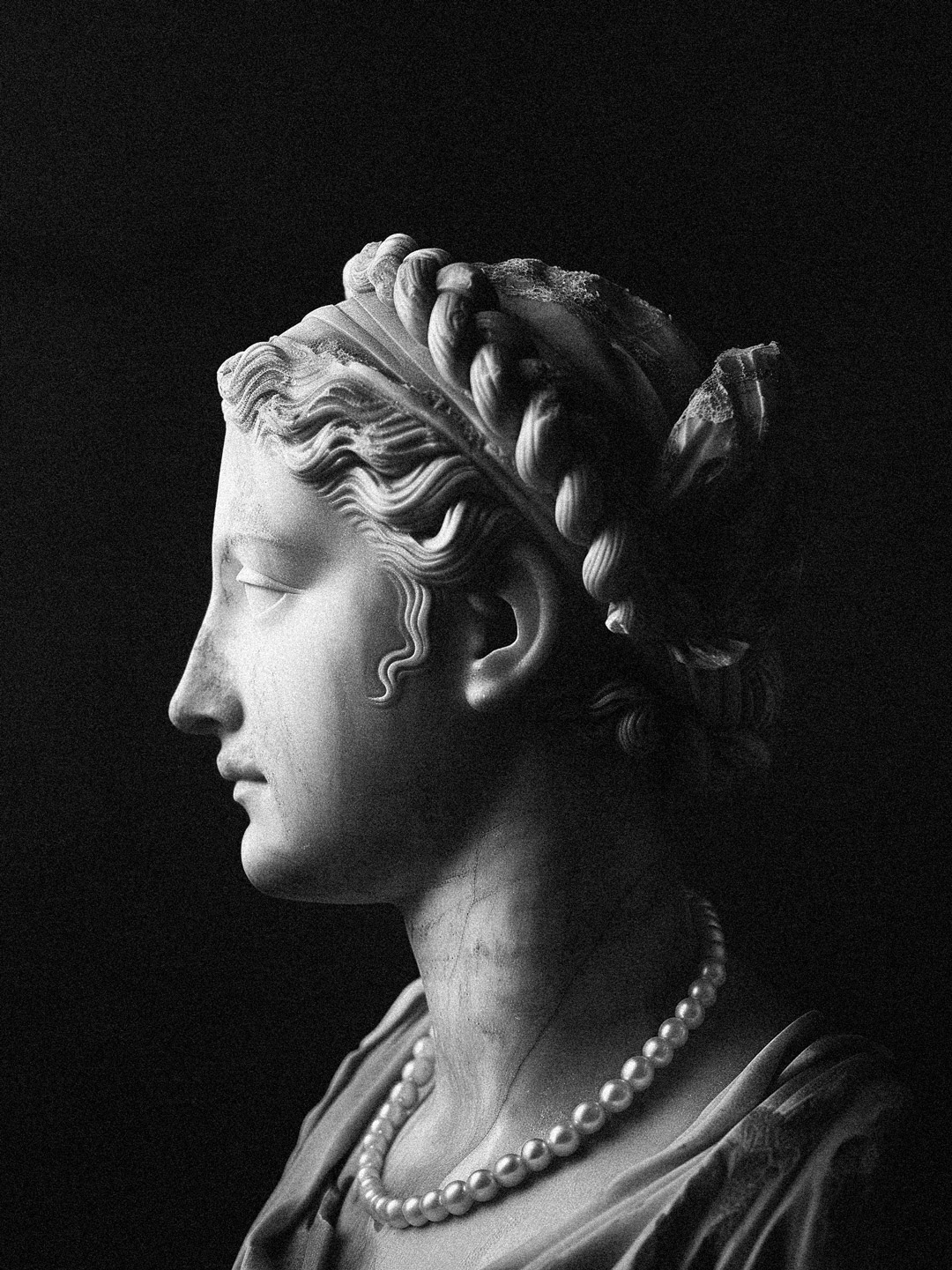
Sappho, spelled (in the dialect spoken by the poet) Psappho, (born c. 610, Lesbos, Greece — died c. 570 BCE). A lyric poet greatly admired in all ages for the beauty of her writing style.

Her language contains elements from Aeolic vernacular and poetic tradition, with traces of epic vocabulary familiar to readers of Homer. She has the ability to judge critically her own ecstasies and grief, and her emotions lose nothing of their force by being recollected in tranquillity.

Marble statue of Sappho on side profile.

Designed with WordPress