Tag: LinearB

  • A brief history of the Wisconsin Stone Tablet region

    This area of Wisconsin, prior to any European explorers; was known to have abundant minerals. This fact was noted by the explorer Champlain and his protégé Etienne Brule. Both explorers were versed in Native American language and listened to and conveyed the stories of the aboriginals about the mines having already been dug.  The Native Woodland Americans did not use these minerals as a common practice, in this region of Wisconsin.  Their first experience with the use of lead was when the explorers demonstrated the thunderous power of the gun. There were lead, copper and zinc mines in this area.

    Also observed by the explorers were well established roads along ridges and rivers.  When the local inhabitants were asked who built the roads and what were they for, they replied; the Spanish built them.  This conversation was with E. Brule.

    Were they referencing an unknown tribe as we here in the U.S. refer to Canadians or Latinos, which would be a very vague usage, rather than narrowing the locale of the citizen to Ottawa or Durango?  But my question would be, why would the locals allow another tribe to construct roads in their territory. The construction had to be quite lengthy and what mode of transportation would require the use of such roads. What beast of burden were being used?

    I find quite odd that five towns along the Wisconsin river have Roman or Latin names.I’m not saying those towns were begun by the Romans, it’s just odd.

    So, in my wild imagination; I suggest the Minoan culture inhabited this area of the Great Lakes, but I don’t know when.  I will persist in defining a timeline for the script on the tablet, based on the differences between evolutions of script of the Minoan, Cuneiforms, local natives and anything else I can find. Right now I’m suggesting the period the script was written prior to the 5th century BCE and after the 20th century BCE, based on symbol changes. Let me know your thoughts.

    The Minoan culture were extremely skilled in metallurgy and they could have had symbols of these noble metals within their language. Perhaps they were never found, until now.

    Absence of evidence is not evidence of absence.

    James R Heath


  • Spice from 11 boughs of a terebinth tree (Knossos Tablet KN 1530 R t 01)… rather romantic

    Spice from 11 boughs of a terebinth tree (Knossos Tablet KN 1530 R t 01)... rather romantic Click to ENLARGE:
    
    KN 1530 R t 01 illegible
    
    In my valiant, though not necessarily entirely successful, attempt to recover syllagograms and lost text from at least some of Knossos Tablet KN 1530 R t 01, a badly damaged Linear B Tablet, I have taken my cue from Andras Zeke and his splendid blog, the Minoan Language Blog, which unfortunately has been mysteriously idle ever since September 2012. For some reason unknown to me, Andras Zeke has simply disappeared from the scene, and his disappearance is a terrible loss to the research community devoted to the eventual decipherment of Linear A, in which he was making considerable headway. The Minoan Language Blog is also an excellent source for the advancement of the further decipherment of those areas of Linear B, which have to date defied decipherment. I strongly recommend this blog to anyone involved in any capacity in research into Linear A or Linear B.
    
    There are several instances of (some seriously) damaged Linear A tablets on the Minoan Language Blog, which Andras Zeke has valiantly attempted to restore, usually with a remarkable degree of success, as illustrated for instance by this consummate restoration of a Linear A tablet which he effected (Click to jump to the entry for this tablet in the Minoan Language Blog:
    
    Minoan-accounting-tablet-fractions
    
    I cannot claim to have achieved anywhere near the proficiency Andras Zeke has mastered in recovering lost portions of damaged tablets, but I have made my best efforts to fill in at least some of the gaps on Knossos Tablet KN 1530 R t 01, much of which has been effaced beyond restoration.
    
    Perhaps the single factor which lends some credence to my so-called “decipherment” is that it hangs together, that it is somehow coherent, all the retrieved parts matching up like the pieces in a jigsaw puzzle. This does not mean that my partial translation is in any sense of the word the “right” one, whatever that is supposed to mean, any more than it is any conceivable variant on the “wrong” ones. It is just the decipherment I was able to pull from the ashes, whatever its supposed merits. I invite any and all researchers/accomplished translators of Linear B to come up with their own versions of “decipherments” of this intriguing tablet, however much they may be at variance with my own.
    
    Richard
    
    
  • Examples of 2 Site-specific Linear B Tablets from Knossos Dealing with Sheep, Rams & Ewes

    Examples of 2 Site-specific Linear B Tablets from Knossos Dealing with Sheep, Rams & Ewes
    
    Here are 2 of the 503 Linear B tablets dealing specifically sheep, rams and uses, from the huge cross-section of 2,500 Linear B tablets at Knossos which I closely examined for content. They serve as fine illustrations of the 138 site-specific tablets and fragments which I further isolated from the 503 overall dealing with sheep in general.
    
    First, we have Linear B tablet KN 934 G y 201, which references sheep, rams and ewes at EKOSO, Exonos, the sheep raising locale accounting for 15 or 10.9 % of the 138 Linear B tablets I examined dealing with sheep, rams and ewes. This sets the incidence for the number of times a specific locale for sheep husbandry at second place for Exonos, behind Kytaistos, Phaistos Lykinthos, each of which accounts for 20 tablets and fragments, at 14.49 %. So we can rest assured that, apart from Knossos, which was, as we pointed out in the previous post, the default locale, Exonos still plays an important rôle in sheep raising.
    
    Linear B tablet KN 934 G y 201 (Click to ENLARGE):
    
    Knossos Tablet KN 934 G y 201 sheep  Exonos
    
    Next comes Linear B tablet KN 1342 E k 321, which is even more significant, as it centres on Phaistos, one of the three first place contenders for site-specific statistics on sheep husbandry, weighing in as it does 20 times or 14.49 % of the 138 tablets on sheep which are site-specific, out of a total of 503 tablets dealing with sheep in general. This leaves 356 tablets which are apparently not site-specific, although it is positively risky to assume that they are not locale-specific to Knossos itself, a critical issue I discussed at great length in the previous post, and to which I draw your undivided attention, if you are interested in or concerned with the contents of Linear B tablets at all, regardless of provenance.
    
    Linear B tablet KN 1342 E k 321 (Click to ENLARGE):
    
    Knossos Tablet 1342 E k 321 sheep at RATOYO and PAITO
    
    Note that this tablet also references RATOYO (archaic genitive masc. singular), i.e. Lato, as a sheep raising locale, which accounts for 12 or 8.7 % of 138 site-specific tablets dealing with sheep, rams and ewes. This is precisely why I have used this particular tablet to illustrate sheep raising locales, because it, like several other tablets in this sub-set, mentions 2 sites, not just 1 locale, further attesting to the prime significance of sheep husbandry at the very core of the Minoan economy.
    
    Richard
    
    
  • CRITICAL POST: The Minoans counted sheep while they were wide awake… big time!

    CRITICAL POST: The Minoans counted sheep while they were wide awake... big time! 
    
    An In-depth Statistical Analysis and Wide Cross-Section of over 2,500 tablets and fragments out of the approximately 4,000 at Knossos dealing specifically with sheep, rams and ewes.
    
    For the past 4 months, I have been meticulously examining a huge cross-section of 2,503 Linear B tablets & fragments from the approximately 4,000 found at Knossos, representing no less than 62.57 % of that total, a sampling for which the statistical accuracy must be so high as not to exceed 0.5 % +/- margin of error (although I haven not verified this myself). Even with the total of 4,000 tablets and fragments being only a reasonably fair estimate of the total, the statistical accuracy would still be very high, since we are dealing with a total very close to 4,000. Here is the detailed table I compiled with its statistical analysis of the total number of tablets and fragments at Knossos specifically dealing with sheep, rams and ewes (503), as opposed to the total number I examined = 2,503. Click to ENLARGE:
    
    
    Linear B Tablets Knossos sheep rams ewes
    
    However, not only did I isolate all 503 of the tablets and fragments dealing with sheep, rams and ewes from my cross-section of 2,500 tablets, I also further sub-divided all 503 of these by locales or sites at which the Minoans raised sheep, these being, from most to least often mentioned on the tablets, Kytaistos, Phaistos & Lykinthos (20 times each), for a total of 60; Exonos (15 times); Davos (14); Lato & Syrimos (12), for a total of 24; Lasynthos (9); Sygrita (8); Tylissos or Tylisos (5) and Raia (2), Knossos never being even mentioned at all! What! I here you say... and me too. Come on, this begs the question. 
    
    Hypothesis A: Why not Knossos?... or more to the point, probably Knossos
    
    Why? Why not Knossos? It is patently ridiculous to assume that no sheep were raised at Knossos, since Knossos was a city of a population reputedly exceeding 50,000, an enormous city for the ancient world (aside from Rome, of course). None of the other locales listed in our table come remotely close to Knossos in size or economic power and significance, not even Phaistos. The Minoans had to have raised sheep at Knossos, of that there can be no doubt. But how many of the overall 503 tablets mentioning sheep, rams and ewes can be said to deal with Knossos?  Although we could ideally postulate a total of 365 times, the remainder of the 503 tablets, this is a highly problematic question, since there is simply no way of knowing whether or not the scribes were referring to Knossos and Knossos alone whenever they omitted to name the locale for sheep husbandry. It seems quite conceivable, even reasonable, to assume that the majority of the remaining 365 tablets and fragments, or at least most of them, do deal specifically with Knossos, but there is really no real way of our ever knowing.
    
    However, there is one tell-tale statistic which may serve as a real clue to the incidence of sheep raising at Knossos, and that is the figure for the number of times Tylissos is mentioned, i.e. only 5 times, even though Tylissos was an important Minoan site. The point I am making here is simply this: Tylissos was right next door to Knossos, practically an outskirt of the city. So if Tylissos is mentioned less often than every other sheep raising locale, with the sole exception of Raya (3 times), then were were the sheep being raised near or at Knossos?  The answer seems transparent enough. At Knossos itself, or at least in the countryside surrounding Knossos, which would almost (but not quite) include Tylissos. So this is my hypothesis, namely, that in all probability most of the remaining 365 tablets and fragments do deal with Knossos, since as I have already said, it is patently impossible that Knossos was not the major sheep raising locale in the Minoan agri-economy.
    
    Hypothesis B: Why not Knossos?... or more to the point, probably Knossos
    
    There is another angle from which we may approach my assumption. Let’s say I am talking about my own garden (today, in the twenty-first century). Now since my own garden is right here in the city I live in, what is the point of saying “my garden in Ottawa” to other folks from Ottawa, since they already know that? The only time it would be necessary to refer to “my garden in Ottawa” would be when I was showing my garden at the cottage to my friends, and I wished to distinguish it from my other garden in Ottawa. Likewise, if I am referring to my mother’s garden, which happens to be in Toronto, while speaking to friends in Ottawa, I have to say “my mother’s garden in Toronto”, unless they all already know that. You see my point.
    
    By analogy, if scribes, all of whom lived in Knossos, were referring to sheep husbandry at Knossos, why would they bother mentioning the city as such, since they would have been sharing this information with their fellow scribes and literate administrators in Knossos itself. On the other hand, if they had to refer to sheep raising absolutely anywhere else, even at Tylissos, which was not quite at Knossos, they would have had to mention the site by name; otherwise, their fellow scribes and co-literates would have had no idea where the sheep were being raised, which defeats the whole point of inventorying or compiling such statistics in the first place. Remember that the Minoan scribes writing in Linear B (not Linear A) were space-saving freaks, to say the least, since the tablets were usually very small. So by not mentioning Knossos as a sheep raising locale, since they lived there after all, they saved precious space on their tablets... yet another reason why Knossos was in fact never mentioned. Anyway, people are lazy by nature, and would rather not do any work they can avoid. So either they would have mentioned Knossos all the time, however many times it would have been the default locale for sheep raising (because, in fact, Knossos was the default location for sheep husbandry) on those remaining 365 tablets, or they would not have mentioned it all. We know of course they did not. All of this is speculation, of course, but it is rational speculation, I dare say.
    
    Hypothesis C: Why not Knossos?... or more to the point, probably Knossos
    
    And, believe it or not, there is yet another way to approach this hypothesis, and this approach is in fact purely statistical. Whenever we are confronted with a tablet or fragment from any of the other sheep raising locales specifically inventoried in the table above, when we examine the tablet for the total number of sheep raised at any one of these locales, we discover (and this is very significant) that nowhere are more than a few hundred sheep, rams or ewes mentioned on these site-specific tablets and fragments. The reason for this is probably that there was not enough available land at these sites to raise more than a few hundred sheep at a time.
    
    On the other hand — and I must lay particular emphasis on this point — on several of the remaining 365 tablets or fragments, 1,000s or even 10s of 1,000s of sheep are tallied. Now where on earth except at Knossos would there be enough room to accommodate so many blasted sheep? I think I have made my point.
    
    I can see some of you object (some perhaps even loudly), how could any place, even Knossos, have enough room in the surrounding countryside to accommodate almost as many or even more sheep than the general population of the city, without stripping the top soil bare, causing irreparable environmental damage and making one stinky countryside? It is hard to counter such an objection, which is entirely rational on any count. Still, we do not know whether the Minoans practised land rotation. However, given that their civilization was so advanced and sophisticated, with their basic grasp and sound implementation of the principles of hydrology to city plumbing never again to be matched until the end of the 19th. century of our era (!), it begs the question whether or not they were familiar with, and indeed practised land rotation for sheep grazing. I for one would be willing to bet at least 50/50 that they did... a practice which would have effectively preserved available grazing land, and made Knossos a perfectly suitable place to raise sheep, and scads of them.
    
    But there is still more. Of the 2,503 tablets and fragments from Knossos I examined, those dealing specifically with sheep, rams and ewes account for fully 20.12 % of every last tablet, regardless of the area of interest in the Minoan society, economy, social structure, religious affairs etc. any and all of the remaining tablets deal with. This is a huge sub-set of all the tablets, and in fact, when you examine a cross-section of as many as 2,503 tablets of approximately 4,000, as I have done, you will discover, perhaps to your astonishment, perhaps not, that no other single area of interest or topic, if you like, in Minoan society comes anywhere even close to the number of times sheep, rams and ewes are specifically and almost always solely addressed on such tablets or fragments, i.e. 503 times. This speaks to the one area that literally grabs centre stage in the Minoan socio-economic and trade structure. It all boils down to one thing: the Minoan economy by-and-large revolved around sheep raising and husbandry, and the products which derived from it, such as wool, which also accounts for a fairly significant proportion of the remaining 3,500 tablets (though far from the numbers for sheep per se). Although there can be no denying that other areas of interest, such as raising pigs and other livestock, various crafts such as gem cutting, jewelry etc., religious issues, military matters, household affairs and so on, played a significant role in the Minoan economy and in their society, there can be no denying that sheep raising and husbandry was the keystone of their economy. There is simply no way of getting around this conclusion, given the fact that the cold, bare statistics practically shout this at us.  Of course, many of you will object, statistics aren’t everything, or even all that reliable as an indicator of anything, for that matter. And of course, you would be right... except for one big thorn in our side, namely, the fact that statistics for the number of fragments and tablets dealing specifically with sheep, rams and ewes is so huge (20.12 %) that it could very well make the objections of our doubting Thomases almost irrelevant. I have not yet formally compiled statistics for the incidence of tablets and fragments dealing with any other aspect of Minoan life whatsoever, but I can assure that, even on examining all of these tablets quite closely, no other area of interest whatsoever comes even remotely close to the overwhelming figure of 503 tablets or fragments specifically focusing on sheep, rams and ewes (20.12 %), accounting for fully 1/5 of all 2,503 tablets and fragments I examined.
    
    The next post will provide us with two examples of the 138/503 site-specific Linear B tablets dealing with sheep, rams and ewes.
      
    Richard


  • Linear B Basic Values & the 13 Supersyllabograms

    Linear B Basic Values & the 13 Supersyllabograms (Click to ENLARGE):
    
    Linear B syllabary basic values with supersyllabograms


    This table is a modified version of the Linear B Basic Values table, with which many of you are already familiar. I have flagged in green font all 13 of the supersyllabograms isolated so far. There may be more, and there probably are. Complementing the supersyllabograms are the meanings, some of them firm, some of them likely to be correct, and others putative (at best).
    
    You should keep this table on hand if you are at all interested in learning supersyllabograms.
    All of the supersyllabograms have been fully illustrated by tablets bearing them in previous posts, so if you are serious about actually mastering sypersyllabograms yourself, you probably should read all of these posts, infra.
    
    Richard
    
    
  • Prof. Thomas G. Palaima Isolates 5 Single Syllabograms as Cities & Settlement Names

    Prof. Thomas G. Palaima Isolates 5 Single Syllabograms as Cities & Settlement Names (Click to ENLARGE):
    
    linear-b-heidelberg-he-fl-1994thomas-g--palaima
    
    When Prof. Thomas G. Palaima translated Heidelburg Tablet HE FL 1994, he hit upon something truly revelatory, namely, that 5 syllabograms in a row, as illustrated in the facsimile of this tablet above, were single syllabograms, which were in actuality the first syllable of the word each represented, and that each of these words was to prove to be the name of a major Minoan/Mycenaean city or settlement. These places, Knossos, Zakros, Palaikastro (or possibly Phaistos), Pulos & Mycenae, all played a key role in Minoan/Mycenaean economy and society.
    
    The real question is, why did the scribe who inscribed this tablet, use abbreviations consisting of the first syllabogram, which is always the first syllable of a Linear B word to represent the entire word?  Was this a phenomenon limited to Heidelburg tablet HE FL 1994, or could it be found on other tablets, and if so, how many... just a few or many? As it turns out, I have discovered this phenomenon occurring on not just a few Linear B tablets, not even a fairly wide cross-section, but — hold your breath — on literally hundreds of tablets. So what is going on here? Why would the Linear B scribes resorted to using single syllabograms on hundreds of tablets over and over again, unless they had very good reason to do so? But that is exactly what they did, and with astounding frequency. It is critical to recognize here that no Linear B scribe alone, let alone so many scribes, would resort to using just one single syllabogram just for the fun of it. That single syllabogram must have meant something, in fact, must have meant a very great deal, and have been a big deal; otherwise, the scribes would not have used them so very often.
    
    The next obvious question is why did they resort to using single syllabograms so often?... & to represent what?  Prof. Palaima’s translation of Heidelburg Tablet HE FL 1994 makes it abundantly clear that what these syllabograms represent is entire words, in the case of this tablet, names of Minoan/Mycenaean cities and settlements. 
    
    But, as it turns out, when I went to investigate several other single syllabograms (8 in all), I discovered to my astonishment that they could and did represent much more than just the names of cities and settlements.  Of the 8 new syllabograms of this type or class, I was able to at least tentatively decipher 6 of them, and I found that none of these represented merely city or settlement names, but something quite different. I recognized a specific word, one word and one word only, in a specific context, in that context and that context alone, for each and every one of the syllabograms I was able to decipher, even if my decipherment was not necessarily “correct”, whatever that is supposed to mean. What was astounding was this: in the specific context which each of these syllabograms appeared in, the word they represented always fits the context like a glove. For instance, the syllabogram for O stands for the word “onaton” = lease field, the syllabogram for KI stands for “kitimena” = plot of land & the syllabogram PE for “periqoro” = enclosure or pen, i.e. a sheep pen, and I emphatically stress, all three of them in the specific context of sheep. In this context and this context alone all three of these translations fit like a glove. For this reason, although my decipherment or translation of each one of these syllabograms (O, KI & PE) may be viewed as tentative by some, I truly believe that they have gone beyond that point, and may in fact be entirely sound, having the very meaning which I have assigned them. 
    
    Now, since single syllabograms such as these are all, without exception, the first syllable by default of the Mycenaean Greek word in Linear B which of which they are the abbreviation, I feel obliged to assign them a name, calling them “supersyllabograms”.  As it now stands, my co-researcher and I have isolated 8 sypersyllabograms, of which we have managed to tentatively decipher 6, in addition to the 5 sypersyllabograms identified by Prof. Thomas G. Palaima, for a total of 13.
    
    Richard
    
    
  • The Supersyllabogram PA… a huge challenge but… (Click to ENLARGE):

    The Supersyllabogram PA... a huge challenge but... (Click to ENLARGE):
    
    d1342 RATOYO PAITO ram
    
    If I thought the other supersyllabograms we have “deciphered” to date (O, DI, KI, PE, ZA & ZE) were a challenge, I had better think again! Before I show you the possible “translations” for this sypersyllabogram (PA) — there are 3 of them — I should first explain my somewhat unorthodox methodology. Faced with the fact that nowhere does there appear the full word which this pesky little sypersyllabogram (PA) can account for on any extant Linear B tablets or in any currently available Linear B Lexicon, I was completely stumped... at first. But then the light came on. I simply had to bite the bullet, and thoroughly scan every single entry in Liddell È& Scott, 1986, beginning with the Greek letters transliterated into Latin as PA, and encompassing no less than 37 pages of this voluminous lexicon (pp. 511-538), in the desperate hope that something, anything, might miraculously pop up and rescue me from my conundrum. And a few, a very few, words did. These are all to be found on the illustration of this tablet above.
    
    Although all of these alternatives make at least some sense in the specific context of sheep (rams and ewes), I eventually had to narrow down my choices from 6 (actually 5) to 3. This is how I did it. The putative translation “furnishing, supplying” is, after all, a bit of a stretch in the context of sheep, unless of course someone has supplied all of the sheep listed on this tablet (i.e. 300 of them all told), not just 3 of them. That doesn’t really make much sense. It is either all of them or none of them supplied, at least as far as I am concerned. The translation “by the sea” must also fall by the wayside, for the same reason. Why would 3 rams be by the sea, and the other 297 not?
    
    That leaves: [1] rams who have wandered off, wandered back, and are thus safely recovered, combining the first two meanings in the list below the tablet (see above) into one, since in effect they do constitute one meaning, amounting one and the same thing: if the 3 rams have wandered off and wandered back, then they are safely recovered. [2] then we have 3 rams enclosed by a fence, which makes an awful lot of sense in the context of sheep, especially when we recall the supersyllabogram PE, PERIQORO, which means virtually the same thing, (in) an enclosure or a pen or sheep pen. This is the most tenable translation, as it almost perfectly matches the translation we easily found for all the tablets using the supersyllabogram PE (and there are plenty of them). [3] off a trodden or beaten way or beaten path. This translation matches up well with [1], and is therefore admissible. In fact the tablet could feasibly be saying that these 3 little rams had wandered off on a trodden or beaten path, and wandered back safe & sound. Makes perfect sense in the context. However, given a choice, I prefer [2], for the simple reason that it matches the 2 syllabograms PA & PE into a unified field (pardon the pun!).
    
    We should also be sure to take note that on all of the Linear tablets using this syllabogram PA,s the number of sheep (all rams) it refers to is always very small (no more than 10), usually out of 100s, which makes the preceding translations all the more tenable.
    
    However, in spite of the apparent cleverness of all three of these translations, all of which nicely fit the bill, a strong word of caution. Caveat: since there exists no word in the extant Linear B lexicon, whether from the extant tablets themselves, or in the two major lexicons currently available online, this opens my interpretations or so-called “translations” to (serious) doubt. I can perfectly understand that a considerable number of researchers in the field of Linear B will protest my choices (some somewhat loudly). This is perfectly reasonable. On the other hand, I would have been remiss, had I not made a valiant attempt to come up with any kind of feasible translation(s) in the context of sheep. But I did this, because that is my way. Better venture into unknown territory, and possibly be right (on 1 of 3 counts, but which one is anybody’s guess). After all, someone can and, I believe, should take this risk, and that someone is me. 
    
    On the other hand, we should take into account that the discovery of new Linear B tablets in the future may just possibly supply a word or two to fill the gap and truly account for our little faux PAs, in a funny sort of way. Folks will surely object, the chances of that ever happening are pretty slim, if you ask me. And again, they would be right. But nothing ventured, nothing gained, I always say.
    
    Anyway, of these 3 translations, the one referring to our 3 little rams being fenced in has a remarkable ring of plausibility to it, especially in light of the much sounder translation of the sypersyllabogram PE, infra:
    
    https://linearalinearblinearc.ca/2014/08/03/a-major-milestone-in-the-further-decipherment-of-linear-b-the-supersyllabogram-defined/
    
    Richard


  • The Supersyllabogram ZA with no less than 3 others, O, KI & PE! Knossos Tablet KN 927 F s 01

    The Supersyllabogram ZA with no less than 3 others, O, KI & PE! Knossos Tablet KN 927 F s 01 (Click to ENLARGE):
    
    Knossos Tablet KN 927 F a 01 rams
    
    Although this tablet looks a little confusing (messy?) at first, it really is not all that difficult to translate, when you come down to it. We just need to separate the men from the boys, or the mature rams from the young ones, so to speak. This tablet (above) illustrates exactly how I accomplished this without too much fuss. A small word of explanation: if 3 rams have just been introduced to the flock this year, I presume that that they are young rams, otherwise why would there be so few of them to introduce. And that is why I rendered the text the way I did.
    
    It is astonishing but also really space saving, that the scribe had the presence of mind to use 4 supersyllabograms on one tablet! Now that is what I call saving precious space on what is admittedly a small tablet, as most Linear B tablets are. Yet again, this tablet is a superb example of how (some) Linear B scribes resorted to sypersyllabograms in a big way, as a shorthand, making shorthand a notable characteristic of Linear B (let alone with its prolific use of logograms and ideograms).       
    
    Richard
    
    
  • ISS Panels, Telegraph Poles, Pot, Table, Poodles & Teepee: More Fun Learning Syllabograms in Linear B

    ISS Panels, Telegraph Poles, Pot, Table, Poodles & Teepee: More Fun Learning Syllabograms in Linear B
    
    Want to have fun learning syllabograms in Linear B?  It’s easy with mnemonics (memory cues). Take for instance these little teasers Click to ENLARGE:
    
    fun learning syllabograms in Linear B
    
    Enjoy!
    
    Richard


  • Introducing the Supersyllabogram O (ONATO) lease field

    Introducing the Supersyllabogram O (ONATO) lease field (Click to ENLARGE):
    
    163 447 K j TA person DAMINISO ram
    
    We have now come to our sixth supersyllabogram, O. Again, I hear you protesting, “Aren’t you being quite arbitrary assigning this value (this word) to the supersyllabogram O?” And again, my answer has to be, “Not really, not at all”. Once again, by the simple process of elimination of absurdities and irrelevant words having nothing to do with agriculture, let alone, rams (or sheep), we are able to narrow down our choices for the actual meaning of this syllabogram to the following:
    
    1 According to the Mycenaean Linear B – ENGLISH Glossary, only the following words are potentially sound candidates for the Mycenaean Greek word the supersyllabogram O is meant to convey. These are, onato (lease field), opiara2 (coastal), oriko (few), oudidosi (not giving), ouqe (neither) and ouruto (guard). However, from all of these choices, ONATO alone appears to be best fit in the specific context of sheep (rams & ewes), especially in light of the fact that we already know that the supersyllabograms KI means KITIMENA, plot of land, and PE means PERIQORO = enclosure or pen (i.e. sheep pen). Given those interpretations, ONATO, lease field, fits like a glove.
    
    2 Turning to Chris Tselentis’s much more substantial linear B Lexicon, we find, in addition to the words already mentioned above, and excluding the numerous names of places and persons, the following: onatere (leasees), ono (payment), opero (debt, liability), orei (mountain) and ouwoze (not working). Here again, most of these words make some sense in the context of sheep, but still the best best by far is ONATO (lease field), and this is precisely why I have assigned this value to the sypersyllabogram O, given (a) the specific context of sheep & (b) our previously defined sypersyllabograms KI = KITIMENA or plot of land & PE = PERIQORO or enclosure or pen. I should also point out in passing that variations on the actually acceptable word a supersyllabogram stands in for are also possible, provided that they are directly derived from the accepted word (root). Thus, in this case, the word onatere (leasees) is probably also valid as an alternative to onato (lease land).
    
    Not only that, you are about to discover, in the next post, that these sypersyllabograms are often combined to produce an even more specific meaning to the context. We have already seen this anyway with the combination of NE = newa (new) & KI = kitimena (plot of land). In that instance, the two sypersyllabograms work in tandem to give us the very precise phrase, “a new plot of land.”   
    
    Richard
    
  • Introducing the Supersyllabograms KI (KITIMENA, plot of land) & NE (NEWA, new)

    Introducing the Supersyllabograms KI (KITIMENA, plot of land) & NE (NEWA, new):
    
    I have assigned the values KITIMENA (plot of land) to the sypersyllabogram KI and NEWA (new) to the sypersyllabogram NE.  I can hear you protesting, “How can you get away with that?  You are just guessing.”  Not really, not at all.  Due to the paucity of the extant Mycenaean Greek vocabulary, or if you will, lexicon, it was actually quite easy to come to this conclusion by the simple process of elimination.
    
    Consulting both The Mycenaean Linear B – ENGLISH Glossary and the much more comprehensive Linear B Lexicon by Chris Tselentis, and putting all the words I found under KI and PE in the specific context of sheep, I was quickly able to determine which words to automatically eliminate, since they did not make any sense whatsoever in this particular context. As if turns out, it was to prove to be almost all of the Mycenaean Greek words beginning with KI and PE in Linear B.
    
    As for Ki, the only viable candidates remaining after winnowing out the obviously ridiculous or non relevant words are: kitita (barley), kitano (terebinth tree), kitiyesi (they cultivate) & finally, kitimena (plot of land). Under NE, in both of these sources, all I could find was a single word, newa (new), all the other words under NE being nothing but personal names. So that narrows our choices down potentially to only 1 adjective and 1 of 3 nouns and 1 verb. However, our choices are even more circumscribed by the fact that “newa” is feminine, meaning that we must eliminate kitano and kitiyesi. That leaves only newa “newa kitita”, new barley and “newa kitimena”, new plot of land. Now I have rarely ever heard of anyone talking of “new barley” as such... fresh barley, harvested barley etc., yes, but not new barley. Besides, in the specific context of sheep, the only remaining word that makes sound sense with the feminine adjective “newa” is the feminine noun “kitimena”, giving us the completely transparent phrase “newa kitimena”, a new plot land. If anything makes perfect sense in the context of sheep, it has to be this. So be it.
    
    Thus, as far as I am concerned, the supersyllabograms KI and NE almost certainly mean “new” and “plot of land” respectively, Given these values, this translation of the tablet makes perfect sense. Click to ENLARGE:
    
    Knossos Tablet 1240 F k 01
     This brings the number of supersyllabograms we have so far defined to 5: DI, KI, NE, PE & ZE.  Richard 
  • A Major Milestone in the Further Decipherment of Linear B – the Supersyllabogram Defined

    A Major Milestone in the Further Decipherment of Linear B – the Supersyllabogram Defined
    
    In this post, I shall first illustrate the use of the supersyllabogram PE with 4 Linear B tablets from Knossos in Scripta Minoa, and then provide a basic definition of the supersyllabogram.
    
    The first of these tablets, KN 1232 E d 462, Rams & Ewes in their Sheep Pens, spells out the word PERIQORO peri/boloj an enclosure or pen (nominative) and peri/boloio archaic Greek genitive, “of or from an enclosure or pen”. So on this tablet, there is no problem. We know that we are dealing with enclosures or pens for rams and ewes, i.e. sheep pens, because that is what the word means. Click to ENLARGE this tablet:
    
    Knossos Tablet 1232 E
    
    However, in the next three tablets, the story is different. Instead of spelling out PERIQORO (nominative) or PERIQOROYO (genitive) in full, the scribe replaces this word with its first syllable only, PE. But the meaning is clear, since all 4 of these tablets appear very closely together in the 1200 E series, with 2 more in the 1300 E series, and since all 11 of these tablets, of which one, KN 1232 E d 462, spells out PERIQOROYO in full, and the other 10 substitute the sypersyllabogram PE, all are formatted identically, with the sypersyllabogram PE on the second line only, not on the first. This implies that only the rams & ewes on the second line are in their sheep pens, while those in the first are not. In other words, the rams and ewes in the first line are free range, as clearly shown by all 3 of the tablets here substituting PE for PERIQORO(Y0). Note also that it is impossible to tell what case PERIOQORO is in on these 3 tablets (or for that matter on the other 7 not posted here), since the first syllable alone of that word gives no hint of the declension.
    
    Click to ENLARGE each of these tablets in turn:
    
    Knossos Tablet 1228 E
    
    Knossos Tablet 1248 E
    
    Knossos Tablet 1285 E
    
    The question is, what on earth is a sypersyllabogram? Our examples make this clear enough. A supersyllabogram is the first syllable only of a specific Mycenaean Greek word in Linear B, standing in for that word and that word only, to the exclusion of all other extant Mycenaean Greek words in Linear B on any tablets, regardless of provenance, or in any Mycenaean Greek – English lexicon. With very few exceptions, supersyllabograms appear immediately before or after a Linear B ideogram, modifying its meaning by narrowing it down to a specific context, one context only and no other. In the case of the supersyllabogram PE, the meaning is clear. PE modifies the ideograms for either ram or ewe (or both) to designate specifically the enclosure or pen in which they are kept, i.e. a sheep pen, and nothing else. This is the beauty and the power of sypersyllabograms. They operate something like our abbreviations today, but not quite the same way, as abbreviations rarely are expressed by the first syllable only of a word. One thing you can bet on is this: the supersyllabogram is always the first syllable of the unique word for which it stands. 
    
    Supersyllabograms are far more common in Linear B than we could have ever imagined. I discovered this, to my amazement, as I went ploughing through some 3,000 Linear B tablets from Knossos in Scripta Minoa. At least 1,000 of them use sypersyllabograms, and what is more, several syllabograms qualify as supersyllabograms.  Among these we count these 12 syllabograms U, KO, MA, MU, NE, PA, PE, PU, TE, WE, ZA and ZE, all of which operate as sypersyllabograms in several tablets. And this list is not complete. In other words, not only are supersyllabograms very common, they constitute another kind of shorthand to which Linear B so often has recourse to (as with logograms and ideograms). In fact, we may safely say, at this point in time, that the Linear B syllabary incorporates to a significant extant the characteristics of a shorthand.
    
    Richard
    
    
  • Knossos Tablet KN 1233 E n 244, Rams & Ewes in their Sheep Pens. Boy oh boy, the beans are spilled!

    Knossos Tablet KN 1233 E n 244, Rams & Ewes in their Sheep Pens. Boy oh boy, the beans are spilled! Click to ENLARGE):
    
    Translation of Knossos Tablet KN 1233 E n 244
    
    If you thought the previous post was a winner, as the old saying goes, “You ain’t seen nothing yet.” With this tablet, we run right smack up with the phenonemon of the sypersyllabogram, in this instance in the guise of the syllabogram PE, which in this tablet, KN 1233 E n 244, stands in as the first syllable of the word, PERIQORO(YO), spelled out in full on the tablet in the previous post, KN 1232 E d 462, Rams & Ewes in their Sheep Pens, where we learned that PERIQORO is the Mycenaean equivalent of the Greek word,peri/boloj, an enclosure, or in this context (as for all tablets in the KN 1200 E series) a pen or sheep pen. When a single syllabogram, as in this case PE, is actually the first syllable of an entire Mycenaean Greek word in Linear B, and is used all on its own to represent or stand in for that entire word, I call this a supersyllabogram. A supersyllabogram, as we shall see in the next post, in which the term is defined in full, operates much like an abbreviation, except that unlike an abbreviation, it per se always the first syllable of one and only one Mycenaean Greek word, to the exclusion of all other words or vocabulary. I stress. A supersyllabogram can stand in for one and only one Mycenaean Greek word, and no other. If it were to replace any old word beginning with itself as the first syllable, in this case, PE, it would not and could not be a sypersyllabogram, and in fact would be meaningless gibberish.
    
    All of this begs the question, why are those so many, and I mean 100s of instances, of single syllabograms plastered all over 100s of tablets, unless they mean something and something quite specific? Yet I have just clearly demonstrated that this very Knossos Tablet, KN 1233 E n 244, in fact uses the sypersyllabogram PE all on its own to stand in for PERIQORO(YO), which our obliging scribe spelled out in full in Knossos Tablet KN 1232 E d 462. Although this is the sole instance among some 3,000 Linear B tablets I have scanned from Scripta Minoa, in which the scribe was kind enough to spell out the word the sypersyllabogram represents, at least on one tablet, by so doing, he gave the whole show away.
    
    This circumstantial evidence is very strong, for the following reasons:
    
    1. All 9 of the tablets in the PE 1200 E series & 2 in the 1300 E series all deal specifically with numbers of rams & ewes;
    2. Of these 11 tablets, 10 use the sypersyllabogram PE, and always in the same position on the tablet. The 11th. Tablet, KN 1232 E d 462, spells the word out in full,  PERIQOROYO (archaic genitive). The word may be PERIQORO(nominative) in some of the other tablets, since they all use the supersyllabogram PE, which cannot indicate case.
    3. All 11 of these tablets, even in the 1300 E series, are by same scribe’s hand, and his writing is neat and clear, so there can be no doubt of the text.
    
    It is for this reason that I now feel confident to announce that Linear B frequently resorts to sypersyllabograms to stand for, fill in or represent an entire specific Linear B word, that word and no other. In other words, sypersyllabograms constitute yet again another example of the shorthand to which Linear B so frequently resorts.
    
    As we shall see over the next year or so, not only can the syllabogram PE be a sypersyllabogram, but many others as well. For instance, I am already aware of PA, TA, TE and ZE operating as sypersyllabograms, and there are plenty of other examples I have noticed on the 3,000 or so Knossos tablets I have closely examined.
    
    Richard
    
    
  • Knossos Tablet KN 1232 E d 462, Rams & Ewes in their Sheep Pens & Some Sheep in a Field. The Code is Broken!

    Knossos Tablet KN 1232 E d 462, Rams & Ewes in their Sheep Pens & Some Sheep in a Field. The Code is Broken! (Click to ENLARGE):
    
    Translation of Knossos Tablet 1232 E d 462 sheep pens
    
    This is without a shadow of a doubt by far the most significant tablet we have posted to date in this blog, with the sole exception of the tablet in the next post which is, believe it or not, even more significant than this one, in fact ground-breaking. It was by sheer luck that I came upon this highly revealing tablet, revealing because it literally hands us the KEY to the supersyllabogram PE, which we will address head on in the next post. Were it not for this tablet, Knossos Tablet KN 1232 E d 462, it would have been impossible to decipher the sypersyllabogram PE which occurs in exactly the same context (with rams & ewes) in every other tablet without exception in the KN 1200 E series. This is no accident. Thank heavens the scribe who inscribed this tablet decided to spell out the word beginning with PE, PERIQOROYO, which just happens to be the archaic genitive of the Mycenaean Greek word for “enclosure or pen” (surprise, surprise!... for sheep and rams). What this means is simply this: this single tablet, KN 1232 E d 462, has provided us with incontrovertible circumstantial evidence of the precise meaning of the sypersyllabogram PE, namely, PERIQORO, sheep pen.
    
    Since all the other tablets in the KN 1200 E series replace the word PERIQO(RO) with simply the syllabogram PE all alone, and nothing else, we can safely assume that in the practically identical context which all the other tablets present, the single syllabogram PE has to be the first syllable of precisely this same word, PERIQORO (nominative or accusative) or PERIQOROYO (genitive). Accordingly, the syllabogram PE in all the other tablets in the KN 1200 E series almost certainly is the first syllable of the very same word, PERIQORO.
    
    The next few posts will reinforce this circumstantial evidence almost beyond a doubt.
    
    And with that, we shall have proven, circumstantially at least, not only the existence of sypersyllabograms, but precisely what they are. 
    
    The definitive definition of the Supersyllabogram is to be provided in the next post.
    
    Sheep in a field in Crete (Click to ENLARGE):
    
    flock of sheep in Crete
    
    Richard
    
    
  • Linear B Fragment Knossos KN 1484 X a 131 SAMARA from SAMA = Grave Circle or Burial Circle

    Linear B Fragment Knossos KN 1484 X a 131 SAMARA from SAMA = Grave Circle or Burial Circle (Click to ENLARGE):
    
    Linear B Fragment Knossos KN 1484 X SAMAra
    
    The NOTES in the illustration of KN 1484 X a 131 provide ample explanation of the most likely meaning of this fragment. However, some clarification is in order. By consulting both the Mycenaean (Linear B) – ENGLISH Glossary and Chris Tselentis’ much longer Linear B Lexicon (ca. 150 pp.) I was able to narrow down the most likely meaning of this fragment by the simple process of elimination. Since neither lexicon gave any other Linear B words beginning with the syllabograms SAMA. Thus, the only possible rendering of this fragment is either, simply SAMA, or the word which both of these Lexicons give, i.e. SAMARA, which is a place name only. Now, since these are the only two major Linear B lexicons currently available online, and they both attempt to account for all possible extant Linear B words on extant tablets and fragments, there can be no other extant word(s) other than these two, at least until such time, if ever it comes, as new Linear B fragments are unearthed, beginning with the syllabograms SAMA, but longer than 2 syllables, and with an entirely different meaning. But as of the present, no such words exist in Linear B.  
    
    Thus, SAMA almost certainly means what Liddell & Scott. 1986, pg. 633, say it means, namely: a sign, mark, token, portent; mound, burial mound; device on a shield etc. Consult Liddell & Scott.
    
    Now, in the context of Mycenaean Greek, I think we can safely narrow down the meaning to either a device on a shield or a burial mound. Since there are very few abstract words in Mycenaean Greek, the other meanings given in Liddell & Scott are pretty much precluded. But Liddell & Scott neither does nor can account for Mycenaean Greek, in which other possible meanings may arise. The other candidate in Mycenaean Greek for SAMA is in fact a “burial circle”, as there is an enormous burial circle right inside the fortress of Mycenae. So in Mycenaean Greek, both of these meanings are tenable: burial mound & burial circle, but the latter carries more weight. Now, since there is a large burial circle right inside Mycenae, then SAMARA almost certainly means the place of the burial circle, i.e. precisely where it is located in the fortress of Mycenae or in any other Myceanean fortress or sites.
    
    
    Mycenaean Burial Circle (Click to ENLARGE): 
    
    Mycenaean grave circle
    
     Richard
    
  • Knossos Tablet, KN 390 J f 21, Erinu, the Avenging Deity. Is she the Minoan Snake Goddess?

    Translation of Knossos Tablet, KN 390 J f 21, Erinu, the Avenging Deity. Is she the Minoan Snake Goddess? (Click to ENLARGE):
    
    Translation of Knossos tablet KN 390 J ERINU 360
    This is no idle speculation. If indeed the Minoan Snake Goddess is one and the same as ERINU, which is entirely feasible, given that she is after all a snake goddess, wielding not one, but two snakes, then we may at long last have at least a handle on who in fact was the Snake Goddess, none other than the frightening spectre of Erinu. This is all the more striking, as the word Erinys lasts almost unchanged from Mycenaean Greek down to Classical Athens, where in the plural, the goddess mutates into the Eumenides, the Furies or avenging deities. Nothing could be fiercer than those rough-and-tumble “ladies”, whom the Greeks justly feared in their concept of Moira or Fate.
    
    If this is true, then this particular tablet is of great significance to the Minoan religion.
    
    Two of the ERINYES. 3722: Johann Heinrich Wilhelm Tischbein, 1751-1829: Erynnien 1787/88. Landesmuseum Oldenburg, Das Schloß (Click to ENLARGE):
    
    Erinu or Erinys or Erinyes
    
    They are the three goddesses of vengeance: Tisiphone (avenger of murder), Megaera (the jealous) and Alecto (constant anger). They were also known as the daughters of the night but were actually the daughters of Uranus and Gaea. Notice in particular the snakes in their hair, hence the clear association I have made with the Minoan Snake goddess (Click to ENLARGE Eumenides & Minoan Snake Goddess):
    
    The Furies
    
    Snake_Goddess_-_Heraklion_Achaeological_Museum 
    
    Richard
    
    
  • Translation of Knossos Tablet KN 601 A g 02, “Even more for people to admire in Amnisos… ”

    Translation of Knossos Tablet KN 601 A g 02, “Even more for people to admire in Amnisos... ” (Click to ENLARGE):
    
    First of all, it is vital that you read the Notes to the previous post, Knossos Tablet KN 600 A g 01, which is for all intents and purposes almost identical to this tablet; otherwise the grammatical constructs of this tablet will make little sense. A few explanatory notes on the grammatical constructs in both of these tablets, except for “AMINISOYO”, which occurs on this tablet only.
    
    [1] The comment on AMORAMA appears in the previous post. 
    [2] As per the notes in tablet KN 600 A g 01, the verb, ESOTO, in Linear B, is the neuter impersonal form of the Greek verb, “to look at, admire”, and so on this tablet the Linear B word, TOSO, must also be neuter. I cannot over-emphasize this.
    [3] Since the impersonal verb, ESOTO, contains the prefix “ES” = ancient Greek “eis”, the notion of “in or into” is clearly implied. Hence, the presence of the preposition EPA, which is merely an archaic form of “epi”. Greek verbs prefixed with “es” or “eis” often take the preposition “epa” or “epi”.
    [4] The presence of the Linear B, AMINISOYO = Greek archaic genitive, “Amnisoio”, throws a wrench into this translation, as “epa” cannot possibly be modified by the genitive, only the dative. So the question arises, WHAT is modified by “epa”. If we assume that the end of this tablet is truncated, it is quite possible, even likely that the phrase “in the port” follows and if so, it can easily be modified by the genitive, “in the port of Knossos”. But all this is speculative.
    
    Richard
    
    
  • Translation of Knossos Tablet KN 600 A g 01, “There is so much for people to admire… ”

    Translation of Knossos Tablet KN 600 A g 01, “There is so much for people to admire... ” (Click to ENLARGE):
    
    TRANS 600 A TOSO EPA ESOPA A 1024 450
    
    At first, I found this tablet a little tricky to translate, as it contains the word, “epa”, which I could not recognize off the top of my head. However, it came to me like a flash that “epa” is merely an archaic form of “epi”, as is readily confirmed when we consult Liddell & Scott, 1986, pp. 288-243,  where the meanings of the vast majority of the verbs with this prefix, “epa”, terminate with either, “in, on or over.” This is strong confirmation of the existence of an earlier, archaic form of “epi”, namely “epa”. Consequently, whenever the preposition “epa” occurs in any Linear B tablet, it has to mean “in, on or over” and variations thereof. 
    
    The translation of “amorama”, according to Chris Tselentis, in his lengthy Lexicon, is doubtful, but it does make sound sense in the context of this tablet.
    
    Finally, I have to say that I find both this tablet, KN 600 A g 01 and the next one in the next post, very unusual, to say the least, because neither of them speaks of that obsession of Linear B scribes, statistics and lists. Instead, these two tablets appear to be so informal as to almost defy logic. While tablet KN 600 Ag 01 does not specifically mention Amnisos, KN 601 Ag 02 does. So I think we can safely say that both of these tablets refer to Amnisos, as they are otherwise practically identical on all respects.
    
    What they seem to be saying is that it is a lot of fun for folks to wander around Amnisos, the lovely port of Knossos, and that there is even a possibility the tablet is referring to foreign visitors, in other words, as we would call at least some of them, “tourists”. But that is a bit of stretch, as the very notion of a tourist seems alien to the cultures of the ancient world, especially of Greece, where such visitors from abroad where always called “strangers” or “foreigners”. Of course, the tablet probably also (and even predominantly) is referring to the inhabitants and citizens of Knossos, some of whom dropped by every single day to admire its beauty. On this tablet, we have 25 visitors, and on the next, KN 601 A g 02, we have 9.
    
    Richard
    
    
  • Haiku, The Sea! The Sea! in Linear B, ancient Greek, English & French …which I am sure you will love

    Haiku, The Sea! The Sea in Linear B, ancient Greek, English & French ...which I am sure you will love (Click to ENLARGE):
    
    Haiku The Sea The Sea!


    Richard

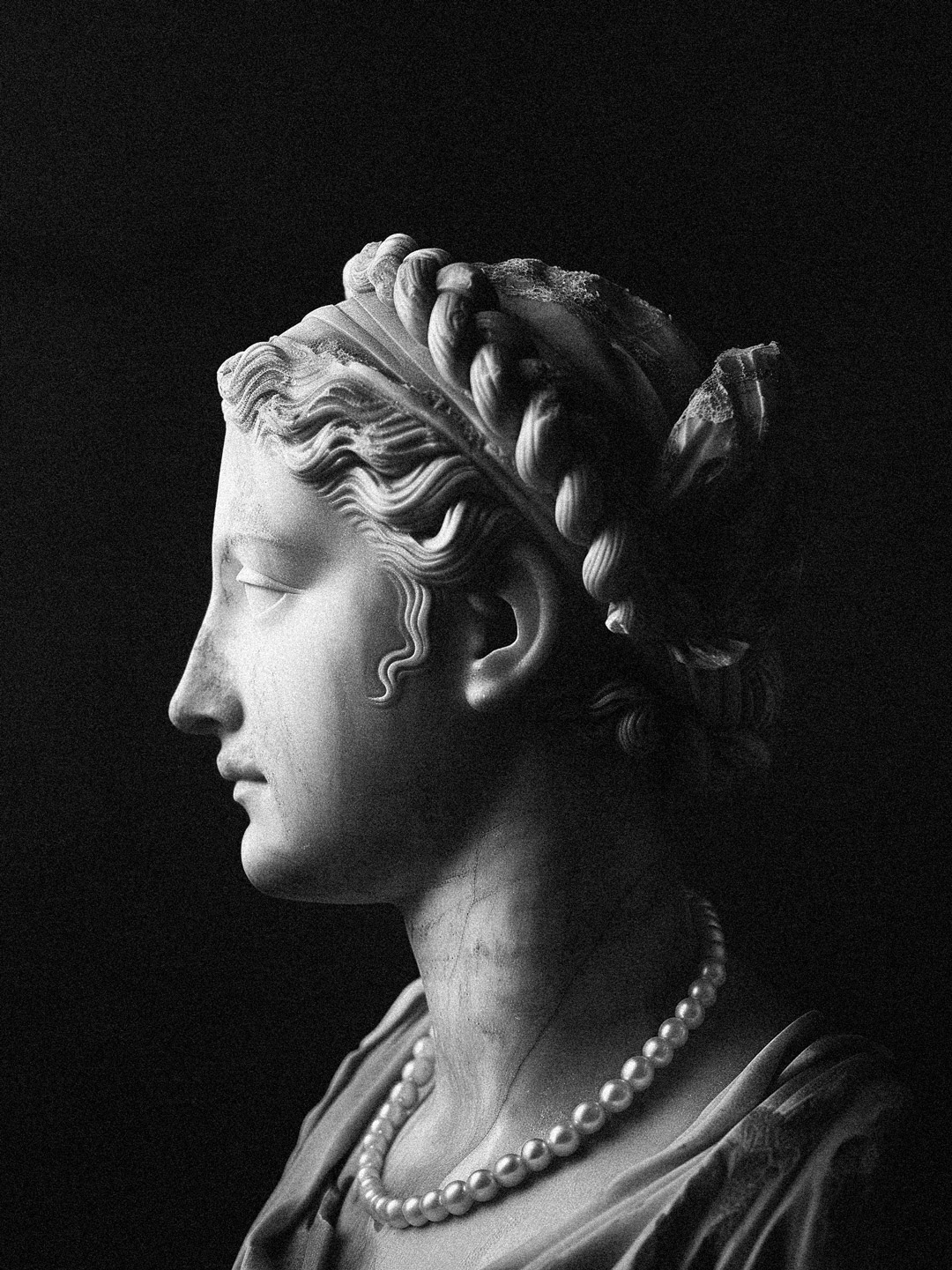
Sappho, spelled (in the dialect spoken by the poet) Psappho, (born c. 610, Lesbos, Greece — died c. 570 BCE). A lyric poet greatly admired in all ages for the beauty of her writing style.

Her language contains elements from Aeolic vernacular and poetic tradition, with traces of epic vocabulary familiar to readers of Homer. She has the ability to judge critically her own ecstasies and grief, and her emotions lose nothing of their force by being recollected in tranquillity.

Marble statue of Sappho on side profile.

Designed with WordPress