Tag: Cretan hieroglyphics

  • Early Minoan hieroglyphic roundels and seals may lend some insight into the later development of the Linear A syllabary

    Early Minoan hieroglyphic roundels and seals may lend some insight into the later development of the Linear A syllabary:

    Minoan hieroglyphic writing


    As illustrated above, early Minoan hieroglyphic roundels and seals may lend some insight into the later development of the Linear A syllabary. Notice that the the hieroglyphic for an axe or labrys looks remarkably like the Linear A and Linear B syllabogram for A, while the Y shaped hieroglyphic, whatever it is supposed to represent (and no one knows what), is similar to the Linear A syllabogram for SA. So it is conceivable, however remotely, that this hieroglyphic seal may actually read asa or saa, whichever way you read it (not that we have any idea what that is supposed to mean).Then we have the hieroglyphic marked with an asterisk (*). This looks very much like a vase, amphora or flask to hold wine, water or possibly even olive oil. There is another one which looks like a fish. That should not be too surprising, given that the ideogram for fish does appear on at least one extant Linear A fragment from Phaistos, as we have witnessed in a recent previous post. Finally, on the bottom line, the seal marked (f) bears a hieroglyphic which looks like a bat, and this in turn may very well be the antecedent to the Linear A syllabogram MA. But this hieroglyphic is not that of a bat, but rather of a cat, which we can see from the beautiful seal on the top left of the illustration. This is substantiated by the some of the variations in the scribal hands for Linear A MA, which indeed look like the visage of a cat, as we see here:

    Linear A scribal hands for MA = cat

    So I guess it is a cat.

  • A truly fascinating Cretan hieroglyphic tablet from Phaistos!

    A truly fascinating Cretan hieroglyphic tablet from Phaistos!
    
    Cretan hieroglyphic tablet from Phaistos
    
    I dare say I find this tablet one of the most intriguing I have ever run across. I is just jam packed with information! I have done my best to decipher at least a little of it. .5 is probably the earliest version for the later-to-become ideogram for “roasted einkorn wheat”. Likewise .8 is almost certainly the primordial ideogram for “figs”. I have also provided the translation for the word “figs” in Old Minoan. It is either nire (singular nira2=nirae) or nite (singular nita2=nitai). It can only be one or other of these 2 options. I was the first person ever to successfully decipher the Old Minoan word for “figs” several months ago.
    
    
  • Knossos clay bar P103, Cretan hieroglyphics, predating Linear A

    Knossos clay bar P103, Cretan hieroglyphics, predating Linear A:
    
    Knossos clar bar P103 Cretan hieroglyphics
    
    While some of the signs on this clay bar resemble Linear A syllabograms and ideograms, the meaning of almost all of them is entirely a mystery. However, .3 looks like the Linear A & B ideogram for “hide/leather/fleece” .4 probably represents wheat .5 so strongly resembles the Linear A ideogram for “olives/olive tree” that I take it to signify just that. .7 looks like the Linear A ideogram for “bull/ox(en)”. Except for the numerics, the rest is indecipherable. 


Sappho, spelled (in the dialect spoken by the poet) Psappho, (born c. 610, Lesbos, Greece — died c. 570 BCE). A lyric poet greatly admired in all ages for the beauty of her writing style.

Her language contains elements from Aeolic vernacular and poetic tradition, with traces of epic vocabulary familiar to readers of Homer. She has the ability to judge critically her own ecstasies and grief, and her emotions lose nothing of their force by being recollected in tranquillity.

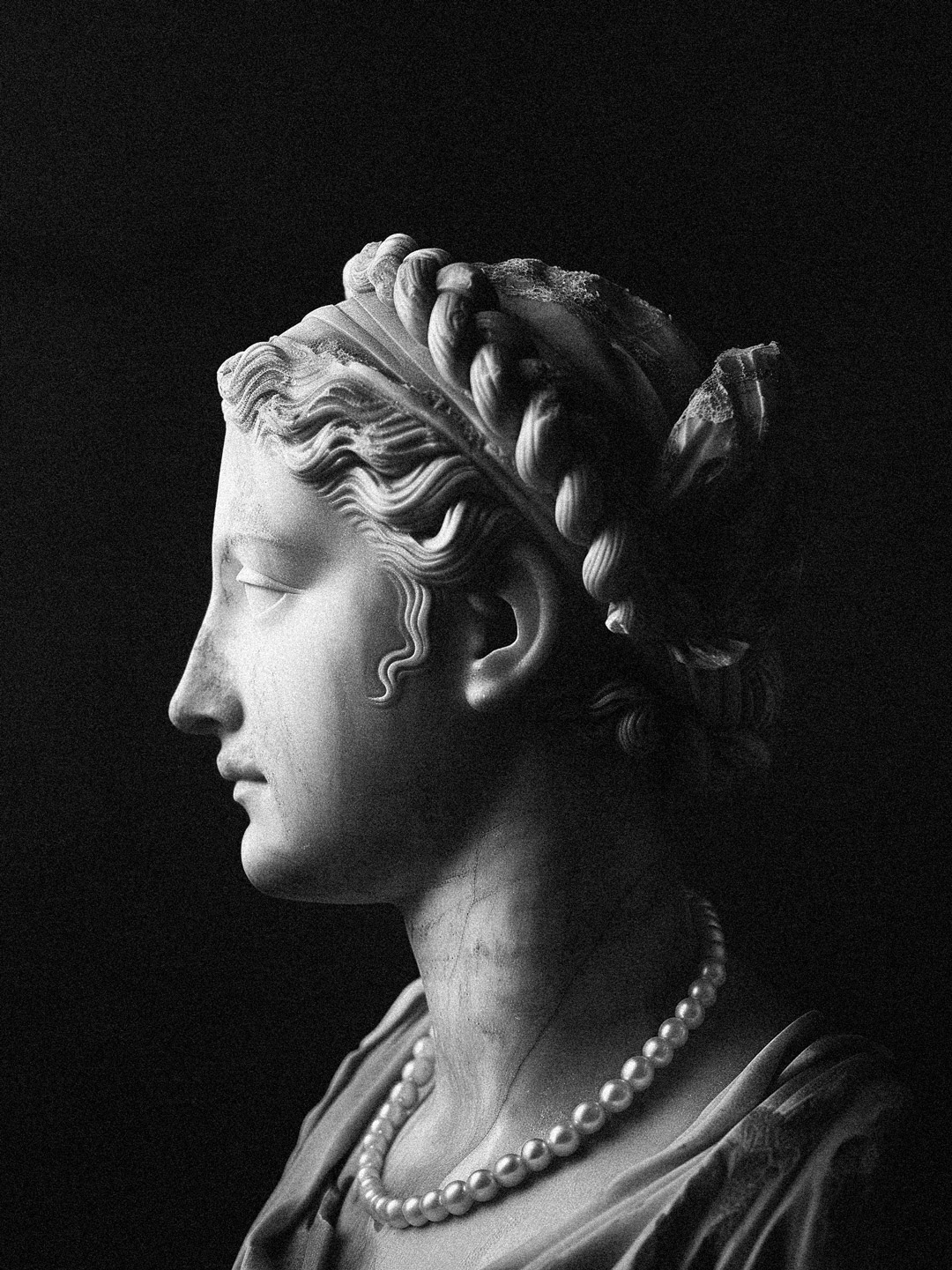
Marble statue of Sappho on side profile.

Designed with WordPress